By Rabbi Dr. Hillel ben David (Greg Killian)

In this study I would like to examine the body of man. Man is a metaphor. Indeed, one of several meanings of the Hebrew word adam (“man”) is “I resemble.” For man is a microcosm of creation—in the words of the Talmud, “As the soul fills the body, so HaShem fills the universe.”[1] Thus Iyov declares, “From my flesh, I perceive HaShem“,[2] by contemplating the workings of our body and the manner in which it relates to and is animated by our soul, we gain insight into the workings of creation and the manner in which it relates to and is sustained by its source. Man is a microcosm, and so provides analogies for all other worlds which can explain the secrets of reality and the great riddles hidden from our senses”.[3]
Shemot (Exodus) 25:8 They shall make Me a Sanctuary, and I will dwell in them.
The Vilna Gaon explained that there are in fact three worlds. This terrestrial world is the macrocosm, the Mishkan is intermediate, and the human body is the microcosm…[4]
Rabbi Chaim of Volozhin (a student of the Vilna Gaon) said that every Jew is “a living Mishkan in miniature”. Just like HaShem rests his Shechinah in the Kodesh HaKodashim, He rests the Shechinah in the human heart.
According to R. Bachya, our primary duty is to study that which is closest to us: the human being.
It is our duty to study the origins and birth of the human, the form and structure of his physical frame, how the various body parts are connected and function together, the purpose of each individual part and the need for it to take its present form. Next we should study man’s advantages, his various temperaments, the faculties of his soul, the light of his intellect, his qualities -- those that are essential and those that are accidental; his desires, and the ultimate purpose of his being. When we have arrived at an understanding of the matters noted in regard to man, much of the mystery of this universe will become clear to us, since the one resembles the other... as Job said (Job 19:26): “From my flesh I see God.”[5]
The Rambam[6] states that the only way to love and fear HaShem is through the study of His creation, for only through this study are we able to know HaShem. Our understanding of HaShem can only be achieved by the intellectual investigation of the genius and balance of His creation. Every detail, every remarkable insight and fact is necessary in our attempt to know (Daat) and connect with HaShem.
The human body is the physical element in a complex and ultimately spiritual being. The human body is not simply the housing for the spiritual essences, it is part and parcel of the combined human being, a being that will ultimately exist in greater spiritual form in the world to come, after the resurrection. For when the world to come begins, and we stand up at the resurrection, we will stand up with combined body and soul, though both will be raised to a much higher spiritual level than at which we stand today.
The walls of the succah represent the human body, and are even adorned with kishutim, jewelry, so-to-speak, as we adorn a body. For, like the body itself, the walls of the succah are only a temporary and somewhat flimsy encasement for the person, the soul, that enters and then later leaves it.
The spiritual nature of the human body is manifested in an erect posture. This is one of the aspects of a human being which shows his spiritual nature. The fact that a man stands upright and has a certain glow in the face is a manifestation of his difference from an animal. These two features distinguish us from the animals.
Maharal’s View
Maharal suggests that the human body symbolizes aspects of HaShem, rather than that the actual form of the body reflects the form of HaShem in some way. In his view, human characteristics such as our walking upright, having two eyes, the heels of our feet, all remind us, if we understand them correctly, of attributes of HaShem. Specifically, our walking upright indicates a lack of subservience, our eyes remind us of HaShem‘s awareness of good and evil, and our heels can remind us of the ubiquity of sin.
Vilna Gaon’s View
According to our mystical tradition, the human being is a microcosm of all creation, and within the human being one can find the characteristics of every creature. The Vilna Gaon, a leading sage of the 18th century, states that this idea is expressed in the following pasuk, where the Creator proclaims:
Bereshit (Genesis) 1:26 Let us make the human being in Our image and after Our likeness.
Who was the Creator speaking to when He said, ‘Let us make the human being’? According to the Vilna Gaon, the Creator was addressing all of creation, bidding each creature to contribute a portion of its characteristics to the human being. For example, the human being’s strength is traced to the lion; his swiftness to the eagle; his cunning to the fox; and his capacity for growth to the flora.
THE TORAH AS A LIVING ORGANISM
The weaving of the Torah from the Ineffable Name (YHWH) suggests the analogy that the Torah is a living texture, a live body in the formulation of both Azriel of Gerona and the Zohar. The Torah “is like an entire building; just as one man has many organs with different functions, so among the different chapters of the Torah some seem important in their outward appearance and some unimportant,” yet in actual fact all are bound together in a single organic pattern. Just as man’s unified nature is divided up among the various organs of his body, so the living cell of HaShem‘s Name, which is the subject of revelation, grows into the earthly Torah that men possess. Down to the last, seemingly insignificant detail of the Masoretic text, the Torah has been passed on with the understanding that it is a living structure from which not even one letter can be excised without seriously harming the entire body. The Torah is like a human body that has a head, torso, heart, mouth, and so forth.
The Divisions of the Body
The human body is divided into three parts: the head, the most aristocratic part of the body; the middle section, which incorporates the heart; and the lower section of the body, the most mundane of all (symbolizing the three sections of the Mishkan, the Kodesh Kodashim (Holy of Holies), the Kodesh (the Holy Place), and the Chatzer (the courtyard), and the three worlds, the world of the angels, the world of the luminaries, and this world.
The Ohel Yeshua[7] lists all the parts of the Mishkan: 48 beams, 100 silver sockets, 10 coverings, 100 loops, 50 golden hooks, 11 coverings, 100 loops, 50 copper hooks, 15 poles, 96 rings, 1 curtain, 4 beams, 4 golden hooks, 1 curtain, 5 beams, 5 hooks, 5 copper sockets, 1 Aron, 1 lid for the Aron, 1 Keruvim, 1 Shulchan, 1 menorah, 1 gold altar, 1 copper altar, and 1 washing station. These, added together, equal 613.
There are 613 commandments. The positive commandments (do), numbering 248, are equivalent to the number of organs in the human body. The 365 negative commandments (do not do) are equivalent to the number of blood vessels in the human body. The 613 mitzvot relate to 613 specific physical areas in the body, a Hakham (Rabbi) can analyze whether a limb is affected by an adversely conducted mitzva.[8]
Man has 248 limbs they are as follows: Thirty bones in the foot, six in each toe. Then, ten bones in the ankle, two in the lower leg, five in the knee, one in the thigh, and three in each hip. There are eleven pairs of ribs. The hand has thirty bones, six in each finger. There are two bones in the forearm, two in the elbow, one in the upper arm, and four in each shoulder. This yields a sum of 102 bones on each side, for a total of 204.
Besides these, there are another 46 limbs. These include the eighteen vertebra of the spine, nine bones in the head, and eight in the neck. There are also six in the “gateway to the heart,” which is the chest, and another five at the outside orifices. The total is 248 limbs.
The Hakhamim (Rabbis) declared that there were 248 members (bones) in the human body;[9] namely, forty in the tarsal region and the foot (30+10 = 40); 2 in the leg (the tibia and fibula); 6 in the knee (including the head of the femur, and the epiphyses of the tibia and fibula); three in the pelvis (ilium, ischium, and pubes); eleven ribs (the twelfth rib, owing to its diminutive size, was not counted); 30 in the hand (the carpal bones and the phalanges); two in the forearm (radius and ulna); 2 at the elbow (the olecranon and the head of the radius); 1 in the arm (humerus); four in the shoulder (clavicle, scapula, coracoid process, and acromion)—which makes 101 for each side of the body, or 202 for both—eighteen vertebræ; 9 in the head (cranium and face), eight in the neck (7 vertebral and the os hyoides), five around the openings [sic] of the body (cartilaginous bones), and six in the key of the heart (the sternum).
The human form also has 248 limbs (and organs), corresponding to the 248 positive commandments of the Torah, and 365 connecting tissues, veins or sinews, corresponding to the 365 prohibitions of the Torah[10].
Like man, the earth is also divided into 248 parts with a head, eyes, mouth and other limbs. It also has 365 arteries. Every time a person observes a commandment, he sustains one of his limbs, as well as a part of the world. Each limb announces, “Observe a commandment with me, so that I will live long”. It is for this reason that man is called a microcosm He is a miniature universe, having in him everything that exists in the world.
Nowhere is it written which mitzva corresponds to which item in the body. This appears to be a secret Tzaddikim have. When something goes wrong physically, it is because a mitzva or group of mitzvot are not being performed properly. The power that should be flowing to that limb is subverted. The power that should be coming from the soul (Torah) to the physical body (mitzvot) is not flowing properly.
“The body,” writes Hakham Culi[11], “has 248 limbs and 365 blood vessels . . . The soul has exactly the same number of limbs and blood vessels, but these are spiritual rather than physical. Each part of the soul is in its counterpart in the body, and is strongly bound to it.”
* * *
The Shela Hakodesh writes that each of the 248 positive mitzvot corresponds to one of the 248 limbs of the body and each of the 365 negative commandments corresponds to one of the 365 veins and arteries of the body. Each positive mitzva that one fulfils and each negative commandment that one is careful not to transgress nourishes its corresponding limb or vein. However, if one neglects one of the mitzvot or commits a sin, he blemishes the parallel limb or vein of his neshama. The Shela then notes that it is impossible for any one individual to observe all 613 mitzvot. Some mitzvot apply only to kohanim; others, only in Eretz Israel or when the Bet HaMikdash stood. Still, others apply only in rare circumstances, e.g., if one‘s brother dies without children and there is a mitzva for him to marry his brother’s widow (yibum). If that is the case, how can one properly prepare his neshama for the Next World and prevent his neshama from being blemished?
The Shela answers that if one fulfils those mitzvot that he is capable of performing and learns the sections of the Torah related to all the mitzvot, it is considered as if he fulfilled the entire Torah. This is alluded to in the passage here. “For this commandment that I command you today is not hidden from you...”. This refers to those mitzvot that are hidden from one and are impossible to fulfil, e.g., mitzvot that apply to kohanim. “...And it is not distant...”. This refers to mitzvot that are possible to fulfill but circumstances are rare, e.g., Yibum or Birchat HaChama. “...Nor is it across the sea...”. This refers to mitzvot that can only be performed in Eretz Israel thereby exempting one who lives across the sea. The Torah says that one should not say that it is hidden, far, in the heavens or across the sea. Rather, it is very near to you, in your mouths and in your hearts to learn and delve into it. The pasuk ends with the words “to perform it”. All that precedes these final words is given on condition that one performs those mitzvot that he can fulfil.
* * *
Rabbi Shimon bar Yochai interpreted the following verse:
Devarim (Deuteronomy) 23:15 HaShem your G-d is constantly present in the midst of your camp [be’kerev machanecha] .
“In the midst” [be’kerev] refers to none other than your heart, and “your camp“ [machanecha] is your body with its 248 limbs. The verse thus continues, “Make sure that no unseemly thing/word be seen in you, which might cause Him to withdraw His presence.” Your body is a Temple for the Divine! Sanctify [i.e. elevate] your mind, speech, and actions, even when you are engaged in permitted activities. [In other words, sanctification does not only refer to refraining from that which is forbidden, but, in addition, to being careful to elevate even that which is permitted[12].] Woe to you if you don’t, for it will be considered as if you had defiled the Mikdash of the king!
* * *
(a) The two calf-bones and one thigh-bones comprise the majority of the volume of bones of the human body.
(b) Since there are 248 limbs in a male human body, the majority of limbs will total 125.
(c) According to Rebbi Yehoshua, there are 252 limbs in a female human body, But according to Rebbi Akiva, there are 253.
(d) A quarter of a Kav (six egg-volumes) of bones will also be Metamei be’Ohel.
The Beginning
We observe that the child’s entire body is derived from a drop of semen originating in its father’s brain. Yet the many physical components which constitute the child’s body are by no means uniform. They vary greatly, from the brain, the highest component, to the nails of the feet, the lowest.
These radical differences come about through the presence of the drop of semen in the mother’s womb during the forty weeks of gestation. It is this period of physical development that produces the differences between one organ and another: the more materialized a particular component of the drop becomes, the more it diverges from its original state and becomes an entity with its own unique physical characteristics. We thus observe that though all the organs share a common source, nevertheless in the process of development there arise differences as radical as that between brain and nails.
Another matter evident from the analogy: Though the nails are the most insignificant part of the child’s body, they are still bound and united with their first source, the father’s brain. For, like the other parts of the child’s body, the nails too receive their nourishment and life from its brain. Since the child’s brain retains the essence of its source (the father’s brain) and is thus constantly bound to its source, even the nails are therefore bound up with their original source.
* * *
A person’s two principle organs are his brain and his heart. The Maharal, commenting on the Mishna in Avot, “May it be Your will that the Bet HaMikdash be rebuilt speedily in our days, and make our portion in Your Torah,” explains that there is a reference here to these two organs. Divine service is the “heart,” while Torah is the “brain.”
A persons brain is the kodesh ha-kodoshim (Holy of Holies) of the human body.
The following charts shows the ten structures of the human being as it relates to the men of the synagogue and to the Temple:
Bet Kenesset – The Body
|
|
Chachmah (Wisdom) - Black Virtue: Emunah (Faithful Obedience) Ministry: Chief Hakham of the bench of three Rosh HaShana |
|
|
Daat (Knowledge) - White Virtue: Yichud (Unity) Ministry: 3rd of the bench of three Yom HaKippurim |
|
Binah (Understanding) - Gray Virtue: Simchah (Joy) Ministry: 2nd of the bench of three Shabbat Shuva |
|
Gevurah (Strength/Might) – Scarlet Red Virtue: Yir’ah (Fear of HaShem) Ministry: Sheliach [Apostle/Bishop] Second Day Second intermediate day |
|
G’dolah / Chessed (Greatness/Mercy) – Royal Blue Virtue: Ahavah (love) Ministry: Masoret [Evangelist] First Day First intermediate day |
|
|
Tiferet (Beauty) - Yellow Virtue: Rachamim (Forgiveness) Ministry: Darshan or Magid [Prophet] Third Day Third intermediate day |
|
|
Hod (Glory) - Orange Virtue: Temimut (Sincerity) Ministry: Parnas [Pastor] Fifth Day Fifth intermediate day |
|
Netzach (Victory) – Emerald Green Virtue: Bitahon (Confidence) Ministry: Parnas [Pastor] Fourth Day Fourth intermediate day |
|
|
Yesod (Foundation) - Violet Virtue: Emet (Truth/Honesty) Ministry: Parnas [Pastor] (Female – hidden) Sixth Day Sixth intermediate day |
|
|
|
Shekhinah / Malkhut (Presence) – Purple Virtue: Humility Ministry: Meturgeman/Moreh/Zaqen [Teacher/Elder] Seventh Day Seventh intermediate day |
|
The highest part of the human body is the hair. This complex subject is so large that I needed a separate paper to explain it. That study is titled HAIR.
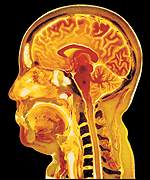
As HaShem is more revealed in the Bet HaMikdash, so, the soul is concentrated in the head.
The Jews are called Israel because the letters can be switched around to form the words, Li Rosh (“to me as a head”)[13]. The head has three parts: the brain, the skull and the hair. The brain is the source of reason, and the skull represents will. Hair represents the Chachma which is revealed to us (the Torah), just as hair receives a minute amount of Chayot from the brain. Thus, the revelation of the “hair“ is in Gan Eden (since Torah is studied there) and the revelation of the brain (hidden Chachma) and of the skull (will, mitzvot), will be revealed when Mashiach comes.
The Tallit that is wrapped around us, represents the mitzvot, the skull and the tzitzith are like the hairs (Chachma, Torah). Since tzitzith contain both ideas (Torah and mitzvot), they correspond to the whole Torah, and thus the statement that “tzitzith are compared to the whole Torah”.[14]
* * *
According to Jewish mysticism, the forehead is associated with the inclusive of Keter (including Chachma, Bina, and Daat). This is related to the verse, “The gold plate shall be on Aaron’s forehead before HaShem“ (Ex. 28:36), since the plate was engraved with the Tetragrammaton, HaShem‘s Holy Name. In addition, the Zohar[15] compares the rest of the head to the menorah of the Sanctuary of which it is written:
Bamidbar (Numbers) 8:2 “When you [Aaron] light the Menorah, its seven lights shall shine toward the center”.
The seven lamps emanating light from the oil correspond to the seven apertures of the head: two eyes, two ears, two nostrils and the mouth, which radiate the light of the mind. This light should be directed toward the center, in the service of HaShem. Lastly, these four sets of organs correspond to the four letters of the Divine Name, where the mouth relates to the last heh - ה and the last of the sefirot, Malchut. We see then that the ten Sefirot permeate the head, from Keter in the forehead on high to Malchut in the mouth. Subjugating and harmonizing one‘s thoughts to the will of HaShem brings one into the spiritual loop such that he becomes a conduit for the flow of Divine energy cascading from on high down below. This is symbolized by a kiss on the forehead that originates in the mind of the bestower, is transmitted down through the mouth, and received by the mind of the recipient who is now resonating in harmony with HaShem.
The human forebrain is made up of a pair of large cerebral hemispheres. Because of crossing over of the spinal tracts, the left hemisphere of the forebrain deals with the right side of the body and vice versa. Things in the higher world are reversed in the lower world when they become manifested. We see this when we see the wicked prosper and the righteous suffer. This reversal is absolutely essential in order for us to have free will. If the righteous always prospered and the wicked always suffered; who would want to be wicked? This apparent injustice is resolved in the next world where we see that the righteous are paying, in this world, for any minor sins that they committed. The wicked, too, are being paid for any minor mitzva that they committed. Thus in the next world the righteous find only reward and the wicked find only punishment.
The next world does not have the cross-over. It is a world of essence.
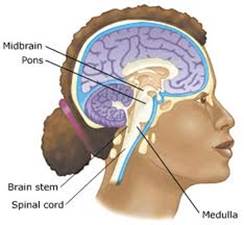
The brain stem and its parts:
The medulla oblongata is an enlarged continuation of the spinal cord extending up into the pons (a large bulge under the brain stem). On each side of the medulla oblongata is an oval swelling, called the olive, from which a large bundle of nerve fibers arises and passes up into the cerebellum. Because of its location, all ascending and descending nerve fibers connecting the brain to the spinal cord must pass through it.
Medulla Oblongata - The medulla oblongata functions primarily as a relay station for the crossing of motor tracts between the spinal cord and the brain. It also contains the respiratory, vasomotor, and cardiac centers, as well as many mechanisms for controlling reflex activities such as coughing, gagging, swallowing and vomiting
Midbrain - The midbrain serves as the nerve pathway of the cerebral hemispheres and contains auditory and visual reflex centers.
Pons - The pons is a bridge-like structure which links different parts of the brain and serves as a relay station from the medulla to the higher cortical structures of the brain. It contains the respiratory center.
The head contains three hidden parts: The right and left forebrain and the brain stem. These three parts picture the Bet Din, the bench of three. The right and left lobes have a dominant lobe, signifying the right hand Dayan (Judge) in the Bet Din (court).
The brain stem pictures the Rosh Bet Din (Chief Justice). This organ is the most centered of the organs of the head, being centered left to right, front to back, and top to bottom.
The brain captures and translates the message of the neshamah[16] into concepts and ideas.
The Mishkan‘s furnishings or vessels are seen as representations of the various organs and faculties of man: The Ark (containing the Torah) corresponds to the mind, intellect and the faculty of speech.
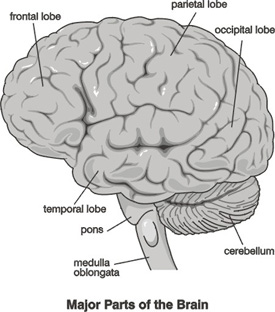
Chachmah (wisdom), of all the mental powers, is considered to be the essential mind or the “mind within the mind.” Consequently, binah (understanding) relative to chachmah, in addition to referring to the heart itself (the physical seat of emotive experience born from the understanding of the mind), can be regarded as the relative “heart within the mind.” This distinction also plays itself out in the body, where Chachmah is positioned in the right lobe and Binah in the left lobe of the brain. The third additional element, Daat – the midbrain, is located in the rear lobe of the brain at the point where the brain connects to the spine, the position of the occipital lobe.
We hear about the concept of brain death. This refers only to the demise of the brain-stem. This does not refer to being comatose, which may only be a state of unconsciousness, nor to the persistent vegetative state in which case the patient is completely alive. It is more accurate to call it brain-stem death, or the death of the whole brain. The brain-stem is the lower part of the brain, which controls automatic, instinctual reactions. At the demise of the brain-stem, it is impossible to remain alive without the help of a breathing apparatus. The body is unable to breath on its own.
Our Sages discuss the part of the body which first returns to life (in the resurrection). It was called the Luz bone, and it is located at the back of the neck. Interestingly, the brain-stem is at the top of the spinal cord and the lower area of the brain!
* * *
Doesn’t the Torah itself say that one must decide in accordance with the majority?
The Rabbi responded with a parable: once, all the hundreds of other organs in the body gathered in opposition to the brain. All of them were being treated as nothing but servants. The brain never consulted with them or asked any of their opinions about what to do, rather, the brain made all the decisions by itself, and whatever it felt like doing, all the other organs were obligated to do. “Can this be?” argued the other organs. “The Torah itself says that one must decide in accordance with the majority!”
But the brain responded immediately. “That verse,” explained the brain, “is discussing the Sanhedrin, the Supreme Rabbinical Court, where 71 brains sat together. Therefore it was necessary to ask the opinions of each one, and in cases of disagreement they would rule in accordance with the majority. But you don’t have a single brain between all of you! Just tails that think they can offer an opinion. In such a case, no one says that one must follow that majority!”
The center of the head is the mid-brain,[17] the controller of the body. One can visualize where this area is located by placing a finger behind the ear and another finger between the eyes. The imaginary point where these two ‘lines’ cross, is the mid-brain. A bullet that pierces this area will surely kill the person.
The following picture illustrates the how the mid-brain is centered in the head.
When we examine Shechem (and the grave of Joseph HaTzaddik), we will see that Shechem bears the geographic topography similar to the brain with Jerusalem as the mid-brain.
Shechem was also the location of Dothan whose name means “dual wells”. This causes us to recall the two hemispheres of the brain which are wells to hold our knowledge of Torah.
One of the major functions of the brain is involved with ‘remembering’. The secret password given to us by Yosef HaTzaddik, is pakod pakadti etchem. Yosef is intimately associated with Shechem in that he was sold by his brothers in Shechem, Yaaqob Abinu gave Shechem to Yosef as an inheritance, and his bones were buried in Shechem.
The Jews were given a sign: if a purported liberator uses the term pakod pakadti etchem, he is a true savior. That is what Yosef meant when he said, “pakod yifkod Elokim Etchem (Elokim will surely remember you)”.[18] As soon as Moshe mentioned these words, he was trusted.[19]
Thus we have a strong connection between remembering and Shechem.
There is much, much more to this subject! I have written a separate paper to try to delve into this most interesting subject. The name of the study is: BRAIN.
The forehead is open and blank. It is at the highest part of the body to indicate an extremely elevated function: Where the forehead is facing is where you are going! What direction are you facing? You will walk in the direction of your forehead. The forehead is a symbol of your ratzon, your desire.
Midrash Rabbah - The Song of Songs VII:11 THY FOREHEAD Is LIKE THE TOWER OF LEBANON. This is the Sanctuary. Just as the forehead is on the highest part of a man, so the Sanctuary is in the highest part of the world. Just as most ornaments are suspended from the forehead, so priesthood, Levites, and kingship are from Jacob.
The following are some of the Ari’s teachings of the spiritual significance of the design of the human body:
The golden head-plate resembles another religious object worn above the forehead: tefillin. The Sages in fact compared the two, and declared: if the tzitz (sacred head-plate), upon which HaShem‘s Name is engraved just once, required constant awareness, certainly tefillin, in which HaShem‘s Name is mentioned many times, have the same requirement.
Yet the argument seems weak. Do the Sages really mean that tefillin, worn by any Jew, are holier than the sacred head-plate worn only by the High Priest when serving in the Temple? Also, why is it that the head-plate only mentions HaShem‘s Name once?
We can divide all of life into two parts: ultimate goals, and the means we use to reach those goals. We must be careful not to confuse one for the other. It is easy to loose sight of our true goals when we are intensively occupied with the ways of achieving them.
Even those who are careful to stay on track may not have a clear understanding of the true purpose of life. The Sages taught that “all actions should be for the sake of Heaven“. Knowledge of what HaShem wants us to do in each and every situation is by no means a simple matter. The ability to discover the highest value, to comprehend the central value of existence, and to be able to relate all of life to this central theme, this is a function of one‘s wisdom and spiritual greatness.
Regarding the High Priest, we expect that the person suitable for such a central and elevated position will have reached the level of enlightenment whereby all activity revolves around one ultimate goal. Everything relates to the central theme of “Holy to HaShem “. Therefore the tzitz contained only one mention of HaShem‘s Name, one crowning value.
The common person, on the other hand, may not reached this level of enlightenment. For him there exist many elevated goals: Torah study, acts of kindness, charity, prayer, service, wisdom, prophecy, etc. These are true spiritual values, and by relating various activities to each of these values, one will succeed in elevating himself and recognizing the underlying central goal. Therefore the individual’s tefillin contains HaShem‘s Name many times, reflecting many guiding spiritual goals.
We see how much people need physical reinforcement in order to keep the ultimate goals of life in sight. This is the underlying logic of the Sage’s comparison between the head-plate and Tefillin. Even the High Priest, despite his broad spiritual perception, needed to be constantly aware of the tzitz on his forehead and its message. Certainly the average Jew, with a multitude of spiritual goals, needs to maintain contact and recognition of his tefillin.[20]
This symbolized that Aaron’s mind was sacred and worthy of carrying the name of HaShem that was embossed on the tzitz.
The obvious question here is, how does the tzitz which is worn on the forehead of the high priest, atone for the impurity of the holy offerings? In other words: what is the connection between the golden plate, the forehead, the sacrifice, and impurity?
Before taking up this question we will first examine another source, which is also related to the tzitz and atonement. Rabbi Anani bar Sasson catalogued the various sins for which the priestly garments provide atonement: the tunic atones for bloodshed; the breeches (trousers) atone for incest; the mitre for arrogance; the girdle for sinful thoughts of the heart; the breastplate atones for errors in legal judgment; the ephod, for idolatry; the robe, slander, and the tzitz procures atonement for impudence. The reason given for the latter: the tzitz is worn “on the forehead (metzach) of Aharon” and in Jeremiah 3:3 it is written: “and you had the forehead (metzach) of a harlot.” From here we learned that the tzitz atones for sins of impudence.[21]
Beyond this comparison, which is of a strictly technical, verbal nature, the word “forehead” (“metzach”) does in fact have a broader meaning which relates to human behavior and character. An examination of the Biblical idiom leads us to the conclusion that “metzach” symbolizes hardness which carries with it opposition and refusal. The words of HaShem to Ezekiel, when He sends him to the people of Israel as a prophet, include the following passage: “But the House of Israel will not want to listen to you for they do not want to listen to Me, for all the House of Israel are defiant (Heb. - chizqei metzach; literally: strong of forehead) and further on, “Behold, I have made your face hard against their faces and your forehead strong against their foreheads, fear them not”[22]. A parallel verse in Isaiah (48,4) says: “for I know that you are obstinate, your neck is a sinew of iron and your forehead is brass.”
The same word also symbolizes insolence and impudence. In addition to the example already discussed above from Jeremiah (“and you had the forehead of a harlot, you refused to be ashamed”), this meaning of the word also appears in the well-known story of King Uzziah who wishes to usurp the prerogative of the priests and offer incense:
“When he was strong, he grew so arrogant that he acted corruptly: he trespassed against HaShem his G-d by entering the temple of HaShem to offer incense on the incense altar. The priest Azariah, with eighty other brave priests of the lord, followed him in and, confronting King Uzziah, said to him, ‘It is not for you, Uzziah, to offer incense to HaShem, but for Aaronite priests, who have been consecrated, to offer incense. Get out of the Sanctuary, for you have trespassed; there will be no glory in it for you from HaShem G-d’. Uzziah, holding the censer and ready to burn incense, got angry; but as he got angry with the priests, leprosy broke out on his forehead in front of the priests in the House of the Lord beside the incense altar. When the chief priest Azariah and all the other priests looked at him, his forehead was leprous, so they rushed him out of there; he too made haste to get out, for the Lord had struck him with a plague“.[23]
It is unreasonable to assume that the choice of the forehead as the only place where the leprosy broke out was simply in order to make it more visible, to make the punishment of this impudent more obvious. Most probably the forehead was chosen for yet another reason: for being a symbol of insolence and impudence; in other words, the forehead was singled out to be struck with leprosy so that part of the body which committed the sin of impudence, would be the part which bears the punishment.
Another famous story makes the same point, the battle of David against Goliath. Here again we can say that it is no coincidence that the stone David chose from the stream struck Goliath precisely on the forehead and nowhere else. Let us not forget, the Philistine “taunted the armies of the Living G-d”[24] insulted them and shamed them. Could there be greater impudence than this? The stone striking his forehead symbolized a blow to the center of his insolence, the focal point of impudence.
(As an aside, Goliath became a giant because of an overactive pituitary gland which is located in the head, between the eyes and slightly above them, and about two inches back from the forehead. Thus, the giant was slain by destroying the organ that had made him mighty. David became the first endocrinologist.[25])
For better or for worse body language is expressed more by the forehead than by any other exposed part of the body. Therefore, when the high priest wears the tzitz on his forehead it is to atone for those sins which the forehead represents. impudence which originates in stubbornness, contrariness and rebelliousness.
The concept of a face is something that reveals on the outside that which is hidden on the inside. The Torah provides some insight into this definition of face:
Shemot (Exodus) 33:20 No one can see My face because no man can see Me and live!
This was, in essence, what HaShem told Moshe Rabbeinu on top of Har Sinai. As the Kabbalists explain, “face” here refers to a more direct revelation of HaShem, which is the end result of successfully entering PaRDeS to the greatest extent possible.
The physiognomy of the human face alludes to ascending levels or dimensions of existence. The mouth, which represents the sense of taste, the least spiritual of our senses, is in the lowest position. The nose, representing the more spiritual sense of smell, comes above the mouth, and the eyes take the highest position as the sense of sight is considered the most spiritual of the senses.
Rabbi Yoseph Chayim of Bagdad goes into the conceptual or spiritual implications of this as well. He quotes the verse, “You shall therefore safeguard the commandment (mitzva), the statutes (chukim), and the laws (mishpatim) which I am teaching you today, to do them” (Devarim. 7:11), and says: The 613 commandments are traditionally divided into three categories:
1) chukim (statutes or decrees) such as not mixing or cross-breeding certain species when planting, or not eating pork, etc.,
2) mitzvot (commandments or testimonies) such as wearing tefillin or keeping the Sabbath and other commemorative festivals, and
3) mishpatim (laws or judgments) such as not killing, not stealing, etc.
These three levels of commandments can be said to correspond to three types of pleasures. In ascending order, these are taste, smell, and sight. Though all of these exist here in this physical world, the lowest of the three, namely taste [eating/drinking], is most appropriate for the level of reality in which we live.
Smell is considered the loftiest and most transcendent sense. The Arizal says that when the sin of Adam brought lust into the world it affected all of the senses except for that of smell. The sense of smell remained unaffected. All other senses desire forbidden things while the nose remains holy.
The nose is that part of the body which is connected most directly with the life force.
Bereshit (Genesis) 2:7 And HaShem God formed man of the dust of the ground, and breathed into his nostrils the breath of life; and man became a living soul.
The nose is used to perform two functions: Breathing and smelling. Now, we have a principle in the Torah which tells us that if we have a single organ which perform two function, then both functions are intrinsically one function.
One obvious connection is that the fresher (with life) something is, the better it smells. That which is dead and decaying (completely lacks life) smells putrid and disgusting.
Chazal[26] teach us that there was a time when people died when they sneezed. The first time you sneezed, you died. This is why we say mazal tov when someone sneezes, and doesn’t die. Clearly, we can see then that the nose was the place where life force went in and the place where the life force went out.
Yilkot Talmud Torah says that when it came time for a person to pass away, he would sneeze and his soul would exit his nostrils.
Pirkei DeRabi Eliezer Ch. 52 From the day that heaven and earth were created, people did not become sick. A person might have been walking in the market, he would sneeze and his soul would leave his body through his nostrils. Jacob requested mercy, ‘Master of the Universe, do not take my soul until I have instructed my children and the members of my house.’ God acceded to the request.... That is why one wishes a person ‘life’ when they sneeze.
“The Chizkuni zt”l informs us that Yaakov Abinu changed the way people die. From the beginning of creation, a man’s sneeze would be his last breath. Wherever he was, whatever he was doing, when he sneezed, his neshama (soul) would leave his body, without warning.”
Baba Metzia 87a Until Jacob there was no illness: then Jacob came and prayed, and illness came into being, as it is written, And one told Joseph, Behold, thy father is sick.
Thus we see sickness that leads to death, instead of a sneeze, for the first time.
The Talmud calls the pleasure of smell one that benefits the soul and not the body.[27]
Smelling is the faculty which tells us whether or not something is alive. Things that are fresh and full of life, smell very good. Things that have died smell very bad. The higher the organism, the worse it smells when the life force has left. Thus, we see that the nose is the organ for the life force.
As we are taught, Mashiach will judge and rectify reality by using his sense of smell. This means he will be able to detect the truth of a person’s statement and will truthfully judge who is guilty, as it says in the prophesy of Isaiah:
Yeshayahu 11:3 “and his delight will be in the fear of G-d and he shall not judge after the sight of his eyes, nor decide after the hearing of his ears...”
Yeshayahu 11:3 “He will be scented with the fear of God, and he will not judge by the sights in his eyes or decide by the sounds in his ears”
The word for “delight” (v’haricho) has the same root as the word “smell”, (rayach). The Sages interpreted this to mean that the Mashiach will be able to judge through the sense of smell. According to tradition, the four senses of sight, hearing, taste and touch were all blemished due to their participation in the sin of eating from the tree of knowledge of good and evil in the Garden of Eden. Only the sense of smell does not appear in the verses describing the sin, thus retaining its original pristine state. Relatively, smell is the sense of the soul, the others of the body. The sense of smell was, therefore, not blemished in the primordial sin. The common expressions “something doesn’t smell right,” and “this stinks” used to illustrate situations that feel intuitively wrong, allude to the association between smell and judgment. Smell is connected to intuition and inspiration, both of which emanate from a superconscious level above logic and reason. Mashiach represents the consummate state of ongoing inspiration from HaShem; therefore he will be able to judge through his rectified sense of smell.
Our sense of smell is our sensitivity to the inner, often unconscious, emotions and motives of ourselves and others. Smell is considered the most evocative, the most inner, and the most primitive of our senses. Not only does it penetrate the innerness of the object, it also penetrates to our own innerness. Of all the senses, only smell is perceived internally, as thought the smell is inside us. So of all our senses, smell creates the most direct connection between the innerness of the object we perceive and our own inner selves. While the body appreciates decoration, the enjoyment of the soul is to encounter something directly, as it truly is. All the other senses appear to us as external to our body.
The Torah[28] states that HaShem breathed life into the form of Man. The Hebrew word for breath, nesheema, is the same as the word for soul, neshama. Our spiritual life force comes, metaphorically, by way of air and respiration.
Yermiyahu refers to the Mashiach as the “breath of our noses”
Eichah 4:20 The breath of our nostrils, the anointed of HaShem, was taken in their pits, of whom we said, Under his shadow we shall live among the heathen.
The sovereignty of Mashiach will be more elevated than that of Moshe Rabbeinu. For the Gemara teaches:
Sanhedrin 93b The Messiah-as it is written, And the spirit of the Lord shall rest upon him, the spirit of wisdom and understanding, the spirit of counsel and might, the spirit of knowledge of the fear of the Lord. And shall make him of quick understanding [wa-hariho] in the fear of the Lord. R. Alexandri said: This teaches that he loaded him with good deeds and suffering as a mill[is laden]. Raba said: He smells [a man] and judges[29], as it is written, and he shall not judge after the sight of his eyes, neither reprove after the hearing of his ears, yet with righteousness shall he judge the poor.
It is explicitly stated that the sense of Mashiach is the sense of smell. “And he shall smell with the awe of God”—”he shall judge by smell”.[30] By his sense of smell (his “holy spirit”) the Mashiach will know how to connect each Jewish soul to its Divine root, and thereby identify its tribe (branch) in Israel.
Mashiach will judge by his sense of smell, whereas a king is permitted to judge only according to the testimony of witnesses. (The concept of judging by the sense of smell applies to Mashiach in his capacity as king, not in his capacity as prophet, for a prophet may not judge.)
The most spiritual of all the senses is the sense of smell and so it is not surprising that it is strongly associated with Mashiach.
The sense of smell was the only one of the five senses that was not involved in the sin that took place in Gan Eden. It is the sense which saved the Jewish people in the time of Mordechai and Esther, who are called Mor veHadas (“myrrh and myrtle”, the two primary sources of fragrance).
The Hebrew word for “smell” (רֵיחַ) is cognate to the word for the second level of soul, which is called “ruach” (רוּחַ). The sages teach us that smell is the one and only sense that “the soul enjoys and not the body.”
* * *
Blessings on enjoyments are not on the sense of pleasure itself but rather on the object which gives us enjoyment. Since material enjoyments are ultimately gifts from HaShem, these blessings are in effect an acknowledgment of the spiritual aspect of the material world. Coarse matter becomes the medium for HaShem to give us enjoyment and uplifting, and thereby a medium for us to strengthen our connection to Him. Without this encounter with reality, there is no occasion for a blessing, and indeed it is a grave transgression to say a blessing in vain, without any tangible object of blessing. Such a “berakha levatala” suggests a partition or separation between HaShem and His world.
The idea that a blessing must connect us with the spiritual within the material is reflected in the rule that no beracha is said on a “reiach sheain lo ikar” - a fragrance which has no present and tangible source.[31] The blessing is meant to connect us to the world, not to detach us from it by closing us up in a cocoon of mere sensation.[32]
* * *
Yoma 85a Abba Saul said: From the navel which sends its roots into every direction! You may even say that [the first view is in agreement with] Abba Saul, inasmuch as Abba Saul holds his view only touching the first formation, because ‘everything develops from its core [middle]’, but regarding the saving of life he would agree that life manifests itself through the nose especially, as it is written: In whose nostrils was the breath of the spirit of life. (Bereshit 7: 22)
R. Papa said: The dispute arises only as to from below upwards,[33] but if from above downwards, one had searched up to the nose, one need not search any further, as it is said: ‘In whose nostrils was the breath of life’.
Sotah 45b FROM WHAT PART [OF THE BODY] DO THEY MEASURE? In what do they differ? One is of the opinion that the source of existence is in the nose, while the other is of the opinion that the source of existence is in the navel. Is this to say [that they differ on the same point] as the following teachers: From where is the embryo formed? From the head, and thus it states: Thou art He that took me [gozi] out of my mother’s womb,(Tehillim 71:6.) and it further states: Cut off [gozi] thine hair and cast it away etc. Abba Saul Says: It is from the navel, and its root spreads in all directions [from there]! — You may even say that Abba Saul [agrees with R. Akiba], because Abba Saul’s statement only applies to the formation, that when an embryo is formed it is formed from the centre, but with respect to existence all agree that [its source is] in the nose; for it is written: All in whose nostrils was the breath of the spirit of life etc.
* * *
The nose is shaped like the Hebrew letter vav, which has the numerical value of six. The Holy Zohar states with regards to the creation of Adam:
Zohar 26a “AND THE L-RD G-D FORMED MAN. “Man” here refers to Israel, whom G-d shaped at that time both for this world and for the future world. Further the word “Vayizer” (and He formed) implies that G-d brought them under the aegis of His own Name by shaping the two eyes like the letter “Yod” and the nose between like the letter “Vav” … Forthwith at that time He planted Israel in the Holy Garden of Eden, as it is said: “and the L-rd G-d planted” (Genesis 2:8).The two names here refer to the Father and the Mother; the “Garden” is the Shekinah on earth, and “Eden” is the supernal Mother; “the man” is the Central Column; the Shekinah was to be his plantation, his spouse who was never to depart from him and was to be his perpetual delight. Thus G-d at that time planted Israel as a holy shoot, as it is written, “the branch of my planting, the work of my hands, in which I glory” (Yeshayahu 60:21).
Rabbi Eliezer Ashkenazi (1513-86 C.E.) in his work “Ma’asei HaShem“ (The Works of God), wrote:
“The phrase ‘a pleasant aroma to the Lord’ does not reflect the absolute quality of the sacrifices, but, on the contrary, it conveys a possible flaw in their nature. In case the worshipper imagines that he indeed has achieved atonement for his sin by just offering a sacrifice, the Torah tells him that this is far from true. The sacrifice is only a ‘pleasant aroma’ which means: a foretaste for what is yet to come. If the worshipper does not repent, then the Almighty will say, ‘To what purpose are your sacrifices to Me?’ [Yeshayahu/Isaiah 1:11] The concept of aroma is attributed to the Almighty because of its metaphoric connotation. Just as a pleasant aroma coming from afar bears witness to something good in the offering, so every time the Torah uses the phrase, ‘a pleasant aroma’ in connection with the sacrifices, (the meaning is that) it should be to the Almighty as a foretaste of the good deeds which the worshipper is planning to perform. It is called a ‘pleasant aroma’ because anything which can be detected by the senses before it actually arrives at a person is called a smell, e.g., to be ‘in the air’, as its says in the book of Iyov (Job) (39:25), “He smelled the war from afar”, which implies that he sensed the battle even before he actually reached it. Every human being who wants to bring a sacrifice should know that this should be done so as to reconcile himself with God. Consequently the sacrifice is to be brought as a foretaste of good deeds which are still to come”.
The Mishkan‘s furnishings or “vessels” are seen as representations of the various organs and faculties of man: The inner altar on which the Ketoret (incense) was burned, corresponds to the sense of smell.
We know that everything that exists in the material world is paralleled in the spiritual world. Smell and taste refer to Torah and mitzvot. Taste and smell are the spiritual core and the living essence of everything and Torah and mitzvot are similarly the living essence of everything.
* * *
The gold used for the sin of the golden calf had an interesting effect on the nose, according to the Targum:
Targum Pseudo Jonathan for: Shemot (Exodus) 32:19-20, 28 And it was when Moshe came near the camp, and saw the calf, and the instruments of music in the hands of the wicked, who were dancing and bowing before it, and Satan among them dancing and leaping before the people, the wrath of Moshe was suddenly kindled, and he cast the tables from his hands, and brake them at the foot of the mountain;- the holy writing that was on them, however, flew, and was carried away into the air of the heavens;‑ and he cried, and said, Woe upon the people who heard at Sinai from the mouth of the Holy One, You will not make to yourself an image, or figure, or any likeness,- and yet, at the end of forty days, make a useless molten calf! 20. And he took the calf which they had made, and burned it in fire, and bruised it into powder, and cast (it) upon the face of the water of the stream, and made the sons of Israel drink; and whoever had given thereto any trinket of gold, the sign of it came forth upon his nostrils.
v.28 And the sons of Levi did according to the word of Moshe; and of the people who had the mark in their nostrils there fell that day by the slaughter of the sword about the number of three thousand men.
The following section was written by Rabbi Pinchas Winston:
Why did the entire “House of Israel” have to cry over the death of Nadav and Abihu? Because, says the Arizal, had it not been for the sin of the golden calf, Nadav and Abihu would not have had to die in such a dramatic way. Instead of a fire coming out and entering their nostrils to burn out the Nefesh from within them, they would have had a normal death. Therefore, the burning of Nadav and Abihu was a direct result of the Jewish people’s involvement with the golden calf, and, therefore, they felt quite responsible (Sha’ar HaGilgulim, Hakdamah 33).
However, that doesn’t explain the connection between the two. True, it doesn’t, but the Arizal does.
According to Kabbalistic tradition, via Kayin son of Adam HaRishon, Nadav and Abihu received the Nefesh-Soul that, before the sin of the Tree of Knowledge of Good and Evil, had belonged to Adam HaRishon himself. Being the Nefesh, the lowest of the five soul-parts, it had been affected by the zuhama of the snake, and it remained affected until Nadav and Abihu stood at Mt. Sinai and the zuhama was removed from all the Jewish people.
However, when the zuhama returned to the nation because of the calf, then, the Nefesh of Adam HaRishon, within Nadav, and, especially Abihu, once again became “infected” with zuhama. This itself made Nadav and Abihu spiritually vulnerable, and thus resulted in their sin and the severity of the punishment: removal of the Nefesh of Adam HaRishon the very way that it entered him -- through the nostrils of Nadav and Abihu.
This is why, explains the Arizal, why “Abihu” was called that, for, it means, “He is my father,” a reference to Adam HaRishon, who is called the “father of the entire world.” Thus, when the Jewish people mourned the untimely and catastrophic death of Aharon’s two sons, they were also mourning the damage they had caused, through the incident of the calf, to the Nefesh of the “father of the entire world,” Adam HaRishon himself.
The stench of death enters through the nostrils; the same nostrils into which Hashem breathed when He planted within Adam eternal life. Death represents the ultimate contradiction to eternal life; only with the sin of Adam did death enter the world. Just as eternal life entered through Adam‘s nostrils, so too is death apprehended most forcefully through the nostrils. The incense, which has the power to stop death, also overcomes the stench, as described by the Rambam.[34]
The Smell of Mashiach
In his later years, when Rabbi Menachem Mendel of Vitebsk lived in Tzefat. One day he heard a commotion in the street and sent his valet to inquire of its nature. The servant came back with the report that Mashiach had arrived. R’ Menachem Mendel opened the window took a sniff, shook his head to the negative and went back to what he was doing.
The question is asked: What does Mashiach smell like and if R’ Mendel knew what Mashiach smelled like, why did he need to open the window?
Menachem Mendel of Vitebsk achieved the spiritual level of awareness akin to the Godliness Mashiach will reveal. He knew what Mashiach smelled liked because his room was in a messianic state. He needed to open the window because the outside was not.
* * *
Bamidbar (Numbers) 33:1 “These are the journeys of the Children of Israel, who went forth from the land of Egypt according to their legions.”
QUESTION: Why does it say matei, journeys, in plural? Immediately after the first journey, weren’t the Jews out of Egypt?
ANSWER: The encampments began after the Exodus from Egypt and culminated with the arrival at Yardein Yericho, the Jordan by Jericho. The word Mitzrayim can also be read as meitzarim, restraints, i.e. boundaries and limitations. Yereicho etymologically stems from the word rei’ach, smell and aroma, and it alludes to Mashiach, of whom it is written, “He will be imbued with a spirit of fear for HaShem“[35]. Also, the Gemara[36] says of Mashiach that, “He will judge right and wrong through his sense of smell.”
The Torah is eternal. Not only does it record the actual departure from Mitzrayim, Egypt, but also conveys a message for posterity. It is incumbent upon every Jewish soul which descends to this earthly world to make matei, journeys, i.e. to progress in stages in order to detach and elevate itself from its own meitzarim, limitations and restraints. As a person rises from one level to the other, he must deal with new and subtler restraints. Upon successfully accomplishing his mission, he is ultimately ready for Yericho, the revelation of Mashiach, and to come to “the good and bountiful land.”
* * *
Shabbat 151b ‘Or ever the sun and the light be darkened’ (Eccl. 12:2.) this refers to the forehead and the nose; ‘and the moon‘ — this is the soul; ‘and the stars‘ these are the cheeks; ‘and the clouds return after the rain’ — this is the light of man’s eyes [his eyesight], which is lost after weeping.
The nose was the portal through which life was given by the eternal breath of the Creator, so too was the smell of the incense the conveyer of spiritual energy into the world. The incense formed the fulcrum point of the Temple both in service and position.
Fifty days after the exodus from Egypt, the Jewish people received the Torah and soon after began building the Mishkan, a temporary dwelling place for the Ten Commandments. Moshe was the leader of the people and his brother Aharon with the help of his four sons would do the service required in the Mishkan. The Torah relates how the two elder sons brought incense before the Creator and were killed because the mixture was improper.
Two lines of light entered into the nostrils of the two sons and took their lives; HaShem said, I am honored and then told Aharon not to come into the Mishkan while drunk. These two disparate notions help to explain the circumstances of their death. They had mixed the incense in a way to bring down too great of a light because they were drunk on HaShem. HaShem was honored, but forbade further exaltations.
The Kabbala teaches that smell is the highest of our senses. It is why the golden Altar that burned the incense was at the central point in the Temple; it is the same reason that the nose is the predominant feature of the face and the face is the stamp of the Creator. It is through the nose that life enters us and through the nose that life leaves the nose grasps what can’t be heard or seen.
The Incense-Offering also alludes to this concept, since incense is something that is enjoyed through the nose, through which the soul enters and leaves the body (which is why we bless a person after a sneeze!). For this reason, we make a blessing over a sweet-smelling fragrance on Motzei Shabbat and inhale it, to compensate ourselves somewhat for the loss of the extra soul we had gained over Shabbat. (Interestingly enough, of the five senses, smell was the only one that did not participate in the sin of eating from the Tree of Knowledge of Good and Evil, and is said to have remained unaffected.) The Talmud calls the pleasure of smell one that benefits the soul and not the body[37].
The eye is similar in shape to the Hebrew letter yud, which has a numerical value of ten. Two eyes and one nose, therefore, are represented by ten plus ten plus six equals twenty-six. Twenty-six is the sum of the letter values of one of the names of HaShem. Thus the name of HaShem is inscribed upon our bodies, teaching us that He is the master of each person, for it is customary to write one‘s name on his belongings; there are seven orifices contained in one‘s head, two eyes, two nostrils, two ears, and one mouth corresponding to the seven candles of the menorah (candelabrum) that was lit in the Temple; the three layers of the eye that surround the pupil represent the three patriarchs (Avraham, Yitzchak, and Yaakov); the lips are similar in shape to the willow leaves that we use on the holiday of Succoth; the thirty-two teeth correspond to the thirty-two paths of wisdom; there are said to be thirteen points of the beard which correspond to HaShem‘s thirteen attributes of mercy.
The Mishkan‘s furnishings or “vessels” are seen as representations of the various organs and faculties of man: The menorah corresponds to the eyes and the sense of sight.
The Bet HaMikdash was called the “eye of the world.” The eye is a physical organ but it receives something that is about as non-physical as you can get; light. The eye is the gateway to a non-physical existence called light. The Bet HaMikdash was called “the eye of the world“ because it was the portal for the Light.
Hearing is the modality of this world. Seeing is the modality of the Olam Haba, the next world. In this world there is movement and sound. Hence hearing is the sense modality of this world. In the next world, there is no more movement, there is no more hearing. This is a world of stillness, a world of sight. Why don’t we move in the next world? Because all movement is done to meet a need. In the next world there will be no more needs and hence there will be no more movement.
Hearing requires us to work, as we shall see. It is the mode of this world. Seeing requires no work. That is why seeing is believing. In the Olam Haba, the next world, reality will be instantly apparent. The Olam HaBa is seeing.
When the Talmud cites a proof to decide a dispute between two sages or to resolve a question of law, it often introduces it with the phrase Ta shema, Come, hear or Come, understand (the Hebrew word shema means both hear and understand). In contrast, the common opening phrase in the Zohar is Ta chazi, Come, see. For the difference between these two forms of Torah is akin to the difference between sight on the one hand, and hearing and comprehension on the other.
While sight and hearing are both tools of perception, absorbing stimuli and conveying them to the mind to interpret, there is a major difference in the manner in which they impress their findings upon us. Sight is the most convincing of faculties: once we have seen something with our own eyes, it is virtually impossible for other sensory evidence or rational proofs to refute what we now know. On the other hand, hearing and comprehension are far less vivid impressers of the information they convey. They will convince us of certain truths, but not as unequivocally as do our eyes. What we hear and understand are facts that have been proven to us; what we see is reality.
One who contemplates the body of Torah gains knowledge of the divine reality. But this remains hearsay, second-hand information conveyed via the medium of its mundane subject matter. Only by studying the soul of Torah does one come to see G-dliness, to perceive its reality in the most immediate and unequivocal manner.
Hearing takes place inside of a person. It requires interpretation by the person doing the hearing. This is in contrast to seeing which is external to a person and does not need interpretation, the sight speaks for itself.
* * *
Tehillim (Psalm) 116:1-9 I love HaShem, because he hath heard my voice and my supplications. 2 Because he hath inclined his ear unto me, therefore will I call upon him as long as I live. 3 The sorrows of death compassed me, and the pains of hell gat hold upon me: I found trouble and sorrow. 4 Then called I upon the name of HaShem; O HaShem, I beseech thee, deliver my soul. 5 Gracious is HaShem, and righteous; yea, our God is merciful. 6 HaShem preserveth the simple: I was brought low, and he helped me. 7 Return unto thy rest, O my soul; for HaShem hath dealt bountifully with thee. 8 For thou hast delivered my soul from death, mine eyes from tears, and my feet from falling. 9 I will walk before HaShem in the land of the living.
For You have delivered my soul from death, my eyes from tears, my feet from falling. . .”
In this spirited chapter of Tehillim, King David sings thanks to HaShem for saving him from his enemies, and for taking away his suffering. King David thanks HaShem for saving three parts of his body from harm:
Why is King David only thanking HaShem for these three benefits? Did not King David thank HaShem for saving his entire being from harm? Perhaps these three items are representative of the entire human being. Consider this thought. There are three parts of man:
When King David praises HaShem for saving his soul from death, he praises HaShem for the entire metaphysical side of himself.
When he thanks HaShem for saving his eyes from tears, he is praising HaShem for saving the part of him that is a connection of body and soul: The eyes do not enter the world as our arms and legs do; they are stuck in their sockets. Yet, they can only see things that are inside the physical world. They are in the physical world, but not of the physical world.
Chazal explain that the role of our right and left eyes is different. The right eye is meant for viewing others positively, always observing, and catching their good qualities. The left eye, which is judgmental and critical, should be directed inwards, at oneself. Indeed, just as our eyes function together so is our ability to see the good in others dependent on our ability to justly criticize ourselves for all of our shortcomings, and our distance from the Almighty.
Rabbi Chaim of Volozhin, the student of the Gaon of Vilna, offers the following explanation in his work, Nefesh HaChayim. Human beings discern physical phenomena mainly by utilizing the power of vision. Their eyes and ears are mainly employed to serve as gateways to ideas and thoughts. Stated another way, the physical world is a detectable reality that we actually see; our awareness of anything spiritual is in our thoughts expressed in the medium of concepts and ideas. We ‘see’ physicality; we ‘hear’ spirituality.
* * *
The human head possess many parts: hair, a skull, brain lobes, eyes, a nose, ears, a mouth, a beard on men; all of this corresponds to levels in the Sefirot themselves. For example, within the Sefirah called Keter, there is the Gulgalta, Skull, a level of Divine light that functions as the Keter of the Keter, often referred to as Arich Anpin.
The level below this in Keter is called the Chachmah of the Keter, or of Arich Anpin. It is also represented by the (expanded) Name of HaShem possessing the following letters: YUD-Vav-Dalet (20), HEH-Yod (15), VAV-Yod-Vav (22), HEH-Yod (15), which has the gematria of Ayin-Bet (72 ), and which is said to correspond to the level called the eyes. This light is so high up in the system, so sublime, that it does not make it to the outside.
This is represented in the human being as well. The ears, nose, and mouth all allow for two-way traffic, whereas the opening in the eyes is covered by a film, allowing light to enter but for nothing to come out. If a person closes his eyes tightly to prevent any light from coming in, he can see light on the inside of his eyes, which, according to Kabbalah, is light that comes down from the high spiritual level mentioned above, through the brain, but flowing only up until the barrier of the eyes.
Hearing is the modality of this world. In this world we hear even though we are using our eyes. This world is like reading a book. We see one letter at a time and we put these letters together to form the ideas being conveyed by the writer. In this world we see a collage of images that we have to assemble into a complete picture. This world is a collection of broken pieces that must be assembled and internalized in order to be understood. That is why Chazal teach that hearing is the modality of this world, even when we use our eyes, we are still required to assemble the pieces. HaShem is not a proof in front of us until WE assemble the broken images into a clear vision that HaShem is concealed int his world, but the one who assembles the pieces will be able to see Him.
“For You have delivered my soul from death, my eyes from tears, my feet from stumbling. . .”
Let us now decipher this phrase; what King David’s body was saved from.
The first one is understandable: King David praises HaShem for saving his soul from death (the most significant potential loss.)
What is meant in the phrase “my eyes from tears“? Why is it that King David thanks HaShem for saving his eyes from tears, and not as we would have thought, from blindness? Consider this thought. What are tears?
A great deal of emotional energy gathered in the body (either joy or pain), that cannot be contained within the body, spills out as tears.
When a person cries, the energy that was built up within him spills out and is lost; it can never be reclaimed, and is a great loss.[38]
That is why tears of the eyes are so significant. That is why they are mentioned right after the loss of the soul.
Similarly, Rabbi Samson Raphael Hirsch calls tears “the sweat of the soul.”
Ketuvot 5a-b Design of Fingers to fit inside Ears.
Ketuvot 5b Design of Ear for Self-Sealing.
Ketuvot 5b Ears are the Most Easily Burnt Limb.
Hearing is a sense which requires us to assemble the sounds from another person, into a cohesive picture. Thus, we would say that hearing is the forming of disparate parts into a single picture. Literally we make many into one. Hearing is the mode of this world. Seeing is the mode of the next world.
The shema, which is uttered twice a day by every observant Jew, is an interesting perspective into hearing. Shema is normally translated as hear. Chazal teach us that shema literally means the gathering of many and making them into one. The appropriateness of this definition is brought into sharp distinction when we see that the goal of the shema is that HaShem should be one and His name One.
The Shema contains 245 words (in the first verse “Shema Israel ...” and the three words that precede them), in order to complete a total of 248 words corresponding to the members of the human body.
Twice a day, the HaShem‘s people cover their eyes, meditate on the unity of the Creator and intone, “Shema Israel - Hear! O Israel, HaShem our God, HaShem is One!”
The Shema is the basic credo of the Jew, his first declaration of HaShem‘s unity and the last words to leave his mouth when he passes from this world.
Why is it that we say “Hear! O Israel?” Why don’t we say “Look! O Israel?”
Hearing is the modality of this world. Seeing is the modality of the Olam Haba, the next world. Hearing requires us to work, as we shall see. Seeing requires no work. That is why seeing is believing. In the Olam Haba reality will be instantly apparent. The Olam HaBa is seeing.
Shemot (Exodus) 20:15 “And all the Nation saw the voices and the flames, and the sound of the Shofar, and the mountain smoking, and the nation was afraid, and they trembled, and they stood far away.”
When the Bne Israel stood at Mt. Sinai, the Torah records that we saw the voices. We saw something that is normally heard. Our Sages teach that when HaShem is manifest, then we see everything as it really is. We see reality, even if it is normally heard, because there are no broken pieces to assemble when everything is one with HaShem. Since there are no broken pieces to assemble, the Torah calls that seeing.
Hearing and seeing are the only senses associated with beauty. We see and hear beautiful things. This makes hearing and seeing intimately associated because they both have this modality.
When the Jewish People stood at Sinai to receive the Torah, they underwent an experience which was literally out of this world. When HaShem spoke, the Torah writes that the Jewish People “saw the voices.” There was a dislocation of the natural perception of the senses. What does it mean to see sound?
There is a fundamental difference between the two senses. With sight, we perceive a complete whole instantaneously. The essence of vision is an instantaneous whole.
Sound, on the other hand, is assimilated as a collection of sounds. We order these separate pieces of information, giving them substance and definition, and in the process, we understand what it is we are hearing. This process of assembly is not instantaneous. Our brain takes time to balance and evaluate what it is hearing. In the end, we have assembled the pieces into a single unified picture.
The reason we say “Hear! O Israel” is that, in this world, you cannot see HaShem. You have to “hear” Him. You have to take the disparate, seemingly random elements of this world, and assemble them into a cogent whole.
There was only one time in history that you didn’t have to hear HaShem‘s Unity; one moment when you could actually see it. At Mount Sinai. There the Jewish People saw the voices. They saw with an incontrovertible clarity those things that usually need to be heard. Seeing is more than believing. When you see, you don’t have to believe. It’s in front of your eyes.
Hearing takes place inside of a person. It requires interpretation by the person doing the hearing. This is in contrast to seeing which is external to a person and does not need interpretation, the sight speaks for itself.
The ears provide two essential services for the body:
Since we have one organ that provides two different functions, we understand that these “two“ functions MUST really be just one function. The hebrew word for “ear” (ozen - אוזן) comes from the same root as “balance” (izzon). The root of both words uses the consonants Aleph (א), Zayin(ז), and Nun (נ), which could be read by their spiritual concepts: G-d nurtures the soul. What is the connection between these two words (ear & balance)? Balance is taking two legs and bonding them into oneness, just as hearing bonds multiple words into one thought or idea.
The main function of our ears is hearing and balance. In law, a hearing is a proceeding before a court which uses a set of balances as its symbol. The Hebrew word Moznayim represents “the scales”, which is the mazzalot for the Hebrew month of Tishre. Moznayim (מאזנים), from the word oznayim (ears), implies equilibrium and balance (the inner and outer sense of the ears).
“Rav Yitzchak Hutner’s[39] begins, his explanation of the putting an awl through the servant’s ear, by quoting the Rabbenu Yonah who says that the ear is unique among the senses/organs because it is the only one that receives but does not emit. Seeing/the eyes receive visual stimuli but also “look”, convey emotion. The nose/smelling accepts scents and also acts, through blowing the nose, breathing,... ; so too for touch/hands, and taste/tongue. The ear is the quintessential receiver.
Similarly, the servant’s identity is completely subsumed by hearing instructions from his master. This understanding is supported by a Halacha in the laws of evaluating worth. In ancient times, when damage was done to an organ of the body, financial compensation was required. How was damage assessed? The beit din would take the person to the slave market and determine how much he would be worth without that limb. The incredible idea is that for damage to the ear, the perpetrator must pay the full worth of the individual! The ear is worth more than any other sense organ. This notion is incredible for it contradicts the Talmudic reference which suggests that blindness is the worst curse a person could bear. The ear is essential for a servant for it represents his entire personality. The servant must listen to his master at all times. That is why the servant is exempt from positive time bound commandments.”
The following was written by R. Ginsburg:
The last power of the soul is manifest in the mouth. Malchut (kingdom) is the domain of a person’s influence. As it is written, “The word of the king rules,” meaning that the extent of the king’s rule is marked by how far his word travels. The ability of the mouth to speak, to produce self-expression, is the power to affect one‘s environment, one‘s world.
Based upon the principle of inter-inclusion, Kabbalah sees in each one of the limbs of the body a reflection and manifestation of the entire body with all its limbs. (From this the path is clear to the now-known biological phenomenon that the genes of each cell of the body encode the entire body.)
We will now analyze several of the primary limbs of the body in this way, beginning from the mouth.
The palate corresponds to the Sefirah of Chachmah (wisdom) within the mouth. Just as the inner eye of wisdom ever experiences new flashes of insight, so do the taste buds of the palate, on the inner spiritual plane, ever experience new tastes of truth. In Psalms we read, “Taste and see that God is good.” The very word Chachmah is read in Kabbalah as cheich-mah, “the palate of [i.e., that tastes] the sublime.”
Just as the palate is the lower extension or reflection of the brain, generally identified with Chachmah (in the words of the Zohar, “Chachmah is the brain“), so is the throat understood to be the higher extension or reflection of the heart, generally identified with binah (“binah is the heart”). The throat is thus understood to be the binah of the mouth. In Kabbalah, we speak of the union of the palate and the throat, reflecting the supernal union of Chachmah and binah (termed father and mother) in the mouth.
The tongue, which in the mouth corresponds to the middle axis of the sefirot, possesses three “centers of energy,” corresponding to the three sefirot along the middle axis: Daat, Tiferet, and yesod.
The point where the tongue connects with the throat is the point of Daat, the power to connect, in the mouth. Of this point it is said, “if there is no daat there is no binah (understanding); if there is no binah there is no Daat.”
The length of the tongue itself corresponds to the Sefirah of Tiferet (beauty) in the mouth. Here lies the power of language or tongue (both in Hebrew and English). In the tongue lies the beauty of self-expression, the eloquent blend of rich vocabulary.
The tip of the tongue corresponds to the Sefirah of yesod, the holy covenant in the mouth. Of this oral energy center it is said, “the covenant of the tongue corresponds to the covenant of the flesh [i.e., the procreative organ].”
Here, at its tip, the tongue touches, as it were, the empty cavity of the mouth itself. This cavity is indeed the essence of the mouth, for as the mouth in general corresponds to the Sefirah of malchut, the empty vessel that receives the lights of all the higher sefirot, so, in the detailed analysis of the mouth, the cavity is its own particular level of malchut, the very end of the middle axis of the sefirot. The touching of the tip of the tongue to the mouth’s cavity is thus an analog to the sexual union of male and female, yesod and malchut.
The upper and lower jaws with their two rows of teeth correspond to the two sefirot of chesed and Gevurah within the mouth. Chewing food is like processing an idea to make it digestible. This process depends upon the two primary emotive powers of the soul. Love, chesed, motivates the desire of the soul to integrate the sparks present in external reality. Might, Gevurah, performs the actual grinding of the teeth, breaking the food into digestible pieces, of which is said, “malchut [in our context, the mouth] is built [i.e., made able to perform its function to eat] out of the [states of] Gevurah.”
Similar to the upper and lower jaws and teeth, the upper and lower lips correspond to the two sefirot of Netzach and hod within the mouth. These guard the entrance to the mouth from the outside (in Kabbalah, Netzach and hod are described as “outside the body”). In addition, the lips serve to convey an expression of the soul deeper than words, the kiss. Here, they join together with the tip of the tongue, the union of the triplet Netzach-hod-yesod within the mouth. Just as “tongue“ means “language,” so does “lip” (safah) mean “language” in Hebrew. This alludes to the language of the kiss.
We have thus completed the analysis of the inter-inclusion of the ten sefirot within the mouth.
|
Sefirah |
Part of Mouth |
|
Chachmah |
Palate |
|
binah |
Throat |
|
Daat |
Contact point of tongue and throat |
|
chesed |
Upper jaw and teeth |
|
Gevurah |
Lower jaw and teeth |
|
Tiferet |
Length of the tongue |
|
Netzach |
Upper lip |
|
hod |
Lower lip |
|
yesod |
Tip of the tongue |
|
malchut |
Cavity of the mouth |
* * *
We know that everything that exists in the material world is paralleled in the spiritual world. Smell and taste refer to Torah and mitzvot. Taste and smell are the spiritual core and the living essence of everything and Torah and mitzvot are similarly the living essence of everything.
The dimple of the upper lip: inclusion of the ten sefirot within the mouth.
The lips also hide a deep secret. This is the secret of our conscience which guides us in life. It is the secret that explains how a man might derive a novel understanding of the Torah that has not been explained by others. This secret is expressed in the body by the dimple of the upper lip. This is what Chazal teach about this dimple:
Midrash Tanchuma (S. Buber Recension) for Vayikra (Leviticus) 12:1 – 13:28
4.1 Leviticus 12:l ff, Part I
(Lev. 12:1-2:) THEN THE LORD SPOKE UNTO MOSES, SAYING: SPEAK UNTO THE CHILDREN OF ISRAEL, SAYING: WHEN A WOMAN EMITS HER SEED AND BEARS A MALE. This text is related (to Job 29:2): O THAT I WERE AS IN THE MONTHS OF OLD, AS IN THE DAYS WHEN GOD WATCHED OVER ME! In regard to this verse, Job spoke it when the afflictions had come upon him. He said: O THAT I WERE [AS IN THE MONTHS OF OLD], and would that I had the days which I had when I was in my mother’s belly! AS IN THE DAYS WHEN GOD WATCHED OVER ME!
<These words> teach that the infant is watched over while it is in its mother’s belly.
[(Job 29:3:) WHEN HIS LIGHT SHONE OVER MY HEAD. From here you learn that the infant has light in its mother’s belly.]
(Job 29:4:) WHEN I WAS IN THE DAYS OF MY YOUTH (horef), [WHEN THE GOD’S COMPANY WAS OVER MY TENT. These words teach about the infant.] Just as the rain is at work in the soil for it to become muddy, so the infant is muddy in its mother’s womb. {WHEN THE GOD’S COMPANY WAS OVER MY TENT. These words teach about the infant.} Moreover, just as the infant stays muddy, [so is a person muddied] by sins, so that misfortunes come upon him. At that time <Job> said (in Job 29:2): O THAT I WERE AS IN THE MONTHS OF OLD, AS IN THE DAYS WHEN GOD WATCHED OVER ME, and would that I had the days which I had when I was in my mother’s belly! What does he finally say (in vs. 4)? WHEN I WAS IN THE DAYS OF MY YOUTH. R. Abbahu said: The infant comes out of the mother’s belly covered with slime and covered with blood; yet everyone praises and cherishes it, especially when it is a male. Ergo (in Lev. 12:2): WHEN A WOMAN EMITS HER SEED AND BEARS A MALE.
* * *
Deuteronomy 30:14 Rather, the matter is very close to you in your mouth and heart to do it.
Why does the Torah use the phrase “mouth and heart” to tell us that we can learn the whole Torah and fulfill it?
When you make a sincere verbal commitment to the Almighty and to yourself to become a changed person, your very words have impact. If you keep up your resolve, you can change your behavior.
If the words of your mouth are one with what is in your heart, then you can change immediately. However, sometimes we need to repeat over and over the words of what we know is correct, and what we should do, so that they will enter our hearts.
Seeing sounds
How does one see thunder given that it is sound and eyes do not “see” sound?
Shemot (Exodus) 20:18 And all the people saw the thunderings, and the lightnings, and the noise of the trumpet, and the mountain smoking: and when the people saw it, they removed, and stood afar off.
How do we “see” that HaShem has spoken?
Yeshayahu (Isaiah) 40:5 And the glory of HaShem shall be revealed, and all flesh shall see it together: for the mouth of HaShem hath spoken it.
We see sound whenever the upper and lower worlds come together. This is what happened at Sinai and this is what will happen when HaShem is revealed in the olam haba.
The place of circumcision is the medium through which man pours his physical life force into the universe, while the tongue is the medium through which man pours his thoughts and ideas into the world.
The life force in man is focused in three places, his intelligence, his organs of reproduction, and his heart. Two of these he has the obligation to circumcise. On the eighth day his parents circumcise his organ of reproduction. It is up to them to turn their child into a channel for God's goodness to enter the world through proper training and education. If they do their job well, parents can correct this defect.
It is up to the individual himself to circumcise his tongue, to employ his adult intelligence to open his eyes and ears to the positive in other people and in the world.
The circumcision of the heart is more complex and awaits the end of days.
Debarim (Deuteronomy 30:6) The Lord your God will circumcise your heart and the heart of your offspring, to love the Lord your God, with all your heart and with all your soul, that you may live.
This ultimate circumcision has the affect of removing the evil inclination entirely and shuts down the present era of human history by bringing free will to an end.
Midrash Tehillim Psalms 120:2-4 In my distress I called unto the Lord ... Deliver my soul, O Lord, from lying lips, and from a deceitful tongue (Ps. 120:1-2). The children of Israel said to the Holy One, blessed be He: Even as You have delivered us from all kinds of distress, deliver us from this one, and we will have no other distress, for lying lips—ín them is our distress. Hence it is said Deliver my soul, O Lord, from lying lips, etc.
Of all the organs of a man’s body, some are fixed in place and some have freedom of movement; his feet make him free to come and go, his hands make it possible for him to give and take. Only the tongue is neither fixed nor free. Being set inside it is isolated and hemmed in. And yet the tongue can smite the great and the small, the near and the far. It could smite all the more fatally, if it were outside a man’s body, or if like some other parts it could give and take, or if like the feet it were free to come and go.
III. What will it profit you, or what will be added unto you, you false tongue? (Ps. 120:3): What will your falseness profit you, or what good can it do you? The tongue sins, but not for its own advantage.
The Holy One, blessed be He, says to the tongue: When a thief steals, he steals to eat. Though it is written You will not steal (Εx. 20:13), a thief will steal for the need of the moment, as it is said Men do not despise a thief, if he steal to satisfy his soul when he is hungry (Prov. 6:30). And though it is written You will not commit adultery (Ex. 20:13), a man will commit adultery and for the moment satisfy his appetite, as is said He that commits adultery with a woman lacks understanding; he that does it destroys his own soul (Prov. 6.32). Though the adulterer destroys his own soul, yet for the moment he satisfies his lust. But you, O tongue, what good have you done yourself by your slaying? I will tell you, O evil/lawless tongue, how I am going to act towards you! Even as you did act towards the world from the beginning—as a serpent you spoke evil to Adam—so will I act towards you. You were also the serpent tongue of the wilderness, when, as it is written, The people spoke against God and against Moses (Num. 21:5). And how did the Lord act towards them? The Lord sent fiery serpents among the people (ibid. 21:6). Why serpents? Because it was a serpent that spoke evil/lawlessness, as is said They have sharpened their tongues like a serpent; vipers’ venom is under their lips (Ps. 140:4). And so I made those evil-tongued children of Israel into the dust that I had decreed for the serpent: Dust will you eat (Gen. 3:14).
IV. What will it profit you, or what will be added unto you, you false tongue? (Ps. 120:3). The evil/lawless tongue is called “triple-slaying.” Why? Because it slays three: the one who owns it, the one who listens to it, and the one of whom it speaks. And so you find in the story of Doeg that it slew three. It slew Doeg himself, for he has no portion in the world-to-come; it slew Ahimelech the priest, for it is said And Nob the city of the priests [Doeg] smote with the edge of the sword (1 Sam. 22:19); it also slew Saul, who listened to it and accepted its words, for it is said So Saul died, and his three sons (ibid.) And the wicked/lawless kingdom (Rome) slays with its tongue as does a serpent, for it is said The voice thereof will go like a serpent (Jer. 46:22).
The tongue is like an arrow. Why? Because if a man takes his sword in hand to slay his fellow, who thereupon pleads with him and begs for mercy, the would-be slayer can repent and return the sword to its sheath. But an arrow—once the would-be slayer aims and lets it go, he cannot bring it back even if he wants to bring it back. Hence it is said Sharp are the arrows of the mighty, like coals of broom (Ps. 320:4), for a broom-shrub once set on fire makes coals that cannot be extinguished.
Once it happened that two men going through the wilderness sat down under a broom-shrub, gathered some fallen twigs of the broom, broiled for themselves what they wanted to eat, and ate their victuals. A year later when they came back into the wilderness to the place of the broom-shrub and found the ashes of the fire which they had kindled, they said: “It is now twelve months since we came through here and ate in this place.” Thereupon they raked up the ashes, and as they walked over them, their feet were burnt by the coals under the ashes, for they were still unextinguished. Hence the evil tongue is said to be like coals of broom, as in the verse Sharp are the arrows of the mighty, like coals of broom (Ps. 120:4).
A wicked/lawless man can slay other men with his tongue. Like an arrow which a man is unaware of until it reaches him, so is the evil tongue. A man is unaware of it until its arrows from the kingdom of Esau come suddenly upon him. A man remains unaware of it until suddenly a sentence of death or imprisonment is released against him. For while the man is given over to his own affairs, the scribes libel him wherever he may be and so slay him. Hence it is said Sharp are the arrows of the mighty. Thus Moses said to Israel: You will not be afraid of the terror by night (Ps. 91:5)—that is, of the terror of the kingdom of Esau; and he went on to say, Nor of the arrow that flies by day (ibid.)—that is, the arrow of the scribes of Esau. Hence it is said Sharp are the arrows of the mighty.
The human body, on its surface, is peach or tan, while the inner lining is red. The lips, on the other hand, are the opposite. The inner red lining is revealed on the outside, while the outer tan part is covered over by the bottom lip. Hashem made the lips of a person different from all other parts of the body in order to stress this concept that the language of a person reflects his inner self. The lips are the final stage that one’s words must pass before being exposed to the outside. Symbolizing the fact that the words of a person reveal his true inner self, the lips are flipped inside out, revealing the inner part of the person.
The following story comes from the Talmud:
Before we're born, while in our mother's womb, the Almighty sends an angel to sit beside us and teach us all the wisdom for living we'll ever need to know. Then, just before we're born, the angel taps us under the nose (forming the philtrum, the indentation that everyone has under their nose), and we forget everything the angel taught us.
What does this story teach?
That truth and wisdom is "right under your nose!"
We can look inside ourselves to learn what life is about. Buried within the subconscious mind, in the farthest corner of our memory, lies the knowledge of everything we need to know: The purpose of life, how to love, how to reach our potential. Our task is to bring that knowledge to the conscious mind – i.e. to make the effort to remember!
Nobody can ever teach you anything new. They can only help you get in touch with what you already intuitively know to be true.
"Education" means drawing out what is already inside the student. Beware of educators who try to impose their position on you.
Teeth are used to reduce the bulk and consistency of food to a level that enables the digestive system to cope it with optimally. In fact, without the teeth, not only would eating not be a pleasure, but be literally a “belly-ache”.
One of Jacob's sons received the blessings of “redness of eyes from wine, and whiteness of teeth from milk.” Just as wine promotes the expansion of veins in the eyes, it also allows the inner person to feel more at ease and also more pensive. “Wine” thus refers to the level of Torah where the “inner secrets” are located. Hence the teaching in the Talmud: “When wine enters, secrets are released.” Whiteness of teeth refers to the process of clarity (whiteness) of mind and emotion, refining these to conform with the Chessed (compassionate) nature of the universe. This involves the “chewing over” of one's day or year at the appropriate moments, daily and annually.
Have you ever wondered why it is that when we wish to show warmth and friendliness to another person, we instinctively smile and reflexively display our teeth? If we were creating the body would you suggest opening your mouth and showing your teeth as a way to show friendship? Why did G-d make our bodies react in this manner? Why is displaying our teeth associated with being open and pleasant?
A hint may be found in the following Midrash about teeth.
Yalkut Shimoni Just as the strength of a person is held within his teeth (if one has no teeth or weak teeth, he cannot eat, and gain strength -ed.), so too, strength is found within the Torah.
Teeth are linked here to wisdom.
We have thirty-two[40] (32) teeth[41] corresponding to the thirty-two paths of wisdom (often understood as the ten sefirot and the twenty-two letters of the Hebrew alphabet) as taught in Sefer Yitzirah.
A malfunciton in a particular tooth must represent a malfunction in a particular aspect symbolized by one of the paths of wisdom. I have no idea which tooth corresponds to which path, although I would take note of functions (biting, grinding, etc) as well as age of development (a good clue to the late-coming wisdom teeth).
“He established twenty-two letters fundamentally by the voice, formed by the breath of air and fixed them on five places in the human mouth, namely:
One at the throat {guttural sounds}, Aleph, Hay, Chet, Ayin.
Two at the palate {palatal sounds}, Gimel, Yod, Kaf, Qof.
Three, at the tongue {lingual sounds}, Dalet, Tet, Lamed, Nun, Taw.
Four, at the teeth {dental sounds}, Zain, Shin, Samekh, Resh, Tzaddi.
Five, at the lips {labial sounds}, Bet, Vau, Mem, Peh.” (Sefer Yetzirah chapter two, section three.)
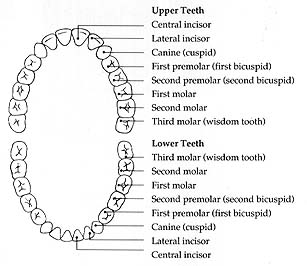
|
Tooth Name |
Number |
|
Central Incisors |
Four (4) |
|
Lateral Incisors |
Four (4) |
|
Cuspids (canine or eye teeth) |
Four (4) |
|
Second Bicuspids (2nd Premolars) |
Four (4) |
|
First Molars (6-year Molars) |
Four (4) |
|
Second Molars (12-year molars) |
Four (4) |
|
Third Molars – (Wisdom Teeth) |
Four (4) |
According to Chazal, our Sages, the number four signifies completion or fullness.
The letter shin has five definitions.[42] The first is shein, which means “tooth,” or “teeth.” The second is lo shanisi, meaning “steadfastness in one’s faith.” The third is shinoy, which is “to change for the good.” The fourth is shuvah, which means “to return.” The fifth is shanah, or “year.”
The general use of one’s teeth (shein) is to chew food. The teeth break up and grind food. This action represents an individual who carefully “chews over,” or is careful with his actions. Additionally, the teeth represent strength. Many times, if we don’t have the strength to break something with our hands, we use our teeth.
According to mystical sources there are 32 paths of wisdom. So too there are 32 sources of wisdom within a person (found in the head) which are channeled to each one of the entire set of 32 adult teeth. The number 32 has the numerical value, gematria, of the Hebrew word lev, which means heart. This means that our 32 teeth represent what is in our heart.
Teeth are linked to the heart and to wisdom. What does this all mean?
The wisdom of a human being begins with thoughts in the heart, but if it remains there the wisdom is self-serving. In order for that wisdom to make the world a better place it needs to be expressed through the mouth. When we open our mouths and speak we share ourselves with the world. Smiling is a symbol of our willingness to open ourselves up to others.
Our many teeth represent the many thoughts that run through our heads; thoughts which have the potential to help others, to make a positive impact upon those around us and indeed the entire world.
When we open our mouths and smile at someone we are communicating the following message: “I want to show you what is inside of me.” When we smile and display our teeth, we are showing others that there's a lot inside that we want to share.
Whether we realize it or not, when we smile, we are showing a glimpse of our wisdom. God created us so that when we are happy we smile, we laugh, we show our teeth. This is as if to say, “I am in a wonderful mood. I feel the grandeur of life. I am happy to be alive in this world. Thus, I am showing my teeth to the world -- and through my teeth, I am displaying my wisdom. I have a precious role to play in this world by tapping into and utilizing my wisdom and sharing it with others. This is why I'm smiling; this is the reason I am showing you my teeth.”
When we greet someone, we are supposed to smile at them. Smiling exhibits our kindness and openness to relate to another person. When I frown I close my mouth tightly; I hide my teeth. I am saying that I do not wish to open myself or my wisdom up to anyone. But when I smile, I say to my fellow man, “Yes, I want to get to know you. I want to share my wisdom, my insights, my personal contributions to this world with you. I am showing you my teeth, the window to my world and my wisdom, and I want you to partake in what I have to offer.”[43]
HaShem is referred to exclusively by the name Elohim in the account of creation, and this name is mentioned exactly 32 times in the course of this section of the Torah. As we said above, the 32 teeth correspond to the 32 paths of wisdom.
RASHI’S COMMENTARY ON PSALM THREE verse eight: YOU BREAK THE TEETH OF THE WICKED. [‘THE TEETH’ is a metaphor for] their might.
One who suffers from a toothache and other oral woes might find their remedy in the recitation of Kiddush Levana. The increasingly mystical Rabbi Chaim Kanievsky teaches[44] that for a toothache, it is a segula from early generations, to add several words to the Kiddush Levana at a specific point in the prayer for relief from toothaches. After one has recited the passage of “so too, may my enemies not be able to harm me”, one should immediately add “and I should no longer have a toothache”.
It seems that the Lubavitcher Rebbe concurred with the efficacy of this segula, as well.[45] This segula is also cited in the siddur “Beit Yaakov“ of Rabbi Yaakov Emden. Rabbi Kanievsky adds that his father would recite these additional words not only for himself when needed, but also on behalf of others who were suffering from toothaches. The reason why teeth are associated with the moon and Kiddush Levana is because these words are all closely related to the word, lavan.[46]
The upper and lower jaws with their two rows of teeth correspond to the two sefirot of chesed and Gevurah within the mouth. Chewing food is like processing an idea to make it digestible. This process depends upon the two primary emotive powers of the soul. Love, chesed, motivates the desire of the soul to “integrate” the sparks present in external reality. Might, Gevurah, performs the actual grinding of the teeth, breaking the food into digestible pieces, of which is said, “malchut [in our context, the mouth] is built [i.e., made able to perform its function to eat] out of the [states of] Gevurah.”
Similar to the upper and lower jaws and teeth, the upper and lower lips correspond to the two sefirot of Netzach and hod within the mouth. These “guard” the entrance to the mouth from the outside (in Kabbalah, Netzach and hod are described as “outside the body”). In addition, the lips serve to convey an expression of the soul deeper than words--the kiss. Here, they join together with the tip of the tongue, the union of the triplet Netzach-hod-yesod within the mouth. Just as “tongue“ means “language,” so does “lip” (safah) mean “language” in Hebrew. This alludes to the language of the kiss.
We have thus completed the analysis of the inter-inclusion of the ten sefirot within the mouth.[47]
The front of the neck is called “Moshe” because this is where speech originates in the physical world. (Speech actually originates in the lungs with the breath, but the breath has no sound and therefore remains in the spiritual world.)
The front of a structure, in the physical world, is always its side of elevation, of spirituality, of holiness. The back is always the side of contamination and lowliness.
The back of the neck is called, in Hebrew, HaOref. When this Hebrew word is read backwards it spells Paro (Pharaoh). So, Moshe brings the word of HaShem into the world, while Paro doesn’t know Him at all.
The first use of neck in the Torah is found in:
Bereshit (Genesis) 27:16 And she put the skins of the kids of the goats upon his hands, and upon the smooth of his neck:
The neck is used by the Torah to describe one who is stubborn. The neck is an allegory for stubborn, unyielding insolence.[48]
Debarim (Deuteronomy) 31: 27 For I know thy rebellion, and thy stiff neck: behold, while I am yet alive with you this day, ye have been rebellious against HaShem; and how much more after my death?
In the Oral Torah we also find various names for the Temple. In the Midrash Rabbah the Temple is called a “neck”:
Midrash Rabbah - Genesis XCIII:12 AND HE FELL UPON HIS BROTHER BENJAMIN‘S NECKS (XLV, 14). Did Benjamin then have two necks? In fact, said R. Eleazar, he foresaw through the Holy Spirit that two Temples would be built in Benjamin‘s portion, and both would be destroyed. AND BENJAMIN WEPT UPON HIS NECK: he saw that the Tabernacle of Shiloh would be built in Joseph‘s portion and would be destroyed.
Bereshit (Genesis) 45:14 And he fell upon his brother Benjamin‘s necks, and wept; and Benjamin wept upon his neck.
(As a side note, Rambam suggests that the three phrases in Bereshit 33:12 refer to HaShem‘s relationship to the three Temples.)
The Midrash also explains the Torah when it tells us that the Temple is equated to the neck:
Midrash Rabbah - Genesis XCIII:6 Here that it is on account of a man, the beloved of the eyes, the one who gives hospitality to the Holy One, blessed be He-as it says, Of Benjamin he said: The beloved of the Lord shall dwell in safety by Him; He covereth him all the day, and He dwelleth between his shoulders (Deut. XXXIII, 12) --how much the more so!’
Debarim (Deuteronomy) 33:12 Of Benjamin he said, The beloved of HaShem shall dwell in safety by him; shall cover him all the day long, and he shall dwell between his shoulders.
The Temple was built within the portion of land allocated to Benjamin. The neck which is between the shoulders alludes therefore to the Temple.
Rashi explains: Necks means the two Temples (all towers resemble neck like structures) in Jerusalem (which was in Binyamin’s territory). Joseph was actually weeping over the future destruction of these two Temples. Similarly, Binyamin was weeping over the neck of Joseph, this being the tabernacle of Shiloh (in Joseph’s territory).
This explanation is amplified by the Maharal, who explains how a person’s neck connects his head, the seat not only of the intellect but also of spirituality, to his body, which carries out the wishes of the head. The Maharal quotes passages to show that the Temple was referred to as the “neck” of the Jewish people, since it forms a connection between HaShem (the “head”) and His people (the “body”).
So the Temple is called the “neck” and it connects the lower and higher worlds. The neck’s seven vertebrae may thus correspond to Shabbat; this approach interfaces with the concept that Man, who is made in the image of the Creator, is a microcosm of the entire universal structure.
The Midrash explains this connection between the neck and the Temple:
Midrash Rabbah - The Song of Songs IV:12 THY NECK IS LIKE THE TOWER OF DAVID: this refers to the Temple. Why is it compared to a neck? Because so long as the Temple was standing, Israel’s neck was stretched out among the nations of the world, but when the Temple was destroyed, then, if one may say so, Israel’s neck was bowed; and so it is written, And I will break the pride of your power (Lev. XXII, 19), namely, the Temple. Another explanation: Just as a man’s neck is in the highest part of him, so the Temple was in the highest part of the world. And just as most ornaments are hung round the neck, so the priests were attached to the Temple, the Levites were attached to the Temple. And just as, if the neck is removed, a man cannot live, so since the Temple was destroyed there has been no life for the enemies of Israel.
Let’s list the things that we know about the neck:
Mashiach is called “The Word” which originates in the neck:
Yochanan (John) (John) 1:1-5 In the beginning was the Word, and the Word was with HaShem, and the Word was HaShem. The same was in the beginning with HaShem. All things were made by him; and without him was not any thing made that was made. In him was life; and the life was the light of men. And the light shineth in darkness; and the darkness comprehended it not.
Mashiach is also a Kohen Gadol. The Kohen Gadol serves to connect the higher and the lower worlds:
Hebrews 3:1-2 Wherefore, holy brethren, partakers of the heavenly calling, consider the Apostle and High Priest of our profession, Mashiach Yeshua; Who was faithful to him that appointed him, as also Moshe [was faithful] in all his house.
In the midrash of Matityahu we find a yoke which is attached to the neck:
Matityahu (Matthew) 11:29 Take my yoke upon you, and learn of me; for I am meek and lowly in heart: and ye shall find rest unto your souls.
Mashiach says that we should take His yoke upon us. This infers that Mashiach is the neck because this is the organ which bears the yoke.
Gan Eden with HaShem, Adam, and Chava was the ideal. When we failed we were given a substitute: the Mishkan. The Mishkan was eventually replaced with the Temple.
The manifest presence of HaShem in the Temple was therefore like Gan Eden. The Pillar of cloud on the altar, the constant miracles all made HaShem‘s presence impossible to ignore.
PHYSICAL BODY |
TEMPLE TYPE |
GAN EDEN |
|
Top of the Head |
Holy of Holies |
Gan Eden |
|
Heart / Brain |
Aron (Ark) containing the Luchot (tablets) – This is the Crown of Torah study. |
Adam – Talmid Hakham and The Tree of Life |
|
Lungs over the heart |
Kervim (Cherubim) with their wings over the Aron |
|
|
Mouth |
Shulchan (table of shewbread) – This is the Crown of Malchut (Monarchy) |
The Tree of the Knowledge of Good and Evil |
|
Eyes / Mind |
Menorah |
Fruit |
|
Nose and sense of smell. |
Altar of incense and the Ketoret (Incense) – This is the Crown of Kehuna (Priesthood) |
|
|
The Stomach |
The brazen altar |
Trees |
|
The “food“ the stomach. |
The Korbanot - sacrifices |
Fruit |
|
Throat – the origin of speech |
chatzer – the place of the Maggid |
|
|
Chest – the origin of song |
fifteen steps with Levitical choir |
|
|
Liquid in the body |
Kiyor (Laver) |
The river |
|
Ribs |
Beams |
|
|
Mashiach |
Crossbeam |
|
|
Hands |
The courtyard of the Jews |
Working the garden |
|
Yesod - “The foundation” |
The courtyard of the women. |
Trees on both sides of the river. |
|
Legs |
The courtyard of the Gentiles |
|
|
Skin |
Curtain and Walls around the Temple |
Walls around the garden. |
In one discussion, Sha’ar HaGilgulim, in Chapter Thirty-One, discusses the division of Adam‘s soul, and teaches how Cain and Abel were from the “Shoulders” of Adam HaRishon, the Left and Right Shoulder respectively. Now, again, we must not think in physical terms, even though that is exactly what we are using to discuss the spiritual world, for, all these physical terms are also just conventions to describe different spiritual levels in the Sefirot as well, of which the physical world is only a “projection.”
It is said that, one of the unique aspects of the “Shoulders” in the spiritual realm is that the light that travels from the “Brains” of the Sefirot to the lower parts of the Sefirot, must do so via the “Shoulders.” Thus, the light splits into two paths, moving downward to the lower levels through the Right and Left Shoulders simultaneously, only to unify once again on the level of Sefirot called “Yesod” (Foundation).
Here is the actual quote: When the “drop” (of light) goes from the Shoulders until the Yesod, the Yesod is then called “Kapat (chof-peh-tav) Tamarim,” which has the letters of “shoulder” (chof-tav-peh). And, once the two Shoulders unify in the Yesod, since a drop from both of them descends to the Yesod, then the following applies, “It shall have two shoulder straps attached to its two ends, and it shall be attached”[49], for, the two have become joined through the Yesod.[50]
However, on one level, it is not unlike the physical body itself, which has a system for sending signals and blood to different parts of the body, often a function of electrical impulses that originate in the brain and move down the spinal cord to more remote sections the body. The light in the Sefirot works very much in the same way, no wonder.
Bamidbar 7:9 The Aron must only be carried on the shoulders of the family of Kehat.
The purpose of carrying the Ark on the shoulders was thus to connect the external aspect of man with the inwardness of the Torah.
What is meant by HaShem dwelling “between his shoulders”. One possibility is that this phrase is referring to the breastplate worn by the High Priest. This is the place where the Divine Presence communicated through the priest (cf. Keli Yakar). Alternatively, “the shoulders” refers to the place where the Temple stood, i.e. between the shoulders of the land of Benjamin and Judah (Rashi, Ibn Ezra).
We see from the Gemara that Esav‘s and Amalek‘s origin was evil, the power of desire, that came into being by the sin of the Eitz HaDaat, as mentioned above. This is explicitly written by the Vilna Gaon[51]: “The heart has a continuous war with Amalek, who is [represented in man by] the liver. The liver always fatigues [the heart] with desire for food, as the Midrash HaNe’elam writes on the pasuk, `And Esav said to Yaakov, hal’iteini no, I pray you, some of this red, red pottage, for I am faint’ (Bereshit 25:30). Hal’iteini no is the gematria of HaShem Amalek.”
Israel sinned because “they enjoyed the feast of that rosho” (Achashverosh). Their sin was their deriving pleasure from the feast. Heaven‘s grievance was not because they ate since they were forced to eat, but because they enjoyed doing it. By doing so they increased Amalek‘s power in that generation.[52]
It was impossible for the power of Amalek to increase during the month of Shevat. The essence of the Rosh Hashanah for Trees is that it is a tikkun for the sin of the Eitz HaDaat. Since the entire power of Amalek becomes intensified only through the damage done by this sin, therefore the Targum Sheini wrote, “The lot would not fall on Shevat since the Rosh Hashanah for Trees” occurs during it.
Finally, it is worth noting that shoulders are the place of transition from the front to the back of the body. They are the transition between positivity (the front) and negativity (the back). The front of the body is where all positive actions take place. We will see, in the next section, what the back contains.
The back is the place of negativity. It is the place where excretion take place. It is the side of darkness. Other than the sense of touch the back contains no other sensory ability.
Arms, Kabbalistically, are outside the body. They enable a person to “do” things in this world, but, they are not, strictly speaking, a part of the body.
The hands are different from all the other limbs. All the other limbs of the body are fixed and static, whereas the hands may be lowered below the feet or raised higher than the head.
The same is true on an allegorical level. Man can “lower” his hands, he can perform all the greatest sins possible. He can murder, steal. Everything can be done with the hands. We talk of having blood on our hands and dirty hands. On the other hand, the hands, when raised up, can perform the holiest acts. When the kohen blesses the people he raises his hands. The hand gives tzedaka (charity). The hand puts on tefillin. We extend the hand of friendship and assistance.
* * *
The thumb is the chief and best finger.
* * *
This next section is an excerpt from Rabbi Yitzchak Ginsburgh.
There are three segments in each of our two arms and two legs, which equals twelve, relating to the twelve tribes.
With regard to the three emotive attributes of the heart, we find that the right arm embodies chesed and the left arm Gevurah. This is alluded to in the verse, “His left arm is under my head, and his right arm embraces me[53]“ and in the saying of our sages, “let the left arm push away and the right arm draw near.”[54] To “push away” in this context means to disengage, granting the other party a sense of independence (before drawing him near). Similarly, the imagery of “his left arm is under my head” means that he nurtures my consciousness of self-independence (before embracing me with his right arm). The balancing position of beauty, that which ties in all the parts of the body in general and is centered between the arms in particular, is the torso.
Of the behavioral properties of the soul, those of Netzach and hod correspond to the legs of the body. Legs represent the first and most continual contact with outer reality. Moreover, the legs facilitate the movement of the body as a whole, bringing a person where he wants to go. Netzach is the quality of putting “one‘s best foot forward” in an assertive posture. Hod is the left leg, which keeps a person’s movement on course by monitoring and validating his assertive thrust. Finally, the property of yesod is referred to as the “sign of the Holy Covenant,” which corresponds to the male and female reproductive organs. Referred to as the “conclusion of the body,” yesod is the body’s physical manifestation of its own ability to actualize and fulfill itself, as well as to connect and communicate with others.
there are 248 limbs which correspond to the 248 positive commandments in the Torah and 365 primary veins which correspond to the 365 negative commandments.
The hands are the organs of asiah,[55] of doing.[56]
When Amalek attacked in the desert, Yehoshua led the battle against them while Moshe positioned himself above the battlefield. Moshe held his hands up, and the battle went in favor of the Jewish people. But when Moshe’s hands grew heavy and sank, the tide of battle turned; Amalek began to prevail. What is the meaning of this?
While Moshe’s hands were held above his head, we were able to defeat Amalek. We are the nation of “Na’aseh v’nishma – We shall do and (then) we shall hear (understand).” We commit ourselves to Hashem before we understand or even attempt to assess the meaning of His Torah and where that commitment will take us. We commit ourselves because He is the Creator and He is truth; what other option could possibly be intellectually honest?
Moshe Rabbenu, that human being who contains within himself all of the Jewish people, holds his hands above his head. The hands are the organs of asiah, of doing, the head is the organ of understanding. When the hands are held higher than the head, the meaning is that practice comes before judgement, before understanding. The na’aseh dimension is held above the nishma dimension. “We shall do, and then we shall understand.” Our actions, our real and practical commitment to You are not limited by our intellect or our ego; we shall do what is true and right regardless of our personal and vested interests. But Amalek is all ego, all vested interest. I am important, I am everything. First I judge, first I must understand; perhaps later I shall decide to act; but then again, perhaps not. It all depends on what is in it for me. First, my understanding, my head. Then, perhaps, my practical commitment, my hands.
And so Moshe holds his hands up. When the hands are above the head, we prevail. When the head is higher than the hands, Amalek prevails.
The “Divine” model of 10 = 2 X 5 (the two prime factors of 10) = (1 squared plus 2 squared) plus (1 squared plus 2 squared). Thus we have two hands with four fingers on each hand folding in a single direction and one finger folding into an opposing direction, the thumb. This gives us two sets of five fingers broken into two sets of four + 1.
This is the model of the Ten Commandments--five on each of the two tablets of the covenant.
* * *
The Maharal of Prague says that there is deep symbolism involved when one washes his hands for the purpose of a mitzva. Hands represent the beginning of the human body, for when one stretches out his hands to reach forward or above, it is the hands that are at the front or at the top of the body. The Maharal explains that that the way one begins an action greatly influences the direction and tone of all that follows from that point, and therefore, even a seemingly insignificant sin, but one involving the “bodily leader,” is particularly wrong, for a misguided beginning will lead to an incomplete and incorrect conclusion. On Pesach, the Maharal continues, we should be extremely careful in our observance of this idea, for Pesach is the annual point of beginning for everything that exists, in all times.
* * *
Bamidbar (Numbers) 6:27 They will put My Name upon the Children of Israel, and I will bless them.
However, unlike the body, light can exit the system in ways that blood cannot leave the body without doing real harm. For example, if blood were to break forth from the ends of the ten fingers of a person he could bleed to death if the deluge is not halted quickly.
This is not the case when it comes to the light leaving the ‘fingertips’ of the spiritual system and our bodies. For the blood of the hands to reach the legs, it must do so internally. However, when it comes to the spiritual light that flows through us - and it really does, it can ‘leap’ from one part of the body to another part of the body without using the internal system of transfer and delivery.
For example, though the spiritual light usually travels from an upper section of our bodies to a lower section of our bodies, the light also has the capacity to move from the hands to the legs via the fingertips. This means without going through the body proper, as is usually the case.
There is a Kabbalistic reason for this, which has to do with maintaining the forces of evil so long as free-will remains necessary in creation. Since evil and impurity have no intrinsic life source of their own, they live off of the holiness that they can latch onto within creation. This is another way of saying that, even though evil seems to work against HaShem, in the end it is HaShem Himself who maintains them as part of the ultimate plan for mankind.
Thus, one such place in the body where the light is said to ‘break forth’ and therefore act as a conduit for the ‘Kachot Hatuma’ (Impure Forces), is the fingertips. Therefore, the finger tips are a place around which the impure forces ‘circle,’ waiting for their due like hungry dogs, so-to-speak, which is why we are so strict about washing ‘Negel Vasser’ (literally, ‘Night Waters’) upon waking, and other types of washing when emerging from a spiritual impure place (such as a bathroom) or before eating bread.
This is also the reason why we are strict about not growing fingernails past the flesh, at least those who are aware of such a tradition. Keeping the fingernails short has the same effect as washing the hands, that being to limit the amount of light that the impure forces are allowed to derive from us. For, when the fingernails extend past the flesh, the Arizal teaches, this increases the flow of holy light to the impure forces, strengthening them against us, and the world in general. This is also one of the reasons why we look at our fingernails during Havdalah on Motzei Shabbat.
Now you can appreciate why, when washing the hands before eating bread, upon saying HaShem‘s Name in the blessing over the washing (‘al netilas yadayim’), we raise our hands upwards to the level of the shoulders. In fact, this is one of the unique properties of the hands more than any other limb of the body: they can ascend and descend.
When we recite blessings, and particularly upon mentioning HaShem‘s Name, we become conduits for His light to enter the world. We draw holy light down from the holy Upper World into the unholy Lower World in which we live. The positive aspect is that the light brings rectification to the world. The negative part is that, if we’re not careful, that same light can end up falling into the hands of the ‘enemy’ and strengthen him against us.
Without going into detail here, this is the inherent problem with people learning Kabbalah before they are holding on the appropriate level of spiritual purity, which can only be achieved through the proper Torah channels and after much time and effort. Many may find it enjoyable unaware of the fact that, since they are very much a part of the world of impurity, they are simply sharing the light they are drawing down with the forces of impurity, contributing to the overall chaos of creation. It’s that serious.
However, just as the Impure Forces are limited as to how far they can ascend in the spiritual world and ‘suckle’ light within the overall system of light and filters (called, in more Kabbalistic terms, ‘Sefirot’), so too are they limited with respect to a human being regarding how high they can ascend to draw light. By shoulder height the ‘K’lipot,’ as they are also called, are left far behind and behind the spiritual boundaries that HaShem has established for them, to make sure they can never come too close to the side of holiness.
Thus, we can now appreciate the need for the kohanim to keep their arms and hands at shoulder height while blessing the Jewish people. Birchat Kohanim (the priestly blessing) has a special ability to draw down tremendous light into the world and to direct it towards those who are intending to be blessed. That is why one is supposed to stand free of any obstacles between them and the kohanim during the blessing, and to have intention to be blessed while focusing on the words of the kohanim.
To protect this light from the would-be impure ‘sucklers,’ the light is kept beyond their borders and thus remains in the realm of holiness.
* * *
The five fingers parallel the five senses: taste, smell, touch, sight and hearing. Each has a finger which serves it. The thumb cleans out the mouth so that one can taste. The second finger is used to clean the nose, so that one can smell. With the third, which is the longest of all, one can touch the entire body. The fourth finger is used to clean the eye, so one can see. The little finger is used to clean the ear. One can see that each finger was created for a special purpose. One unconsciously uses the little finger to clean the ear, and the second finger to clean the nose, without ever changing them.
The fingers are pointed so that if a person hears forbidden speech or vain oaths, he can place his fingers in his ears and not hear them For the same reason, although most of the ear is hard and cartilaginous, the earlobe is soft. It can be used to close the ear, so that it will not hear idle chatter and malicious gossip. The ears need special protection, since they are the first parts of the body to be burned by the fires of purgatory.
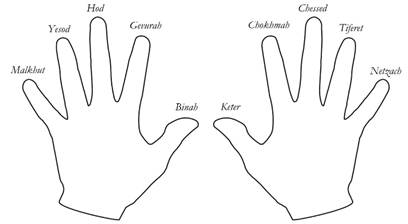
* * *
“Yad” means the right hand and “zeroa” the left hand when both terms occur in the same sentence in the Tanakh (Naz. 3b, and see Rashi ad loc.).[57]
Bereshit (Genesis) 3:22 lest he extends his hand and also takes of the Tree of Life, and eat and live forever.
The phrase “lest he extends his hand” appears to be redundant. Let us first review what was written in the book “וילקט יוסף” which was quoting from the book “תפארת הגרשוני” (Ed: by Rabbi Gershon ben Yitzhak Ashkenazi zt”l published in Frankfurt 1699), who in turn was quoting from the book “עשרה מאמרות” that, when Adam ate from the Tree of Knowledge, he did not use his hands since the passuk did not state “he took”. The passuk only mentioned that he ate because his arms did not want to extend and his hands did not want to open and his fingers did not want to hold the fruit. We were told in Masekhet Hullin 5B that “HaShem does not cause a fault to happen through the hands of tzadikim”; and here, we note the Gemarah specifically said ידי (hands). In addition, they also said this is the reason the Kohanim raise their hands when they bless the people because they are capable of blessing, since the hands of Adam HaRishon did not sin.
Thus, we can understand that, in the sin of the Tree of Knowledge, the hands did not take part because, as we saw in the above Gemarah, HaShem does not cause a fault to happen through the hands of tzadikim (Ed: Such as Adam). But after he sinned, Adam was no longer a tzadik and thus, there was concern that, if he was to sin again, he would then use his hands.
Adam had already sinned, there is concern that “he will extend his hand” since he was no longer a tzadik.
Now, we can also understand:
Tehilim (Psalms) 90:17 may the graciousness of HaShem, our G-d, be upon us and establish the work of our hands upon us.
And here, the passuk specifically referred to “his hands” which did not sin, and hence, “established upon us”. In addition, we can also understand Shmuel 19:9 “and David was playing [the harp] with his hand” since King David was a gilgul of Adam HaRishon and was making a tikun for his blemish, the passuk stated that he used his hand since it did not sin. We can also understand Tehilim 18:21 “HaShem rewards me according to my righteousness, and compensates me according to the purity of my hands” since the hands did not sin.
The number five represents the perfection of the natural order (the number four), with the addition of one: HaShem Himself.
Whenever a four-level system is used to contemplate “existence,” there is always a fifth, higher and all-inclusive level that enlivens the other four.
Each hand has five fingers. Four are similar in motion with a fifth that is contrary in it’s motion. The thumb is the chief and best finger.
Hands are specially constructed for taking hold of objects.
HaShem equipped our hands with opposable thumbs, or thumbs that can be moved against the fingers. This action makes it possible to grasp things in the hand and make delicate motions. To help to understand the work thumbs do, try to pick up a pen with your thumb motionless alongside your hand. If you accomplish that, then try to pick up a dime in the same way.
Hands are also used to feel things. The human hand contains at least four types of nerve endings that make the fingers and the thumbs highly sensitive. Blind people rely entirely on their sense of touch when reading Braille books. Surprisingly, there are 27 bones that make up the hand: eight in the wrist, five in the palm, and fourteen make up the fingers and thumb. Thirty-five powerful muscles move the hand, with fifteen of them in the forearm, rather than in the hand. This allows the hand to have great strength, without making the fingers thick with muscles that would make them difficult to move. Twenty muscles within the hand itself are arranged so that the hand and fingers can make a variety of precise movements
Each of the four fingers has three joints and the thumb has two: (4 x 3) + 2 = 14.
According to the prayerbook with the commentary of Rabbi Shabsi of Rashkov:
|
|
right hand |
left hand |
|
thumb |
alef-hei-yud-hei |
alef-hei-yud-hei |
|
first finger |
alef-lamed-pei and the second iteration of each letter |
alef-lamed-pei and the second iteration of each letter |
|
second finger |
hei-yud and the second iteration of each letter |
hei-alef and the second iteration of each letter |
|
third finger |
yud-vav-dalet and the second iteration of each letter |
yud-vav-dalet and the second iteration of each letter |
|
fourth finger |
hei-yud and the second iteration of each letter |
hei-alef and the second iteration of each letter |
* * *
We have ten fingers, corresponding to the ten (elementary) commandments, ten pulses, relating to the ten sefirot (spiritual energy centers which reflect different aspects of HaShem‘s emanations in the physical world) and ten types of song which comprise the book of Psalms.
These are just a few examples of how HaShem fashioned the human body reflecting deep, spiritual concepts. Every part of the human body is, in some way, related to the commandments of the Torah and every event recorded in the Torah applies, in some way, to our daily lives. In it’s basic, straightforward interpretation, our parsha discusses the Jews‘ redemption from the crushing slavery of Egypt. On the deeper, allegorical level, the Exodus relates to our daily lives, especially to our very limbs, sinews and organs.
The Gemara says that the earth was created with the five fingers of HaShem.
* * *
Design of Fingers to fit inside Ears: Ketuvot 5a-b
Kethuboth 5b Bar-Kappara [also] expounded: What [is the meaning of what] is written. And thou shalt have a peg among thy implements? Do not read, thy implements, but ‘upon thy ear’; [this means to say] that if a man hears an unworthy thing he shall plug his finger[58] into his ears. And this is the same that R. Eleazar said: Why do the fingers of man resemble pegs? Why?[59] Shall I say because they are divided?[60] [Surely] each one has been made for its own purpose![61] For a Master said: This one[62] [Is used for measuring] the span;[63] this one[64] [is used for] taking a fistful of the meal-offering,[65] this one[66] [is used for defining] the cubit measure,[67] this one[68] [is used for taking the measure of] ‘a finger’,[69] [and] this one[70] [is used for service with] the thumb![71] — But [the question is] why[72] [are the fingers] pointed like pegs? [The reason is] that if a man hears an unworthy thing he shall plug his fingers into his ears. [A member] of the school of R. Ishmael taught: Why is the whole ear hard and the ear-lap soft? [So] that if a man hears an unworthy thing he shall bend the ear-lap into it.[73]
Individual Purpose of each Finger: Ketuvot 5b
Involvement of Clean Hands in protecting the eyes: Shabbat 108b
* * *
The Me’am Lo’ez is the only source that mentions the custom of pointing the pinkie finger towards the text, adding that it is customary to kiss the pinkie after pointing. However, this is not a universal custom, and is not mentioned in other halachic sources.
In reply to our inquiry as to the source of this custom, Rabbi Chaim Pinchas Scheinberg, shlita, gave the following explanation: The Torah lists the ten generations from Noah until Abraham, including Yoktan, who established the largest number of families. Rashi notes that Yoktan merited establishing so many families due to his great humility as his name indicates (from the root katan-little). Rabbi Scheinberg went on to explain that when pointing at the Torah we take this lesson to heart and we point with our smallest finger - the pinkie - to indicate that we should reach out to try to gain understanding of the Torah with the utmost humility and thus merit to succeed in this aspiration.
Rabbi Chaim Falagie expounds on a second variation of the custom in which the index finger is used for pointing towards the Torah rather than the pinkie. He bases this custom on six consecutive statements in Tehilim the first of which is, “The Torah of HaShem is perfect reviving the soul...”. Each one of these statements is composed of five words corresponding to the number of fingers of one hand. The second word of each statement is HaShem corresponding to the second, namely the index finger. In pointing towards the Torah with the index finger we are indicating that every word of the Torah is a Name of HaShem. For that same reason, Rabbi Falagie points out, during the wedding ceremony the ring is placed on the index finger to signify that HaShem is the unifying force binding husband and wife.
The significance and the symbolism that our Sages attach to every finger and to each part of our body is most instructive. Rabbeinu Bechaye discusses the utility of each organ and in particular the fingers, each of which serves to facilitate one of the five senses. The pinkie finger is associated with the sense of hearing and we may conjecture that this is related to the custom of pointing towards the Torah with the pinkie.
Sources:
Nachmanides--Ramban on the Torah -- Devarim (27:26).
Tractate Sofrim (14:14).
Shulchan Aruch -- Orach Chaim (134:2); and Ba’er He’tev(6).
Devarim (4:44).
Sha’ar Hakavanos (Sefer Torah -- Drush 1)
Bamidbar (9:23).
Me’am Lo’ez -- Devarim (27:26).
Bereishis (10:26-29).
Lev Chaim (Responsa) -- Orach Chaim (167:6).
Tehilim (19:8-10).
Rabbeinu Bechaye -- Vayikra (8:23).
* * *
Zohar Parshat Terumah 154B the Zohar is finding a connection between the word Chovah used to express the obligation to give the waters to the Other Side and the same word Chovah as it is used to describe guilty or in this case negative energies, things and spaces i.e. water, nails on fingers and the Tumah (spiritual impurity) they have and the dark forces they attract and nourish. The Zohar further finds it of note that we do bless when we wash our hands before the meal while we do not when we wash our hands after the meal. This is not in the Zohar‘s view due primarily to the fact that little water is used but rather because as it states blessing does not rest on that side. We wash our hands in the morning or before a meal to remove spiritual impurity thus we make a blessing. Here with the After Waters we are nourishing spiritual impurity thus we do not bless for we do not wish to “increase” spiritual impurity via the blessing. To increase is a blessings function see Nefesh Hachaim 2:2 This reason of the Zohar behind washing the hands after a meal is not seemingly shared by a notable Halachic authority with resulting changes in the quantity of water used see Shulchan Aruch Aroch Chaim 181:1 and Mishna Berurah ad loc.
* * *
Heh has a numerical value of five, alluding to the five fingers of the hand. As such it represents Understanding, the hand that hold Wisdom, distributing it and channeling it. Heh is one of the two letters in the Hebrew alphabet that is written as two disjunct parts. This alludes to the fact that Understanding represents the beginning of separation.”[74]
* * *
The Kiddush cup symbolizes the vessel through which, and into which, the blessing comes. The numerical value of the Hebrew word for drinking cup kos is the same as that of the name of god Elokim which expresses the divine revelation in the world, in nature, in law. And into the cup is poured the bounty, the wine, whose numerical value is seventy, the number of the Shabbat Eve. After the filling of the cup, which is now the vessel of consecration containing the divine plenty, it is placed on the palm of the right hand in such a way that the cup, supported by the upturned fingers, resembles or recalls a rose of five petals. For one of the symbols of Malkhut is the rose. And the cup of wine, thus expressing also the Shekhinah, stands in the center of the palm and is held by the petal fingers of the rose.
* * *
The priests should lift their hands shoulder high, extend them, and spread out their fingers to allow five open spaces between them. On each hand, there should be an open space between the two pairs of fingers and the second pair of fingers and thumb, thus creating four open spaces, two on each hand. They should hold their hands in such a manner that a fifth open space is created between the two thumbs. This proceedure, “Peeking through the window.” means that the Divine Presence peeks through the windows between the priests fingers. The five spaces are an allusion to the verse in Shir HaShirim (Song of Songs) 2:8 which states that HaShem “peeks through the cracks in the wall.” In other words, HaShem protects and watches the Jewish people even when He is hidden.
The priests should be very careful that the tips of their thumbs do not touch, lest they spoil the “window.” The right hand should be raised slightly higher than the left hand, and the right thumb should be above the left thumb. They should spread their hands so that their palms face the earth and the back of their hands face the sky.
* * *
One of the most popular Jewish pendants, along with the Star of David, the mezuzah, and the chai, is the hand-shaped symbol known as the chamsa. The word chamsa is from the Arabic root meaning “five,” similar to the Hebrew chamesh, obviously derived from the fact that we have five digits on our hand. Normally the chamsa is displayed hanging downward, with the fingers symmetrical so that you can’t differentiate between the thumb and pinkie finger. Alternatively, the hand faces upward, with the fingers sometimes slightly spread and the thumb’s tip accentuated outward, resembling a bird. These attempts to purposefully misrepresent the hand may be concessions to the second commandment‘s prohibition against making a sculpted image of anything on the earth. The Talmud, in fact, explicitly forbids making a physical representation of the hand. Sometimes a chamsa even has a sixth finger to clearly differentiate it from the normal human hand.
“R. Yehuda said in the name of R. Akiva; ‘Why did the Torah say to bring the Omer on Pesach? Because Pesach is the time of produce. The Holy One Blessed be He said, ‘Bring before Me the Omer on Pesach so that your produce in the fields may be blessed…”
Rashi notes that the kohen first “waved” the Omer offering towards the north, then to the south, then east and finally west. After Tenufa, the Kohen proceeded to the southwest corner of the Mizbeach where he paused. He then touched the lower portion of the southwest corner of the Mizbei’ach with the Kli Shareit containing the Omer offering. This act is called Hagasha. Then he held his right hand open and vertical, placed it in the Kli Shareit in the midst of the Omer offering, folded his four fingers (excluding the thumb) against his palm, turned his palm upward and lifted his hand up. This act is called Kemitza. The Omer flour trapped in his four fingers and his palm is the Kometz (“handful”). It is this Kometz which would be burnt on the Mizbeach. (Note the Rambam, Ma’asei Korbanot 13:12,13 and the glosses of the Kesef Mishna and the Lechem Mishna.). The Kometz was then placed in a second Kli Shareit. This act of “re-sanctification” is called Kiddush Hakometz. The Levona, the frankincense, was also transferred from the first Kli Shareit to the second.
The kohen carrying the Kli Shareit containing the Kometz and the accompanying Levona ascended to the top of the Mizbeach, salted them (Melicha) and then consigned them to the ever-burning sacrificial fire. This act is called Haktara. Following the Haktara of the Omer, a lamb was sacrificed as an Olah - burnt offering. The Omer offering completed, the people in Jerusalem were now permitted to harvest and eat Chadash, the newly ripened grain of that year’s harvest. Elsewhere in Eretz Israel, the people waited until noon.
For example, though the spiritual light usually travels from an upper section of our bodies to a lower section of our bodies, the light also has the capacity to move from the hands to the legs via the fingertips. This means without going through the body proper, as is usually the case.
There is a Kabbalistic reason for this, which has to do with maintaining the forces of evil so long as free-will remains necessary in creation. Since evil and impurity have no intrinsic life source of their own, they live off of the holiness that they can latch onto within creation. This is another way of saying that, even though evil seems to work against HaShem, in the end it is HaShem Himself who maintains them as part of the ultimate plan for mankind.
Thus, one such place in the body where the light is said to ‘break forth’ and therefore act as a conduit for the ‘Kochos Hatuma’ (Impure Forces), is the fingertips. Therefore, the finger tips are a place around which the Impure Forces ‘circle,’ waiting for their due like hungry dogs, so-to-speak, which is why we are so strict about washing ‘Negel Vasser’ (literally, ‘Night Waters’) upon waking, and other types of washing when emerging from a spiritual impure place (such as a bathroom) or before eating bread.
* * *
One should trim his finger-nails every Friday, never on Thursday, otherwise the nails will commence growing on the following Sabbath. He should pare the nails of the left hand first, beginning at the fourth finger and ending with the thumb; and then he should pare the nails of the right hand, beginning with the thumb and ending with the fourth finger; he should not vary the following order: 4th, 2d, 5th, 3d, 1st of the left hand; then the 1st, 3d, 5th, 2d, 4th of the right hand. Never pare two (contiguous) fingers one after the other, for it is dangerous, and it also impairs the memory. The reason and mystery about the order for paring the nails are well known to the expert.
The Guiding Hands of Torah
The Ten Commandments were engraved on the tablets in two groups of five each. Nachmanides comments:
Five of the Ten Commandments deal with the honor of the Almighty, the Creator, whereas the other five address the well-being of man. The commandment to honor one‘s father and mother is a part of the commandments honoring HaShem Himself, since by honoring one‘s father and mother a person honors HaShem; this is because HaShem is a partner in the formation of any human being.
The ten sefirot parallel the ten fingers.
We are therefore left with five commandments which address man’s needs and dignity. It appears that one set of five commandments was engraved on one of the two tablets, and the second on the other. We are to regard both groups of commandments as equally important. This corresponds to what is written in the Sefer Yetzira, that the ten sefirot parallel the ten fingers, five on each hand, with a covenant forming the link between them in the center.
This explains the need for two tablets. Up to and including the commandment of honoring father and mother, the commandments allude to the Written Torah; the commandments found on the second tablet are an allusion to the Oral Torah.
Two tablets…represent the relationship between bride and groom.
Our sages may have had this in mind when they said that the reason that there were two tablets was that one symbolizes heaven whereas the other symbolizes Earth; they represent the relationship between bride and groom. They symbolize the two worlds, the here and now with the Hereafter. All of this is reflected in a single allusion. Intelligent students will understand this.
Thus far Nachmanides.
On the verse “Your two breasts [shnei shadecha] are like two fawns, twins of the gazelle” (Songs 4:5), Rashi comments that the expression shnei shadecha refers to the two stone tablets. They are described as “twins” because they were both of identical dimensions and contained five commandments each. The commandments parallel each other. The injunction not to murder corresponds to the commandment that “I am the Lord Your God,” for the murderer diminishes the stature of HaShem by destroying His handiwork. The commandment not to have other gods corresponds to the prohibition of adultery, because the adulteress practices deceit of her husband, whereas the idol-worshipper practices infidelity against his Maker.
* * *
Interestingly enough, the Talmud has recorded instances of rabbinic leaders producing living creatures-like the legendary golem,[75] an artificial anthropoid-from dust. In talmudic accounts a golem was formed from earth and was activated by putting the Name of HaShem either on the golem’s forehead, or on a manuscript inserted into his mouth. A golem was incapable of speech, and since speech was said to be associated with possession of a soul, it was concluded that a golem did not possess a soul. This would explain why renowned rabbinic leaders were reportedly able to destroy a golem without violating the prohibition of murder.
The Hebrew Letter Tav
Tav Is The Twenty-Second Letter Of the Aleph Bet {Hebrew Alphabet}
The Letter Tav represents Truth and Perfection
Gematria is a particular study of Jewish mysticism based on the numerical value of Hebrew letters in the Aleph Bais (Hebrew alphabet) as inscribed in the Torah. Jewish Gematria has many disciplines.
Gematria value = 400 Gematria value of the word Tav = 406
Meaning of Tav = sign, line, feature or note...
The Tav is a directional letter moving from the left to the right. The direction begins with man represented by the letter Vav and moves towards truth and perfection which represent HaShem {see Gematria discussion for the letter Vav}.
The Gematria construction of the Tav is a Vav = 6 plus a Vav = 6 plus a Vav = 6 for a total of 18, {see first blue box at top of page}. The Gematria of Chai, meaning “life / living” is 18, {see first yellow box at top of page}. Every life and the substance for every life is based upon HaShem‘s truth. All Creation is sustained and maintained by HaShem‘s truth. The first letter for the Hebrew word Torah begins with the letter Tav. The last letter for Emet, meaning truth, concludes with the letter Tav. The letter Tav is HaShem‘s seal. The Tav is HaShem‘s absolute guarantee that His agreement will be carried out to completion.
When Kayin murdered his brother Hevel, the Torah records that HaShem placed an Oht, meaning sign, on Kayin’s forehead. This Oht, according to Nachlas Benjamin, was the letter Tav. The letter Tav {from right to left} Vav - Yod - Tav comes from the root Hey - Vav - Tav, meaning to place a mark or sign. It is the Tav that represents HaShem‘s sign or mark!
The basis for this comes from the following: “The sign { Tav } as a Divine judicial pronouncement was used when HaShem decreed the destruction of Jerusalem and ordered the angel Gabriel - as seen in the vision by the Prophet Ezekiel (Ch. 9) - to put a { Tav } on the foreheads of the citizens of Jerusalem. {The Tav was used} to differentiate the righteous ones destined for life in the World to Come from the wicked who were doomed to perish in This World and in the next, ink and blood were used respectively. A { Tav } in ink was placed on the forehead of the righteous, denoting {the word [from right to left] Hey - Yod - Chess - Tav, ‘Teech Yeh’ meaning} you shall live; {see second blue box at top of page} and in blood {on the forehead} for the wicked, denoting {the word [from right to left] Tav - Vav - Mem - Tav, ‘Taw Moos’ meaning} you shall die” {see second yellow box at top of page}.[76]
HaShem‘s seal has been understood in Judaism for thousands of years and since Creation as the Hebrew letter Tav. In Judaism we regard the Tav which is the Gematria total of Vav {6} plus Vav {6} plus Vav {6} equaling 18 to mean “LIFE”. Christians / Messianics regard HaShem‘s seal with its Gematria construction of Vav {6} plus Vav {6} plus Vav {6} to be “666” which they claim to be “the mark of the Beast.”
Now, in fact, the letter Tav does NOT represent the mark of the beast. The Tav represents the seal of HaShem the Creator. HaShem‘s seal is placed upon the forehead of the righteous IN INK representing “life in the World to Come” and HaShem‘s seal is placed upon the forehead of the wicked IN BLOOD meaning “you shall die in this life and in the next world.” The righteous are sealed to life IN INK and the wicked are sealed to death IN BLOOD. The same seal is used.
* * *
HALACHAH: HOW MUCH OF THE FACE DETERMINES “BECHORAH”? Resh Lakish rules that even after the forehead of fully formed child has come out of the womb, the next born is a Bechor with regard to inheritance (because a forehead is not considered “Yakir.”) Rav Yochanan rules that a forehead entirely removes the status of Bechor of the next born, even as far as inheritance.
HALACHAH: The TUR (CM 277) rules that although only a Bechor who was born while his father was still alive has the status of Bechor for inheritance, if most of the forehead came out while his father was still alive it is sufficient. The BET YOSEF explains that this ruling is in accordance with Rav Yochanan.
The BACH recommends removing the word most, since the Gemara only mentions “forehead,” which implies that the entire forehead must be born and not only most of the forehead. Since the forehead is required in order that it should be possible to recognize (“Yakir”) the newborn, the rule of Rubo k’Kulo would obviously not apply. The SHEV SHMAITSA (7:15) and Acharonim agree with this emendation.
* * *
“You shall make its horns on the four corners (of the altar), to be of one piece with it, and overlay it with copper.” (Shemot 27:2)
Why were its horns to be of copper, “nechoshet”? In order to atone for insolence, as it says, “And your forehead is copper.”(Is. 48:4) (Midrash Tanchuma 11) The forehead is a metaphor for insolence, because such a person raises his forehead when it should be bowed in humility; copper also suggests inflexibility. (Rabbi David Kimchi, 12th-13th c.)
There are some qualities concerning which it is forbidden simply to maintain a middle path, but must be avoided to the extreme, and pride is one of them. The right way is not simply to be humble, but to be extremely humble-minded and very low in one‘s own estimation. Thus it was said of Moses that he was “VERY humble”, (Numb. 12:3) not merely “humble”. Hence our Sages directed us to “be exceedingly humble.” (Pirkei Avot 4:4) They also said that whoever is prideful, denies the essential principle of our faith, as it says: “And your heart will be proud, and you will forget the Lord your God.” (Deut. 8:14) (Maimonides, Laws of Ethical Qualities 2:3)
Tetzaveh
by Rabbi Yaakov Menken
“And you shall make a Tzitz of pure gold, and you shall engrave in it, like the engraving of a seal, ‘Sanctified to HaShem.’” [Shemot 28:36]
The Tzitz was a band which the Kohen Gadol, the High Priest, wore across his forehead. Engraved into this band, pressed in from the back so as to appear in relief, coming out from the band, were the words “Kadosh LaShem,” Sanctified to HaShem.
Our Sages explain in the Talmud that the Tzitz atoned for azus panim, literally “boldness of face” -- presumptuousness, brazenness, chutzpah. Think about a “bald-faced lie” -- sinning in an obvious, blunt, brazen way. The Zohar says that when the Kohen Gadol wore the Tzitz on his forehead, it subdued those who were brazen. Just imagining it can be frightening. The Kohen Gadol is wearing “Sanctified to HaShem“ on his forehead. What shows on my forehead? Brazen lies and other misdeeds?
In the Chapters of the Fathers, Chapter 5, there is a perplexing Mishna. “He [Yehudah ben Teima] used to say: ‘The brazen go to Gehennom [purgatory], but the shamefaced go to the Garden of Eden.’ May be Your will, HaShem our HaShem and the HaShem of our fathers, that the Holy Temple be rebuilt speedily in our days, and grant us our portion in your Torah.”
What is happening in this Mishna? The author is telling us what Yehudah ben Teima used to say, and then he suddenly starts davening (praying)! Looking forward to the rebuilding of the Temple, and praying for our share in Torah, is a recurring theme throughout the traditional Jewish prayer book -- but why is it relevant to a discussion of appropriate and inappropriate character traits?
I found the following answer (original source unknown): the author of the Mishna wrote the saying of Yehudah ben Teima, and immediately thought of the brazen people in his own generation, who undoubtedly caused grief for the community and especially for straight, upright individuals. Those people, he wrote, were going to face cleansing in Gehennom for their behavior. And he remembered that when the Temple existed, the Tzitz on the forehead of the Kohen Gadol atoned for their sins, and indeed subdued them and prevented them from being so brazen in the first place.
Life would be so much better for everyone, if only the Temple were rebuilt! And so this short prayer burst from his heart, asking for this to happen soon.
Our Sages also say in the Talmud (Beitzah 25): “Why was the Torah given to Israel? Because they are brazen.” And the commentator Rashi explains, “The Torah was given to them so that they should involve themselves in it, and it will take their strength and subdue their hearts.” Therefore the writer of the Mishna concludes: “And give us our portion in Your Torah.”
The Temple was not merely designed to be a glorious place for worship of HaShem, a fancy edifice. In every aspect, it was built to help us, to improve each person who passed through its gates, or even shared the world with it. In the meantime, we take refuge in the Torah, which has everything spiritual within it, but may we indeed see the Temple rebuilt, speedily in our days!
Good Shabbos,
Rabbi Yaakov Menken
The source of the commandment of Tefillin appears in the passage of Shema Yisrael: You shall love the L-rd your HaShem with all your heart and with all your soul and with all your might. Take to heart these instructions with which I charge you this day.... Bind them as a sign on your hand and let them serve as a symbol on your forehead. (Deuteronomy 6:5-8)
This next passage from Song of Song of Songs Rabbah, which compares a woman’s breasts to Moses and Aaron, is extremely telling and rife with symbolism.
Song of Songs Rabbah IV:13 YOUR TWO BREASTS: these are Moses and Aaron. Just as the breasts are the beauty and the adornment of a woman, so Moses and Aaron were the beauty and adornment of Israel. Just as the breasts are the appeal of a woman, so Moses and Aaron were the appeal of Israel. Just as the breasts are full of milk, so Moses and Aaron filled Israel with Torah. Just as whatever a woman eats helps to feed the child at the breast, so all the Torah that Moses our teacher learned he taught to Aaron, as it is written, “And Moses told Aaron all the words of the Lord (Exodus 4:28).” The Rabbis say, “He revealed to him the ineffable Name.” Just as one breast is not greater than the other, so it was with Moses and Aaron, for it is written, “These are that Moses and Aaron (Exodus 4:27),” and it is also written, “These are that Aaron and Moses (ib. 26),” showing that Moses was not greater than Aaron nor was Aaron greater than Moses in knowledge of Torah. R. Abba said, “They were like two fine pearls belonging to a king which he put in a balance, finding that neither weighed down the other. So were Moses and Aaron just equal.”
Through the symbolic use of “breasts” to represent Moses and Aaron, we have an encounter with both symmetry and opposition. The symmetry of the breasts illustrates the equivalence between Moses and Aaron. Yet, on the other hand, Moses and Aaron also represent opposites. Aaron was an eloquent spokesperson while Moses stuttered and was “slow of tongue“ (Exodus 4:10). We can also say that Moses is to Aaron as God is to Moses. This is demonstrated by the following two passages.
Exodus 4:16 And he (Aaron) shall speak to the people for you; and he shall be to you (Moses) as a mouth, and it will be as if you were God to him.
Song of Songs Rabbah I:52 “And you shall be to him in God’s stead.” In fact, what God said to Moses was this, “Moses, as My fear is upon you, so shall the fear of you be upon thy brother.”
The Hebrew word for breasts can be further related to greater spiritual realms in two ways. First, the spelling for breasts, Shadayim, differs by only one letter from the spelling for heavens, Shamayim, and second, the word for breast, Shad, appears to be etymologically related to the appellation “God Almighty”, El Shaddai. Additionally, the transition of the milk of the breasts from the unseen inside to the visible outside is also representative of more general transitions from the unknown to the known, and hence from HaShem to humans.
Yoma 54a R. Judah contrasted the following passages: And the ends of the staves were seen[77] and it is written but they could not be seen without[78] — how is that possible? — They could be observed, but not actually seen. Thus was it also taught: ‘And the ends of the staves were seen One might have assumed that they did not protrude from their place. To teach us [the fact] Scripture says: ‘And the staves were so long’. One might assume that they tore the curtain and showed forth; to teach us [the fact] Scripture says: ‘They could not be seen without’. How then? They pressed forth and protruded as the two breasts of a woman, as it is said: My beloved is unto me as a bag of myrrh, that lieth betwixt my breasts.[79]
Our Sages also teach that the poles of the ark protruded into the parochet, the curtain that separates between the Holy and the Holy of Holies. They describe the effect as the “appearance” of breasts. It is also said that the parochet moved in and out and gave the appearance of breathing. Thus we can see that the Ark of the Covenant (the heart) was situated between the protruding poles (breasts); in the area of a breathing curtain (lungs). The connection to a woman’s body is obvious.
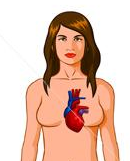
The parochet, the curtain, represents the diaphram, while the poles represent the breasts.
The other 32 bones (vertebrae) in the spine bream down to the 3 bones of the Coccyx, the 7 of the neck, the 12 thoracic bones of the upper back and the 10 of the lumber and sacrum, split evenly 5 and 5.
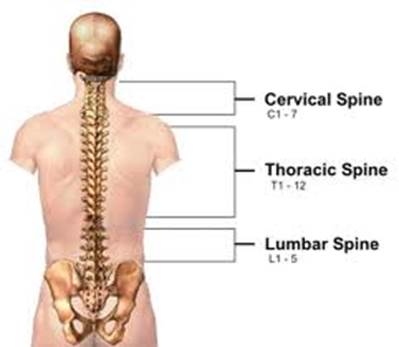

The Mishkan‘s furnishings or “vessels,” are seen as representations of the various organs and faculties of man: The Outer Altar on which the animal and meal offerings were brought represent the digestive system and other “functional” organs.
In Jewish literature, man’s heart has often been referred to as king. Physiologically, the heart provides sustenance to all the body’s limbs, without which all would die. Spiritually, the heart is the seat of thought and emotion, with the capacity to guide man to higher levels of devotion to and closeness with HaShem:
Devarim (Deuteronomy) 6:5 “You shall love HaShem your G-d with all your heart...”
Conversely, the heart can drag man into a bottomless abyss, from where there appears to be no return:
Bamidbar (Numbers) 15:39 “Do not explore after your heart and after your eyes after which you stray.”
HaShem made man a heart, which is the king over all the organs, and which is the seat of the animate soul.
Just like the center of the Temple is the Holy of Holies, the center of the human being is his heart. His head is above him, his feet are beneath him, so the heart which is at the midpoint of his trunk, is the actual center of his being. Just as the holiness that is the source of all that is good in the world emanates from the Holy of Holies, the life force of the human emanates from the heart.
The human heart serves as the physical antenna and receiver of the spiritual force of ruach. Thus the human heart, which serves as the physical antenna and receiver of the spiritual force of ruach is the exact counterpart of the cherubim above the Ark in the Holy of Holies. Just as that is the point where the Divine voice connects with man, the ruach in man’s heart is the connection point with the neshama, which represents the Divinity within man.
All joy is manifest in the heart (in Hebrew: lev). The word lev has many associations with the holiday of Succoth: When we write out the letters of the word lev (spelled lamed, beit) in full (Lamed, mem, dalet; Bet, yud, tav) they equal the numerical value of succoth (486).
When we sit in the succah, we bless HaShem for having commanded us to sit inside. The distinguishing words of this blessing are leshev basukkah (“to sit in the succah“). The first letters of the words Leshev Basukkah are lamed and bet, another allusion to lev.
The lulav (“palm branch”), one of the four species, is spelled lamed, vav, lamed, bet. This word can be read as lo lev, “he has a heart.”
Our sages say that the etrog (“citron fruit”), another of the four species, resembles a heart.
The numerical value of all the four species, (etrog, aravah, lulav, hadas) equals lev (32) times lev!
* * *
The Nation of Israel is the “heart” of the whole world. Just as the heart is the vital organ which determines whether the body will live, so are we responsible for the spiritual life of the whole world. (Kuzari, 2:36-44). However, we must follow a certain order. First, we must bring the Nation of Israel to perfection, then all of mankind, and finally, the animal, vegetable and mineral world.
The Torah teaches that importance should always be given to the right side. We put on our right shoe before our left shoe, we wrap our Tefillin with our right hand and we give charity with our right hand. Why than is the most important part of the body, our heart, on the left side? Rav Nachman of Breslav gives the truest answer. If we stand face to face with another individual our heart is on their right. Our heart is for them not for ourselves.
The center of the body part that is covered by a shirt is the heart.[80] A bullet that pierces this area will surely kill the person. Note that the heart is situated between the breasts such that the breasts and the heart are at the same level.
While the heart contains four chambers, there are two sets of two chambers that work together. The left two chambers pump oxygen depleted blood to the lungs and the right two chambers pump the oxygenated blood from the lungs to the rest of the body.
The life of the body is in the blood. The heart pumps this life blood to the whole body.
Bereshit (Genesis) 9:4 But flesh with the life thereof, which is the blood thereof, shall ye not eat.
When we examine Jerusalem (and the Ark of the Covenant), which corresponds to the heart, we will see that the contents of the Ark were also a set of two pair. Two sets of Luchot (tablets): One set that were broken and one set was whole.
Yoma 54a R. Judah contrasted the following passages: And the ends of the staves were seen[81] and it is written but they could not be seen without[82] — how is that possible? — They could be observed, but not actually seen. Thus was it also taught: ‘And the ends of the staves were seen One might have assumed that they did not protrude from their place. To teach us [the fact] Scripture says: ‘And the staves were so long’. One might assume that they tore the curtain and showed forth; to teach us [the fact] Scripture says: ‘They could not be seen without’. How then? They pressed forth and protruded as the two breasts of a woman, as it is said: My beloved is unto me as a bag of myrrh, that lieth betwixt my breasts.[83]
How wonderful is the human heart! It speaks and sees (Eccles. 1.), it hears (1 Kings 3.), it walks (2 Kings 5.), it falls (1 Saml. 17.), it stands (Ezekl. 22.), and it rejoices (Ps. 16.), it cries (Lament. 2.), it is comforted (Isa. 40.), and it grieves (Deut. 15.), it hardens (Exod. 19.), and it softens (Deut. 20.), it saddens (Gen. 6.), it is terrified (Deut. 28.), it breaks (Ps. 51.), it is haughty (Deut. 8.), it rebels (Jer. 8.), it devises (1 Kings 12.), and it has imaginations (Deut. 29.), it indites (Ps. 45.), it thinks (Prov. 19.), it desires (Ps. 21.), and it declines (Prov. 7.), it goes astray (Numb. 15.), it supports (Gen. 18.), it is stolen (Gen. 34, it becomes humiliated (Levit. 26.), it is persuaded (Gen. 24.), it errs (Isa. 21.), it trembles (1 Saml. 4.), it is awake (Songs 5.), it loves (Deut. 6.), and it hates (Levit. 19.), it is envious (Prov. 23.), and it is searched (Jer. 17.), it is rent (Joel 2.), it meditates (Ps. 49.), it is like fire (Jer. 20.), and it is stony (Ezkl. 36.), it repents (2 Kings 23.), it is hot (Deut. 19.), it dies (1 Saml. 25.), it melts (Joshua 7.), it receives fear (Jer. 23.), it gives thanks (Ps. iii.), it covets (Prov. 6.), it hardens (Prov. 28.), and it is pleased (judges 16.), it deceives (Prov. 12.), it speaks inwardly (1 Saml. 1.), it loves bribery (Jer. 22.), it is written upon (Prov. 33.), it is mischievous (Prov. 6.), it receives injunctions (Prov. 10.), it is presumptuous (Obad. 1.), and it arranges (Prov. 16.).Mid. Eccles. 1.
The lungs take in air and separate out the gasses to be absorbed from the gasses to be expelled. The expelled product is less refined than the incoming air, but still it is not very offensive and it is light and ethereal.. By contrast, that which is expelled below the diaphragm is much more offensive and “heavy”.
The diaphragm (Hebrew: Parsa, lit. curtain) acts as separator between the higher organs of the heart and lung, the immediate organs of life, and the lower organs of digestion and reproduction. The diaphragm divides the organs of breathing [the respiratory system] from the organs of digestion. The diaphragm is thus seen as separating between the more spiritual aspects of the body and the lower, more physical aspects. Above the diaphragm we have the heart, the lungs, the brain, etc., while below, we have the more corporeal and gross physical organs.
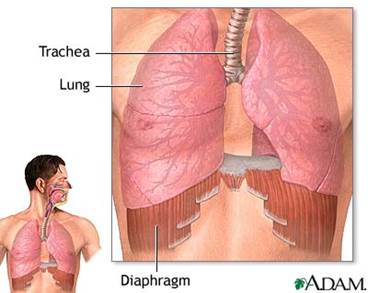

Your heart rests over the diaphragm and the liver, gall bladder spleen, stomach and kidneys lie below it. It is attached to the spine as it moves and massages all your abdominal organs.
Your diaphragm is the mediator of all the biological and emotional rhythms of your body. Including the autonomic nervous system. The diaphragm interconnects your abdomen, lungs and spine.
The diaphragm divides the organs of breathing [the respiratory system] from the organs of digestion. The diaphragm is thus seen as separating between the more spiritual aspects of the body and the lower, more physical aspects. Above the diaphragm we have the heart, the lungs, the brain, etc., while below, we have the more corporeal and gross physical organs.
* * *
How does the transmission of Life Force depend on our speech and prayer?
It is written, “From my flesh, I shall see G-d”.[84] [By understanding the human body, we can also understand HaShem‘s ways.]
Man is filled with life force and breath, spread inside him. When he wishes to speak, he must constrict this breath through his larynx, and modulate it with his mouth, lips, tongue and teeth. He can then express it as he desires, and only then can his speech, voice and wisdom be detected. [He can communicate] because his life force, wisdom and voice are constricted in his speech.
When a righteous person stands in prayer, he certainly attaches and binds his thought and life force to the Infinite Essence, which is a simple formless Unity. When he begins to speak, he transmits the Creator’s Life Force into his words and speech. As these leave his lips, they are very strongly bound to his breath and life force, constructed into the sounds that he expresses.
Then (to the extent that we can express it), the Infinite Essence is bound to this person’s breath and life force, and is modulated and constricted in his expression of words.[85]
The Torah and Chazal attributed specific functions to the organs of the body. The Talmud tells us that, “The kidneys advise” (Berachot 61a), this echoes King David’s song:
Tehillim (Psalms) 16:7 I will bless the Lord who has advised me, even at night my kidneys instruct me.
This may seem very strange to us, after all, what do kidneys have to do with giving advice? Chazal suggest that the right and left kidneys represent, respectively, the good and evil inclinations:
Berachoth 61a Our Rabbis taught: Man has two kidneys, one of which prompts him to good, the other to evil; and it is natural to suppose that the good one is on his right side and the bad one on his left, as it is written, A wise man’s understanding is at his right hand, but a fool’s understanding is at his left. Our Rabbis taught: The kidneys prompt, the heart discerns, the tongue shapes [the words], the mouth articulates, the gullet takes in and lets out all kinds of food, the wind-pipe produces the voice, the lungs absorb all kinds of liquids, the liver is the seat of anger, the gall lets a drop fall into it and allays it, the milt produces laughter, the large intestine grinds [the food], the maw brings sleep and the nose awakens. If the awakener sleeps or the sleeper rouses, a man pines away. A Tanna taught: If both induce sleep or both awaken, a man dies forthwith.
Another of Chazal’s interpretations is that the two kidneys correspond to two aspects of our relationship to HaShem: To fear HaShem and to love HaShem. In both interpretations, these organs represent a system of duality or alternative courses of action. The role of these “advisers” is to signal us how to choose between possible actions.
Berachot 61a Our Rabbis taught: Man has two kidneys, one of which prompts him to good, the other to evil; and it is natural to suppose that the good one is on his right side and the bad one on his left, as it is written, A wise man’s understanding is at his right hand, but a fool’s understanding is at his left.
Our Rabbis taught: The kidneys prompt, the heart discerns, the tongue shapes [the words], the mouth articulates, the gullet takes in and lets out all kinds of food, the wind-pipe produces the voice, the lungs absorb all kinds of liquids, the liver is the seat of anger, the gall lets a drop fall into it and allays it, the milt produces laughter, the large intestine grinds [the food], the maw brings sleep and the nose awakens. If the awakener sleeps or the sleeper rouses, a man pines away. A Tanna taught: If both induce sleep or both awaken, a man dies forthwith.
Rabbi Nachman says that Torah study can sanctify the spiritual energies of the kidneys, directing the mind to the path of holiness. In other words, when the kidneys contain the spiritual energies of holiness, it eventually leads to purity of the mind. The spiritual energies of holiness facilitate the mind in making the right choices because they can light up the darkness of any problem. When one makes the right choices, he is directed to the pathways that lead to HaShem, the source of all joy and goodness. It is essential to safeguard the purity of the mind and all the organs of the body that influence it, because one‘s link to HaShem and eternal goodness, is dependent upon the degree of purity of the mind. This is referred to as Tikun HaBrit, “rectification of the covenant“, which is an eternal bond that the Jewish nation made at Mount Sinai with HaShem, and is incumbent upon each Jew to observe.
Rav Noson says that although the spiritual energies of the kidneys provide good advice to the brain, the fat that covers them contain negative energies which distort the good advice. Rashi explains that the origin of the word K’SiL (which refers to an intellectual fool, one who has a great intellect but misuses it, coming to errroneous conclusions which lead him away from HaShem), has the same root as the word K’Saw’Lim (kidneys). Rashi says that the spiritual energies contained in the fat covering the kidneys prevent the intellectual fools from returning to HaShem. It is forbidden to eat the layer of fat that covers the kidneys because its essence pollutes the spiritual energies of holiness contained in the kidneys, greatly hampering the mind’s ability to make the right choices, as the verse says, “You may not consume any fat or any blood [because of the negative spiritual energies they contain].” (Lev. 3:17)
Midrash Rabbah - Genesis LXI:1 And in His law doth he meditate day and night (Ps. Ioc. cit.). R. Simeon b. Yohai said: His [Abraham‘s] father did not teach him, nor did he have a teacher; whence then did he learn the Torah? The fact is, however, that the Holy One, blessed be He, made his two kidneys serve like two teachers for him, and these welled forth and taught him wisdom; thus it is written, I will bless the Lord, who hath given me counsel; yea, in the night seasons my reins [kidneys] instruct me (ib. XVI, 7).
Midrash Rabbah - Ecclesiastes VII:28 Another interpretation of WISDOM IS A STRONGHOLD TO THE WISE MAN: i.e. to Adam, as it is written, Thou seal most accurate, full of wisdom, and perfect in beauty, thou wast in Eden the garden of God (Ezek. XXVIII, 12f.). THAN TEN RULERS THAT ARE IN A CITY: i.e. the ten organs that minister to the soul,4 viz. the gullet for [the passage of] food, the windpipe for voice, the liver for anger, the gall for jealousy, the lungs to absorb liquids, the stomach to grind [food], the milt for laughter, the kidneys to advise, the heart to give understanding, and the tongue to decide.
The Torah and the sages attributed interesting features to certain organs of the lower half of the body. A comment in the Talmud, “The kidneys advise” (Berachot 61a), echoes King David’s song: “I will bless the Lord who has advised me, even at night my kidneys instruct me” (Psalms 16:7). But this may seem very strange to us: What do kidneys have to do with giving advice?
The Sages suggest that the right and left kidneys represent, respectively, the good and evil inclinations (Berachot 61a); another of their interpretations is that the two kidneys correspond to two aspects of our relationship to the divine: to fear God and to love God. In both interpretations, these organs represent a system of duality or alternative courses of action. The role of these “advisers” is to signal us how to choose between possible actions.
We can see this from a physical perspective: kidneys filter and detoxify, cleansing the blood, separating what is good for our bodies from what is bad. They monitor levels of sugar, salt, potassium, protein, and water. Further, atop the kidneys sit the powerful adrenal glands, which fuel our “fight or flight” reflex when a dangerous situation develops, and empower the body to go beyond its normal range of reactions. So, along two different dimensions, the kidney area represents decision-making.
The kidneys are related to the heart and to desire:
Yeremyahu (Jeremiah) 17:10 I the Lord search the heart and test the kidneys, and give to each man according to his ways and to the fruit of his actions.
The name Kislev derives from the Hebrew word kesel1 (כֶּסֶל), which means either “security,” or “trust.” There are two states of trust—one active and one passive—both of which manifest in the month of Kislev, which in the human body correspond to the right and left kidneys, respectively. In Hebrew, the word for kidney2 is also kesel (כֶּסֶל).
The name Kislev comes from a root in the word ‘kesel- kesalim’ and the kelayot-kidneys are called kesalim. Strong desire is rooted in the kidneys; Ibn Ezra comments[86] that they are called kelayot because they are the seat of lust and desire and “How I my soul pine and indeed my soul was consumed in yearning for Thy Courtyards, HaShem“[87] or “If I put kisli in gold”[88] that Rashi sees as “all my hope and thoughts”, that is the desires and the lusts. This is the trait of Benyamin as they taught that he was concerned and thoughtful of HaShem all day; Rashi explains this like a person who is troubled that he hasn’t satisfied his desires[89].
Rav Noson says that although the spiritual energies of the kidneys provide good advice to the brain, the fat that covers them contain negative energies which distort the good advice. Rashi explains that the origin of the word K’SiL (which refers to an intellectual fool, one who has a great intellect but misuses it, coming to errroneous conclusions which lead him away from HaShem), has the same root as the word K’Saw’Lim (kidneys). Rashi says that the spiritual energies contained in the fat covering the kidneys prevent the intellectual fools from returning to HaShem. It is forbidden to eat the layer of fat that covers the kidneys because its essence pollutes the spiritual energies of holiness contained in the kidneys, greatly hampering the mind’s ability to make the right choices, as the verse says, “You may not consume any fat or any blood [because of the negative spiritual energies they contain].” (Lev. 3:17)
The word for kidney, kulyah, comes from kol--”all.” Kol = 50. Our sages teach us that “at the age of 50 one is able to give advice.” The two kidneys are two complementary sets of 50 (as the 50 parallel 50 loops of the two sets of the over-hang drapery of the Tabernacle). 50 plus 50 = 100 = 10 squared, the consummate state of rectification, 10 (powers of the soul) “interincluded” in 10.
The liver is the main organ of the abdomen according to the kabbalistic system.
The liver uses food elements to produce blood elements. The liver separates out those elements to be retained and those elements that are to be discarded. This is analogous to the lungs which take in air elements and separates the oxygen component which is used to produce blood elements. The blood is, of course, the place of the life energy.
The liver is dedicated to the nefesh and translates its messages into desires and drives.
Soncino Zohar, Bereshith, Section 1, Page 27b AND THE LORD GOD COMMANDED THE MAN, SAYING. It is agreed that the term “command“ in the Scripture always has reference to the prohibition of idolatry. This sin has its root in the liver, which is the seat of anger, and it has been laid down that “to fall into a passion is like worshipping idols”. The expression “the man” designates bloodshed, on the analogy of the verse: “by man shall his blood be shed” (Gen. IX, 6). This sin has its root in the gall, the sword of the angel of death, after the verse: “her latter end is bitter like gall, piercing like a two-edged sword” (Prov. V, 4). The expression “saying” refers to incest, which has its root in the spleen, as it is written, “Such is the way of the adulterous woman, she eats and wipes her mouth” (Ibid. XXX, 20). Although the spleen has no mouth or suckers, yet it absorbs the black turbid blood of the liver; so the adulterous woman wipes her mouth and leaves no trace. The murderer is incited by the bile and sucks from the blood of the heart. All who see bile recoil from it, but unchastity is covered in darkness, in the black blood of the spleen. Whoever sins by murder, idolatry, and incest bans his soul through the liver, the gall, and the spleen, and is punished in Gehinnom in these three members, through three chief demons, Mashith (destroyer), Af (anger), and Hemah (wrath)....
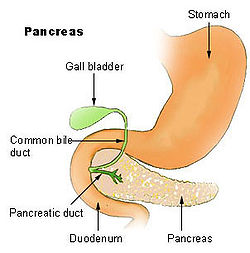
The pancreas is a digestive and endocrine organ. It produces chemicals which aid in digestion and chemicals, like insulin, which affect the body in other ways. Insulin is needed to convert the carbohydrates you eat into energy.
The Talmud, in Tamid 31a, calls the pancreas the “finger of the liver”.
Devarim 16:7 – 27:22. Bereshit 31:20
There’s nothing like a hot cup of tea on a cold day. Now an Israeli company plans to introduce an herbal tea to the United States that it claims can substantially reduce the blood-sugar levels of diabetics.
Glucodan tea, which was developed by Nufar Natural Products, is a mixture of medicinal herbs for reducing and balancing sugar levels in the blood. The company says tea reduces sugar and breaks down carbohydrates and fats, which rise to dangerous levels in diabetics after they eat a meal.
The small 15-man company claims the tea, which includes the herbs stevia, gymnema sylvestris, salvia fruticosa, eucalyptus and lemon grass, rehabilitates and activates the pancreas causing it to secrete insulin, a hormone that helps the cells absorb glucose from the bloodstream and use it to produce energy, thereby reducing sugar levels in the blood. In addition, says Israel Solodoch, the founder and CEO of Nufar, the tea helps diabetics absorb the insulin into their bodies.
“Drinking Glucodan tea decreases the body’s resistance to insulin,” he explains. “The cells get re-influenced by the insulin, absorb the sugar, disassemble it and as a result stabilize the levels of sugar in the blood.
Patients who have used the tea, drinking from two to three cups a day, claim that their blood-sugar levels have fallen dramatically.
HaShem made for man the spleen, which produces black bile. The spleen also causes a person to be happy, and makes him laugh.
The part of the body considered Kislev‘s controller, or guide, is the belly (קֵבָה). The relation between the belly, especially when it is full and satiated and the tranquil state of sleep (Kislev‘s sense) is clear and explicit in the teachings of our sages. The rectified individual always has a figuratively full belly, regardless of his or her conditions. To attain this state of contentment, one must never be jealous of others, as the sages state, “Who is rich? He who is happy with his portion.” Being content demands a spiritual outlook on life and its conditions; an outlook that makes us realize that our portion—the hand we have been dealt by the Almighty—is indeed ours and no one else’s. The word “belly” derives from the word “measure” (קַב). The sages state that by nature, “The individual desires one measure of that which is his, more than he desires nine measures of that which belongs to his fellow.”
In English, belly is not a very specific anatomical term. To properly identify the belly, we need to go back to the Pentateuch, where we find that the belly is one of the three organs donated to the priests from every kosher animal slaughtered[90] (not for the purpose of a sacrifice).[91]
Still, from the description of Pinchas’s act of self-sacrifice,[92] we learn that the word “belly” (קֵבָה) also refers to the womb. Thus, belly can be understood not only as a specific organ in the body but a general term, including the entire region of the abdomen, which like its synonym בטן, can refer to the stomach, the (large) intestines, or the womb. The womb, in particular, relates to Benjamin, Kislev‘s tribe. Benjamin is described as the “point of Zion” in Kabbalah, referring to the feminine aspect of the sefirah foundation, anatomically identified with the female procreative organ, the womb.
The human body is divided into three parts as evidenced by our clothing. Each of these three parts represent a critical area of connecting which are essential to life. If any of these three parts is damaged, then there is no life for the body.
Each of these three portions contain an organ which is centered in the portion. It is centered front-to-back, left-to-right, and top-to-bottom. This organ is precisely centered within its body portion!
The center of the lower portion of the female torso, covered by the clothing below the belt, is the womb (uterus). A bullet that pierces this area will surely kill any future life.
The womb is associated with the cave at Machpelah, located in Hebron. Our Patriarchs Avraham, Yitzchak, and Yaaqov were buried there along with their spouses and the first couple, Adam and Chava. As the womb is a foundational area, so also are the patriarch the foundation for the Jewish people. Thus we would say that Hebron signifies a foundational area of the land of Israel.
Note, in the following graphic, that the vagina forms an ‘outer room’ and the uterus forms an ‘inner’ room, like a cave within a cave. The ‘cave within’ contains the place where new life will begin. It is the place where a soul first enters this world. Thus we would say that the womb is a portal from the upper world into the lower world. Our Sages debate whether Machpela, in Hebron, was a ‘cave within a cave’ or a ‘cave above a cave’. When viewing the uterus and vagina, we see that when the woman is prone it is a cave within a cave. When the woman is erect, it is a cave above a cave.
The Hebrew word for womb is rechem – רֶחֶם. The three letters of רֶחֶם also form the root of the Hebrew word Rachamim - רַחֲמִים, which is normally translated as compassion. This teaches us that the womb is the source of compassion.
What does a womb do? The womb takes a zygote[93] and determines whether the zygote is viable: Does it have the potential to succeed? If it has that potential, then the womb shelters and nourishes the zygote. If it does not have the potential to succeed, then the zygote is expelled by the womb. Thus we understand that Rachamim – רַחֲמִים – compassion, is the potential for success. If one does teshuva – repentance, then one has the potential to succeed, and compassion will nourish and shelter that potential.
This understanding leads to another interesting idea: Rosh HaShana is the day of man’s conception. Ten days later that zygote is implanted in the womb – on Yom HaKippurim – the day of compassion. If we repent, then we have potential. If we have potential, then HaShem gives us compassion – on Yom Hakippurim. This is why we read the book of Jonah on Yom HaKippurim. This book is all about compassion.
If we look at the siddur for the additions to our prayers during the ten days between Rosh HaShana and Yom Kippur we will see that they all focus on life. Further, we pray that we will be written in the book of life, not because we deserve it, but because that is HaShem‘s desire. His womb, His compassion, is all about life and its potential.
The word for “intestines” dakin - דַקִין, derives from the same root as the words meaning “minute” (דַקָה) or “grain” (דַק). It implies the power to dissect into fine, refined parts.
In the process of preparing the incense for the Temple (the consummate expression of the sense of smell in the Temple service), the priest would repeat (over and over) a phrase which uses the verb “to grind” (הַדֵק הֵיטֶב, הֵיטֶב הַדֵק), which is also cognate to the word for “intestines.”
All of the sacrifices in the Temple service are meant to produce a “satisfying aroma” (רֵיחַ נִיחוֹחַ) and please the Divine sense of smell, which symbolizes HaShem‘s “satisfaction” with the service of His children Israel in particular and with creation in general. The sages interpret the phrase “satisfying aroma” as “I am satisfied, for I have spoken and My will has been fulfilled.” This Divine satisfaction with man and creation was first expressed on the 28th of Cheshvan, when Noah offered his sacrifice to HaShem. Due to His satisfaction, HaShem swore to Noah never again to destroy the world by flood. As is expressed explicitly in laws of the Torah, it is the fats of the intestines that when offered on the altar produce the “satisfying” aroma for HaShem. For this reason the intestines are understood to control the sense of smell.
Our sex organs betray our spiritual disposition.
The male genitalia is is visible and distended which mirrors the arogance and visibility of the male persona. The male organ is used for giving sperm to the female. It is the aspect of giving that defines maleness. That is why HaShem is always referred to by male pronouns.
In a similar way, a man’s body shape has it’s bulk in the shoulders which indicates his closer connection to the spiritual world. This explains why males are so concerned with the physical aspects of the female. They lack the connection to the physical so they constantly seek the physical connection. That is why husbands seem to be only interested in their wife’s body and not her spiritual components (her words, ideas, and other non-physical components).
The female genitalia are hidden and and internal betraying the modesty and hiddenness of the female. The female organs are meant to receive the male organ and his sperm. Femaleness is defined by receiving.
In a similar fashion, the female body has it’s bulk around the hips which denotes a strong connection to the physical. This is why she constantly seeks the spiritual connection with her husband because this is what she lacks. She has no significant interest in her husband’s body. She is only interested in the spiritual components which she lacks.
When the male arouses the female with the spiritual (his comforting words, actions, and miniscule sperm which is too small to fit in the physical world) and descends from above, into the female, he completes them both. She provides the vessel with which to receive the spiritual from the male. She becomes the house. She is her husband’s house and her child’s house. As her husband dwells in her, so also does her child dwell in her. From this act we derive, in Jewish law, that the woman has complete dominance in the way the home is kept and the children are raised.
The mishkan also resembles HaShem‘s other microcosmos, man, it too has outer “skin” (the outer curtains of goat and tachash skins), an intellectual center (the menorah, corresponding to the light of understanding), a food processing mechanism, without which the intellect cannot function (the copper altar at the entrance to the mishkan, and the table within, with its supply of weekly bread, consumed by the kohen), and at its heart, the tablets in the ark in the Holy of Holies (compare the two tablets of the decalogue with the heart’s ventricles). Each space inside the mishkan is separated and defined by membranes (curtains). The entire structure is supported by wooden acacia beams, its ribs and skeletal framework. Over this are stretched the curtains and animal skins. Close to the place of the heart is the altar of incense. associated with the sense of smell, and the soul. The keruvim spread their wings over the ark, tightly bound to its cover, the caporet, corresponding to the lungs and their close and vital connection to the heart. The kiyor (laver) represents the function of water in the body. Each of the holy utensils may represent an inner organ of the human body.
Chayim exposition expands, and differs with, that of the Rambam, cited in Chidushei Hagaonim on Menachoth 29, quoted in The Midrash Says; in The Guide 3:45, Rambam gives a simple explanation of the mishkan; but he dwells upon its “secret“, nistar, implications in his grand letter of life wisdom and instructions to his son, Avraham, a manual of intimate personal morality; there he claims that the table represent the liver, the menorah the spleen; the sacrificial altar represents our natural heat, the altar of incense man’s intuitive illumination. The holy scrolls, in the ark, symbolize human wisdom, the cherubim, protecting them, the safeguarding of our health. it is translated into English and expounded in Letters of Maimonides, by Leon D. Stitskin. He claims that it was also meant for his spiritual son, Ibn Aknin (whom Rambam calls his “dear son” in a letter), and the children of his brother David, whom he adopted, for he addresses his “children”, but had only one son (but I recall a letter from Rambam, wherein he portrays difficulties and tension with his daughters). His first wife must have died early[95] and a daughter, perhaps David’s, died young (mentioned by Rambam, in that letter to Ibn Aknin, where he urges Aknin not to mourn or grieve at the demise of any individual, male or female, the survival of the species being the focus of the notion of goodness).
One of the many subliminal messages suggested by the above exposition is that, just as the sanctuary structure resembles a human body, so the human body should become a sanctuary, treated and respected as such. Then it can become an abode of the Shechinah, the concentrated manifest essence of HaShem, They shall make me a sanctuary, and I shall dwell within them.[96] The Mishkan thus provides the children of Israel with a tangible model of the connection between their bodies, the microcosmos, and the structure and plan of HaShem‘s cosmos, the universe. It henceforward becomes the meeting place (Ohel Moed) of heaven and earth. The leaders and the people try repeatedly and unsuccessfully to erect the Mishkan. Moses, undaunted, exerts himself in the seemingly impossible task, and the Mishkan basically erects itself, a hint perhaps to the eventual resolution of the seemingly insoluble conflicts of modern Israel, torn between heaven and earth, body and soul, the moment and eternity.
The Ohel Moed[98] represented the head of man, for that was the place where the main sensual and intellectual functions of man were focused.
The Ohel Moed was divided into two rooms. The back room was called the Kodesh HaKodashim, the Holy of Holies. Placed in this room was the Aron, Holy Ark, the most sacred of the articles in the Sanctuary. The Holy Ark consisted of three boxes, one inside the other. The innermost box contained the two tablets upon which the Ten Commandments were engraved. These Commandments were the outline of all the mitzvot in the Torah. It represented the brain of the Perfect Man. Just as a brain has two hemispheres, the right and the left, so too there were two tablets. Just as the Perfect Man contemplates only Torah ideas and ideals, so too the Ark contained the essence of Torah. Just as the brain is triply encased in a skull with two membranes, the tablets were also encased in three boxes.
The upper portion of the Kodesh contained the Menorah, to the left, and the Shulchan, to the right. These two items represented the eyes of Perfect Man. The eyes are used for two purposes. One is used for intellectual pursuits- enlightenment, symbolized by the light of the Menorah. Just as the Menorah’s fuel was the purest of oil, so too should man strive for the purity of enlightenment. According to the Kabbalists, there are seven areas of spiritual wisdom and the seven branches of the Menorah represent them.
The second function of the eyes is for survival: to see and avoid pitfalls, to search out food in order to live; this is symbolized by the showbread (Shulchan). The showbread remained on the table from Shabbos to Shabbos. On the second Shabbos new bread was placed there and the old bread was divided among the kohanim to eat. Each kohen received only a very small portion, yet it was enough to satisfy his desire for food. The Perfect Man should eat moderate amounts of food, motivated strictly for the purpose to endure, so that he may properly serve his Creator in every way.
The opening of the Kodesh was at the bottom of the room. It represented the mouth of Man. Here the kohanim stood when they uttered the priestly benediction every morning. G-d created the universe through words. His very utterance brought about the various creations. “And G-d said: Let there be light! And there was light!”[99] Man too has the power to create with his words. On the physical level he can negotiate peace or declare war. He can create harmony between himself and his fellow man. On the spiritual level, Man can create heavenly realms with his words of blessing and prayer.
Outside the Ohel Moed, in the center of the courtyard, was the main Altar upon which the sacrifices were offered and consumed. This represents the stomach and internal organs of Man. Some sacrifices were offered as atonement for a sin that was committed. Others were offered as a joyous expression of thanksgiving. As a general rule, a sacrifice that was brought on account of a sin, came with several restrictions. Some sin offerings were not eaten at all. Other sin offerings could be eaten but only by the kohanim, only on the grounds of the Mishkan, and only for one day. Offerings that were brought as an expression of thankfulness could be eaten by all Jews. It could be eaten anywhere in the entire camp of the Israelites. Most offerings that expressed thankfulness could be eaten for two days and the night between them.
Midrash HaGadol says:
“The materials donated for the Mishkan[100] correspond to the components of the human being. ‘Gold’ is the soul; ‘silver’ the body; ‘copper’ the voice; ‘blue’ the veins; ‘purple’ the flesh; ‘red’ the blood; ‘flax’ the intestines; ‘goat hair’ the hair; ‘ram skins dyed red’ the skin of the face; ‘Tachash skins’ the scalp; ‘Shittim wood’ the bones; ‘oil for lighting’ the eyes; ‘spices for the anointing oil and for the sweet incense’ the nose, mouth, and palate; ‘Shoham stones and gemstones for setting’ the kidneys and the heart…”
Divrei Beit Hillel comments:
“On another level, the Mishkan symbolizes the human body. The beams which comprise the sides of the Mishkan symbolize the ribs. The goat-skin curtains represent the skin. The menorah symbolizes the mind. The Keruvim (cherubim) symbolize the lungs, which lie over the heart, and the Aron HaKodesh (the Holy Ark) represents the heart. . .”
View these descriptions as though the woman is laying down. A wife is called a 'house' by the Torah, just as the Mishkan was called the 'beit HaMikdash' – the House of The Holy One.
The Mishkan is a picture of the Garden of Eden. Just as Adam and Eve were naked and unashamed, so too should a husband and wife be naked and unashamed when they are going to experience marital intimacy.
There are some interesting connections to sexual intimacy (ona[101])[102] in the Mishkan, that seemed logical to me:
The intimacy expressed in intercourse takes us back to Gan Eden where we were naked and unashamed. We are taken back to closesness with HaShem where we walked with Him in the garden. The act of marriage restores us to the androgynous nature of Adam HaRishon where we become 'one flesh'.
If you learned Rambam, in the laws of the Temple, one of the sections of those laws is called the laws of entering the Temple. When the Priests and the High Priest are allowed to go into the Temple and when they are not allowed. The similarities between these laws and intimacy between husband and wife are quite interesting. A Priest is not allowed to go into the temple if he has had a few drinks. You are not allowed to be intimate with your wife if you have had a few drinks. You cannot come into the Temple with dirty clothing. What is dirty clothing? Selfish thoughts. thought, speech and action are the garments of the soul.
Yeshua has said the kingdom of heaven is within us (See Luke 17:20-21). The Tree of Life comprising the female reproductive system includes the trunk comprised of the cervix and the vagina, topped by the canopy of the “tree,” comprised of the Fallopian tubes (oviducts), the ovaries and the uterus. The fruit of this tree are its ovum, which in effect are tiny little naturally-occurring fusion chambers from which develop the fetus / child.
In Jewish mysticism the imagery of the Cherubim in the Holy of Holies was interpreted as the conjugal union between male and female. The cherubim are engaged in intimacy while HasShem speaks from between them. These three (HaShem, the husband, the wife) are engaged in the creation of a child.
The Twelve Kinds of Fruit which the (female) Tree of Life produces each year as symbolically represented in Revelations 22:2 are the twelve various ovum a human female produces once per month on an annual basis.
The Tree of Life comprising the male reproductive system is comprised of the erect penis, its ‘fruit’ being the gonads, the ‘seed’ of the fruit being the spermatozoon. In Jewish mysticism, the gonads are also called the ‘Treasury of Souls,’ also known as the ‘Chamber of Guf’, ‘guf’ being the Hebrew word for ‘body’, the gonads being body chambers, cavities within the human body. The Waters of Life is its semen. The Fountain of the Waters of Life is an ejaculating penis.
The cherubim are engaged in intimacy while HasShem speaks from between them. These three are engaged in the creation of a child.
Cherubim are only found in two places: The Garden of Eden and the Temple. They are always guarding the Tree of Life.
Sanhedrin 7a Another used to say: When love was strong (between husband and wife), we could have made our bed on a sword-blade; now that our love has grown weak, a bed of sixty (cubits) is not large enough for us.
Said R. Huna: This is alluded to in the verses: Of the former age (when Israel was loyal to God) it is said: (Shemot 25:22) “And I will Meet with thee and Speak with three from above the ark-cover;” and further it is taught in a Baraita: The Ark measured nine hand-breadths high and the cover one hand-breadth, i.e. ten in all. Again, it is written: (I Melachim 6:2) “As for the House which King Solomon built for the Lord, the length thereof was three score cubits, the breadth thereof twenty cubits, and the height thereof thirty cubits” (with a “small” section of this overall structure devoted to serving as the Kodesh HaKodashim.) But of the latter age (when they had forsaken God) it is written: (Yeshayahu 66:1) “Thus Saith the Lord, The Heaven is My Throne and the earth My Footstool. Where is the house that ye may build unto Me?”
Taking an even greater overview, R. Lau writes in conclusion:
The story of the Kodesh HaKodashim and the place where God and man would meet is the story of humanity in general. Initially there was the Encounter at Mt. Sinai, a moment of Revelation brimming with energy, resembling a marriage ceremony enchanting and enchanting. From the Mountain we go to the Tabernacle with its public and private rooms resembling married life after the ceremonies. The ceremony is preserved by means of photographs and videos, requiring much time and costing great sums to enable us to return to the Mountain. The encounter in the intimate room takes place quietly. The home is nourished and heated with love on a small, constant flame: (Shemot 25:22) “And there I will Meet you…”
A man is old enough to have Daat in the mind when he is old enough to have Daat in his body. Daat in his body is the sexual maturity which is manifested in pubic hairs. Thus when a man is old enough to bond with a woman and produce something new physically, then he is old enough to bond with the higher world and bring down new wisdom. This explains why a boy makes his Bar Mitzva at thirteen. The halacha is that he must have pubic hairs before he can become responsible for the commandments. The reason for this halacha is that the physical mirrors the spiritual. The hair indicates that the mind has matured to the point where he can become responsible for the commandments.
The place of circumcision is the medium through which man pours his physical life force into the universe, while the tongue is the medium through which man pours his thoughts and ideas into the world.
The life force in man is focused in three places, his intelligence, his organs of reproduction, and his heart. Two of these he has the obligation to circumcise. On the eighth day his parents circumcise his organ of reproduction. It is up to them to turn their child into a channel for God's goodness to enter the world through proper training and education. If they do their job well, parents can correct this defect.
It is up to the individual himself to circumcise his tongue, to employ his adult intelligence to open his eyes and ears to the positive in other people and in the world.
The circumcision of the heart is more complex and awaits the end of days.
Debarim (Deuteronomy 30:6) The Lord your God will circumcise your heart and the heart of your offspring, to love the Lord your God, with all your heart and with all your soul, that you may live.
This ultimate circumcision has the effect of removing the evil inclination entirely and shuts down the present era of human history by bringing free will to an end.
By Rabbi Yitzchak Ginsburgh
The Ten Fingers, the Tongue and the Procreative Organ
The most evident allusion to the ten sefirot in the human body are the ten fingers and the ten toes. This correspondence appears in the beginning of Sefer Yetzirah, the most ancient Kabbalistic text, whose first three staves (Mishnayot) read:
With thirty-two wondrous pathways of wisdom, God...created His world with three books: “scribe,” “book,” and “story.”
[There are] ten ineffable sefirot and twenty-two letters of foundation: three mothers, seven doubles, and twelve simples.
[There are] ten ineffable sefirot, corresponding to the ten fingers, five opposite five, and the single covenant is placed in the middle, in the word of the tongue and the circumcision of the procreative organ.
Here, in the third Mishnah of the first chapter of Sefer Yetzirah, we find the first explicit portrayal or model of the ten sefirot in Kabbalah.
The first Mishnah of Sefer Yetzirah introduces the 32 pathways of wisdom in general; the second Mishnah divides the 32 pathways into two general groups of 10 sefirot and 22 letters (which further subdivide into 3 groups of 3, 7, and 12 letters). In the third Mishnah, the text begins to deal with the ten sefirot explicitly (and continues to do so throughout the rest of the first chapter).
These first three Mishnayot themselves follow the order of the three sefirot of the intellect: Chachmah (“wisdom”), binah (“understanding”) and Daat (“knowledge“). The first Mishnah opens with the 32 pathways of Chachmah (the right lobe of the brain). The second mishna analyzes and divides these 32 into subgroups, a process dependent upon the intellectual faculty of binah (the left lobe of the brain). The third mishna presents a concrete, physical model for the ten sefirot, thus employing the power of Daat (the middle, posterior lobe of the brain), which serves to concretize the abstract intellectual cognition of Chachmah and binah.
In addition, this mishna presents the most fundamental principle of tikkun (“rectification”) in Kabbalah--balance and equilibrium. Balance between the right and left axes of the sefirot is dependent upon the middle axis of the sefirot in general, and upon the power of Daat in particular.
When Daat is not counted as one of the ten sefirot (i.e., when the ten are counted from keter), it serves as the middle balance-point between the two symmetric groups of five (right side) and five (left side) sefirot. Daat is able to balance and regulate the two groups of five because it itself subdivides into two internal categories of five each: five chasadim (“positive” powers of attraction) and five Gevurot (“negative” powers of repulsion). These two sets of five inherent to Daat prevail throughout creation. They must be regulated and properly balanced in order to serve their purpose in the rectification process of reality.
In the Torah, the “five opposite five“ principle first finds its expression in the two tablets of the covenant, given to Moses at Sinai, upon which were inscribed the Ten Commandments--”five opposite five.”
In general, the five “positive” forces of Kedushah (holiness) motivate the performance of the 248 positive mitzvot of the Torah, while the five “negative” forces of Kedushah fortify the soul to refrain and thereby observe the 365 negative mitzvot of the Torah.
Thus we find the general teaching of our sages: “the left hand should always repel and the right hand bring near.”
The secret of the “single covenant“ (or the “covenant of the Single One“), which appears at two levels--in the tongue (to balance the ten fingers) and in the procreative organ (to balance the ten toes)--is thus the manifestation of the power of Daat “above” and “below.”
Daat “above”--in Kabbalah Daat Elyon--is the rectified, concrete perspective on all of reality “from above”: the Creator Himself is the true essence of all being, whereas the “virtual reality” of creation envisioned as existing independently is in fact “nothing.” Daat “below”--in Kabbalah Daat tachton--is the creation‘s perspective of its Creator as an absolute “given,” yet totally “unknown.”
Moses, the greatest of all men, is called “the man of God,” which is interpreted by our sages to mean: “from his ‘mid-point’ and above, [he was] God; from his ‘mid-point’ and below, [he was] man.” Moses fully unites and integrates the two levels of Daat (as will be explained), the power to perceive reality through the “eyes of God” (this being the meaning of “from ‘mid-point’ and above, [he was] God”), as well as the power to “humbly” know God, one‘s Creator, from the eyes of man (the meaning of “from ‘mid-point’ and below, [he was] man”).
The external expression of the higher Daat is through the means of the speech of the tongue, especially in speaking words of Torah in general, and revealing the inner mysteries of the Torah, in particular. In relation to Moses, this is the secret of “the Shechinah [Divine Presence] speaks through the throat of Moses.”
The external expression of the lower Daat is through the union of husband and wife (to procreate), as referred to in the original union of man and woman: “and Adam knew Eve, his wife.” (Marital relations are referred to as “knowing” only when the procreative organ is circumcised, and indeed, we are taught that Adam was created already circumcised.)
The modesty present in the holy union of husband and wife reflects the “unknowability” of the Creator’s essence by His creation, especially in that very moment that the creation most emulates its Creator, the moment of procreation, attaching itself to His certain existence. This is the moment that “man” reaches his epitome (fulfilling the first and only commandment given him by HaShem at the moment of his creation: “be fruitful and multiply...”).
From the above, we learn that the “tongue“ and the “procreative organ” (the two manifestations of the “single covenant“--the union of God and man) are interrelated in essence. From this we may infer that their “rectification” is interdependent. The “correction” of one‘s faculty of speech (to speak only good and “sweet” words) and the “guarding” of the covenant of one‘s procreative organ (to express one‘s true love for one‘s spouse in marital relations in holiness), depend upon and influence one another. For this reason the two terms: “the word (in Hebrew, mila) of the tongue“ and “the circumcision (in Hebrew mila) of the procreative organ,” are the same.
The most basic model of Divine service, as taught by the Ba’al Shem Tov, is the three-stage process of chash, mal, mal--”silence, circumcision, and speech” (equivalent to “submission, separation, and sweetening”). The last two stages, circumcision and speech, correspond to the two levels mentioned in our Mishnah: “the circumcision of the procreative organ” and “the word of the tongue.”
The first stage of Divine service--chash or silence--also appears in the opening phrase of the Mishnah: “ten ineffable sefirot.” The word for “ineffable”--blimah--appears subsequently in the text as “shut your mouth from speaking,” thus referring to the service of chash (which must precede those of mal-mal). Thus, the order of Divine service is found to be that first one must meditate, in silence, on the mysteries of the “ten ineffable sefirot” and then actualize the potential of his lower (human-like) Daat and his higher (God-like) Daat.
In continuing our study of the third Mishnah in Sefer Yetzirah, we find that it comprises twenty-two elements:
ten fingers, corresponding to the ten sefirot of the world of Atzilut, the world whose consciousness is exclusively that of Daat Elyon; ten toes, corresponding to the ten sefirot of the world of Beriah (and the lower worlds), whose consciousness is that of Daat tachton; and two balance-points--the tongue and the procreative organ.
We can associate the above twenty-two elements of the physical body with the twenty-two Hebrew letters by drawing the following representation (the tongue above the ten fingers and the procreative organ above the ten toes):
|
|
|
|
|
|
א |
|
|
|
|
|
|
|
|
|
|
|
|
|
|
|
|
|
|
|
|
|
|
|
|
|
|
|
|
|
|
|
|
|
|
|
|
|
|
|
|
|
|
כ |
י |
ט |
ח |
ז |
|
ו |
ה |
ד |
ג |
ב |
|
|
|
|
|
|
|
|
|
|
|
|
|
|
|
|
|
|
ל |
|
|
|
|
|
|
|
|
|
|
|
|
|
|
|
|
|
|
|
|
|
|
|
|
|
|
|
|
|
|
|
|
|
|
|
|
|
|
|
|
|
|
ת |
ש |
ר |
ק |
צ |
|
פ |
ע |
ס |
נ |
מ |
We see from this diagram that the two letters that correspond to the “single covenant“ (manifest at its two levels)--alef and lamed--combine to form the Divine Name Kel. This is the Divine Name that appears in the verse: God [Havayah] is a God [Kel] of two [levels of] knowledge.
This verse (in the thanksgiving song Chana sang after the birth of Samuel) is the Biblical source for the existence of two levels of Daat, as described in chapter 8. Thus, the two levels of Daat are alluded to in the two letters of God’s Name: Kel, the two letters that appear in the places of the two manifestations of the “single covenant“ as pictured above:
Alef corresponds to the intuitive wisdom and insight of the mind, as is said: “I will teach [alef] you wisdom”; Lamed corresponds to the emotive power of the heart, for the letter lamed throughout the Torah represents the “heart” (lev).
Thus we learn that the inner insight of the mind (the consciousness of Daat Elyon) finds its external expression in the tongue, whereas the inner emotion (love) of the heart (Daat tachton) finds its external expression in the procreative organ.
When the hands are raised (as the hands of the priests when blessing the people), the tongue (that blesses) is between the ten fingers. But, when the hands are lowered, it is the procreative organ that is between the ten fingers. Conversely, we find in the Bible the idiom of the tongue “walking,” like the feet.
Though it was explained above that the higher Daat of the alef serves to balance the ten fingers--the ten sefirot of the world of Atzilut--and the lower Daat of the lamed serves to balance the ten toes--the ten sefirot of the world of Beriah (and the lower worlds)--we see here that there is also a relation between the higher Daat (the tongue) and the lower worlds (the toes), and the lower Daat (the procreative organ) and the higher worlds (the fingers).
The union of the supernal sefirot of Atzilut gives birth to the consciousness of the lower Daat in Beriah and below. The service of the souls in the lower worlds reveals, ultimately, the higher Daat on earth.
Moreover, the alef and the lamed--the higher Daat and the lower Daat--of the tongue and the procreative organ themselves, at times invert. The emotions of the heart find their expression in the words of the tongue. The seminal essence of the mind “contracts” into the seed of the procreative organ.
We can now understand why the order of the two manifestations of the “single covenant“ as quoted in our Mishnah is first “the word of the tongue“ and thereafter “the circumcision of the procreative organ” (though following the order of the Divine service of chash-mal-mal described above “the word of the tongue“ follows “the circumcision of the procreative organ”). Ultimately, the revelation of the Divine essence (on earth) depends upon the rectification and sanctification of “the circumcision of the procreative organ.”
* * *
|
Etrog |
Lulav |
Our sages offer different explanations of the symbolism of the four species. One explanation is a reference to the body parts. The etrog is the shape of a heart, the lulav is like a backbone (spinal cord), the leaves of the myrtle resemble the eyes, and the willow leaves are the mouth. These are the organs that can be misused for negative behavior. The eyes see, the heart desires, the body reacts, and the mouth speaks. We dedicate all our activities to serving the Almighty, above and below and in all four directions.
* * *
With the organ of the brit mila we make physical children. With the organ of the brit HaLashon (the tongue) we make talmidim, spiritual children (talmidim – disciples).
I challenge anyone to draw blood, have it analyzed by the most stringent of laboratory tests and find for me the component in the blood which we can call the nefesh, the soul. The soul cannot be found in a laboratory simply because the soul is not something physical that can be detected or examined under a microscope. Nonetheless, the soul is in your blood. Otherwise, you would have no soul, your blood would have no life, and you would not be alive.
When one strikes his fellow, it causes the blood to accumulate in that particular limb and the blood becomes congealed and trapped there. The characteristic of harshness, “din,” in Hebrew, is the spiritual essence that is contained in physical blood. When the limb that has ben struck has an excessive amount of blood, this causes an accumulation of excessive din or harshness to inundate the affected limb. The excessive build-up of blood is not good for the health of the body and the excessive harshness that permeates the limb is not good for the spiritual condition of the mind and the soul.
Before their sin, the bodies of Adam and Eve were very pure and were inclined toward the spiritual. Their bodies had no desire for any of the pleasures of this world. After their sin their bodies became more coarse and more attached to the physical. It became very difficult for them to strive for the spiritual. The coarseness of the body now stood in the way. The urges of the body became more dominant, which now made it very burdensome to strive for the spiritual. This all came about through the change in the nature of the blood. By eating the forbidden fruit, the spiritual essence of the fruit that they ate became absorbed into the bloodstream. This caused the blood become polluted with the evil powers that was contained in the forbidden fruit. Now blood was not only the item that sustained physical life, but it also contained poison, the urge to do evil. After the sin, the only way for a person to be successful in coming close to HaShem is to purify his blood. This is why HaShem intentionally fashioned the Torah to correspond to the limbs of the human body. Each limb of the human body is connected to and draws nourishment from each limb of the Torah. It is the nature of blood to be absorbed into the limb that it passes through. The spiritually poisonous blood that flows through our bodies is absorbed by each limb that it passes through. Since each one of our limbs is directly connected to each limb of the Torah, the spiritual poisons of the blood become absorbed by the Torah itself, which purifies the blood. This processes weakens our desires for the harmful and forbidden pleasures of this world. The weakening of the desires for this world is all dependent on our attachment to the Torah. The more effort one makes in following the Torah, the more he is able to reflect and activate the limbs of the Torah, and the more success he has at purifying his blood.
THE SECRET OF THE BEIT HAKISEH
The Importance of Answering Nature’s Call in Due Time
Sefer Ben Ish Hai
Hakdama to Parasha VaYetze
Rabbi Yosef Hayim
Bereshit 31:44 Now come, let us make a covenant, you and I, let it be a witness between us.
Now, anyone with eyes can see that this covenant is different from any other covenant in the world. Every covenant that a man makes with his friend is based on connection, union, closeness, and brotherhood. This is not the case with this covenant, which is founded upon separation, and staying away one from the other. One is not to see the other, and not to have anything to do with the other. They are to be completely concealed one from another. We must understand why they have made this covenant in this way, that one is to be concealed from the other.
This matter will be understood with the help of Heaven. It is known that everything “below” has to be in the image of its supernal source.
Now, our father Yaaqob, upon him be peace has his source in holiness. Laban has his source in klipah.
It is known that the klipot have no ability to attach themselves to the face side of the holy light, rather they (the klipot) stand “behind” the light. Therefore, the face of the light does not see the klipah.
This exact pattern is also made below in that this covenant was made, as it is written, “HaShem will watch between you, and me, for we are concealed one from one another” (Bereshit 31:49). The reason (for this) is clear, for each one must be in the image of its source.
Therefore our Sages of blessed memory have taught regarding the pasuk, “and he (Moshe) was buried opposite Beit P’ohr”[113], that any time that “P’ohr” (a title for the powers of the “other side”) rises up to bring accusations (against Yisrael), it sees that Moshe is buried there, and is startled, and withdraws back. This is because the Sitra Achra, the “other side” must disappear, and not be seen in the presence of holiness.
This is the reason why a man’s rectum is on his rear side, and not on the front side. For it is clear in the writings of the Arizal, in the Sha’ar Ma’amrei Rashbi (the teachings of Rabi Shimon Bar-Yohai), Parasha Tetzaveh, and this is what he says:
“Now, we will explain the subject of the “nikudat ha’ahor” (the rectum), and what it is all about. However this is a great secret, and it is proper to keep it concealed. Now, you have known that the klipot are called “tzo’ah bli makom” (filth, lit. feces, without a place)[114]. Their nourishment, and sustenance come from the remainder that comes forth from the “nikudat ha’ahor” (the rectum).
Therefore was the rectum placed on the back side, for they (the klipot) are not able to receive from the side of the face. They cannot see the light of the Face of the Shechinah, as it is written, “the boastful shall not stand before your eyes”[115].
Now, this, the rectum, is called in the language of the Torah “Beit P’ohr”. This is the secret of the idolatry called “P’ohr”. Its service was that one would relieve oneself upon its face. As is known, that is how it received its sustenance. Understand this!”
We thus find that the place where the refuse of leftovers of man (leave his body), is (formed) in the image of the place that nourish the klipah. Therefore is its place on the behind of man, for this is the place of the klipah.
With this one can understand the reason why the unclean spirit descends upon a man when he enters into a bathroom, for it is there that the powers of the “other side” cling, for the filth is their food.
Therefore must one be very cautious not to delay the call of nature, and thus make himself detestable. Rather, at every time that one feels that it is time for the refuse to be excreted, one must do so immediately, without any wait or delay at all.
This warning is very important, according to the secret of things, especially prior to praying, saying a blessing, or studying Torah. This is spoken of in Sefer Hasadim, (Sec. 818). It is written there, “One must be as clean on the inside as one is on the outside”. It is also written, “let all that is within me bless His holy Name“[116], this shows that one‘s insides should not be filthy.
Therefore prior to prayer, as well as prior to eating and drinking, which (as is known) requires a blessing, one should relieve oneself.
In the Gemara[117], it says, “The one who wishes to completely take upon himself the burden of the Kingdom of Heaven must first relieve oneself, wash one‘s hands, put on Tefillin, read the Shema, and pray (the Amidah)”.
Rabbeynu[118] writes in Sha’ar HaMitzvot, Parashat Shemini, “Regarding the abomination of the soul, referred to in the pasuk, “you shall not make yourselves abominable”[119], our Sages, of blessed memory have said[120], “from here it is learned that the one who holds back nature’s call, violates the commandment of “you shall not make yourself abominable”.
The reason is clear, for the (spiritual) purpose of eating is to sift the (true) food from the wastes. The food, which is the nourishment is absorbed within the body, and the extra is made into waste and pushed below. From this are the klipot made, as it is written, “you shall cast them away as an unclean thing, say to them, leave”[121]. For they (the klipot) are what exits from the rectum, as was referred to regarding the P’ohr.
Therefore the one who delays nature’s call, that is he who waits and delays pushing the refuse, and the klipah outside (of his body) after the sifting and digestion is complete, is one who makes his soul abominable, even more abominable than his body.
It is known, “Know Him, in all your ways”[122]. Therefore one must keep these thoughts in mind when he has to relieve himself, prior to entering the bathroom. For it is forbidden to think (about holy things) inside the bathroom”.
* * *
If a Jew eats kosher, eating a cow which eats the grass which is grown from the ground; the cow, the grass and the ground are elevated by the Bnei Israel using that food to nourish his body to learn Torah and do mitzvot. Physical activity effects a spiritual result. So it is generally that souls cause a change in physicality which effects spirituality which fascinatingly enough then can change physicality again. This helps us to understand the waste that comes from the backside. This waste represents physicality that has not yet been elevated. This waste will return to the ground and nourish another plant, which will nourish another cow, which be eaten and elevated by Bnei Israel.
After we go to the bathroom we have a special blessing:
בָּרוּךְ אַתָּה יְהֹוָה אֱלֹהֵינוּ מֶלֶךְ הָעוֹלָם אֲשֶׁר יָצַר אֶת
.הָאָדָם בְּחָכְמָה וּבָרָא בוֹ נְקָבִים נְקָבִים חֲלוּלִים חֲלוּלִים
גָּלוּי וְיָדוּעַ לִפְנֵי כִסֵּא כְבוֹדֶךָ שֶׁאִם יִפָּתֵחַ אֶחָד מֵהֶם
אוֹ יִסָּתֵם אֶחָד מֵהֶם אִי אֶפְשַׁר לְהִתְקַיֵּם וְלַעֲמוֹד לְפָנֶיךָ
.אֲפִילוּ שָׁעָה אֶחָת
בָּרוּךְ אַתָּה יְהֹוָה רוֹפֵא כָל בָּשָׂר וּמַפְלִיא לַעֲשֹוֹת
Baruch atah Adonai, Elohainu, melech ha’olam, Asher yatzar et ha’adam b’Chachmah, u’vara vo n’kavim n’kavim, chalulim chalulim, galui v’yadua lifnai chisei chvodecha, she’im yipatei’ach echad maihem o yisataim echad maihem, ee efshar l’hitkayeim v’la’amod l’fanecha afilu sha’ah achat. Baruch atah Adonai, rofeh chol basar u’mafli la’asot.
The following is a translation of Asher Yatzar:
Blessed are You, HaShem, our God, King of the Universe, Who formed man with intelligence, and created within him many openings and many hollow spaces; it is revealed and known before the Seat of Your Honor, that if one of these would be opened or if one of these would be sealed it would be impossible to survive and to stand before You (even for one hour). Blessed are You, HaShem, Who heals all flesh and does wonders.
We can all appreciate the problems of constipation or diarrhea. We can, therefore, appreciate the fact that it is a good thing when the body works. What makes this blessing so amazing is the last line. In this last line we speak of HaShem healing all flesh, yet when we go to the bathroom properly, the body does not need healing, it is working correctly. So, why do we include this phrase? The answer is amazing! The secret is that HaShem originally created man (Adam) in such a way that he never needed to go to the bathroom. In fact, when we were traveling in the wilderness, we never needed to go to the bathroom. How do I know this? Well one can see that the camping order of the tribes precluded a bathroom because it was ten miles to get outside the camp if you were close to the mishkan (Ten of Meeting). Chazal teach that one day we will be healed and we will never need to go to the bathroom again!
CONNECTION
Words are the way a soul communicates within the world. That is why words are formed and pronounced by organs in the center of the body. The center of the body only contains organs which are used for connecting.
The mouth, for example, is used for three functions: Eating, kissing, and talking.
If one fails to eat at the proper time, one feels faint as the soul begins to separate from the body.. If he keeps from eating long enough, the soul completely separates from the body and the body dies. Food, therefore, is what keeps the soul connected with the body. This, by the way, is why the korbanot, the sacrifices are called HaShem‘s food. These korbanot are what keeps HaShem‘s soul connected with the earth.
Vayikra (Leviticus) 3:11 And the priest shall burn it upon the altar: [it is] the food of the offering made by fire unto HaShem.
Vayikra (Leviticus) 3:16 And the priest shall burn them upon the altar: [it is] the food of the offering made by fire for a sweet savour: all the fat [is] HaShem‘s.
The second function of the mouth is for talking. Talking is the only way a soul can connect and communicate with the world.
The third function of the mouth is for kissing. Kissing is how two souls connect in love.
With the mouth as an example, one can quickly grasp how the other organs in the center of the body are used for connecting.
As we learned before, the human body is divided into three parts: the head, the most aristocratic part of the body; the middle section from the shoulders to the belt, which incorporates the heart; and the lower section of the body which goes from the belt to the bottom of the torso.
In each of these three parts of the body we have an organ that is centered left to right, top to bottom, and front to back. It is The Center organ. Thus the midbrain in the head, the heart in the middle section and the womb in the bottom section. We can learn the meaning of “center” if we go back to Bereshit:
Bereshit (Genesis) 2:9 And out of the ground made HaShem God to grow every tree that is pleasant to the sight, and good for food; the tree of life also in the midst of the garden, and the tree of knowledge of good and evil.
There were two trees in the middle, the center of the garden. The tree of the knowledge of good and evil and the tree of life. By examining the organs that are in the center of each of the three sections, one can see that they are the connections to life and to knowledge.
Legs, kabbalistically, are outside the body. They carry a person through this world, but, they are not, strictly speaking, a part of the body.
The sefer Yitzirah describes the arms and legs as being the right and left sides which are linked together by a “brit”, a covenant, in the exact center of the two. The arms are on both sides of the brit HaLashon, the covenant of the tongue; whilst the legs are on both sides of the brit mila, the covenant of circumcision:
Section Two The ten Sephiroth out of nothing is analogous to that of the ten fingers {and toes} of the human body, five parallel to five, and in the center of which is the covenant with the only One {between the hands this is the tongue. Between the feet this is the circumcised penis or the broken hymen} by the word of the tongue and the rite of Abraham.
The legs represent the physical part of man. They always touch the ground (the chomer) and are very connected to the physical world. They also serve the most basic function of the body, that of transporting the body from place to place.
A habit, in Hebrew – heregail, is a thing done without thinking by the legs.
The Gemara says that a person’s legs are his guarantors since they make sure that he arrives where he is supposed to be:
Sukkah 53a R. Johanan stated, A man’s feet are responsible for him; they lead him to the place where he is wanted.
* * *
Tehillim (Psalm) 116:1-9 I love HaShem, because he hath heard my voice and my supplications.
2 Because he hath inclined his ear unto me, therefore will I call upon him as long as I live.
3 The sorrows of death compassed me, and the pains of hell gat hold upon me: I found trouble and sorrow.
4 Then called I upon the name of HaShem; O HaShem, I beseech thee, deliver my soul.
5 Gracious is HaShem, and righteous; yea, our God is merciful.
6 HaShem preserveth the simple: I was brought low, and he helped me.
7 Return unto thy rest, O my soul; for HaShem hath dealt bountifully with thee.
8 For thou hast delivered my soul from death, mine eyes from tears, and my feet from falling.
9 I will walk before HaShem in the land of the living.
For You have delivered my soul from death, my eyes from tears, my feet from falling. . .”
In this spirited chapter of Tehillim, King David sings thanks to HaShem for saving him from his enemies, and for taking away his suffering.
King David thanks HaShem for saving three parts of his body from harm:
Why is King David only thanking HaShem for these three benefits? Did not King David thank HaShem for saving his entire being from harm?
Perhaps these three items are representative of the entire human being. Consider this thought: There are three parts of man:
When King David praises HaShem for saving his soul from death, he praises HaShem for the entire metaphysical side of himself.
When he thanks HaShem for saving his eyes from tears, he is praising HaShem for saving the part of him that is a connection of body and soul: The eyes do not enter the world as our arms and legs do; they are stuck in their sockets. Yet, they can only see things that are inside the physical world. They are in the physical world, but not of the physical world.
When he thanks HaShem for saving my legs from stumbling, he thanks HaShem for saving the physical part of him. The legs represent the physical part of man. They always touch the ground (the chomer) and are very connected to the physical world. They also serve the most basic function of the body (that of transporting the body from place to place).
The Zohar explains that it was through the left thigh that the yetzer hara entered Adam and mankind.
Rashi’s Commentary for: B’resheet (Gen.) 32:26: he touched the socket of his hip --The upper thigh bone that is thrust into the hip bone is called the כַּף , lit., ladle, because the flesh on it is like a sort of pot ladle.
The Talmud calls a “son” the “foot of his father”, because as a foot carries us through this world, so a son carries us through time.
This next section is an extract from Rabbi Eliyahu Desslers’ book:[123]
HaShem said to Mosheh in parashat Beshalah: “See, I am standing before you there by the rock in Horev”.[124] On which our Rabbis comment: “The Holy One Blessed be He said to Moshe: Wherever you find signs of a human foot —there I am before you”.[125]
In order to gain some understanding of this very obscure midrash, we have to know something about the symbolism of our Rabbis. The foot is the lowest part of the human body. Therefore, in the language of the Rabbis, the human foot means the lowest level of a human being’s spiritual existence.
Speaking to the Serpent in Gan ‘Eden, God said, “You will attack him [the human being] at the heel“.[126] The meaning is that the Serpent—who is the yetzer hara - attacks a person at the point of his greatest weakness. This is the “heel“ of the person: The sins which a person crushes with his heel. There are things in a person’s life which he does not even call sins; he thinks them too small to concern him. But in fact, “small” sins repeated innumerable times may cause more spiritual damage to a person than greater sins, because he is aware of and concerned about the latter and will soon do teshuva[127] for them, which is not the case with the “little” sins. It is, therefore, the unnoticed sins which constitute the person’s lowest level.
But it is just at the lowest level that HaShem stands. Right there is the place of the Shechina. As HaShem said to Moshe on a previous occasion: “Take your shoes off your feet; the place where you are standing is holy ground”.[128] Wherever a person stands—there is his holy place: the place where he can begin his regeneration. His spiritual place —his behira point[129] - however low it may be on the scale of spiritual values is precisely the place from which he can begin his ascent. A person who discovers his lowest point can draw from this discovery the spiritual impetus which he needs for aliya. “Take your shoes off your feet“ means, “Remove the covering which is hiding your defects from yourself”. Only when this is done will “the place where you are standing“ be “holy ground”. There is no better place than that to begin one‘s ascent.
In parashat Vayera, Avraham asked the visitors, whom he assumed to be desert wanderers, to wash their feet.[130] The Zohar explains that Avraham purified his guests in a mikveh as preparation for their entry under the wings of the Shechina? “Washing of the feet“ symbolizes purifying one‘s lowest level. Only after that did he invite them to “rest under the tree”. This, according to the Zohar, alludes to the Tree of Life - the life-giving powers of the Torah.
The Yalkut Shimoni states that as a reward for his saying “Let a little water be taken”, his children merited that Moshe would strike the rock and release a great flow of water.[131]
There is so much to say about the heel of the foot that I have written a separate paper on this body part. Please see the study titled: HEEL.
This section is an excerpt form the following book:
Dream Interpretation From Classical Jewish Sources, By Rabbi Shelomo Almoli, Translated and Annotated by Yaakov Elman.
Limbs: The general significance of each limb is recorded in gentile books: the head, the kidneys, and the penis all represent the dreamer himself.
The shoulders represent wives and sisters, for we bear many things for wives and sisters, just as the shoulders bear a load.
The arms represent sons and daughters, for they are under our control.
The forearms represent friends, members of the household, and servants, for they help us, just as the forearm helps us.
The hand represents wise subordinates, for from them we receive perfect help, as from a hand.370
The testicles represent children.
The buttocks, feet, and lower legs represent sustenance of life. The thighs represent relatives.
The intestines represent one‘s essential loves or wealth, which are as hidden and secret like one‘s intestines.
The liver and the blood represent one‘s treasure, for the blood denotes gold, since we often expend blood to obtain gold. The Egyptians said that the liver represents desire and lust, blood represents anger, the heart represents the seat of life, skin diseases with blood or pus denote the essence [of the man] or gold. The hairs of the beard represent beauty and quiet, the hair on the arms represents women, pubic hair represents enemies, and the hair of other parts of the body represents wealth and beautiful golden vessels. Flying represents change of place or change of situation, depending on the context.
Cannibalism: If you see yourself eating human flesh, you will hate a friend. If you see yourself eating a human head, you will consume everything you re in illness.
Dumbness: If you see yourself dumb, it is a good sign.
Testicles: If you see one of your testicles fall, you will fall ill and recover (Rashi). thers say: You will lose a son.
Penis: If you see a penis, you will have a son. If you see an erect penis, it foretells the strength of sons. If you see your penis cut off, you will die that year (Rashi). Others say: If your penis is cut off, your descendants will be cut off
Nipples: If you see your nipples cut off, it is a sign of trouble (Rashi).
Blood: If you see blood issuing from your body but do not writhe in pain, your ns are being brought to Heaven‘s attention. Others say: They are being taken way. If you see your penis urinating blood, your wife will miscarry.
Beard: If you see your beard ripped out, you will gain an evil reputation (R. Hai Jaon). Others say: If you sec your beard plucked out or falling, it portends trouble.
Forearms: If you see your forearms smooth and white, great men will love you (R. Hai Gaon).
If you see your forearms ugly or dirty, your friends will tell lies about you (R. Hai Gaon).
If you see your forearms fallen off the body, an evil time will befall you (R. Hai Gaon).
Group: If you see yourself joining a group, the anger of others will depart from you.
Illness: If you see yourself ill, you will rejoice during that year.
Purity: If you see yourself become ritually pure, it is a bad sign.
Your hands: If you see your hands cut off, you will not need the use of your hands (R. Hai Gaon).
Barefoot: If you see yourself barefoot, it portends a loss.
Sleeping: If you dream you are asleep, it is a good sign.
Jawbone: If you see your jaws fallen off, those who advocate evil against you will die.
Your intestines: If you see your intestines come out, you will bury your children (Rashi).
Parapet: If you see yourself falling from the parapet of your house, it means trouble.
Forehead: If you see your forehead broken, it means trouble.
Bloodletter: [The Talmud states:] A Tanna recited before R. Nahman [b. Isaac]: [If he dreams that he is undergoing] bloodletting, his sins are forgiven. But has it not been taught [elsewhere]: His sins are laid out? What is meant by “laid out”? Laid out to be forgiven. Explanation: Since sins are described as red, as it is stated: “If your sins are red as crimson.” But R. Hai Gaon says: [If someone dreams that he is undergoing bloodletting] from the nose, his days will be shortened. If from the shoulders, he will lose something important. If from the forearms, a small loss will come to him.
If you see yourself undergoing a major bloodletting, it is a good sign.
Judgment: If you see yourself undergoing judgment and are saved, it portends trouble.
Death: If you see yourself die in a dream, it is a good sign.
Nostrils: If you see your nose bleeding, you will take ill and recover. If you are covered with blood, it signifies a financial loss (R. Hai Gaon). Explanation: Blood represents money. And therefore, “if you see that blood coming out of your nostrils,” it is a sign that money which you earned by the sweat of your brow will be spent to cure illnesses. And they said that he will recover because blood from the nose signifies recovery. “If he is covered with blood, it indicates a financial loss”—this means that he would not have recovered without incurring these expenses.
Eye: If you have pain in your eye, it is a bad sign.
Excrement: Excrement from a sick person or from someone else represents money earned in an evil way. Just as excrement is hidden but becomes known with ntestinal problems, so too money earned in an evil way. And in the Talmud: If he dreams that he is moving his bowels, it is a good sign for him, as it is written: “He that is bent down shall speedily be let free.” But this is only if he did not wipe himself in his dream.
Another version: Your needs are being met, as it is written, “He that is bent iown shall speedily be let free.” This applies only if he did not wipe himself. Explanation: One who moves his bowels removes the poison from himself, and that is why it is a good sign. As for the alternative version, “His needs are met, so long as he does not wipe himself’—so that his hands do not become unclean. This is a sign that you will need to dirty your hands in order to fulfill your needs and with the sweat of your brow you will eat bread.
Nails: If you see your fingernail torn and bad looking, it is a sign of wisdom (Rashi).
Height: If you see your height increase, you will live many years.
Head: If you see yourself washing your head, you will be saved from every trouble.
Riding: If you see yourself riding on another man’s neck, you will ride on the neck of your adversaries [i.e., you will defeat them.]
Running: If you see yourself running in a dream, it is a good sign.
Feet: If you see yourself with your feet cut off, you will go to a far-off place. If you see one of your haunches cut off, you will fall ill and recover.
Teeth: If you see your teeth grown long, it is a good sign. And Rashi says that great redemption will come.
If you see your molars fill out, your daughters or sisters will die (R. Hai Gaon).
If you see a tooth sprout in a dream, it signifies illness. If you see a black tooth, trouble will soon come.
If you see a loose tooth in a dream, it signifies illness.
If you see a loose tooth in a dream and it then fills out, it foretells death. And for this reason it has become customary to fast for your dream, even on a Sabbath. Many say that if the tooth causes pain as it falls out, it is a sign that the person will die and his death will be very painful. But if it does not cause pain as it fills out, it is a sign that the person will die painlessly.
Hair: If you see yourself shaving with a razor in a dream, and have only very short hairs on your head, like a “crewcut,” it is a good sign.
Urine: Urine denotes many things, depending on the context. For example, if you see urine in a silver or golden vessel or in something expensive, it indicates that you will have children with a noblewoman (gentile books).
If you see urine in a ugly vessel, it indicates an ugly woman (gentile books).
Shaving: The Talmud states: If you shave your head in a dream, it is a good sign for you; if your head and your beard, it is a good sign for you and your whole family.
If you dream about shaving, rise early and say, “And Joseph shaved himself and changed his garments,” before another verse occurs to you, “If I be shaven, then my strength will depart from me.”
Hanging: If you see yourself hanging, you will ascend to greatness; and if you descend head-first, do not fear, for though your time is delayed, you will repent [and all will be well].
Fasting: If you see yourself fasting, it is a bad sign. In the Talmud [it is stated: R. Hisda said:] Any dream but one about a fast. Explanation: Any dream [may be favorable] except one in which you see yourself fasting. And for this reason people have become accustomed to fasting for such a dream even on the Sabbath. Others say: this is particularly the case at the time of the Neilah prayer on Yom Kippur; the reason seems to be that if one has such a dream at that time, [when Yom Kippur is nearly over and one‘s sins have presumably been forgiven], it indicates that he still has sins to atone for and therefore still must fist, and so it is a bad sign.
Berachoth 61a Another explanation: R. Hisda said (some say, it was taught in a Baraitha): It teaches that [God] built Eve after the fashion of a storehouse. Just as a storehouse is narrow at the top and broad at the bottom so as to hold the produce [safely], so a woman is narrower above and broader below so as to hold the embryo.
The human body has a front and a back side. Back signifies the past, while front signifies the future. In addition, back refers to the evil inclination and influences which set man back, while front refers to the good inclination and influences which enable him to progress spiritually. Man is tempted by the illusory and ephemeral pleasures of this world but he is also drawn toward the blissful promise of the World to Come that lies ahead of the righteous.[133]
A wife craves the spiritual. She wants her husband to listen to her. She wants her husband to lead the spiritual. Think about it: The man craves the physical (sex) and often finds his wife uninterested. She wants to talk and hang out, but her husband is antsy. The man's shape shows him to be bigger in the upper world, the spiritual, while the woman is bigger in the lower world, the physical world. So, what each wants is what they DON'T HAVE. The woman has the physical and she wants the spiritual. The man has the spiritual so he wants the physical. To have the physical the man must produce the spiritual. To have the spiritual the woman must produce the physical. If either fails to produce the needed output, then the marriage is like a machine without oil - lots of noise and great inefficiency.
The body of Mashiach is the ‘body’ of Israel. The life of this body extends from the time we left Egypt until the arrival of the Mashiach. Throughout the generations, older ‘cells’ die and newer ones comprise this ‘body,’ but they are all the same body.
As such, we can say that we were there when we left Egypt. We are a part of that very same body that experienced that earth-shattering event. This is the meaning behind the Haggada‘s statement that “WE” were slaves in Egypt.
All of the Bne Israel are part of one whole and need each other, like the different parts of the human body constitute a complete person. Just as each limb possesses its own characteristic and unique quality that benefits the body as a whole, so, too, are the Bnei Israel people divided into different spiritual “limbs”; each Jew has his own mission and task and each benefits all other Jews by accomplishing his unique function. Until the coming of Mashiach, when holiness will exist truly as one entity.
The human body is actually a combination of incarnations of both the Tree of Life and Tree of Knowledge. This I learned from the Aryeh Kaplan’s books:
Our ten fingers and our tongue are the Tree of Life. It is worth noting that the Tree of Life is Mashiach.
Our ten toes and the sexual organ (usually this deals only with the male sexual organ to my admittedly very limited knowledge) are the Tree of the Knowledge of good and evil. Our Yetzer HaRa is the tree of the knowledge of good and evil.
The human body as it exists today is a fusion of the two worlds. It is the flimsy barrier between both worlds. It is that which is actually you. One of the goals of prayer and mitzvot is to unify these two Trees, for it is through these two worlds that HaShem has hidden himself from us.
Let us explain the spiritual difference now between men and women. Our meager barrier, our bodies (the only thing clearly definable as ‘us’, which allows the people in Tanach to say ‘I am dust,’ without lying), our bodies are what we must elevate. Our souls already reach to the heights if we let them, but when we voluntarily intertwine our souls with our bodies, our bodies are carried up as well. The Tree of Life and the Tree of the Knowledge of good and evil, of my body, are the inner and outer worlds of my soul mate respectively. The Tree of Life and the Tree of Knowledge of her body are my soul (inner world), and world (outer world). This is the spiral. I am the flimsy film between her two worlds, and she the flimsy film between mine. Our bodies are different however. The male sexual organ’s nature is to give, and the female‘s is to receive, to bound. The outer world which I provide to my soul mate is one of giving, and plenty. The outer world which she provides for me is one of boundary and reception. This is not to say that one has a negative connotation. If you are reading a negative connotation into this, rid your mind of that idea and go back and look over the two halves of the whole directly above. To assume then that only our outer worlds are different would be foolishness on my part because I have already admitted that the inner and outer worlds are intrinsically connected (and in fact, one). So, our inner worlds are different as well, and we can see this in the different acts and usages of speech between the sexes. More importantly this explains why the commandments for men are binding ones, and the commandments for women are unbinding (By binding I obviously refer to time, but that is not the only kind of boundary from which women are free). We live in different worlds, literally.
* * *
From Rabbi Yitzchak Ginsburgh
The next stage of reflection upon the powers of the soul is to meditate on how classical Kabbalah relates these powers to aspects of the human anatomy. This identification of spiritual powers with limbs of the body illustrates the Kabbalistic idea of hitlabshut (“enclothment”), wherein a higher reality is vested in a lower one. In this instance, a power of the soul is the higher reality that is vested and expresses itself through the medium of a lower reality, such as a physical vessel like a limb or organ of the body.
It is important to note that in the traditional literature of Kabbalah great emphasis is placed on the correlation between the supernal sefirot and the physical limbs and organs of the human body, skipping directly from the plane of the Divine to the plane of the physical. Only at a later stage in the historical unfolding of the revelation of the Torah’s hidden wisdom, did the Ba’al Shem Tov and his disciples come to reveal and describe in detail the psychological correlates to both the supernal sefirot and their physical parallels. These psychological correlates serve as the spiritual intermediates by means of which the Divine sefirot may in fact become vested and reflected in the physical limbs of the body.
The correspondence presented in Kabbalah between the sefirot and the limbs of the body can be summarized as follows:
|
Sefirah |
Meaning |
Corresponding part of the body |
|
keter |
crown |
skull |
|
Chachmah |
wisdom |
brain [in particular, the right lobe of the brain] |
|
binah |
understanding |
heart [related to the left lobe of the brain] |
|
Daat |
knowledge |
rear lobe of the brain |
|
chesed |
loving-kindness |
right arm |
|
gevurah |
might |
left arm |
|
tiferet |
beauty |
torso |
|
netzach |
victory |
right leg |
|
hod |
thanksgiving |
left leg |
|
yesod |
foundation |
procreative organ |
|
malchut |
kingdom |
mouth [also associated with the crown on the tip of the procreative organ] |
Asher Yatzar
The blessing of Asher Yatzar is recited every morning as part of the Birchat HaShachar, Morning Blessings. It is also recited after one has gone to the bathroom. It expresses our recognition that our bodies are complex and sophisticated systems and if one part of the system goes bad then this effects the whole body. In this blessing we express our gratitude to HaShem for the fact that our bodies continue to function properly. The Asher Yatzar prayer is over two thousand years old. The following is a translation of Asher Yatzar:
Blessed are You, HaShem, our God, King of the Universe, Who formed man with intelligence, and created within him many openings and many hollow spaces; it is revealed and known before the Seat of Your Honor, that if one of these would be opened or if one of these would be sealed it would be impossible to survive and to stand before You (even for one hour). Blessed are You, HaShem, Who heals all flesh and does wonders.
Commentaries:
“Who formed man with intelligence”:
The human body is extraordinarily sophisticated. In this context we are speaking primarily of the digestive system. The ability to ingest foreign material and process it so as to provide the body with the energy and materials it needs to continue functioning is truly amazing. HaShem gave man the gift of intelligence.
During the six days of creation, HaShem wisely created man’s needs before he created man.
HaShem used great wisdom in binding man’s soul to his body.
“many openings and many hollow spaces”:
“Openings” refers to openings in the human body such as the mouth, the anus, the nose, and the ears. “Hollow spaces” refers to hollow organs such as the stomach, the intestines, and the heart.
“it is revealed and known before the Seat of Your Honor”:
The reason that the Seat of HaShem‘s Honor is mentioned here is to teach us not to think that HaShem does not concern Himself with lowly things such as the use of the bathroom, but that HaShem watches and knows everything.
“if one of these would be opened or if one of these would be sealed it would be impossible to survive and to stand before You”:
If a person is born with one of the openings or hollow spaces of his body improperly formed, either that it is open when it should be closed or vice versa, then life would not be possible.
The Chafetz Chaim and other Great Sages write that the saying of Asher Yatzar with the proper intent and from writing has the power to help one have a healthy body all of his life. There are many people who were saved from a severe illness by saying this Beracha from a written page with the proper intent.
* * *
The salivary glands or “fountains”[135] are situated in the cavity of the mouth[136] and under the tongue.[137] The capacity of the pharynx (“bet ha-beli’ah”) was found by experiment to be larger than it seems. A hen’s egg can easily be swallowed whole.[138] The esophagus (“wesheṭ”) and larynx (“ḳaneh”) have their respective origins in the pharynx. The structure of the esophagus is composed of two layers (“orot”)—an outer, muscular one and an inner, serous one.[139] The inner layer has longitudinal folds throughout its length, except at the upper part, which is called “tarbeẓ ha-wesheṭ” (ib. 43b). The lower portion of the inner layer is supplied with hair-like projections.[140]
The larynx (“ḳaneh,” “gargeret”) is composed of a large ring of cricoid cartilage (“ṭabba’at gedolah”), thyroid cartilage (“koba’,” “piḳah shel-gargeret”), and the epiglottis (“shippuy koba’”; Ḥul. 18b). The trachea is composed of incomplete cartilaginous rings (“ḥulyot”), and membranous ones (“bene ḥulyah”).
According to R. Samuel, there are no hair-like projections (“milot”) below the pylorus (“meẓar”). The gastro-intestinal tract throughout its lengthis covered externally with the peritoneum (“ḳerum niḳlaf”) except the posterior surface of the lower portion of the rectum (“ḥilḥolet”; Ḥul. 49b). The peritoneum forms the greater omentum (“peder”), which is attached to the greater curvature or “bow” (“Ḳashta”) of the stomach (ib. 50a) and the beginning of the small intestines (ib. 93a).
The liver is attached to the diaphragm (“ṭarpesha”) by a fold of the peritoneum.[141] It is united also with the gall-bladder (“marah“) by means of a narrow tube.[142] The pancreas is considered an accessory organ of the liver, and is called the “finger of the liver” (“eẓba’ ha-kabed”). Its relations to the abdominal organs are described correctly (Tamid 31a). The anterior abdominal wall is divided into an inner, peritoneal layer (“keres penimit”) and an outer, muscular one (“keres ḥiẓonah”). The spleen and kidneys are frequently mentioned in Talmud and Midrash, but no description is given (see below).
The lungs are composed of two “rows” (“‘arugot”), right and left, divided vertically, by a septum (“ṭarpesh ha-leb”) which rises from the pericardium (“kis ha-leb”) and is attached to the spinal column. The large bronchi (“bet ha-simponot”) enter respectively the inner side of each row (ib. 50a). Alongside of the bronchi enter also the large blood-vessels (“mizraḳim”; ib. 93b). The number of lobes in each lung is given correctly (ib. 47a). The pleura is composed of two layers, an outer, rough one (“ḳerama ‘illaya”) and an inner, rose-colored one (“ḳerama tatta’a,” “kittuna de-warda”; ib. 46a). The heart is composed of two ventricles (“ḥalal”), the right being larger than the left (ib. 45b). It is situated to the left of the median line (Men. 37b). Rab expressed a radical view for his time, namely, that the aorta (“ḳaneh shel-leb”) contains blood, not air (Ḥul. 45b). The large veins are called “weridim”; the small ones, “ḥuṭe dam.”
The brain is not mentioned in the Bible. According to the Talmudists, it has two coats, an outer (the dura mater) and an inner coat (the pia mater), the one being hard (“ḳashshish”), the other thin (“daḳḳiḳ”). The spinal cord begins outside of the condyloid processes (Ḥul. 45a). The Zohar gives a somewhat more detailed description: “The skull contains three cavities in which the brain is lodged. From the brain issue thirty-two paths. These paths spread over the body connecting it with the brain“ (Zohar on Lev. xxvi.).
From the laws relating to circumcision, flux, menstruation, etc., which are discussed at length in the Bible and especially in the Talmud, may be gathered some idea of the knowledge which the ancient Jews possessed concerning the anatomy of the generative organs. Of the male genitals the anatomical parts are mentioned as follows: The scrotum (“kis”)is divided by a septum into two sacculi (Bek. 40a); the testes (“beẓim,” “ashakim”) have two coats (Ḥul. 45a); each testicle has an appendix, the epididymis (“ḥuṭe beẓah”; Yeb. 75a); it is supplied with blood-vessels (“gide paḥad”; Ḥul. 93a) and nerves (ib. 45b), and it contains a viscid fluid (Yeb. 75a). It was held that the spermatic fluid and the urine had each a separate canal for their exit (Bek. 44b).
Besides the uterus only the visible parts of the female generative organs (“rechem”), there being many synonyms, are mentioned in the Bible. The Talmud mentions the following: Mons veneris (Hebr. “kaf tappuach”; Yer. Yeb. 1-2); vulva (“‘erwah”); rima pudendorum (“bet ha-setarim”; Niddah 66b); vestibulum vaginœ (“bet chitzon”; ib. 41b); orificium urethrœ (“lul”; ib. 17b); hymen (“betulim”); ostium vaginœ (“bet shinnayim”; ib. 46b); vagina (“bet toref,” “bet ha-reḥem”; Shab. 64a); septum vesico-vaginalis (“gag prosdor”; Niddah 18a); septum vagina-rectalis (“karka prosdor”; ib.); uterus (“rechem”; ib.); canalis cervicis uteri (“makhor; ib. 41a); cavum uteri (“cheder” [ib. 17b]; “bet herayon” [‘Ar. 7a]).
According to the Mosaic law,[143] a woman after giving birth to a male child remained unclean for seven days thereafter; in the case of a female child, fourteen days. Then followed a period of purification—for a male thirty days, and for a female sixty-six days. According to the Mishna, miscarriages fell under the same law, provided, however, the fetus (“shefir”) was completely formed[144] and its features were well differentiated.[145] Monstrosities and all fetuses not viable were exempt from the above-named law.[146] This interpretation of the Biblical law served as an impetus to the Talmudists for the diligent study of embryology.
The esteem in which were held those who occupied themselves with this study is shown in the legend that King David devoted a great deal of his time to these investigations (Ber. 4a). R. Samuel, it is said, was able to tell the exact age of a fetus (Niddah 25b). The fetus, it was held, is completely formed at the end of the sixth week. Aba Saul, a grave-digger by occupation, but also an embryologist, describes an embryo at the end of the sixth week as follows: “Size, that of the locust; eyes are like two specks at some distance from each other, so are the nostrils; feet like two silken cords; mouth like a hair. . . . The soles are not well defined.” He adds that the embryo should not be examined in water, but in oil, and only by sunlight (Niddah 25b). R. Samuel (l.c.) contended that it was impossible to differentiate the sex before the end of the fourth month, which, by the way, is the opinion of modern embryologists. At certain autopsies it was found that the male embryos were completely formed at the end of the forty-first day, and the female embryos at the end of the eighty-first day. The Rabbis contended that the autopsies had not been free from error (Niddah 30b). The soft parts are formed first, then the bones (Gen. R. xiv.). Monstrosities like cyclopia, monopsia, double back with double spinal column, and artresia œsophagi (“wesheṭ aṭum”), etc., are mentioned (Niddah 23b, 24a, b).
The Bible identifies the blood with the soul (Gen. ix. 4). The Talmudists regard blood as the essential principle of life (Chulin 125a). The relation between strength and the development of muscles is mentioned in the Bible (Job xl. 16). The Talmudists noted the fact that the muscles change their formwhen in motion (Chulin 93a). Respiration is compared to burning. Expired air can not sustain life (Sanh. 77a). The life of all the organs of the body depends upon the heart (Yer. Ter. viii. 4). Each gland secretes a fluid peculiar to itself, although all the glands derive their material from the same source (Num. R. xv.). The difference in the structure of the teeth in herbivorous and carnivorous animals is noted (Chulin 59). Saliva, besides moistening the tongue, adds to the palatability of food (Num. R. xv.). The stomach performs a purely mechanical function, that of churning the food; it is compared to a mill. Digestion proper (“ikkul”) is carried on in the intestines. The time occupied in digestion is not the same in all individuals. The end of the digestive period is made manifest by the return of a desire for food (Bek. 52b). Eating when the bowels are full is likened to the making of a fire in a stove from which the ashes have not been removed (ib. 55a). Normal defecation hastens digestion. Birds digest their food rapidly (Shab. 82a); dogs, slowly (Oh. xi. 7). The reasoning faculties are lodged in the brain (Yeb. 9a). The movements of the body depend upon the integrity of the spinal cord (Chulin 58). Rabbi Isaac holds that the liver elaborates blood (Shab. 82a).
However, our times are known as ikvesa diMeshicha, which means “the heels of Mashiach.” Try to picture the entire span of time, since the creation of the world, as a body. The first generation, Adam, is compared to the top of the head, and the next generation a little lower, like the nose, then the neck, then the heart, then the abdomen, then the top of the legs, until the time of Mashiach. Almost 6,000 years after creation we’ve descended down the entire body from head to foot. The generation which will greet Mashiach, the generation which is right before Mashiach, is called the heels of Mashiach -- and there’s nothing lower than the heels of the body.
The difference between the “heel“ and the other parts of the body is that other organs of the body have some will of their own -- the brain has a mind of its own, the heart has emotions. According to Chassidus, the kidneys also have some relationship to the process of thought (even though scientists may not know it, but they will find out some day that the kidneys have their own place in the thought processes). But the heel? That is one part of the body that we look at as kind of passive. The heel cannot make major decisions. The heel simply follows the will of the person. If the brain decides that it wants to go someplace, then the heel has no choice but to go where the brain wants.
Chassidus explains that the era of the “heels of Mashiach“ therefore means that just like the heel receives its directions and mission in life without too much intellectual enquiry, we too, should not be guided overly much by our intellect and reason, by rationality, but by pure, simple faith in
HaShem. Even a person who has reached a deep understanding of G-dliness, of Torah and mitzvot, should nevertheless not be motivated chiefly by his understanding, but by his faith, regardless of how high his or her IQ is, and no matter how much knowledge he or she has. Whether you understand it, or whether you do not yet understand it, you do it with kabbalas ol.
The body is a microcosm of the Holy Temple.
* * *
Bibliography:
The Jewish Encyclopedia (Anatomy)
The Sefer Yetzira
In My Flesh I See God, Avraham Yaakov Finkel.
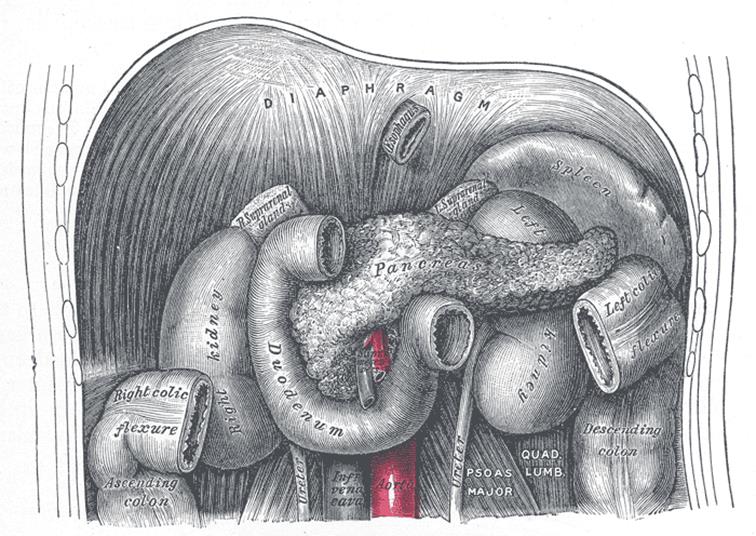
This study was written by
Rabbi Dr. Hillel ben David
(Greg Killian).
Comments may be submitted to:
Rabbi Dr. Greg Killian
12210 Luckey Summit
San Antonio, TX 78252
Internet address: gkilli@aol.com
Web page: http://www.betemunah.org/
(360) 918-2905
Return to The WATCHMAN home page
Send comments to Greg Killian at his email address: gkilli@aol.com
[1] Berachot 30a
[2] Iyov 19:26
[3] Shomer Emunim HaKadmon, argument 1, sec. 27
[4] commentary to Shemot 25:7
[5] Duties of the Heart (Chapter 5)
[6] Mishneh Torah, Hilchot Yesodei HaTorah 2:2
[7] Drash 1:9
[8] “Mitzva” has a nuance beyond “commandment” - its root also means connection or bond (tzavta means bond). A commandment bonds the one who commands with the one who obeys.7 If you can hear My command even when it sounds totally unnatural, even when the cost will be the life of your son, you will be lifted out of the natural into another realm. The order of the natural world will cease to bind you; you will create a new order entirely.
[9] Jewish Encyclopedia
[10] Zohar I, 170b
[11] Meam Loez
[12] see Ramban, Vayikra 19:2
[13] Remember that each letter of the Hebrew alefbet has meaning, so ultimately one can understand a word by adding up the meaning of the letters.
[14] Based on a Maamer of the Tzemach Tzedek, Derech Mitzvosecha, Mitzvot Tzitzith.
[15] Tikkunim 13b
[16] The lowest of the five levels of the soul.
[17] For the ease of the layman, I am using the term ‘mid-brain‘ to describe the organ that includes the medula oblongata, pons, and the mid-brain.
[18] Bereshit (Genesis) 50:24
[19] Shemot Rabba 3:8; Targum Yonatan to Bereshit 50:24; cited by Rashi Shemot 3:18.
[20] Ayn Aya III:26 on Shabbat 12
[21] Zevachim 88b and the parallel sources in Arachin 16a and in Vayikra Rabbah 10,6
[22] Ezekiel 3:7-8
[23] II Chronicles 26:16-20
[24] II Samuel 17:21 and 45
[25] I learned this from my endocrinologist Dr. Jerome Fisher.
[26] Mishna Berura
[27] Berechot 43b
[28] Bereshit (Genesis) 2:7
[29] Thereby definitely knowing whether he is guilty or innocent. ujhrvu is thus derived from jhr reah, smell.
[30] Rather than by sight or hearing. Isaiah 11:3; Sanhedrin 93b.
[31] SA OC 216:6, 217:3
[32] see Kuzari III:16
[33] If the person under the debris has his feet up and his head down. According to one view, one must examine the core, i.e., the heart; according to the other, even though the heart seems to have suspended action, the definitive diagnosis depends on the action or failure of the function of the nose.
[34] Moreh Nevuchim (Guide for the Perplexed): The delicious aroma of the incense was necessary to overcome to stench of death created by so many slaughtered carcasses in the Temple.
[35] Isaiah 11:3
[36] Sanhedrin 93b
[37] Berachot 43b
[38] Similarly, Rabbi Samson Raphael Hirsch calls tears “the sweat of the soul.”
[39] sefer Pachad Yitzchak, Pesach volume, article 43, Rav Yitzchak Hutner, former Rosh Yeshiva of Chaim Berlin.
[40] According to the Ramchal, the Temple’s central Alter, measuring 32 by 32 cubits, is an energy pump dispersing shefa (life-giving energy throughout he Temple and our world. By comparison, our innermost alter is our Heart, Lev in Hebrew, which likewise has a numerical value of 32.
[41] We also have 32 vertebrae in our spines.
[42] Likkutei Levi Yitzchak, Commentary on Tanach, pp. 421-424.
[43] Rabbi Perl
[44] Derech Sicha Vol. 1 p. 144
[45] Igrot Kodesh, Vol. 10 p. 150
[46] These two paragraphs came from Rabbi Ari Enkin.
[47] The previous three paragraphs were written by HaRav Yitzchak Ginsburgh.
[48] Tehillim (Psalms) 75:6, The ArtScroll Tanach Series, Tehillim, A new translation with a commentary anthologized from Talmudic, Midrashic, and rabbinic sources. Commentary by Rabbi Avrohom Chaim Feuer, Translation by Rabbi Avrohom Chaim Feuer in collaboration with Rabbi Nosson Scherman.
[49] Shemot 28:7
[50] Sha’ar HaGilgulim, Hakdamah 31
[51] Or Yohel, parshat Nasso
[52] I learned this understanding of Chanukah from the Yemei Purim, who deduced the significance of Purim -- KiPurim from the Vilna Gaon’s explanation.
[53] Shir HaShirim 2:6
[54] Mechilta
[55] Kedushat Levi often invokes the Kabbalistic Idea of the existence of four Worlds: the highest, the World of “Atzilus,” Emanation, “Beriah,” Creation, “Yetzirah,” Formation and the lowest World, that of “Asiah,” Action, Performance, or Doing. This lowest World is our World, “Olam Hazeh,” “This World,” the World beneath the level of all the Heavenly Worlds inhabited by the Angels, but whose creatures, specifically the human being, “created directly by the ‘hands’ (so to speak) of the Holy One, Blessed is He” has the potential to elevate himself to a level of Holiness above the level of the Angels.
[56] I heard this beginning part from Rabbi Akiva Tatz.
[57] The Jewish Encyclopedia – Right and Left
[58] The finger is pointed like a peg
[59] Lit., ‘what is the reason?’ I.e., what is the meaning of the question? With regard to what are the fingers of man like pegs?
[60] I.e., shall I say that the question is: Why are the fingers divided? They might have been joined together.
[61] Lit., ‘for its thing.’
[62] The little finger.
[63] I.e the distance from the little finger to the thumb of a spread hand.
[64] The finger next to the little finger.
[65] vmhne the taking of a fistful of the meal-offering. v. Lev II, 2.
[66] The middle finger.
[67] The cubit is a measure equal to the distance from the elbow to the tip of the middle finger.
[68] The fourth from the little finger.
[69] And also for priestly service with the ‘finger’; cf. Lev. IV, 6.
[70] The fifth from the little finger.
[71] V. Lev. VIII, 23, 24; XIV, 14, 17, 25, 28. We thus see that every finger has a definite purpose. They therefore had to be divided and function as separate fingers!
[72] Lit., ‘what is the reason (that)?’
[73] Into the ear. He will thus close the ear and not hear the unworthy thing.
[74] Sefer Yetzira, p. 15-16
[75] Sanhedrin 65b
[76] Shabbat 55a
[77] I Melachim (Kings) 8:8
[78] Ibid.
[79] Shir HaShirim (Song of Songs) 1:13.
[80] Yes, I know the heart is slightly off-center, never the less it does have a part precisely in the center.
[81] I Melachim (Kings) 8:8
[82] Ibid.
[83] Shir HaShirim (Song of Songs) 1:13.
[84] Iyov (Job) 19:26
[85] From Magid Devarav Le Yaakov 269
[86] VaYikra 3:4
[87] Tehillim, 84:3
[88] Iyov 31
[89] Yoma, 12a
[90] Deuteronomy 18:3.
[91] Chulin 130a. Rambam, Hilchot bikurim, ch. 9.
[92] The sages (Chulin 134b) teach us that all three gifts allude to the various actions taken by Pinchas at that time in order to save the children of Israel from the plague that had begun killing them.
[93] A zygote (from Greek ζυγωτός zygōtos ”joined” or “yoked”, from ζυγοῦν zygoun ”to join” or “to yoke”), is the initial cell formed when two gamete cells (a sperm and an egg for example) are joined by means of sexual reproduction. In multicellular organisms, it is the earliest developmental stage of the embryo.
[94] This section is an excerpt from: The Month of Cheshvan According to the Book of Formation (Sefer Yetzirah).
[95] see Meor Enayim, de Rossi, Ch. 25
[96] Ex. 25:8, Sifse Cohen
[97] These ideas and words came from Rabbi Jeff Kirshblum.
[98] Tent of Meeting
[99] Bereshit (Genesis) 1:3
[100] The Torah spends 13 chapters describing the Mishkan and its 15 physical substances including gold, silver, copper, wood, wool, linen, animal skins, oil, spices, and gemstones. In contrast, the Torah devotes one chapter to its account of the creation of the universe and three chapters to the revelation at Mount Sinai, and conveys many complex laws by means of a single verse, or even a single word or letter. But if the very purpose of creation is embodied by these bracing rods and foundation sockets, tapestries and furnishings, copper stakes and silver hooks, then obviously, each and every detail is of supreme importance to us. It is crucial that we know that the Menorah had 22 decorative goblets hammered into its design, and that each of the Mishkan's 48 wall panels measured 10 cubits in length and 1.5 cubits in width. It is necessary to define (as the Talmud does) the 39 forms of creative work — from plowing to weaving to lighting to writing — involved in the Mishkan's construction. For here lies the prototype for our life's work of making our world and our lives a home for G‑d.
[101] Ona translates as ‘time’.
[102] Shemot (Exodus) 21:10
[103] Nedarim 20b
[104] Exodus 26:31 Parochet shall separate for you between the Holy and the Holy of Holies.
[105] Why does the parochet contain Cherubim? In Jewish mysticism the imagery of the Cherubim in the Holy of Holies was interpreted as the conjugal union between male and female. Perhaps we can identify a symbolic connection between the parochet and the state of virginity - both embody clear separation, a boundary forbidden to all, permitted only to those duly appointed and at the correct time. Perhaps for this reason, the Temple's desecration by Titus, its destructor, is described in terms of a brutal rape. His breaking into the Temple is thus described: "And he took a sword and slashed the curtain" (Bavli, Gittin 56b). The Bavli continues and relates: "Miraculously, blood spurted out".
[106] The Talmud teaches: “When Israel used to make the pilgrimage [the priests] would show them the Cherubim which were intertwined with one another, and say to them: ‘Behold! Your love before God is like the love of male and female.'”
[107] Bereshit (Genesis) 3:16
[108] Bereshit Rabba 20:7
[109] Bereshit Rabba 1:1
[110] Shir Ha-shirim 7:11
[111] The Ramban (Shemot 26,21) states that the kaporet with its keruvim is "the throne of glory". The Ramban ends his comments on this verse with the words, "the enlightened will understand"; in other words, his explanation is based on the kabbala and he does not intend to explain exactly what he means.
[112] In Shemot (Exodus) 26:34 we see the completion of the Mishkan when we bring the kaporet (the ark cover) into the Mishkan and place it on the ark. *** The different parts and elements of the mishkan are first constructed and then placed inside. Here the aron is brought to the Holy of Holies and only afterward is the kaporet placed on it. The Torah, in fact, emphasizes, and apparently requires, that the kaporet be placed on the aron "in the Holy of Holies". This makes it clear that the aron, as a "kli mikdash," is complete without the kaporet. Placing the kaporet on the aron is part of constructing THE MISHKAN, not the construction of the aron..
[113] Debarim 34:6
[114] Yeshayahu 28:8
[115] Tehillim 5:6
[116] Tehilim 103:1
[117] Berakhot 15A
[118] HaAri
[119] VaYikra 11:43
[120] Macot 16B
[121] Yeshayahu 30:22
[122] Mishlei 3:6
[123] Strive for Truth, vol. III, by Rabbi Eliyahu E. Dessler, rendered into English by Aryeh Carmell.
[124] Shemot (Exodus) 17:6
[125] Mechilta ad. loc.
[126] Bereshit (Genesis) 3:15
[127] Repentence
[128] Shemot (Exodus) 3:5
[129] See Strive for Truth II, pg. 52.
[130] Bereshit (Genesis) 18:4
[131] Yalkut, Parashat Vayera.
[132] Dream Interpretation From Classical Jewish Sources, By Rabbi Shelomo Almoli, Translated and Annotated by Yaakov Elman.
[133] The ArtScroll Tanach Series, Tehillim, A new translation with a commentary anthologized from Talmudic, Midrashic, and rabbinic sources. Commentary by Rabbi Avrohom Chaim Feuer, Translation by Rabbi Avrohom Chaim Feuer in collaboration with Rabbi Nosson Scherman, on verse 119:73.
[134] This section is based on the work of Hanan Yitzhak ben Sh’lomo Shimon u’Berachah Hannah
[135] Niddah 55b
[136] Ab. R. N. xxxi.
[137] Lev. R. xvi.
[138] Yoma 80a
[139] Ḥul. 43a
[140] ibid. 44a
[141] ibid. 46a
[142] “simpona”; ibid. 48b
[143] Leviticus 12:2-5
[144] meruḳḳam
[145] mi-ẓorat adam
[146] Niddah iii.