
The Festivals of the Jewish People
By Rabbi Dr. Hillel ben David (Greg Killian),
Paqid Adon Poriel ben Avraham, & Paqid Adon Mikha ben Hillel

History tells us about a people that have been present for most of human history. The Jews have been around for several millennia, existing before and after Greece and Rome. With such a vast and rich history, one would expect that Judaism would have many festivals. One would also expect that these festivals would be significant and meaningful in religious, as well as historical, ways. This article is meant to teach the reader not only the historical, but also the religious significance and meaning of the festivals to Jews, and to instill an appreciation for these prophetic festivals. If the reader is interested in becoming a prophet, then he will surely find this article of great interest.
The reader is probably familiar with the festivals of Christmas and Easter. These Christian holidays are normally festive and happy days of the year. Families get together and exchange gifts, hide and find eggs (which, oddly enough, were laid by a bunny), enjoy good conversation, enjoy good food, and generally have a good time. Unfortunately, a critical piece is missing from this puzzle: Man's correct answer to HaShem's call. What this article proposes to accomplish is to find the correct way to answer HaShem's call in these prophetic festivals as proscribed by the scriptures and celebrated by Mashiach and his followers.
Jews spend every week preparing for the prophetic Sabbath, which starts on Friday night. We see time go by in terms of how many prophetic Sabbaths have passed. Our lifestyle encourages us to prepare for the next prophetic Sabbath and coincidentally for the next prophetic festival (especially prophetic festival Sabbaths, explained later). To Jews, the festivals are Moedim, appointments, with HaShem. These are times designated by HaShem for the Jewish people to unite with each other and with our Creator, under the leadership of the Mashiach to prophesy of things yet to come. The significance of this cannot be underestimated!
The Biblical festivals are also Mikraot, rehearsals, set by HaShem. We rehearse certain events in time in order to be prepared for, and prophesy about, future events. This is significant, since to Jews this means that our festivals are prophecies of things to come:
Colossians 2:16 Let no man therefore judge you in meat, or in drink, or in respect of an holyday, or of the new moon, or of the sabbath days: 17 Which are a shadow (prophecy) of things to come; but the body of Mashiach.
The festivals allow us to actively prepare for something that can happen this year or the next! Therefore these appointments with HaShem place us at the right place, at the right time, doing the right things, as prophets always do!
This contrasts with the festival calendars of others, who offer a mere role of being a spectator, marveling at miracles, rather than being a performer and harbinger of future events (i.e. a prophet). What these Biblical festivals offer is the chance for a human being to make a real connection with HaShem, and become HaShem's helpers in bringing about redemption to all mankind.
As can be seen, the Biblical festivals are not just occasions for giving presents, eating candy and good food, and having a good time with friends and family (although we do those as well). They include those things and so much more! They are very significant times of the year designed by HaShem for us to connect with Him, to connect with our people, and to prepare and prophesy about future events in human history.
Now that we have been introduced to the Jewish understanding of the essence of these prophetic festivals, it seems appropriate to provide a list of all the prophetic festivals including the dates on which they are celebrated and a small description of each of them. See the links for each festival to discover more ways to prophesy!
Pesach - Passover (Nisan 15) The first Pilgrimage Festival
Pesach commemorates the liberation of the Israelites from Egypt. The first Seder (royal banquet) is on the evening of the 14th (this is the beginning of the 15th). On the evening of the 15th (This is the beginning of the 16th), the second Seder (royal banquet) is held, and the Sefirat HaOmer, prophetical counting of the Omer, starts. The Omer is a prophetic counting down of the days from the time of the departure from Egypt, until the time the Torah was received at Shavuot (Pentecost).
See also sheni.html for information on the second chance to celebrate Pesach.
By being prophetically obedient and partaking of these royal banquets Hakham Shaul (Apostle Paul) instructs that we prophetically announce to the whole world that:
1 Corinthians 11:26 As we eat this (matza) bread and drink of the third cup (during the Passover royal banquet) we do announce the Master’s death till he comes (again).
Sefirat HaOmer (Counting The Omer)
Sefirat HaOmer also known simply as ‘The Omer’ (Hebrew for counting), this 49 prophetic day period between Pesach and Shavuot is defined by the Torah as the period to bring special offerings to the Temple in Jerusalem. This makes physical the spiritual connection between Pesach (Passover) and Shavuot (Pentecost). Pesach marks the physical liberation from Egypt and Shavuot marks the receiving of the Torah, the spiritual liberation. The Omer begins the second night of Pesach.
Traditionally, the Sefirah is a time of sadness. During this period, twelve thousand pairs (24,000) of Rabbi Akiva's disciples died. This occurred during the Hadrianic persecution that followed the Bar Kochba revolt, in which Rabbi Akiva was involved.
From the first day of the count until Lag B'Omer (the 33rd prophetic day of the count), it is a custom to not marry, or have haircuts, or do anything involving dancing or music.
Yom Ha'Shoah (Nisan 27) Holocaust Remembrance Day. See Yom Yerushalayim.
Yom HaZikaron (Iyar 4) Day of remembrance.
In honor of Israeli veterans of the War of Independence. See Yom Yerushalayim.
Yom Ha'atzma'ut (Iyar 5) Independence Day.
See Yom Yerushalayim.
Lag B'Omer (Iyar 18 -The 33rd day of the Omer)
The prophetic day of Lag B'Omer takes place during the Sefirah. During this day there was a break in the Hadrianic persecution. Weddings and joyful occasions are permitted. On this prophetic day of Lag B’Omer we prophesy about the ascension of the Master of Nazareth.
Yom Yerushalayim (Iyar 28)
This say marks the prophetic reunification of the holy city of Jerusalem, and the Temple Mount under Jewish rule almost 1900 years after the destruction of the Temple, at the end of the six-day war in 1967.
The Hallel [a series of prayers of praise from the Psalms] is recited. Chief Rabbis advocate the prophetic recitation Hallel with a special blessing.
The new holidays of Yom Yerushalayim, Yom HaZikaron, Yom Ha'atzma'ut and Yom HaShoah are still too new for any consensus to have developed in the Jewish community as to the appropriate liturgy.
Shavuot (Sivan 6, 7) The second Pilgrimage Festival, it is also known as The Feast of Weeks, Hag Haqatsir (The harvest festival), Hag HaShabuot, or just Atzeret (The conclusion of Pesach). [Literally, the Hebrew word 'Atzeret' means conclusion.] This prophetic festival is known in Greek and in many other languages as Pentecost.
Shavuot marks the end of the counting of the Omer. According to Rabbinic tradition, the Ten Commandments were given on this day. It is customary to prophetically read the Book of Ruth on this day.
The Fast of the Seventeenth of Tammuz (Tammuz 17)
Mentioned by the prophet Zechariah (the fast of the fourth month), the 17th of Tammuz marks the beginning of the destruction of Jerusalem. On this day in 70 C.E. the Romans breached the walls encircling Jerusalem, which led to the destruction of the second Temple. (During the siege preceding the first destruction of the in 587 BCE, the Romans breached the walls on the ninth of Tammuz (Jeremiah 39:2), but both events are commemorated on the same date. The actual destruction of the Temple itself took place on the 9th of Av--both in 587 BCE and 70 C.E. See Tisha B'Av.)
Traditionally, this day is observed by fasting. The fast begins at sunrise and concludes at sunset of the same day. This applies to all fasts, with the exception of Yom Kippur and Tisha B'Av, both of which begin on the preceding night. Fasting is the only restriction imposed on Tammuz 17; Working and bathing as usual are permitted. This prophetic fast announces future great joy that will be celebrated on this day when all reign of evil be vanquished.
The Three Weeks (Tammuz 17-Av 9) and The Nine Days (Av 1-Av 9)
Traditionally, the days between the 17th of Tammuz and the 9th of Av are considered days of mourning, for they witnessed the collapse of Israel. In the Ashkenazi Jewish minhag (custom), weddings and other joyful occasions are traditionally not held during this period.
A further element is added within the three weeks, during the nine days between the 1st and 9th day of Av. During this period, the pious refrain from eating meat and drinking wine, except on Shabbat or at a Seudat Mitzva (such as a Pidyon Haben or completing the study of a religious text.) Many minhagim (rites) observe a ban on cutting one's hair during this period. However, the length of time varies: some refrain only during the week in which Tisha B'Av falls. Tisha B'Av (Av 9) the saddest day of the Jewish calendar. On this day both the First and were destroyed. (587 BCE and 70 C.E.) On this day in 1290, King Edward I signed the edict compelling the Jews to leave England. The Jewish expulsion from Spain in 1492 also occurred on this day. Tisha B'Av also marked the outbreak of World War I.
The fast of Tisha B'Av begins after Arbit (Maariv – evening)) services, Sefer Eicha (the book of Lamentations) is read. This is followed by the reading of Kinot, sorrowful hymns that emphasize the import of the fast. On the day of the ninth, Talit and tefilin are not worn during shacharit (morning) services, as a sign of mourning. This prophetic fast announces future great joy that will be celebrated on this day when all reign of evil be vanquished.
New Year for Animal Tithes (Elul 1)
This day is set up prophetically by the Mishna as the New Year for animal tithes, which roughly corresponds to a New Year for taxes. This is similar to the tax deadline in the, on April 15, in the United States. This holiday has not been observed since the Babylonian Diaspora.
Rosh Hashanah (Tishri 1) Also known as Yom HaDin (Judgment Day), Yom HaZikaron (Day of Remembrance) and Yom Teruah (Day of breathing or blowing).
 This
holiday celebrates the creation of Adam, and therefore of the world, and as such is the civil new year for calculating civil calendar years, sabbatical and jubilee years, vegetable tithes, and tree-planting
(determining the age of a tree). This holiday is characterized by the prophetic
blowing of the shofar a hundred
times. During the afternoon of the first
day, some follow the prophetic practice of tashlik, symbolically casting
away sins by throwing stones into the
waters.
This
holiday celebrates the creation of Adam, and therefore of the world, and as such is the civil new year for calculating civil calendar years, sabbatical and jubilee years, vegetable tithes, and tree-planting
(determining the age of a tree). This holiday is characterized by the prophetic
blowing of the shofar a hundred
times. During the afternoon of the first
day, some follow the prophetic practice of tashlik, symbolically casting
away sins by throwing stones into the
waters.
Fast of Gedaliah (Tishri 3) The Fast of the Seventh Month
This fast commemorates the slaying of Gedaliah Ben Akhikam, whom Nebuchadnezzar appointed governor of after the first destruction of the (Jeremiah 40:7, II Kings 25:22). His death was the final blow to hopes that the Jewish state might survive the Babylonian domination. This prophetic fast announces the future great joy that will be celebrated on this day when all evil will be vanquished.
Yom Kippur (Tishri 10) The Day of Atonements (coverings)
This is the most important day of repentance (returning), the holiest and most solemn day of the year. Its central theme is atonements and reconciliation. Traditionally, there are prohibitions on eating, drinking, bathing and conjugal relations, and thus prophesying that we can be like the angels in the age-to-come if we too prophesy by joining the Jewish people in the observance of these critical prophetic festivals.
It is customary for the pious to immerse in the mikveh (pool of water) on Erev (the evening before) Yom Kippur to prophesy that by HaShem’s grace a person can become sinless before HaShem.
Yom Kippur services begin with the prophetic Kol Nidre, which must be recited before sunset. A talit (prayer tent/closet) is donned by men for evening prayers, the only evening service of the year in which this is done. The Ne'ilah service is a special service held only on the day of Yom Kippur and deals with the closing of the gate, the last chance for repentance. Yom Kippur comes to an end with the prophetic blowing of the shofar, which marks the conclusion of the fast.
Succoth (Tishri 15) The third Pilgrimage festival, it is also known as The Feast of Booths Tabernacles), The Feast of Ingathering, or just simply The Hag (The Festival).
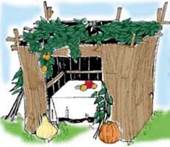 Succoth is a seven day festival, with an eighth day: the first day is celebrated as a Sabbath, the following five days (Chol HaMoed) are weekdays that
retain some aspects of the festival, the seventh day, Hoshanah Rabbah (the Day
of the Great Hosanna), and the eighth (Shemini Atzeret) days have special prophetic
observances of their own.
Succoth is a seven day festival, with an eighth day: the first day is celebrated as a Sabbath, the following five days (Chol HaMoed) are weekdays that
retain some aspects of the festival, the seventh day, Hoshanah Rabbah (the Day
of the Great Hosanna), and the eighth (Shemini Atzeret) days have special prophetic
observances of their own.
Succoth commemorates the life of the Israelites in the desert during their journey to the Promised Land. During their wandering in the desert they lived in booths (Succoth), and tasted of many of the miracles that we shall experience forever in the age-to-come.
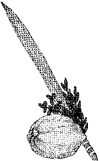 Four species of plants are prophetically
used to celebrate the holiday: The lulav (palm branch), etrog (lemon-like
citron), myrtle and willow. The etrog is handled separately, while the other three species are bound together, and are
collectively referred to as the lulav.
Four species of plants are prophetically
used to celebrate the holiday: The lulav (palm branch), etrog (lemon-like
citron), myrtle and willow. The etrog is handled separately, while the other three species are bound together, and are
collectively referred to as the lulav.
During the five intermediate days of Succoth it is customary to read the book of Ecclesiastes to prophesy to the whole world about the futility of a life lived in the pursuit of worldly pleasures at the expense of pursuing the pleasures of the age-to-come and a life lived in total blessed prophetic obedience to HaShem, most blessed be He!
Hoshanah Rabbah (The seventh day of Succoth).
This day closes the period of repentance that began on Rosh Hashanah. Tradition has made this day into a sequel to the Days of Awe, lengthening the period of penitence and postponing the prophetic day when final sentence is to be rendered.
Shemini Atzeret (Tishri 22) The eighth day of Succoth.
In the Talmud it is written that "the eighth day [of Succoth] is a separate festival", so Succoth is really observed as seven days and Shemini Atzeret is observed as a separate holiday. It marks the beginning of the prophetic rainy season (latter rains) in Israel.
Simchat Torah (Tishri 23) Rejoicing with the Torah. The finale of Succoth.
In Israel, Succoth is eight days long, including Shemini Atzeret. Outside Israel (in the Diaspora), Succoth is nine days long. Thus the eighth day is Shemini Atzeret and the extra (ninth) day is Simchat Torah. In Israel, the festivities and customs associated with Simchat Torah are celebrated on Shemini Atzeret. The last portion of the Torah is read, every year, on this day for those who use the annual Torah lectionary. For those who use the triennial or septennial Torah lectionary, the same portions are read only once in three and a half years. The following Shabbat the reading of the Torah starts again at the beginning of Bereshit, Genesis. Festivities begin in the evening with evening prayers. There are seven prophetic hakafot (processions) of the Torah around the Synagogue. Services are joyous, and humorous deviations from the standard service are allowed and even expected.
Chanukah (Kislev 25) Also known as Hag Ha'urim (The Festival of Lights) and The Feast of Dedication.
Chanukah is a second chance to celebrate Succoth. This story of Chanukah is preserved in the books of the First and Second Maccabees. These books are not part of the Tanakh (Hebrew Scriptures), but are part of the Apocrypha (Hebrew historical and religious material that was not codified as part of the Bible.) The prophetic miracle of Chanukah is referred to in the Talmud, but not in the books of the Maccabees. It marks the defeat of Assyrian forces that had tried to prevent from practicing Judaism. Judah Maccabee and his brothers destroyed the overwhelming forces and rededicated the Temple. The eight day festival is marked by the prophetic kindling of lights with a special Menorah, called a Chanukiah.
The Fast of the Tenth of Tevet (Tevet 10)
The fast marks the beginning of the siege by the forces of Nebuchadnezzar. This prophetic fast announces future great joy that will be celebrated on this day when all reign of evil be vanquished.
Tu B'Shevat (Shevat 15) The New Year for trees.
This day was set aside in the Mishna on which to bring fruit tithes. It is still prophetically celebrated in modern times. In the 1600's, Rabbi Yitzchak Luria of Safed and his disciples created a short Seder, somewhat reminiscent of the Seder observed on Pesach, that explores the holiday's prophetic and hidden themes.
This festival commemorates the events found in the Book of Esther. The Shabbat preceding Purim is called Shabbat Zakhor (the Sabbath of remembrance). The day before Purim, Adar 13, is the Fast of Esther. The book of Esther is written in the form of a scroll, the Megillah. It is chanted on Purim in the evening and on the next day after the Torah reading to prophesy about important events yet to come.
In the Book of Esther, the rejoicing in the walled cities took place one day later (Adar 15) than elsewhere (Adar 14). Therefore, this day has come to be known as Shushan Purim. To the present day, Purim is prophetically observed on Adar 15 in such cities that are encircled by walls.
Nisan is the first month of the Biblical calendar; in Temple times, and was celebrated as the New Year for Israelite Kings (i.e. Mashiach), and months. In addition to this "New Year", the Mishna prophetically sets up three other New Year's: Elul 1, for animal tithes, Tishre 1 (Rosh HaShanah), and Shevat 15, the New Year for Trees/fruit tithes. Ever since the Babylonian Diaspora, only Rosh HaShanah and Tu B'Shevat are still celebrated. When Mashiach returns and is enthroned as the King over Israel this prophetic day of Nisan 1 will be fully celebrated.
Tzom Bechorot: The Fast of the First Born (Nisan 14)
In commemoration of the slaying of the first-born sons of the Egyptians as the Tenth Plague visited on Pharaoh, while their Hebrew counterparts were "passed over" (i.e. spared, hence the English name Passover for Pesach), first-born sons are prophetically required to observe a minor fast on the day before Passover. However, if they attend a simcha (joyous occasion) such as a wedding or a siyum (a celebration marking the completion of the study of a tractate of the Talmud), they are prophetically allowed to break the fast. Therefore most Orthodox synagogues arrange for a siyum on that day.
There is a group of seven festivals that are also prophetic festival Sabbaths. Prophetic Festival Sabbaths are days in the festival that also take on the splendor of the weekly Sabbath. They are:
|
FESTIVAL SABBATH |
SABBATHS |
OUTSIDE ISRAEL SABBATHS |
|
|
|
|
|
Pesach Seventh Day. |
Nisan 15 |
Nisan 15 and 16 |
|
Nisan 21 |
Nisan 21 and 22 |
|
|
|
|
|
|
Sivan 6 |
Sivan 6 and 7 |
|
|
|
|
|
|
Rosh Hashanah – Feast of Trumpets |
Tishre 1-2 (one long day) |
Tishre 1-2 (one long day) |
|
|
|
|
|
Yom Kippur – The Day of Atonements |
Tishre 10 |
Tishre 10 |
|
|
|
|
|
Succoth – The Feast of Tabernacles Shemini Atzeret – The Eighth Assembly |
Tishre 15 |
Tishre 15 and 16 |
|
Tishre 22 |
Tishre 22 and 23 |
|
(Nisan) |
15 Full Hallel At seder |
16 half Hallel |
17 half Hallel |
18 half Hallel |
19 half Hallel |
20 half Hallel |
21 half Hallel |
22 half Hallel |
|
(Sivan) |
6 Full Hallel |
7 Full Hallel |
|
(Tishri) |
1 No Hallel |
2 No Hallel |
|
(Tishri) |
10 No Hallel |
|
(Tishri) |
15 Full Hallel |
16 Full Hallel |
17 Full Hallel |
18 Full Hallel |
19 Full Hallel |
20 Full Hallel |
21 Full Hallel |
22 Full Hallel |
23 Full Hallel |
|
(Kislev & Tevet) |
25 Full Hallel |
26 Full Hallel |
27 Full Hallel |
28 Full Hallel |
29 Full Hallel |
30 Full Hallel |
1 Full Hallel |
2 Full Hallel |
|
(Adar) |
14 No Hallel – The Megilah of Esther is Hallel |
Most Jews would consider these to be the most significant of the prophetic festivals, largely because they require more prophetic activity than the other festivals. For instance, Pesach (Passover) has two days in which the Pesach royal banquet is to be eaten and thus preparations in advance must be made. It also requires for each house to be completely cleaned of chametz (leaven) for the whole week of the prophetic festival, and that no G-d fearing person eats any leaven during that Passover week. See the links above to discover more.
In the previous two lists we saw some peculiar vocabulary being used. They seemed to be dates, but not from any calendar you've ever used! That's because they are dates in the Biblical calendar used by all genuine prophets.
Jews count time in a different way then the rest of humanity do and this is most evident in the use of a different calendar. The Gregorian calendar is the one used by most people today. It is the standard calendar used in the business world and is solar-based. The Biblical calendar is used by Jews for prophetic purposes and is lunar and solar-based. Because the Biblical calendar is lunar and solar-based, new months are measured by the phases of the moon. With every new moon there is a new prophetic month.
The months in the Biblical calendar are (in order):
Nisan (approx. March-April)
Iyar (approx. April-May)
Sivan (approx. May-June)
Tammuz (approx. June-July)
Av (approx. July-August)
Elul (approx. August-September)
Tishre (approx. September-October)
Heshvan (approx. October-November)
Kislev (approx. November-December)
Tevet (approx. December-January)
Shevat (approx. January-February)
Adar (approx. February-March)
It's important to remember that when the Bible speaks about months, it speaks about months relative to the Biblical calendar, not the Gregorian. This includes both the Tanakh (the so called ‘Old Testament’) and the Nazarean Codicil (the so called ‘New Testament’). Therefore this is a key fact to understand when prophesying or interpreting Biblical prophecy.
Another important thing to keep in mind is that the Bible determines a new day to start at sun-down rather than at 12:00 AM. This affects the time on which prophetic weekly Sabbaths and festivals start, as well as the right time to start our prophetic work.
THE LEAP YEAR AND ITS AFFECT
ON THE FESTIVALS
As all societies, cultures, nations, governments and people have certain dates that they observe according to their own calendars, so Yeshua, the Master of Nazareth, lived in a society whose days were governed by the Jewish prophetic calendar; where he gave his lectures, as recorded in the “gospels”, in their appropriate prophetic times. Rabbi Hillel II, a relative of Yeshua, fixed the calendar based on mathematical and astronomical calculations to a nineteen-year cycle. Within this cycle they have calculated into it leap years by which the calendar, along with its prophetic festivals, will continually remain in a fixed state rather than jump through the seasons. The Rabbis made sure that the Biblical year harmonizes with the solar and lunar cycle, using the nineteen-year cycle of Meton (c. 432 B.C.E.) Meton discovered that where the years were dependant on using both the sun and the moon these get back into synchrony every 19 years.
The word calendar comes from a Latin root meaning “account book” which is a system of determining the beginning, length, and divisions of a year and for arranging the year into days, weeks, and months. It is also used as a schedule of pending court cases, bills coming before a legislature, planned social events and more. The Biblical calendar it is also used for determining the dates of HaShem’s prophetic festivals, Rosh Hodeshim (new moon celebrations that mark the beginning of a Biblical and prophetic month), Shabbatot (prophetic weekly Sabbaths) and prophetic leap years.
The Rabbis (masters of the Bible) have calculated that within this nineteen-year cycle there are twelve qesidra (regular) years; that contain 354 days within a twelve month period. When the biblical month of Heshvan has 29 days and the biblical month of Kislev has 30 days it is determined as a qesidra year. When both months have 30 days the year is then called a Shelema (complete or leap) year.
The number of days in a Jewish year is calculated by the prophetic new moons that appear which is known as a lunar year. It is also based on the revolution of the earth around the sun to determine seasons which is known as a solar year. A lunar year of 354 days is eleven days shorter than the solar year. If the Jewish calendar were based only on the lunar calculation, we would find Pesach (Passover) being observed in the spring in one year, in the winter some years later, then in the fall and then in the summer and, after 33 years, in the spring again. But the Torah commanded that Pesach must be prophetically celebrated in the spring (Shemot [Exodus] 13:4). This tells us that the average length of the Biblical lunar year must be adjusted to the solar year. Now we can begin to appreciate and understand the effect that the prophetic leap year has not only upon the calendar, but also on the prophetic festivals themselves, as Yeshua taught.
The prophetic leap years, in each cycle of nineteen years, are spaced every two to three years so that the 3rd, 6th, 8th, 11th, 14th, 17th and 19th years are prophetic leap years. The prophetic leap month of Adar I is placed on the calendar in the 3rd, 6th, 8th, 11th, 14th, 17th and 19th years of the cycle. Adar II is normally just called Adar. Adar I is 30 days long and Adar II is 29 days long, but when the prophetic leap month of Adar I is placed BEFORE Adar II, hence the need for clarification. On Rosh Hashanah (the Jewish new year), Thursday, October 2, 1997 CE (Biblical calendar year 5758 AM) began the first year of the cycle. On Rosh Hashanah, 2016 will be the end in this cycle. Within this period, Rosh Hashanah of the year 2000 started the second leap year, the third started in 2003, the fourth will start in 2005, the fifth in 2008, the sixth in 2011, and the seventh in 2013.
THE HISTORICAL
AND BIBLICAL ROOTS OF THE FESTIVALS
In the United States, as in all countries, we have our solemn days in which we celebrate days as a remembrance of historical events. The fourth of July celebrates the great day in which the Independence of the United States was won from the British and its Monarch. On the last Thursday in the month of November Americans celebrate Thanksgiving, the day in which the Pilgrims and Native Americans sat down, in peace, to give thanks to HaShem for His abundant provision. This is also the case with the Biblical-prophetic calendar. The Biblical calendar is full with past, present, and future events that we celebrate. Each festival has a rather large number of prophecies attached to it and as we celebrate them we prophesy of present and future events unfolding before us.
|
Festival |
Historical Event |
Prophecy |
|
HaShem redeemed and liberated Israel from Egypt |
Speaks about the future redemption which is modeled after the redemption from Egypt. |
|
|
Sefirat HaOmer (Counting the Omer) |
Smikha (Rabbinical ordination) of Rabbi Akiva’s students and The Master of Nazareth’s students |
Counting to the giving of the Love of the people of Israel and all genuine G-d fearers. |
|
Shavuot – Feast of Weeks - Pentecost
|
This is the day the Torah was given to Israel. |
Speaks about the time when Torah will be completely written on our hearts. |
|
Rosh Hashanah - Feast of Trumpets |
Speaks about the coronation of King Mashiach. |
|
|
Yom HaKippurim - |
Atonement after the golden calf |
Speaks about the wedding of the Lamb. |
|
Hag HaSuccoth - Feast of |
Wandering in the wilderness. |
Joy – Speaks about the wedding feast of the Lamb and the perpetual dwelling with HaShem. |
What makes the history in Biblical festivals more real and vibrant than the history celebrated in the festivals of other nations? The festivals are markers to relive the events of the past and prophecy about the future. Its history tends to ripple itself throughout the ages in each generation, as we relive the events being remembered and its future consequences. We shall see examples of how the historical events in the Biblical calendar have an effect on the observance, the spirit and meaning of these prophetic festivals on the special prophetic seasons in which they are celebrated.
Because every prophetic festival appoints its own theme and idea for which it is observed, we ought to be able to see other Torah events which have the same themes. The first prophetic festival sanctified by HaShem is Pesach (Passover).
Vayikra (Leviticus) 23:5 HaShem’s Passover begins at twilight on the fourteenth day of the first month.
Pesach was also the first prophetic festival to be observed with Cain and Abel’s offering to HaShem (Bereshit [Genesis] 4:1-4).
which sets the prophetic theme for redemption on the Hebrew month of Nisan 15. Any event, throughout the timeline of history, which mimics the themes identified in the Torah, are to have occurred in its thematic festival and date. Let’s examine a couple of the events which took place in the festivals:
|
Delivered from: |
Scripture/ Referrence |
|
|
|
|
|
|
Abram leaves Ur |
The exile in Ur |
Bereshit (Genesis) 15:6-16 |
|
Abram goes to Egypt |
Egyptian bondage and exile |
Bereshit (Genesis) 12:10 - 13:4 |
|
Circumcision pain |
Bereshit (Genesis) 18:1-18 |
|
|
Angels visit Lot |
The Sodom exile |
Bereshit (Genesis) 19:1-29 |
|
Isaac is born and is Bound |
Jews delivered from death |
Bereshit (Genesis) 18:1-10 |
|
|
Scripture/ Reference |
|
|
Lag BaOmer |
|
|
|
This was day 138 of the swelling of the water on the earth in the days of Noah. Day 138. |
|
Bereshit 7:24
|
|
Yocheved had been hiding Moses for seventy days, after a 6 month and one day pregnancy |
|
|
|
On Lag B’Omer HaShem sent The Bread from Heaven (manna) |
|
|
|
Hezekiah was celebrating the fourth day of the Second Hag ha-Matza |
|
|
|
|
|
|
|
The Torah was given on Shavuot |
Torah was assign to the People of Israel |
Shemot (Exodus) 19:1-11 |
|
Leadership was appointed |
Leadership was assigned to the People of Israel |
|
|
The Torah was delivered in all seventy languages |
Israel assigned with the duty of giving all nations the Torah |
Shemot (Exodus) 5:9 |
|
Judges 21:15-24 |
||
|
Abraham defeats the 5 kings and gives tithes to Melchizedek.
|
Bereshit (Genesis) 14
|
Upon realizing that there are critical prophetic energies that are attached to each festival, one begins to find the significance and powers of time in that the future is found in the repetition of history and the Biblical festivals capture this very prophetic spirit. The careful observer will find that history does repeat itself throughout the ages. Yet it is not as fixed and as evident as that which is shown through the Biblical festivals. During the prophetic fasts of the fourth and fifth month it becomes clear that the prophetic spirit and energy of calamity and tragedy befalls at this time in the past and in the present, but in the future these prophetic fasts will be occasions for much joy..
In the prophetic fast of the fourth month (Zechariah 8:18-19), the 17th of Tammuz, the Talmud tells us that we fast because of 5 tragedies that fell upon the Jewish people throughout their history (Taanith 26b) and they are:
1. The "Luchot," the tablets upon which the Ten Commandments were engraved, were broken by Moshe; (Exodus 32:19)
2. The “Korban Tamid”, the continual daily sacrifice, was discontinued;
3. The wall around the city of Jerusalem was breached; (Jeremiah 52:6-7)
4. Apostamus burned the Torah scroll; (Talmud Yerushalmi- Taanith 4:5),
5. An idolatrous image was placed in the Holy Temple. (Daniel 12:11 , Arachin 11b)
There were also other prophetic events that happened on this day. It is recorded in Genesis 8:9 that Noah sent the dove out of the ark to see if the waters had receded. The Levites also killed 3000 Israelites and became set apart to HaShem (Exodus 32:25-29). In 1239, Pope Gregory IX ordered the confiscation of all manuscripts of the Talmud. In 1391, more than 4,000 Spanish Jews were killed in Toledo and Jaen, Spain. In 1559 the Jewish Quarter of Prague was burned and looted. In 1944, the entire population of the Kovno ghetto was sent to the death camps. In 1970, Libya ordered the confiscation of all Jewish property. (See: tamuz17.html)
Concerning the prophetic fast of the fifth month, the 9th of the month of Av, the following events happened on this day:
The following is a comprehensive list of the tragedies of Tisha B'Av. They are tragedies of various degrees. Here's the list:
1. 1312 BC - The sin of the spies who examined Canaan caused HaShem to decree that the Benei Yisrael, the Children of Israel, who left Egypt would not be permitted to enter the land of Israel.
2. 421 BC - Destruction of the first temple by the Babylonians.
3. 70 AD - Destruction of the second temple by the Romans.
4. 132 AD (135AD?) - Betar, the last fortress to hold out against the Romans during the Bar Kochba revolt fell, sealing the fate of the Jewish people. Over 100,000 Jews were slaughtered.
5. 133 AD (136AD?) - One year after the fall of Betar, the Temple area was plowed.
6. 136 AD - Jerusalem destroyed and the Roman city Aelia Capitolina established in its place.
7. 1095 AD – First Crusade declared by Pope Urban II. 10,000 Jews killed in first month of the Crusade. Crusades bring death and destruction to thousands of Jews, totally obliterate many communities in Rhineland and France.
8. 1290 AD – Expulsion of Jews from England by King Edward I, accompanied by pogroms and confiscation of books and property.
9. 1492 AD - Expulsion of Jews from Spain by King Ferdinand.
10. 1555 AD - Ghetto established in Rome. Pope Paul IV moves all the Jews into a foul smelling area near the Tiber River. The Jews were forced to pay for the wall that was built around the ghetto.
11. 1571 AD – The ghetto of Florence Italy was established.
12. 1648 AD – Three thousand Jews perished in Konstantynow in what were known as the Chmielnicki massacres
13. 1670 AD – The last group of Jews were forced to leave Austria.
14. 1882 AD – The Turkish government, which then controlled the Holy-land, barred immigration of Russian and Romanian Jews and also banned the sale of land in Palestine to Jews.
15. 1914 AD – WW1 begins. 75% of all Jews lived in war zones.
16. 1940 AD – Hitler presented his plan to the Nazi Party on the "Final Solution" to the Jewish problem
17. 1941 AD – Hitler’s plan was implemented.
18. 1941 AD – A decree went forth expelling all Jews from Hungarian Ruthenia
19. 1942 AD – Deportation from Warsaw Ghetto to the concentration camp at Treblinka began.
20. 1989 AD – Iraq walks out of talks with Kuwait
21. 1990 AD – Gulf war starts.
22. 1994 AD – Deadly bombing of the Jewish community center in Argentina, killing 86 and wounding 300.
THE HISTORICAL EVENTS
IN THE NAZAREAN CODICIL
The historical events that happened during these dates according the Jewish calendar further support how the prophetic spirit of each event is captured in every festival. Any student of the Scriptures, and of the Master of Nazareth, would be well advised to accustom themselves to the time and order of HaShem as shown through the Bible. The Nazarean Codicil also throws light into the prophetic festivals and their special meaning as shown in the table below:
|
NAZAREAN CODICIL |
|
|
|
|
|
|
Yochanan (John) 19:42, Yochanan (John) 20:19 |
|
|
|
|
|
Yochanan (John) 6:31 II Luqas (Acts) 1:3 |
|
|
|
|
|
II Luqas (Acts) 2:1-47 I Yochanan (1 John) 3:1 |
|
DAYS OF MOURNING |
|
|
|
Yochanan (John) 2:18-22, Yochanan (John) 16:19-20 |
|
ROSH HASHANAH - Festival of Trumpets |
|
|
|
1st Corinthians 15:2 Matityahu (Matthew) 24:31 Revelation 8:6 (?) |
|
|
|
|
|
Revelation 1:10 |
|
SUCCOTH - Festival of Tabernacles |
|
|
|
I Luqas (Luke) 9:27:36 Yochanan (John) 1:14 Yochanan (John) 7:37-38 |
|
CHANUKAH - Festival of Dedication |
|
|
|
Yochanan (John) 10:22-42 |
However, the historical events and prophetic energies of the festivals are not the only meanings and importance given to them. The festivals also symbolize by means of a prophetic parable the husband/wife relationship, leading to marriage, between HaShem and His bride—the people of Israel, as it is written in Yeshayahu (Isaiah):
Yeshayahu (Isaiah) 62:5 For, as a young man marries a virgin, so shall your sons marry you: and as the bridegroom rejoices over the bride, so shall your G-d rejoice over you.
We will see the prophetic parable of the marriage relationship as defined by events in Scripture and in the Nazarean Codicil in the table below:
|
PROPHETIC FESTIVAL |
MARRIAGE RELATIONSHIP |
MESSIANIC THOUGHT |
EXPLANATION |
|
|
The courtship.
The friend of the bridegroom comes to escort the bride (Moses).
During this time the groom checks for any hint of unfaithfulness (Meribah).
During the week before the wedding, it is customary for the groom and bride not to see each other, even during the day.
|
Yochanan (John) 3:29 "For this cause a man shall leave his father and mother."
|
This happened in two stages: first we left the people of sin, then we left the land of sin. This feast is also known as Hag HaMatzah - Unleavened Bread. The main requirement was to avoid all leaven for seven days. Leaven as a type of sin is something we do not want our lover to find in us. This feast begins our freedom. On the seventh day of this feast we will cross the Red Sea and leave Egypt, the land of sin. |
|
Sefirat HaOmer (Prophetic Counting the Omer) |
The Zohar teaches that Passover is the beginning of our engagement to HaShem, when HaShem promised to marry us; and Shavuot is the betrothal itself. The counting in-between, teach the mystical Sages, is like the count of a bride-to-be in preparation for her wedding, |
II Luqas (Acts) 1:4-5 On one occasion, while he was eating with them, he gave them this command: "Do not leave Jerusalem, but wait for the gift my Father promised, which you have heard me speak about. For John baptized with water, but in a few days you will be baptized with the Holy Spirit." |
We wait, and count the days, as "a bride awaits her wedding, or betrothal, day."
|
|
This is the day the Torah was given to Israel. We believe that the Torah was the betrothal agreement, which is called a Ketubah. |
The Betrothal
On the Shabbat before the wedding, the groom is called up to the Torah. The groom and bride maintain the world by raising children who will busy themselves in Torah study. Therefore, he is called upon to read the letters of the Torah, which maintain the ten utterances of creation. |
"We will listen and we will do everything HaShem has said." |
This one-day feast is a Sabbath. This feast is the conclusion of Pesach, to which it is attached via the counting of the Omer. This feast concludes our journey to freedom. We now have HaShem’s law. One Hag Shavuot soon, HaShem will give us His new covenant and we will always obey him. This is the festival is celebrated with two huge, leavened, loaves of bread. |
|
|
The unfaithful bride After the betrothal, Israel sinned with the golden calf and with many other grievous sins. |
Jeremiah 3:8 I gave faithless Israel her certificate of divorce and sent her away because of all her adulteries. Yet I saw that her unfaithful sister Judah had no fear; she also went out and committed adultery.
|
A certificate of divorce is the method of ending a betrothal, as well as a marriage. At this Point, Israel has not remarried, but has run after other lovers. Hosea is the picture of HaShem's effort to bring us back to faithfulness with Him. |
|
|
The bride returns! |
Hosea 14:1-2 Return, O Israel, to HaShem your God. Your sins have been your downfall! Take words with you and return to HaShem. Say to him: "Forgive all our sins and receive us graciously, that we may offer the fruit of our lips.
|
This period of Teshuva, returning, is a forty day period of intense repentance before our neighbors and before HaShem. |
|
Feast of Trumpets |
The Bridegroom comes!
It is well known that the ancestors of the newlywed couple descend from the world of truth and attend the marriage celebration. The souls of ancestors from three generations back attend all Jewish weddings; and there are some weddings at which those of even further removed generations are present.
|
Matityahu (Matthew) 25:6-13 "At midnight the cry rang out: 'Here's the bridegroom! Come out to meet him!' "Then all the virgins woke up and trimmed their lamps. The foolish ones said to the wise, 'Give us some of your oil; our lamps are going out.' "'No,' they replied, 'there may not be enough for both you and us. Instead, go to those who sell oil and buy some for yourselves.' "But while they were on their way to buy the oil, the bridegroom arrived. The virgins who were ready went in with him to the wedding banquet. And the door was shut. "Later the others also came. 'Sir! Sir!' they said. 'Open the door for us!' "But he replied, 'I tell you the truth, I don't know you.' "Therefore keep watch, because you do not know the day or the hour. |
This one LONG day (two twenty-four hour days) festival is a Sabbath. This day is appointed for the resurrection of the dead and the crowning of HaShem and His Mashiach as King. This is the day of the King’s return to Earth. Blowing the shofar a hundred times is the major task for this day. For the last 30 days (the month of Elul) we have been repenting before our neighbor and before HaShem, to prepare for this day.
|
|
The Seven days between Rosh Hashanah and Yom Kippur |
Niddah
A woman, who is preparing herself for her wedding, must first count seven menstrually clean days. After having counted the seven clean days, she must examine herself daily until she performed the ritual immersion and also after the immersion until the ordained consummation of the marital act. Shulchan Aruch Chapter 157 |
Ephesians 5:25-27 Husbands, love your wives, just as Mashiach loved the church and gave himself up for her To make her holy, cleansing her by the washing with water through the word, And to present her to himself as a radiant church, without stain or wrinkle or any other blemish, but holy and blameless. |
There are precisely seven days between Yom Teruah and Yom HaKippurim:
Yom Teruah: Tishre 1-2 Day 1 Tishre 3 Day 2 Tishre 4 Day 3 Tishre 5 Day 4 Tishre 6 Day 5 Tishre 7 Day 6 Tishre 8 Day 7 Tishre 9 Yom HaKippurim: Tishre 10
|
|
Day of Atonements
This day is, in many ways the preparation day of the wedding. There is also a connection between this day and the day of the wedding feast.
The marriage contract is called a Shitre Erusin, and the marriage ceremony is called kiddushin. |
The Wedding Day
The bride should recite the entire book of Tehillim, if possible. The groom and bride observe a complete fast from food and water. If the wedding takes place before sunset, the groom and bride do not have to complete their fast. It is our custom that the groom wears a 'kittel' (white garment) under the Chupah. Therefore, he does not wear a kittel on the Yom Kippur following his marriage. On the following Yom Kippur he begins wearing a kittel. Under the Chupah, and likewise in the proceeding at the Mincha (afternoon service) before the wedding, the bride and groom recite the same Amidah (silent devotion) as on the afternoon before Yom Kippur, including the full confessional. We untie all the knots on the groom's garments (e.g. tie, shoelaces, etc.). The groom should not have money, silver articles, gold, precious stones, etc. in his pockets at the time of marriage. |
Joel 2:15 Blow the trumpet in Zion, declare a holy fast, call a sacred assembly. Gather the people, consecrate the assembly;
Revelation 19:7 Let us rejoice and be glad and give him glory! For the wedding of the Lamb has come, and his bride has made herself ready.
|
This one-day festival is a Sabbath. This is the only day where HaShem commands us to fast and deny ourselves. On the day before, all of HaShem's people go to the mikveh. From this day forward, there will no longer be any more sin... This is the same thing that happens when two become one.
|
|
|
The Wedding Feast
It is customary that the couples who accompany the groom and bride to the Chupah, both the men and the women, should circle the groom (seven times) together with the bride. After the groom and bride drink from the cup of wine over which the Sheva Berachot is recited under the Chupah, it is given to someone to finish. Then the groom breaks it with his right foot. During the week of rejoicing following the wedding, the groom or bride should try not to go alone, even in each other's company. Another person should always escort them. |
Revelation 19:9 Then the angel said to me, "Write: 'Blessed are those who are invited to the wedding supper of the Lamb!'" And he added, "These are the true words of God."
|
This seven-day festival has a Sabbath on the first day. On the eighth day we celebrate Shemini Atzeret. HaShem commanded that we spend these seven days in a temporary dwelling place, which is like a bridal chamber. This feast is known as the feast of our joy, and was the most joyful of the feasts. On the first day of this feast, Yeshua was born, on the eighth He was circumcised. In the succah we have the exalted guests, even as we have guests at a wedding feast. In the synagogue we circle the Torah seven times on Hoshana Rabbah, just as the bride circles the groom. |
This prophetic parable of the husband/wife relationship is indeed the heart of the matter, the very reason for the existence of the festivals. Building this unity is the purpose of the festivals! HaShem has instituted powerful prophetic rehearsals for the Jewish people to perform every year so that we are prepared to perform them in the future.
In light of the prophetic Biblical festivals, one can begin to appreciate Yeshua, the Master of Nazareth, as one that observed the Biblical festivals because he knew the deep significance each prophetic festival has in the relationship of HaShem with Israel. HaShem, most blessed be He, created seasons and times. These wonderful times are provided by our Creator to project into the world a holistic prophetic experience of HaShem's will for all times and seasons.
Ecclesiastes (Kohelet) 3:1, 4-5 To every thing there is a season, and a time to every purpose under the heaven[s] … A time to weep and a time to laugh; a time to mourn and a time to dance. A time to cast away stones, and a time to gather stones together; a time to embrace, and a time to refrain from embracing.
Kohelet (Ecclesiastes) 1:9 The thing that has been, it is that which shall be; and that which is done is that which shall be done: and there is no new thing under the sun.
CONCLUSION
We have discovered much in this article; the intimate relationship between HaShem and His people is a widespread theme. We discovered that the festivals are not merely times for reminiscing on days of old, but are actually shadows (prophecies) of things to come. The festivals are appointments with HaShem for us to prophesy about upcoming events. Like a wedding rehearsal, Jews prepare for the day in which we shall again renew our vows with our Creator, the final act. The energy of the festivals is so powerful that even Abraham celebrated them, feeling their presence even before the historical events which caused their establishment as festivals took place. We have seen that these are not one-time events, since we have discovered that many events with similar themes and connotations for Jews happened on these prophetic dates (festivals). We have seen that Yeshua, the Master of Nazareth, prophesied on these Biblical festivals just as devout Jews do today.
The vast affects of the Jews' and HaShem fearers’ relationship with HaShem, can only be understood through these prophetic festivals. Mark Twain sums up the power of this relationship at the end of his essay 'Concerning The Jews':
If the statistics are right, the Jews constitute but one per cent. of the human race. It suggests a nebulous dim puff of star-dust lost in the blaze of the Milky Way. Properly the Jew ought hardly to be heard of; but he is heard of, has always been heard of. He is as prominent on the planet as any other people, and his commercial importance is extravagantly out of proportion to the smallness of his bulk. His contributions to the world's list of great names in literature, science, art, music, finance, medicine, and abstruse learning are also away out of proportion to the weakness of his numbers.
He has made a marvelous fight in this world, in all the ages; and has done it with his hands tied behind him. He could be vain of himself, and be excused for it. The Egyptian, the Babylonian, and the Persian rose, filled the planet with sound and splendor, then faded to dream-stuff and passed away; the Greek and the Roman followed, and made a vast noise, and they are gone; other peoples have sprung up and held their torch high for a time, but it burned out, and they sit in twilight now, or have vanished.
The Jew saw them all, beat them all, and is now what he always was, exhibiting no decadence, no infirmities of age, no weakening of his parts, no slowing of his energies, no dulling of his alert and aggressive mind. All things are mortal but the Jew; all other forces pass, but he remains. What is the secret of his immortality?
Perhaps Mark Twain read Colossians 2:16 in his King James Version in a more logical way and discovered the key that has made the Jewish people and the Scriptures immortal. Perhaps he correctly translated this verse to read:
Colossians 2:16 Let no (PAGAN) man therefore judge you but the body of Mashiach (i.e. the Jewish people) concerning (kosher) meat, or (kosher) drink, or in respect to (the celebration of) a (Biblical) holyday, or of the new moon, or of the Sabbath days: 17 For these (observance of the laws of kashrut and of Biblical festivals) are a shadow (prophecy) of things yet to come.
* * *
ACKNOWLEDGEMENT: The authors are indebted to His Eminence Hakham Dr. Yosef ben Haggai for editorial supervision and his keen insights into this marvelous subject.
* * *
This study was written by:
Rabbi Dr. Hillel ben David (Greg Killian),
Paqid Adon Poriel ben Avraham, &
Paqid Adon Mikha ben Hillel
Comments may be submitted to:
Rabbi Dr. Greg Killian
12210 Luckey Summit
San Antonio, TX 78252
Internet address: gkilli@aol.com
Web page: http://www.betemunah.org/
(360) 918-2905
Return to The WATCHMAN home page
Send comments to Greg Killian at his email address: gkilli@aol.com