
Elijah the Prophet
By Rabbi Dr. Hillel ben David (Greg Killian)

Elijah the Prophet
By Rabbi Dr. Hillel ben David (Greg Killian)
Part I: Who Is Elijah? Origins and Identity
The Halachic Conundrum: Is Eliyahu a Cohen?
The Literal vs. Metaphysical Ascent
Part II: The Prophet's Life and Miracles
Eliyahu vs. the Prophets of Baal
Confronting the Prophets of Baal
Deep Insights on Elijah and Elisha
Moshe Rabbenu and Elijah Comparison
Moshe Rabbenu and Elijah Contrasted
Ahijah and Eliyahu’s shared soul-root
Part IV: Titles, Nature, and Cosmic Role
Part V: Elijah in Jewish Ritual and Practice
Five Cups of Wine at the Seder
Part VI: Elijah, John the Baptist, and the Messianic Era
Tasks Preparing for Mashiach ben Yosef
Jonah the Potential Mashiach ben Yosef
The Exile of the Mixed Multitude
Elijah's role relative to Gog u'Magog
Part VII: Elijah Stories (Midrashic Tales)
The Rebellion of the Baal Bull
The Flight to Sinai: Escaping the Crown of Israel
The Encounter with the Three Sages
The frequent appearances of Eliyahu HaNavi

Elijah the Prophet is one of the most vivid, uncompromising, and deeply revered figures in biblical history. Operating in the Northern Kingdom of Israel during the 9th century BCE, his ministry was defined by a fierce, singular mission: battling the infiltration of pagan Baal worship and demanding absolute fidelity to HaShem.
Unlike prophets who left behind written books of discourse, Elijah’s legacy is defined by dramatic, overt actions, structural confrontations with corrupt monarchy, and a deeply enigmatic departure from the physical world.
Elijah emerges suddenly in the narrative of 1 Kings 17 from Tishbi in Gilead. The Northern Kingdom, ruled by King Ahab and his Phoenician queen, Jezebel, had institutionalized the worship of Baal, the Canaanite storm god, and Asherah, systematically executing the true prophets of Israel.
His narrative arc is marked by major miraculous milestones:
To directly challenge Baal's supposed control over the weather, Elijah decrees a multi-year drought, forcing him into hiding by the Brook Cherith, where ravens feed him, and later with a widow in Zarephath, whose oil and flour miraculously do not empty, and whose son Elijah revives from death.
The Showdown at Mount Carmel: In a direct theological trial by fire, Elijah challenges 450 prophets of Baal to a public duel on Mt. Carmel. While the pagan priests slash themselves to rouse their silent deity, Elijah builds an altar, drenches it in water, and calls down a consuming heavenly fire that immediately ignites the wood, stones, and dust. The watching populace declares “HaShem Hu HaElohim”, “The Lord, He is God”, and the drought breaks.
Fleeing Jezebel’s immediate death threats after Carmel, a broken, exhausted Elijah journeys 40 days to Mount Horeb, Mt. Sinai. Expecting a grandiose display of divine power, he learns that HaShem is not in the shattering wind, the earthquake, or the fire, but in the “still, small voice”.
Elijah never experiences a conventional physical death. In 2 Kings 2, as he walks with his chosen successor, Elisha, across the Jordan River, a chariot of fire with horses of fire appears, and Elijah ascends to heaven in a whirlwind.
Because Elijah did not die a standard death, post-biblical Jewish tradition, the Talmud, and Kabbalistic literature transform him into a permanent, wandering spiritual guardian who bridges heaven and earth.
Based on the text in Malachi 3:23-24 “Behold, I send you Elijah the prophet before the coming of the great and awesome day of the Lord...”, he is the designated herald of the Messianic era who will resolve all unresolved halachic disputes and turn the hearts of parents to children.
In the Zohar and the Talmud, when he appears in disguise to earthly sages to reveal hidden dimensions of Torah, the encounter itself is given a name: Gilluy Eliyahu, The Revelation of Elijah, casting him as the ultimate heavenly mentor. Hundreds of Talmudic and Hasidic tales depict Elijah appearing to righteous individuals in the guise of a beggar, a simple traveler, or a poor merchant to test their hospitality, perform hidden miracles, or reveal secret dimensions of Torah knowledge.
In Jewish tradition, the descriptor "Giladi", the Giladite, originates from the introductory verse introducing the Prophet Elijah: "And Elijah the Tishbite, who was of the settlers of Gilead".[1] While the literal Pshat, the plain meaning, identifies his geographic region, Chazal, the Sages of the Talmud and Midrash, and the Meforshim, the classical biblical commentators, extract deep genealogical, spiritual, and halakhic lessons from this specific title.
Gilead was the rugged hill country east of the Jordan River, stretching roughly from the Yarmouk River in the north toward the Arnon River in the south. It belonged primarily to the tribes of Gad, Reuben, and half of Manasseh. Calling Elijah a Giladi immediately evokes several associations. Gilad was not the political center of Israel. The royal court was in Samaria. The religious center had long been associated with places such as Bethel and Dan. Gilad, by contrast, was wild, mountainous, and relatively isolated. Elijah comes from the margins rather than the center of power. This fits his entire prophetic career.
Throughout the Hebrew Bible, Gilad is associated with: rocky mountains, shepherds, warriors, wilderness, and endurance. Even Elijah's clothing reflects this image. He is described as wearing a hairy garment with a leather belt,[2] making him resemble a desert ascetic. When King Ahaziah asks for a description of the prophet who intercepted his messengers, they reply: "He was a hairy man, with a leather belt girt about his loins." The king immediately recognizes him, declaring, "It is Elijah the Tishbite".[3]
In Midrashic literature,[4] "Giladi" is interpreted not just as a location, but as a title of supreme legal authority. The Sages connect the word "Gilad" to a verse in Hosea 6:8, or interpret it allegorically to mean the Beit HaMikdash (The Holy Temple). The title signifies that Elijah is the ultimate Dayan, the ultimate rabbinical judge, representing the Chamber of Hewn Stones, where the Sanhedrin sat. In Jewish tradition, whenever the Talmud leaves a legal dispute unresolved with the word Teyku (תיקו), it is taught that "Elijah the Giladite" will arrive in the future to resolve all doubts, clarify confusing rulings, and settles disputes. The title HaTishbi represents his specific cosmic role in the Messianic era. He is the great unifier and clarifier. His very name implies an energy of restoration, settling doubts, rectifying broken traditions, and bringing intellectual and spiritual peace to the Jewish people before Mashiach arrives.
In Pirkei De-Rabbi Eliezer[5] and various commentaries, the phrase m'toshvei gilad is read as a homiletic pun: "He who caused Israel to return in repentance while in the land of Gilad". The title praises Elijah's life mission. He was not just a citizen of Gilead; he was the catalyst who successfully turned the hearts of the Jewish people away from idolatry and back toward HaShem.
The Meforshim and later Kabbalistic and Chassidic masters often analyze the pairing of his two titles: "Tishbi", "the Tishbite", and "Giladi". Tishbi, This title is much more mysterious. The traditional interpretation is that Elijah came from a town called Tishbe. But this immediately raises problems. No archaeological site has been conclusively identified as ancient Tishbe. Chazal, the Meforshim, and Kabbalistic sources reveal that this title, HaTishbi, encodes Eliyahu’s lineage, his dual spiritual nature, and his ultimate mission.
The most famous tradition, found in Yalkut Shimoni, identifies Eliyahu as Pinhas ben Elazar (the grandson of Aharon HaKohen). Under this view, HaTishbi is read as a title of comfort. HaShem told Pinhas, who had displayed intense zealotry:
Bamidbar (Numbers) 25:11 Phinehas the son of Eleazar the son of Aaron the kohen has turned My anger away from the children of Israel by his zealously avenging Me among them, so that I did not destroy the children of Israel because of My zeal.
The title Tishbi (תִּשְׁבִּי) is seen as an anagram or wordplay on his ability to cause a return, Teshuvah, or turn back judgment.
In Kabbalah, particularly the teachings of the Arizal (Sha'ar HaGilgulim), the title HaTishbi explains Eliyahu's unique status as an angel in human form. The Arizal notes that ordinary humans have one root soul. Eliyahu, however, possessed a composite soul drawn from two different spiritual levels: the soul of Nadav and the soul of Avihu, the two sons of Aharon who died in the Tabernacle.
The word Tishbi, תִּשְׁבִּי, has the same gematria as the phrase בשנ"י, with two. This hints that Eliyahu operates in two realms simultaneously. He didn't taste death in the ordinary human sense; he ascended in a whirlwind, and he constantly transitions between the upper spiritual worlds, as an angel, and the lower physical world, attending circumcisions and Seders. HaTishbi designates him as the ultimate bridge, the one who can exist in the physical world of the "settlers" while maintaining a completely celestial consciousness.
Eliyahu is called HaTishbi not just because of where he slept, but because of what he does. He is the master of turning back wrath, returning hearts in Teshuva, and the one who will resolve the ultimate questions of exile.
Because Elijah appears suddenly in the text without an explicit lineage, Chazal debate his tribal heritage based on the phrase "of the settlers of Gilead". The Tribe of Gad or Manasseh: Some Sages in the Midrash[6] take the text literally. Because the territory of Gilead belonged to the tribes of Gad and Manasseh, they argue Elijah was a literal descendant of those tribes. Conversely, another tradition in the Midrash[7] states that Elijah actually came from the tribe of Benjamin and lived in Jerusalem. According to this view, he was called a "settler of Gilead" because he temporarily migrated there, or because he brought the spiritual merit of his Torah learning to the residents of that region.
A highly specific historical perspective is brought by the Ba'alei Tosafot[8] in Tractate.[9] They connect Elijah's lineage to the tragic civil war of Pilegesh B'Giv'ah, The Concubine of Gibeah, recorded at the end of the Book of Judges. During that war, the city of Jabesh-Gilead was nearly wiped out, leaving very few survivors. The Tosafot teach that Elijah descended from the remnant of those specific survivors of Gilead. His harsh, fiery character and absolute zealotry were seen as a spiritual reflection of his ancestors' dramatic history in that region.
The identification "Pinchas is Elijah" is one of the most famous and profound equations in rabbinic literature. It bridges the Torah narrative of Parashat Pinchas[10] with the prophetic books and the ultimate Messianic future. On its surface, it presents a historical impossibility: Pinchas was the grandson of Aharon HaKohen, living during the Exodus from Egypt (circa 1300 BCE), while Eliyahu HaNavi appears seamlessly during the reign of King Ahab in the Northern Kingdom of Israel nearly five centuries later (circa 800 BCE). By declaring that they are the same individual, Chazal[11] are unlocking a profound, multi-layered mystery concerning the nature of immortality, the mechanics of soul-migration, and the spiritual burden of absolute justice.
While a small minority of commentators interpret this connection purely metaphorically, as a shared spiritual personality, the overwhelming consensus of Chazal and classical Meforshim treat it as a literal, physical reality. Pinchas never died; instead, he lived for centuries, transformed into an angelic being, and operates in Jewish history under the name of Elijah.
The direct textual source identifying the two figures appears across several midrashic frameworks:
Pirkei De-Rabbi Eliezer:[12] This is the ultimate source for the direct equation. It explicitly states: "Rabbi Eliezer said: God changed the name of Pinchas to Eliyahu... and gave him the covenant of life and peace so that he should live forever".
Yalkut Shimoni:[13] Rabbi Shimon ben Lakish (Resh Lakish) states: "Pinchas is Elijah." The Midrash records God telling Pinchas: "You brought peace between Me and My children in this world; so too, in the future, you are the one who will bring peace between Me and My children."
Targum Yonatan:[14] When God grants Pinchas His Briti Shalom, "My covenant of peace", Targum Yonatan translates this to mean that God transformed him into an eternal angel who will live forever to herald the final redemption at the end of days. God promised him: "I will make him an angel of the covenant, and he shall live forever to herald the redemption at the end of days".
The Talmudic Clue:[15] The Gemara relates a story where Rabbah bar Avuha meets Elijah standing inside a non-Jewish cemetery. Aware of the strict prohibition against a kohen (priest) entering a cemetery, the rabbi asks him: "Are you not a kohen?!" Elijah replies with a complex halachic defense regarding why that specific cemetery did not transfer ritual impurity. The fundamental premise of the Talmud's question relies on Elijah literally being Pinchas the kohen.
The commentators analyze why these two figures are fused into one entity, identifying unique linguistic and conceptual parallels that run through their lives. No other two individuals in the entire Tanakh are assigned the specific title of divine zealot in this precise manner:
Pinchas: God commends him because "he was zealous for My sake".[16]
Elijah: When speaking to God at Mount Horeb, Elijah utilizes the exact same phrasing: "I have been utterly zealous for the Lord".[17]
The Baal Haturim notes that this linguistic mirroring isn't accidental; the exact same spiritual flame that drove Pinchas to stop the plague at Shittim drove Elijah to confront the pagan prophets of Baal at Mount Carmel. The Baal Haturim and later Kabbalistic masters explain that when Pinchas transitioned from a standard physical man into a long-living angelic messenger, his name changed to reflect his new status. Angels traditionally carry the divine name element אֵל (El) (e.g., Michael, Gabriel). By rearranging components of his human identity and incorporating the Tetragrammaton, his name became אֵלִיָּהוּ, Eliyahu.
The Sforno and Torah Temimah[18] address a massive conceptual paradox: Pinchas commits an act of raw, lethal violence, killing Zimri and Cozbi, yet his reward from God is a Covenant of Peace.
The Meforshim explain that true shalom is not merely the absence of conflict; it is the restoration of harmony between heaven and earth. By removing the active defilement that was destroying the community, Pinchas bridged the rift between HaShem and Israel. Because he created that peace, he was tasked with being the ultimate messenger of peace for the future. This links directly to the Mishna:[19] "Elijah does not come to declare pure or impure... he comes only to bring peace to the world."
Pinchas stood up to defend the sanctity of the covenant when the people succumbed to immoral behavior with the daughters of Moab.
Elijah lamented during his flight to Sinai that the Northern Kingdom had abandoned the covenant: "For the Children of Israel have forsaken Your covenant".[20]
Because Elijah claimed Israel had abandoned the brit, God commanded that he must physically witness their ongoing dedication. The commentators explain that this is why Pinchas / Elijah is present at every single circumcision throughout history, seated in the dedicated Kisse shel Eliyahu, witnessing that the Jewish people never truly abandoned their bond with God.
The textual anchor for this identity begins in the Torah, immediately following Pinchas’s fierce act of zealotry in Shittim. When the prince of Shimon publicly defiled the sanctuary, Pinchas took a spear, executed the wrongdoers, and halted a divine plague that had already killed 24,000 people. In reward, God makes a unique, open-ended declaration:
Bamidbar (Numbers) 25:12-13 Phinehas the son of Eleazar the son of Aaron the kohen has turned My anger away from the children of Israel by his zealously avenging Me among them, so that I did not destroy the children of Israel because of My zeal. 12 Therefore, say, "I hereby give him My covenant of peace.
The Meforshim, most notably the Targum Yonatan ben Uzziel[21] and the Baal HaTurim, note that the phrase Beriti Shalom was not just a promise of safety; it was an injection of biological immortality. The Targum explicitly writes: "I will make him an angel of the covenant, and he shall live forever to herald the redemption at the end of days."
Because the Torah uses the word Shalom, which denotes wholeness and the absence of decay, Chazal understand that Pinchas’s physical body never underwent the typical dissolution of death. Instead, he slipped into the shadows of Jewish history, re-emerging centuries later under the name Eliyahu HaTishbi to fight the exact same battle against idolatry and moral collapse.
In the system of the Arizal,[22] the relationship between Pinchas and Eliyahu is explained through the lens of Ibbur, spiritual impregnation, and soul-roots.
Both figures are rooted in the highest peak of Gevurah, Strict Judgment/Fire. However, the Arizal adds a vital, missing link: when Nadav and Avihu, the elder sons of Aharon, brought an "alien fire" into the Tabernacle and died, their pure, unfulfilled soul-sparks fled.
When Pinchas ran into the tent to confront the tribe of Shimon, he acted with a level of self-sacrifice that transcended his natural human capacity. At that exact moment of supreme holy fire, the souls of Nadav and Avihu entered him, fusing with his own. This composite, hyper-charged spiritual entity is what later cloaked itself in the persona of Eliyahu.
The name Tishbi (תִּשְׁבִּי), as noted in earlier esoteric works, is a perfect numerical and thematic anagram for the words בשנ"י (B'Shnei — "with two"), hiding the secret that Eliyahu operates with the dual soul-power inherited through the line of Pinchas.
The equation Pinchas is Elijah is not just a statement of cosmic mechanics; it is a profound lesson in character transformation. Both characters are defined by their uncompromising fury when God's covenant is broken.
Pinchas used a physical spear to execute those who abandoned the covenant.
Eliyahu used the spiritual weapon of famine to punish those who broke the covenant.
However, the Midrash emphasizes that the equation is active because Eliyahu’s mission serves as the rectification for Pinchas's zealotry.
When Pinchas killed the prince of Israel, the tribes mocked him, pointing out his lineage to Jethro, who had fattened calves for idols. His act, though divinely ratified, left a stain of violence in the physical world. Therefore, when Eliyahu later complains at Mount Horeb that "Israel has abandoned Your covenant", God uses the identity of Pinchas to reshape his energy. God essentially tells him: "You complain that they abandoned the covenant? You, who are Pinchas, received eternal life precisely because you guarded the covenant. Therefore, your immortality will now be spent witnessing their absolute loyalty."
This is the deeper reason why Eliyahu is forced to attend every circumcision. The one who once wielded a spear to punish a breach of the covenant must now sit silently in a chair, forced to gaze upon the beautiful, tender sight of Jewish parents willingly bringing their newborn sons into that very same covenant.
Pinchas is Eliyahu teaches us that true spiritual eternity is achieved when a person's life becomes entirely indistinguishable from a divine ideal. Pinchas began his journey as a mortal priest clearing away deception with raw, devastating force. Through centuries of refinement, that same soul transformed into Eliyahu, the timeless, comforting guardian who no longer needs a weapon, because his very presence illuminates the world, turning the fierce heat of judgment into the gentle, enduring light of peace.
The scribal anomaly of the vav keti'ah (ו קטיעה)—the "cut" or "broken" vav—in Parashat Pinchas is one of the most profound textual anomalies in the Masoretic tradition. It occurs in Numbers 25:12, where God rewards Pinchas for his zealotry with a covenant of peace:
הִנְנִי נֹתֵן לוֹ אֶת־בְּרִיתִי שָׁלוֹם
Bamidbar (Numbers) 25:12 Behold, I give him My covenant of peace [Shalom].
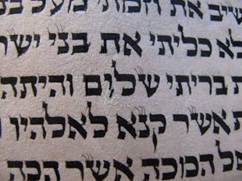
In a kosher Torah scroll, the vav in the word Shalom שָׁלוֹם must be written with a deliberate split or crack in its vertical leg. Normally, a broken letter completely invalidates (pasul) a scroll, but here it is a mandatory, ancient tradition.
To understand why this broken vav alludes to Eliyahu HaNavi, we have to look at the classic Chazal equation: Pinchas hu Eliyahu, Pinchas is Elijah. Mystically and midrashically, they are viewed as the same soul. Both were fierce zealots for God's honor who confronted systemic betrayal among the Israelites, Pinchas with his spear against Zimri, and Eliyahu on Mount Carmel against the prophets of Baal.
The broken vav serves as a structural bridge between these two chapters of the same soul's journey, unfolding in two distinct ways:
Throughout the Tanakh, the name Eliyahu is standardly
spelled with a vav at the end ( ). However, there are exactly five
places where his name is spelled defectively, missing the vav (
). However, there are exactly five
places where his name is spelled defectively, missing the vav ( ), most
notably in Malachi 3:23, where his future return is heralded.
), most
notably in Malachi 3:23, where his future return is heralded.
Conversely, there are five places in the text where the name
of the patriarch Yaakov (Jacob) is spelled with an extra, non-standard vav
( ).
).
The Midrash[23] explains this linguistic exchange. Yaakov took the vav from Eliyahu's name as a "pledge" or security deposit. Yaakov holds onto this vav until Eliyahu fulfills his ultimate, peaceful mission of heralding the final redemption of Yaakov's children.
The broken vav in Pinchas's covenant of Shalom is that exact missing piece. It is a visual cue that the vav is detached, floating, or held in escrow.
Pinchas's act of violence, even though sanctioned by Heaven to stop the plague, could not produce a perfect, enduring peace. Peace achieved through the edge of a spear is inherently fractured; without the vav (which literally means "and" and serves as the ultimate grammatical connector), the Shalom is incomplete.
Because the vav is cut, the word can visually read as
shalem ( ), meaning "complete", but
the letter itself is broken. This signals that true, unshakeable peace is
deferred.
), meaning "complete", but
the letter itself is broken. This signals that true, unshakeable peace is
deferred.
The soul of Pinchas is transformed into Eliyahu, who is stripped of his weapon and given a completely inverted mission. Instead of wielding a spear to separate, Eliyahu's messianic role is to bind together. As Malachi notes, he comes to "turn the hearts of the fathers to the children, and the hearts of the children to their fathers".
When Eliyahu returns to herald that final redemption and reconcile the people, the "pledge" is returned, his name recovers its missing vav, and the fractured vav in the brit shalom is finally made whole.
There is a massive, unresolved debate running through the Midrash, the Talmud, and the Rishonim regarding Eliyahu's tribal lineage. This is not just a genealogical trivia point; it creates a major structural and halachic paradox.
The Midrash [24]famously states: "Pinchas is Eliyahu". Because both displayed identical, uncompromising zealousness for God's honor, the Sages suggest they share the same soul, or that Pinchas never truly died and later emerged under the name Eliyahu.
If Eliyahu is Pinchas, he is a Cohen (a priest from the line of Aaron). Throughout the text, Eliyahu behaves in ways that are strictly forbidden to a Cohen: He built a private altar and offered sacrifices on Mount Carmel outside the Tabernacle/Temple jurisdiction. He physically touched and carried the corpse of the dead son of the widow of Zarephath, which causes severe ritual impurity.
The commentators[25] go to great lengths to resolve this. Some argue his actions were temporary emergency decrees, while others use this to map out the exact moment his physical body transitioned into an angelic entity, exempting him from earthly ritual restrictions.
Everyone knows Eliyahu is invited to every Seder, but he is also mystically present at every single circumcision, where a dedicated "Chair of Eliyahu" is set up. The backstory behind this custom reveals a profound divine "sentencing" that reshaped his eternal mission.
According to the Midrash,[26] when Eliyahu fled to Mount Horeb, he complained to God: "I have been very zealous for Hashem... for the Children of Israel have forsaken Your covenant".[27] God’s response was a profound measure-for-measure correction: "Because you accused My children of abandoning the covenant, you will be forced to physically witness every single time they seal that covenant in their flesh throughout history, so you can see with your own eyes that they have never forsaken it".
This turned his unbending strictness on its head. The prophet who wanted to punish Israel for failing the covenant was transformed into the very guardian who must stand over every newborn child, witnessing their entry into that exact covenant.
Did Eliyahu actually enter Heaven with a physical body? The Talmud[28] states a foundational rule of the universe: "The Divine Presence, the Shechinah, never fully descended to earth, and Moses and Eliyahu never actually ascended above ten handbreadths into Heaven. "This seems to flatly contradict the text stating he went up in a whirlwind. The Ramchal[29] and the Radak clarify this deep metaphysical transformation: Eliyahu's body did not pass through the gates of the spiritual worlds as flesh and blood. Instead, the "fiery chariot" was the mechanism that instantly burned away the physical density of his material body, refining his physical matter into pure spiritual energy. He remains unique because he can reverse this process, re-clothing himself in a physical disguise whenever he descends to earth to aid the Sages or assist a poor family.
These hidden dimensions connect his fiery earthly past to his ultimate role in the future.
The account of the ravens sustaining Eliyahu at the Brook of Cherith is found in 1 Kings 17:1–7. Immediately after declaring a supernatural drought to King Ahab as a punishment for Israel's idolatry, God commands Eliyahu to hide in a secluded ravine east of the Jordan River, where ravens brought him bread and meat morning and evening. The Gemara[30] debates whether these were literal birds or human agents, but the message is clear: when one serves HaShem, even nature becomes a messenger.
As an aside: The name Cherith[31] literally means "a cutting," "separation," or "gorge". It derives directly from the prime root verb כָּרַת, karat, which means to cut down, cut off, or sever. In the context of Eliyahu's narrative, the name carries a profound dual meaning: It describes a deep, sheer ravine or canyon carved ("cut") out of the stone landscape, which provided the perfect natural hideout from King Ahab. In the spiritual reality, it marked the exact moment Eliyahu was completely "cut off" and separated from human society, transitioning into a state of total, isolated dependency on divine provision.[32]
The text notes that the ravens brought him bread and meat every morning and evening, and he drank from the brook until it eventually dried up. In Jewish commentary and Midrashic thought, this episode contains deep layers of linguistic, psychological, and cosmic significance.
The choice of the raven (עוֹרֵב - Orev) is one of the starkest examples of divine irony in the Tanakh.
In biblical and Talmudic thought, ravens are archetypes of cruelty and parental neglect. Psalm 147:9 and Job 38:41 describe the young ravens crying out to God because their parents abandon them. Yet, God commands these naturally cold, predatory, and neglectful birds to become the instruments of constant, reliable mercy and daily sustenance for His prophet.
The raven is an unclean bird.[33] For a prophet who lived with extreme stringency regarding the laws of the Torah, receiving his daily meat from an unclean predator required a total subjugation of his own logic to the divine decree. A classic question raised by Chazal, the Sages, in the Talmud[34] is: Where did the ravens obtain high-quality bread and meat twice a day during a catastrophic national famine?
The Gemara records a striking tradition. the ravens were flying directly into the kitchens of King Ahab himself, or his righteous palace overseer Obadiah. God was systematically extracting provisions from the very house of the idolatrous king who was actively hunting Eliyahu, utilizing nature's scavengers to smuggle it out to the hidden ravine.
On a deeper level, Cherith was not just a hiding place; it was a divine educational crucible.
Eliyahu’s spiritual nature was rooted in unyielding justice and fierce zealotry. He demanded the drought to force the nation to choose between God and Baal, unconcerned with the widespread human suffering the famine would cause.
By placing Eliyahu at Cherith, God forced him to live in a state of absolute, fragile dependency on the mercy of a cruel bird. When the brook eventually dried up, it was a message: Your decree of judgment has exhausted the natural resources of the land. God was teaching His prophet that the world cannot survive on pure, unyielding judgment alone, it requires the same unnatural, miraculous mercy that the ravens extended to him every morning and evening. When the brook dried, Eliyahu was sent to a widow in Sidon, the very heartland of Baal worship. Her barrel of flour and jug of oil never ran dry throughout the famine. This was a theological statement: the God of Israel sustains even in the domain of false gods.
The narrative of the Widow of Tzarafat[35] takes place at a critical turning point in Eliyahu’s life. Having just locked the heavens against rain, he is sent by God into the heart of Phoenician territory, the very birthplace of Queen Jezebel and Baal worship, to be sustained by a destitute non-Jewish widow.
When we look past the simple narrative of a desperate mother making a final cake of flour and oil, Chazal, the Malbim, and Kabbalistic sources uncover a profound spiritual drama about the nature of vulnerability, the mechanics of divine sustenance, and the transformation of Eliyahu himself.
The episode begins with a jarring paradox. God tells Eliyahu:
Melachim alef (1 Kings) 17:9 Behold, I have commanded a widow woman there to sustain you.
Yet, when Eliyahu arrives, the woman is so impoverished that she is gathering sticks to cook a final meal for herself and her son so they can "eat it, and die" The Malbim explains that this dynamic reveals a fundamental law of Bitachon, absolute trust: God deliberately did not send Eliyahu to a wealthy merchant or an affluent estate. He sent him to a vessel that possessed absolutely nothing from a natural perspective. This forced both Eliyahu and the widow to recognize that sustenance does not come from a person's existing surplus, but from the divine word itself. By demanding that she make his small cake first before feeding herself and her son, Eliyahu was teaching her to prioritize the spiritual conduit over physical survival. The moment she did, her finite jar of flour and jug of oil became tied to the infinite.
Melachim Aleph (1 Kings) 17:14 For thus has spoken HaShem, the God of Israel, 'The pitcher of flour shall not end nor will the flask of oil be diminished until the day the Lord gives rain upon the land.' "
The flask of oil that miraculously never emptied is linked by the Midrash to the sacred anointing oil used to inaugurate the Tabernacle, the Kings of Judah, and ultimately, Mashiach. Chassidic commentators note that Eliyahu’s ability to unlock continuous, supernatural sustenance from a seemingly finite, physical vessel is a preview of the economic and agricultural reality of the Messianic era. Chazal teach that in the future, the physical earth will produce abundance effortlessly, and the spiritual energy of the world will flow continuously without interruption, echoing the miracle of the widow's home on a global scale.
Tzarafat, Sarepta, was located within Sidon, the epicenter of Baal worship. The Zohar notes that sending Eliyahu there was a precise spiritual surgical strike. The physical drought Eliyahu caused was meant to break the spiritual blockages of the Jewish people. By embedding Eliyahu within the source country of the corruption, God was showing him that even in the darkest, most spiritually desolate places on earth, there are sparks of pure faith and righteousness.
The widow, though a gentile in a pagan land, possessed a soul capable of recognizing the truth of the Living God. By sustaining the prophet of Israel, she effectively subverted the spiritual power of her own homeland, proving that the spark of truth can pierce through any Klipah, external shell.
The most harrowing part of the narrative occurs when the widow's son falls ill and stops breathing. Her immediate reaction to Eliyahu is deeply telling:
Melachim alef (1 Kings) 17:18 What have I to do with you, O man of God? You have come to me to bring my sin to remembrance, and to slay my son!
The Sages in the Midrash isolate this verse to explain a profound spiritual reality: the proximity of a Tzaddik alters the spiritual climate of a home. Before Eliyahu arrived, the widow's deeds were evaluated by the Heavenly Court relative to her pagan neighbors; she looked incredibly righteous by comparison. But once Eliyahu, the very embodiment of uncompromising, absolute truth and Midat HaDin, Strict Justice, moved into her upper chamber, the spiritual standard of the house was elevated. Her minor flaws were suddenly cast in a glaring light, causing the standard of strict justice to strike her son. Recognizing this, Eliyahu carries the boy up to his room and argues passionately with God. For the first time, Eliyahu tastes the devastating consequences of his own spiritual weapon, Din. He realizes that strict, unyielding judgment can shatter the most innocent and vulnerable. This realization breaks Eliyahu’s rigidity, prompting him to stretch himself over the boy three times, crying out for Rachamim, mercy, until the soul returns.
In the writings of the Arizal, the materials in the widow's house are map coordinates for the human soul and the mechanics of the universe: In Kabbalah, flour represents the vessel, the physical material of the world (Malchut), while Shemen, oil represents the illuminating, hidden wisdom, the Chochma, of the intellect and soul.
When Eliyahu stretched himself over the child three times, he was channeling the three upper levels of the soul: Nefesh, Ruach, and Neshama. By binding his own refined, immortal energy to the child, Eliyahu created the prototype for Techiyat HaMeitim, the resurrection of the dead. He proved that when a person completely subjugates their physical existence to the divine will, the spiritual soul can override the physical breakdown of the body. This was the first recorded resurrection in Tanach, a declaration that HaShem holds ultimate authority over life and death.
The Widow of Tzarafat is the story of Eliyahu’s education. He went into that home as a fierce zealot wielding the weapon of famine. He left that home as a master of resurrection, having learned from a destitute woman that the ultimate purpose of divine power is not to punish the broken, but to sustain them against all natural odds.
The act of Eliyahu HaNavi locking the heavens and declaring a severe drought during the reign of King Ahab is viewed by Chazal and the Meforshim not merely as a historical event, but as a cosmic event with profound future, spiritual, and legal implications.
Melachim alef (1 Kings) 17:1 And Elijah the Tishbite of the settlers of Gilead said to Ahab, "As the Lord, the God of Israel, whom I serve, lives, if there will be during these years dew or rain except according to my word."
When Eliyahu held back the rain, he set in motion spiritual dynamics that echo all the way into the Messianic era.
The Talmud[36] reveals a fascinating cosmic backstory to this drought. Chazal teach that HaShem generally keeps three "keys" exclusively in His own hands, never delegating them to an emissary: the key to childbirth, the key to the resurrection of the dead, and the key to rain.
When Eliyahu swore that no rain would fall except by his word, he effectively demanded that HaShem hand over the Key of Rain to fulfill his oath of zealotry. Later, when the son of the Tzarafatite widow died, Eliyahu begged HaShem to revive the boy. HaShem responded: "Two keys cannot rest in the hands of the student while the Master has only one. You hold the key to rain, and now you want the key to resurrection? Give back the key to rain, and take the key to resurrection."
Because Eliyahu surrendered the key to rain to achieve the immediate resurrection of that child, Chazal note that the ultimate power over life and rain was re-aligned. In the future era, Eliyahu will use that same unlocked mastery over resurrection to act as the catalyst who revives the dead, a task directly linked to his historical trade-off.
The Radak and the Malbim delve into the textual nuance of Eliyahu’s decree: "There shall be neither dew nor rain these years, except according to my word".
According to the Midrash, God corrected Eliyahu on this formulation: "I agreed to back your decree regarding rain, but I never agreed to hold back dew, because the world cannot survive without dew for even a moment". In Kabbalistic and prophetic thought, rain represents conditional blessing, it depends on mankind's actions and spiritual alignment. Dew, however, represents unconditional, pure divine flow from the highest spheres, Chesed, which never ceases.
The Meforshim explain that Eliyahu’s attempt to halt even the dew demonstrated his desire for absolute, unyielding justice. In the future, Eliyahu's perspective undergoes a complete reversal. Instead of holding back the rain to punish spiritual infidelity, the Zohar teaches that Eliyahu will become the herald of the Dew of Resurrection, using the very element he tried to restrict as the physical mechanism to dew-soak the earth and bring the dead back to life.
The Kli Yakar and various Chassidic masters (such as the Sfat Emet) view the three-year drought as a macro-blueprint for the end of days. Just as the physical drought under Ahab brought the nation to an absolute breaking point, culminating in the dramatic showdown at Mount Carmel where all of Israel shouted “HaShem is God!", the Meforshim teach that the period preceding the final redemption will feature a parallel spiritual drought. This fulfills the words of the prophet Amos:
Amos 8:11 Behold, days are coming, says HaShem God, and I will send famine into the land, not a famine for bread nor a thirst for water, but to hear the word of the Lord.
Eliyahu's future role is to break this spiritual drought. Just as he broke the physical drought on Mount Carmel by channeling fire and rain after Israel made Teshuva, his future arrival will trigger a massive downpour of divine consciousness, instantly ending the spiritual famine of the exile.
On a legal and philosophical level, the Meforshim note that Eliyahu's bold decree set a monumental precedent for the future power of the Sages. The Gemara applies the principle of “A righteous person decrees, and the Holy One fulfills it." By honoring Eliyahu's oath, God established for all future generations that the spiritual leadership of Israel has the authority to alter physical reality and shape halachic reality through their decrees, a power that reaches its zenith when the Sanhedrin is restored in the Messianic court.
When Eliyahu held back the rain, he was a fierce prosecutor using nature to demand loyalty. In the future, the implications of this act are beautifully flipped, the zealotry that locked the heavens is transformed into the gentle, life-giving power of the morning dew, waking the sleeping souls of history.
Elijah’s confrontation with the prophets of Baal on Mount Carmel[37] is one of the most explosive and theatrically profound moments in Biblical history. It is the definitive showdown between absolute monotheism and state-sponsored paganism.
The text itself is gripping, but when we layer in the insights of the Talmud, the Midrash, and the classical Meforshim, commentaries like Rashi, Radak, and Malbim, the event shifts from a simple display of power to a highly orchestrated, legal, and spiritual trial meant to shatter the psychology of idolatry.
The northern Kingdom of Israel, under the rule of King Ahab and his Phoenician queen Jezebel, had formally adopted the worship of Baal, a storm/fertility god, and Asherah. To prove that God, not Baal, controlled the rain and fertility, Elijah declared a massive, multi-year drought. When the famine became unbearable, Elijah told Ahab to gather all Israel and the 450 prophets of Baal to Mount Carmel.
Here is a breakdown of the event, fusing the plain meaning of the Pshat text with the deeper insights of Chazal.
Elijah stands before the nation and delivers his famous line: "How long will you go limping between two opinions? If HaShem is God, follow Him; but if Baal, then follow him".[38]
The Malbim points out the specific psychology here. The Jewish people hadn't entirely abandoned God; they were "syncretists".[39] They thought they could worship God in the Temple but also worship Baal in the fields to ensure good crops. Elijah’s core argument was that the Divine is exclusive. You cannot hedge your bets between the Creator and the forces of nature. The "limping" refers to a person trying to walk on two uneven legs, it is an unstable, impossible stance.
Elijah proposes a test. two bulls, two altars, no fire. The deity who answers with heavenly fire is the true God. The prophets of Baal go first. They pray, dance, and eventually cut themselves from morning until noon, but there is no answer.
The Midrash[40] adds fascinating details to the prophets' failure, explaining that they weren't entirely stupid, they had a trick planned. The prophets of Baal allegedly hollowed out the altar and hid a man named Hiel inside with a torch. The plan was for him to ignite the wood from underneath while they prayed. However, the Midrash states that God sent a snake to bite and kill Hiel before he could light the fire. Thus, despite all their screaming, the altar remained cold.
The Midrash also notes that the two bulls were twins, raised on the same pasture. Elijah told the prophets of Baal to choose one. The bull designated for Baal refused to move. It spoke to Elijah, arguing, "My brother is going to be offered to God and sanctify His name, while I have to be offered to an idol and anger my Creator"? Elijah had to physically hand the bull over, telling it that its role in proving the falsehood of Baal was just as crucial to the sanctification of God's name as the other bull's role.
At noon, Elijah begins to publicly mock them.[41] "Cry aloud, for he is a god; either he is musing, or he is gone aside, or he is on a journey, or perhaps he sleeps and must be awakened."
The Radak explains that this extreme sarcasm was highly unusual for a prophet, but it was a calculated psychological tactic. The Israelite audience was watching in awe of the Baal prophets' frenzy. Elijah used humor and ridicule to break the hypnotic trance the false prophets had over the crowd. He was demonstrating that idolatry is fundamentally absurd.
When it is Elijah's turn, he takes twelve stones, representing the unified twelve tribes, repairs the ruined altar of God, and digs a massive trench around it. To completely eliminate any suspicion of hidden sparks or tricks, Elijah demands that four massive jars of water be poured over the sacrifice and the wood three separate times, thoroughly soaking everything and filling the trench.
This exact moment poses a massive halachic problem. Offering sacrifices outside the central Temple in Jerusalem was a severe biblical prohibition. Elijah was technically breaking Torah law by building a private altar on a mountain.
The Talmud[42] uses this exact event to establish the critical legal concept of an emergency decree. A recognized prophet has the authority to temporarily suspend a Torah law to save the nation. Elijah knew that if he didn't break the law about the altar right then, the nation would be lost to idolatry forever.
Elijah prays a remarkably short, direct prayer:[43] "HaShem, God of Abraham, Isaac, and Israel, let it be known this day that You are God in Israel... Answer me, HaShem, answer me, that this people may know that You, HaShem, are God, and that You have turned their hearts back again."
The Talmud[44] asks why Elijah repeated "Answer me". The Sages explain: "Answer me that fire should come down from heaven, and answer me that they will not say it was an act of sorcery". Immediately, the fire of God falls. It is so intense that it consumes not just the sacrifice and the wet wood, but the stones of the altar, the dust, and it licks up all the water in the trench.
The people fall on their faces and cry out, "The LORD, He is God! The LORD, He is God"! This exact phrase is famously repeated by Jews at the climax of the Yom Kippur service today. Following this, Elijah orders the immediate execution of the 450 prophets of Baal at the brook Kishon.
Why the Extreme Violence? The Meforshim clarify that this was not random vigilantism. Under biblical law,[45] those who lead the nation into idolatry are subject to capital punishment. Elijah was re-establishing the absolute rule of Torah law over the land. By executing the false prophets, he removed the cancer that was destroying the spiritual and physical life of the nation, opening the channel for the rain to finally return to the land of Israel.
The national awakening on Mount Carmel was spectacular, but the physical and political fallout that immediately followed was a rollercoaster of intense triumph, deep isolation, and a profound shift in how God communicates with humanity. The story moves directly from the mountaintop into the wilderness through a sequence of dramatic events recorded in 1 Kings 18:41 to 1 Kings 19.
Immediately after executing the prophets of Baal, Elijah tells King Ahab to go up, eat, and drink, because "there is the sound of the roar of rain".[46] Elijah then climbs back to the summit of Carmel, bends down to the ground, and places his face between his knees.
The Posture of Prayer: The Talmud[47] and Rashi note this unique posture. By placing his head between his knees, Elijah was completely shutting out the physical world, focusing his mind entirely on the spiritual channel of Yesod to break the three-year decree of barrenness and bring rain.
He sends his servant seven times to look toward the sea. On the seventh time, the servant sees a tiny cloud "the size of a man’s palm." Within minutes, the sky grows black with clouds and wind, and a massive downpour unleashes upon Israel.
King Ahab mounts his chariot and rides furiously toward his winter palace in Jezreel to escape the storm. Then, scripture records a staggering physical miracle: "And the hand of HaShem was on Elijah; and he girded up his loins, and ran before Ahab to the entrance of Jezreel".[48]
The Radak's Explanation: The Radak explains that Elijah outran a team of royal chariot horses over a distance of roughly 17 miles in a torrential rainstorm. Why did he do this? Elijah did not want to overthrow the king; he wanted the king to repent. By running ahead of Ahab's chariot like a royal footman, Elijah was showing immense honor to the office of the king, demonstrating that even after his massive spiritual victory, he was still a loyal subject to the crown of Israel.
When Ahab arrives at the palace, he tells his Phoenician queen, Jezebel, everything Elijah had done, specifically that he had slaughtered her 450 state-funded prophets. Jezebel does not repent. Instead, she sends a messenger to Elijah with a death warrant: "So may the gods do to me, and more also, if I make not thy life as the life of one of them by tomorrow about this time".[49]
The Malbim asks: If she wanted to kill him, why send a messenger warning him? Why not just send assassins? Jezebel knew that executing Elijah right after the Carmel miracle would cause a peasant revolt. Her goal was to terrify him into fleeing, thereby ruining his reputation as a fearless prophet and making the people believe he was a coward.
The tactic works. Exhausted and spiritually depleted, Elijah flees south past the borders of the Northern Kingdom, all the way to Be'er Sheva in Judah. He leaves his servant there, walks a day's journey into the harsh wilderness, sits under a broom bush, and begs God to take his life, "It is enough; now, HaShem, take away my life; for I am not better than my fathers".[50]
An angel touches the sleeping prophet, providing him with miraculously baked cake and water. Sustained by that single divine meal, Elijah walks for forty days and forty nights until he reaches Mount Horeb, aka Mount Sinai, the exact place where Moses received the Torah. He enters the very same cave where Moses once stood.
God asks him: "What are you doing here, Elijah?"
Elijah responds with his fierce, unyielding passion: "I have been very jealous for HaShem... for the children of Israel have forsaken Your covenant, thrown down Your altars, and slain Your prophets... and I, even I only, am left; and they seek my life". God tells him to stand on the mountain, and executes a profound cosmic demonstration:
[A Great, Shattering Wind] ──> "But HaShem was not in the wind."
│
▼
[A Great Earthquake] ──> "But HaShem was not in the earthquake."
│
▼
[A Fire] ──> "But HaShem was not in the fire."
│
▼
"And after the fire, a Still, Small Voice."
The Midrash (Yalkut Shimoni) and the Radak interpret this sequence as a direct gentle rebuke from God regarding Elijah's harshness toward Israel.
God was showing him the wind, the earthquake, and the fire, these represent the terrifying, destructive public miracles like Mount Carmel. They are spectacular, but they do not permanently change human hearts. True, lasting divine connection is found in the the still, small voice of patient teaching, internal reflection, and long-suffering mercy.
Because Elijah insists on maintaining his fierce, fiery standard of justice against the nation rather than defending them, God gently informs him that it is time to transition his earthly role. God instructs him to return and anoint Elisha ben Shaphat to succeed him as prophet, setting the stage for Elijah’s eventual physical departure from the earth in the chariot of fire to assume his macro-cosmic role as the Archangel Sandalphon.
The Mount Carmel moment remains one of the most dramatic theological statements in human history, a public, undeniable demonstration that the God of Israel is the sole sovereign of the universe.
The showdown at Mount Carmel, where Eliyahu single-handedly confronted 450 prophets of Baal and brought down fire from heaven, is seen by Chazal and the Meforshim as the ultimate historical template for the end of days.
Melachim alef (1 Kings) 18:17-39 And it was when Ahab saw Elijah, that Ahab said to him, "Is this you, the one who brings trouble upon Israel?" 18 And he said, "I have not brought trouble upon Israel, but you and your father's house, since you have forsaken the commandments of the Lord, and you went after the Baalim. 19 And now, send and gather for me all of Israel to Mount Carmel, and the prophets of the Baal four hundred and fifty and the prophets of the Ashera four hundred who eat at Jezebel's table. 20 And Ahab sent among all of the Children of Israel, and he gathered the prophets to Mount Carmel. 21 And Elijah drew near to all the people and said, "Until when are you hopping between two ideas? If the Lord is God, go after Him, and if the Baal, go after him." And the people did not answer him a word. 22 And Elijah spoke to the people, "I have remained a prophet to the Lord by myself, and the prophets of the Baal are four hundred and fifty men. 23 And let them give us two bulls and let them choose one bull for themselves and cut it up and place it on the wood, but fire they shall not put, and I will prepare one bull, and I will put it on the wood, and fire will I not place. 24 And you will call in the name of your deity, and I will call in the name of the Lord, and it will be the God that will answer with fire, he is God." And all of the people answered and said, "The thing is good." 25 And Elijah said to the prophets of the Baal, "Choose for yourselves the one bull and prepare it first since you are the majority, and call in the name of your deity, and fire place not." 26 They took the bull that he gave them and prepared [it]. And they called in the name of the Baal from the morning until noon, saying, "O Baal, answer us!" But there was no voice and no answer, and they hopped on the altar that they had made. 27 And it was at noon that Elijah scoffed at them, and he said, "Call with a loud voice, for he is a god. [Perhaps] he is talking or he is pursuing [enemies] or he is on a journey; perhaps he is sleeping and will awaken. 28 And they called with a loud voice and gashed themselves as was their custom, with swords and lances, until blood gushed on them. 29 And as the afternoon passed and they feigned to prophesy until the time of the sacrifice of the [evening] offering, and there was no voice and no answer and no one was listening. 30 And Elijah said to all the people, "Come near to me," and all the people came near to him and he repaired the torn down altar of the Lord. 31 Elijah took twelve stones, corresponding to the number of the tribes of the sons of Jacob, to whom the word of the Lord came, saying, "Israel shall be your name." 32 He built the stones into an altar in the name of the Lord and he made a trench as great as would contain two se'ah of seed, around the altar. 33 And he arranged the wood, and he cut up the bull and placed [it] upon the wood. 34 And he said, "Fill me four pitchers of water and pour them on the burnt-offerings and on the wood." And he said, "Repeat it," and they repeated it. And he said, "Do it a third time," and they did it a third time. 35 And the water went around the altar, and also the trench he filled with water. 36 And it was when the evening sacrifice was offered that Elijah the prophet came near and said, "Lord, the God of Abraham, Isaac and Israel, today let it be known that You are God in Israel and that I am Your servant, and at Your word have I done all these things. 37 Answer me, O Lord, answer me, and this people shall know that You are the Lord God, and You have turned their hearts backwards." 38 And the fire of the Lord fell and consumed the burnt offerings and the wood and the stones and the earth, and the water which was in the trench it licked up. 39 And all the people saw and fell on their faces, and they said, "The Lord is God, the Lord is God."
The Sages and commentators teach that the dynamics of that confrontation carry profound implications for how the final redemption will unfold, how the world will be cleansed of false ideologies, and how Eliyahu’s personal spiritual trajectory will be completed.
The most direct future implication of Mount Carmel is the total, sudden collapse of false global ideologies. At Mount Carmel, Eliyahu forced a stark, public choice: "How long will you hop between two opinions? If HaShem is God, follow Him; and if Baal, follow him!" The Radak and the Malbim explain that the period preceding the Messianic era will mirror this exact spiritual landscape. The world will be filled with a "hopping between opinions", moral relativism, confusion, and the worship of modern material equivalents of Baal.
Just as Eliyahu exposed the absolute powerlessness of Baal in a single, dramatic afternoon, Chazal teach that his future return will bring a sudden, undeniable clarity to the world. This fulfills the prophetic vision of Zechariah:
Zechariah 13:2 And it shall come to pass on that day, says HaShem of Hosts: I will cut off the names of the idols from the earth, and they shall no longer be mentioned. And also the prophets and the spirit of contamination I will remove from the earth.
Mount Carmel proved that falsehood cannot withstand an authentic manifestation of truth; Eliyahu's future arrival will replicate this on a global scale.
Before bringing down the fire, the text notes a highly specific action Eliyahu took:
Melachim alef (1 Kings) 18:30-32 And Elijah said to all the people, "Come near to me," and all the people came near to him and he repaired the torn down altar of the Lord. 31 Elijah took twelve stones, corresponding to the number of the tribes of the sons of Jacob, to whom the word of the Lord came, saying, "Israel shall be your name." 32 He built the stones into an altar in the name of the Lord and he made a trench as great as would contain two se'ah of seed, around the altar.
The Meforshim note that during the reign of Ahab, the Jewish nation was deeply fractured into the Northern Kingdom and the Southern Kingdom. By utilizing twelve stones to build a single altar, Eliyahu was performing a prophetic action. Chazal[51] teach that Eliyahu’s primary task upon his return is not to change Jewish law, but to settle tribal genealogies and bring peace and unity, Shalom, to a fractured nation. The twelve stones of Mount Carmel are the architectural blueprint for his Messianic mission. He will identify, gather, and emotionally fuse the disparate, lost parts of the Jewish people back into a single, unified spiritual structure, just as he did with the stones on the mountain.
To conduct the showdown on Mount Carmel, Eliyahu built a private altar and offered a sacrifice outside the Holy Temple in Jerusalem. Strictly speaking, the Torah severely prohibits offering sacrifices outside the centralized Temple courtyard.
The Talmud[52] uses Eliyahu’s actions at Mount Carmel to establish a monumental legal precedent for all of Jewish history: a temporary emergency decree. The Sages rule that if a verified prophet instructs the nation to temporarily violate a negative commandment to protect or restore the integrity of the Torah as a whole, the nation is obligated to obey. The Meforshim suggest that this unique authority is preserved for Eliyahu in the future. When Mashiach arrives and the Sanhedrin is re-established, complex halachic dilemmas that accumulated over thousands of years of exile, colloquially known as questions left to Teyku, which, as noted previously, stands for "The Tishbite will resolve difficulties and questions", will be resolved using this exact paradigm.
Because Eliyahu proved at Mount Carmel that he can navigate the boundary between the absolute letter of the law and the emergency needs of the hour, he is the only one trusted to safely guide the transition of Halacha into the Messianic kingdom.
A famous Midrash[53] adds a dramatic detail to the Carmel confrontation. It states that the regular laws of nature were frozen that day. The sun wanted to stop shining, and the element of fire refused to descend because it did not want to cooperate in a display that would lead to the slaughter of the Baal prophets. Eliyahu had to spiritually wrestle with the celestial forces to allow the miracle to happen. Furthermore, he famously prayed,
Melachim (1 Kings) 18:37 Answer me, O Lord, answer me, and this people shall know that You are the Lord God, and You have turned their hearts backwards."
At Mount Carmel, Eliyahu demanded fire to consume the offering to prove God's dominance, which ultimately led to the execution of the false prophets. It was an act of absolute, unyielding justice. The Sages teach that this intense confrontation was the catalyst for Eliyahu's eventual ascension in a chariot of fire, he was too holy and fiery for a compromised physical world.
Therefore, his future return is his ultimate rectification. Having experienced both the fire of judgment on Carmel and the quiet, still voice at Mount Horeb, Eliyahu returns in the future not with a sword to destroy the wicked, but with the specific capacity to turn hearts backward in peaceful repentance. The fire of Mount Carmel becomes the warm, illuminating light of universal Teshuva.
The confrontation at Mount Carmel was a localized, intense flash of truth that shattered a specific regime of falsehood. Its future implication is the expansion of that event into a permanent reality: a world where the twelve tribes are perfectly reunited, the true parameters of Torah law are clarified, and humanity collectively echoes the cry of Carmel: "HaShem is God, the Lord is God", "Hashem Hu HaElokim!"
The manner of Eliyahu’s departure from this world is completely unique in Tanakh:
Melachim Aleph (2 Kings) 2:11 And it came to pass, as they went on, and talked, that, behold, there appeared a chariot of fire, and horses of fire, and parted them both asunder; and Eliyahu went up by a whirlwind into heaven.
The Radak and the Ramban explain that Eliyahu did not die in the ordinary human sense. Instead, his physical body was refined and spiritualized to the point where it could exist in the celestial realms, allowing him to step back into the physical world at will. This unique state makes Eliyahu the ultimate bridge for the future Resurrection of the Dead, Techiyat HaMeitim. Because he already embodies the synthesis of a physical body functioning at a purely spiritual frequency, he acts as the catalyst and cosmic template for how humanity will exist after the resurrection.
Eliyahu did not disappear into legend without ensuring the continuation of his mission. He chose a successor, Elisha ben Shaphat, and forged one of the most profound teacher-disciple relationships in Jewish history.
The lives of Eliyahu and Elisha are explicitly structured as a series of spiritual mirror images. Rather than just repeating each other's actions, Elisha's miracles frequently reflect, reverse, or expand upon the exact themes of Eliyahu’s career, shifting the energy from destructive justice to constructive mercy.
The Sages of the Midrash and Tanakh commentators highlight five primary structural mirrors between the master and disciple.
Splitting the Jordan River (The Bookends)
The final act of Eliyahu's earthly life and the very first act of Elisha's independent career are perfect mirror images, utilizing the exact same physical object.
Eliyahu took his mantle, rolled it up, and struck the waters of the Jordan River. The water split, allowing both men to cross over out of the land of Israel into the wilderness.[54] Immediately after Eliyahu ascended, Elisha picked up the fallen mantle, walked back to the exact same bank, and struck the water, crying out for the God of Eliyahu. The water split again, allowing him to cross back into the land of Israel to begin his leadership.[55]
Eliyahu uses the mantle to exit the stage of history; Elisha uses the exact same mantle to enter it.
Resurrecting an Only Son
(The Physical Contrast)
Both prophets encountered a grieving mother whose only son had died, and both performed a resurrection. However, their physical methods and emotional dynamics mirror each other in opposite directions.
With the Widow of Zarephath, Eliyahu’s approach was an intense, vertical cry of justice. He carried the boy to the upper roof chamber, stretched himself over the child three times, and cried out to God, demanding to know why a woman who fed him should suffer.[56] The boy's soul returned instantly.
Elisha and the Shunamite Woman: Elisha’s method was incredibly intimate, horizontal, and gradual. He went into the room, closed the door, and literally matched his body to the child's body: mouth to mouth, eyes to eyes, hands to hands. He lay upon him until the child's flesh grew warm. He then paced back and forth in the house before laying on him a second time. The boy sneezed seven times and opened his eyes.[57]
Eliyahu demands the soul back from above using cosmic force; Elisha breathes life back into the child from below, infusing his own warmth into the cold body step-by-step.
The Multiplication of Oil
(Survival vs. Redemptions)
Both prophets used a miraculous, unending supply of oil to save a desperate household from economic ruin during times of severe famine, but the scale and purpose completely shifted.
Eliyahu arrived at a poor widow's home and promised that her tiny jar of oil and handful of flour would not diminish until the rains returned.[58] It was a miracle of subsistence, keeping them barely alive day by day.
Elisha encountered the widow of the prophet Obadiah, whose creditors were coming to take her sons into slavery. He told her to gather every empty vessel from her neighbors. Her tiny flask of oil poured continuously until every single room-sized container was filled to the brim.[59]
Eliyahu's oil provided quiet, daily survival in hiding; Elisha's oil provided overwhelming, public financial liberation that permanently broke the cycle of debt.
The Response to Food Shortages
(Famine vs. Feast)
Food and starvation are central motifs for both men, but their actions present opposite halves of the same coin.
Operating out of strict justice, Eliyahu explicitly locked the heavens and decreed a multi-year drought to punish the kingdom for idolatry, causing widespread starvation.[60]
When a deadly famine hit the land, Elisha took twenty loaves of barley bread brought by a follower and commanded that it be distributed to one hundred hungry prophets. His servant scoffed that it wasn't enough, but Elisha stated God would multiply it. Not only did everyone eat their fill, but there were substantial leftovers.[61]
Eliyahu uses his prophetic power to restrict sustenance to bring the nation to its knees; Elisha uses his power to expand sustenance to lift his students up.
Confronting Royal Military Officers
(The Shift in Fire)
Both prophets were confronted by military detachments sent by the king to arrest them, providing the ultimate mirror of how they handled external threats.
When King Ahaziah sent captains with fifty men to arrest Eliyahu, the prophet sat on top of a hill and said, "If I am a man of God, let fire come down from heaven and consume you". Lightning struck and instantly vaporized two separate military units.[62]
When the Syrian army surrounded Elisha to capture him, his servant panicked. Elisha prayed for the servant's eyes to be opened, revealing a mountain filled with horses and chariots of fire protecting them. Instead of consuming the enemy, Elisha struck the soldiers with temporary blindness, led them safely into the heart of Samaria, ordered the King of Israel to feed them a massive feast, and sent them home unharmed.[63]
Eliyahu calls down visible fire to destroy his captors; Elisha keeps the heavenly fire invisible as a defensive shield while using psychological strategy and mercy to turn enemies into peaceful neighbors.
The relationship between Eliyahu HaNavi (Elijah) and his primary disciple Elisha ben Shaphat is one of the most structurally unique master-student pairings in all of Tanakh.
While the text of Melachim (Kings) showcases a smooth mantle-passing from one prophet to the next, Chazal and the Meforshim look deeper. They reveal a relationship defined by a profound clash of spiritual elements, an architectural restructuring of prophecy, and an ultimate journey from terrifying cosmic distance to radical human closeness.
The Arizal[64] explains that Eliyahu and Elisha operated out of entirely different cosmic soul-roots. To look at their relationship deeply is to watch the interaction of two distinct divine attributes (Sefirot): Eliyahu was Fire (Gevurah / Strict Justice): His spiritual baseline was unyielding truth. He lived in the wilderness, wore animal skins, brought down lightning, and demanded that the physical world either align with perfection or burn. Elisha was Water, Chesed / Lovingkindness: Elisha was introduced while plowing a fertile field with twelve yoke of oxen.[65] Water represents flowing downward, settling in low places, and nurturing growth. Elisha’s soul root was built entirely on healing, expansion, and sustainability.
The Malbim notes that God deliberately paired them because a world run solely on Eliyahu's fire would burn to ash, while a world run solely on water can become stagnant. Elisha needed to absorb the core intensity of Eliyahu's truth, while Eliyahu needed to pass his authority to someone who could translate that raw energy into an agricultural, community-friendly reality.
Before Eliyahu ascended in the whirlwind, Elisha made a famous, legally complex request:
Melachim bet (2 Kings) 2:9 Please let a double portion of your spirit be upon me.
Eliyahu replied that this was a "difficult thing," but it would be granted if Elisha witnessed his master's ascent. The Meforshim, such as the Radak, explain that Elisha was not asking to become "twice as great" as Eliyahu in an arrogant sense. Rather, he was invoking the biblical law of the Bechor, the firstborn son, who legally inherits a double portion of the father’s estate.[66] Elisha was stating: "I do not view myself merely as your student; I am your firstborn spiritual son. I need the double portion of your spirit to handle the crushing weight of leading a rebellious generation".
The Talmud[67] demonstrates that this blessing was fulfilled down to the letter. The Sages count the documented miracles performed by both prophets: Eliyahu performed exactly 8 miracles in his lifetime. Elisha performed exactly 16 miracles, precisely a double portion.
If you examine the character of their respective miracles, you see the profound philosophical shift from the master to the disciple. Eliyahu's miracles were primarily macro-cosmic, national, and destructive, meant to shatter public delusion. Elisha’s miracles were micro-cosmic, personal, and constructive, meant to heal individuals.
|
Eliyahu's Fire & Justice |
Elisha's Water & Mercy |
|
Locks the heavens to cause a national famine. |
Sweetens the toxic water supply of Jericho with salt (2 Kings 2). |
|
Calls down fire to vaporize 100 soldiers. |
Multiplies a poor widow's oil to save her sons from slavery (2 Kings 4). |
|
Executes 450 prophets of Baal at Mount Carmel. |
Purifies a lethal pot of stew for his hungry students (2 Kings 4). |
|
Flees from society to live in a hidden desert cave. |
Cleanses the leprosy of Naaman, the Syrian general (2 Kings 5). |
The Kli Yakar notes that Elisha took the raw, unbending Emet, Truth, of Eliyahu and packed it into vessels of Rachamim, Mercy. He proved that the ultimate destination of prophecy is inside the messy, painful realities of domestic human life.
The final transition between them is one of the most visually and psychologically heavy moments in Tanakh:
Melachim bet (2 Kings) 2:11-12 And it came to pass, as they went on, and talked, that, behold, there appeared a chariot of fire, and horses of fire, and parted them both asunder; and Eliyahu went up by a whirlwind into heaven. And Elisha saw it, and he cried, 'My father, my father, the chariot of Israel, and the horsemen thereof!'
The Midrash[68] points out that the fiery barrier didn't just separate Eliyahu from the earth; it literally pushed Elisha away. Eliyahu’s element, fire, claimed him completely, pulling him out of the human realm. But as Eliyahu vanished, his physical mantle floated back down to earth. Elisha picked it up, walked back to the bank of the Jordan River, and struck the water, crying out: "Where is HaShem, the God of Eliyahu"? The water split for him just as it had for his master.
The Sages teach a final, deep insight from this moment: Eliyahu left the world in fire, but his clothing, the garments he used to interface with human beings, remained with his disciple. Elisha realized that he did not need to become a carbon copy of Eliyahu to carry his legacy. By wrapping himself in the mantle, Elisha bound Eliyahu's fiery vertical energy to his own horizontal, earthly devotion, completing a circuit of leadership that sustained the Jewish people through some of their darkest generations.
Chazal and the Meforshim compare Elijah to Moshe Rabbenu extensively. In fact, rabbinic tradition notes that no two prophets share more structural, biographical, and spiritual parallels than Moshe and Elijah. The primary source for this side-by-side comparison is found in the Yalkut Shimoni,[69] which explicitly states: "You find that Moses and Elijah are equal to one another in every single matter”.
Even outside the Pinchas identity, many textual sources simply refer to him by his functional tribal title as Eliyahu HaKohen, Elijah the Priest. This aligns with his actions on Mount Carmel where he constructed an altar and offered a sacrifice, a task legally reserved for the priesthood.
In Melakhim alef (I Kings) I 18, we read of the conflict between Eliyahu and the priests of Ba'al at Har Carmel. The Pesikta Rabbati, quoted in the Yalkut Shimoni,[70] points out the parallels between Eliyahu and Moshe, especially as it relates to the priesthood, as follows:
|
Moshe |
Eliyahu |
|
Moshe brought the nation to Har Sinai. |
Eliyahu brought them to Har Carmel. |
|
Moshe had Bnei Levi kill all the idol worshippers. |
Eliyahu also had the nation kill all the Baal prophets. |
|
Moshe called for all those who believed in HaShem. |
Eliyahu called the nation to repent. |
|
Moshe prayed to HaShem and both took advantage of the merit of their forefathers in doing so. |
Eliyahu prayed to HaShem and both took advantage of the merit of their forefathers in doing so. |
|
From Moshe the nation came to love HaShem |
From Eliyahu the nation came to love HaShem |
|
As they state at Har Sinai, “we will obey and we will hear”. |
at Har Carmel, the nation attests “HaShem is our Lord.” |
|
Moshe was the first prophet from the tribe of Levi. |
Eliyahu was the last prophet from the tribe of Levi. |
|
Moshe redeemed Israel from Egypt. |
Eliyahu is destined to redeem Israel in the future. |
|
Moshe is called a 'man of God'. |
Eliyahu is called a 'man of God'. |
|
Moshe went up to heaven. |
Eliyahu went up to heaven. |
|
In reference to Moshe, the Torah says, ‘and God passed over his face.’ |
in reference to Eliyahu we read, ‘Behold God is passing over.’ |
|
In reference to Moshe, it says ‘and he heard the voice.’ |
In reference to Eliyahu it says 'Behold the voice came to him.’ |
|
Moshe destroyed idolatry. |
Eliyahu destroyed idolatry. |
|
Moshe was zealous. |
Eliyahu was zealous. |
|
Moshe was buried in a cave. |
Eliyahu was buried in a cave. |
|
concerning Moshe it is written, ‘And he came to the mountain of God’. |
Concerning Eliyahu, ‘And he came to the mountain of God’. |
|
Moshe spent forty days and forty nights. |
Eliyahu spent forty days and forty nights. |
|
Moshe “built an altar beneath the mountain with twelve stones for the twelve tribes of Israel” (Shemot 24:4). |
Eliyahu builds an altar out of twelve stones, corresponding to the number of the tribes. |
|
We read concerning Moshe, “and who approaches the cloud” (Shemot 20:18). |
We read “And Eliyahu approached and he said…” |
|
Concerning Har Sinai we learn, “You were shown that you may know that God is the Lord” (Devarim 4:35). |
Eliyahu announces that the purpose of the gathering at Har Carmel is that “it will be known today that You are God in Israel ... and the nation will know that you are the Lord” (Melakhim I 18:36-7). |
The Midrash traces a highly specific, extensive list of mirroring milestones between their ministries:
Both descended from the tribe of Levi, Moses was the first redeemer of Israel, and Elijah is the final redeemer.
Moses fled from Pharaoh and came to a well; Elijah fled from Jezebel and came to a well in Beer-sheba.
Moses ascended Mount Sinai and spent 40 days and nights without food or water;[71] Elijah traveled to Mount Horeb, AKA Sinai, on the strength of a single meal for 40 days and nights.[72]
Moses stood in a cleft of the rock on Sinai when God passed before him;[73] Elijah entered that exact same cave on Sinai when God revealed Himself.[74]
When God revealed Himself to Moses, the text says "And HaShem passed before him";[75] for Elijah, the text states "And behold, HaShem passed by".[76]
Moses gathered Israel at Sinai, destroyed the Golden Calf, and commanded the Levites to draw their swords against the idolaters. Elijah gathered Israel at Mount Carmel, called down fire to defeat Baal, and personally slaughtered the pagan prophets.
When the Jewish people built the Golden Calf, God wanted to destroy them. Moses actively stepped into the breach, defended the people, and went so far as to challenge God: "If You do not forgive them, erase me from Your book that You have written" (Exodus 32:32). Moses chose the people over his own legacy.
When Elijah was hiding in the cave at Sinai, God asked him, "What are you doing here, Elijah?" Elijah responded: "I have been fiercely zealous for Hashem... for the Children of Israel have forsaken Your covenant, torn down Your altars, and killed Your prophets" (1 Kings 19:10).
The Midrash creates a powerful dialogue based on this moment:
God says to Elijah: "You are zealous for Me, but you are accusing My children! You claim they broke the covenant? Go and witness their faithfulness."
The Meforshim explain that because Elijah criticized the nation by claiming they abandoned the covenant, God relieved him of his immediate prophetic mantle (telling him to anoint Elisha as his successor) and reassigned him to a permanent historical duty: Elijah must physically attend every future circumcision to sit in his designated chair and witness that the Jewish people never truly abandoned the covenant.
Through this comparison, Chazal teach that while Elijah achieved the staggering spiritual heights of Moses, the ultimate duty of a Jewish leader is to follow the model of Moses, to defend, protect, and love the community, even in their lowest moments.
In the Biblical narrative, Ahijah the Shilonite[77] is a pivotal prophet operating during the late reign of Solomon and the splitting of the United Monarchy.[78] His name means "Brother of Yah" or "My brother is Yah", and his geographic designation links him to Shilo, the ancient site of the Tabernacle before Jerusalem's ascension.
In the Talmud,[79] Chazal assign an extraordinary, supernatural lifespan to Ahijah, listing him as one of the seven righteous men whose combined lives span the entirety of human history. According to this tradition, Ahijah saw Amram, the father of Moses, and lived all the way down to the generation of Elijah the Prophet. This gives him a lifespan of over 500 years, placing him as an eyewitness to:
· The Egyptian bondage and Exodus.
· The entire period of the Judges and the Tabernacle at Shilo.
· The reigns of Saul, David, and Solomon.
· The fracture of the kingdom under Jeroboam and Rehoboam.
Because of this monumental lifespan, traditional Jewish sources identify Ahijah as the primary spiritual mentor of Elijah the Prophet.
The Mishneh Torah of Maimonides, in his introduction outlining the chain of transmission, states that Ahijah received the oral tradition directly from King David and his court, and subsequently passed the transmission down to Elijah. This mentorship establishes a profound soul-affinity. Ahijah was the prophet who fiercely condemned Solomon’s foreign marriages and Jeroboam's golden calves.[80] He passed this unyielding, fiery standard of justice down to his prime student, Elijah, who would weaponize it against Ahab and Jezebel.
In the inner dimensions of Torah research, Ahijah's identity intersects with another prominent figure of identical spelling. In the wilderness generation, Moses appoints an Ahijah from the tribe of Levi who was in charge of the sacred treasuries of the Tabernacle.[81]
The Midrash connects these dots, suggesting they are the same individual. This explains why he is later found in Shilo—he followed the Tabernacle vessels he was originally appointed to guard in the desert, remaining in Shilo for centuries until its destruction, and surviving to oversee the transition of authority from the Davidic throne to Jeroboam.
Ahijah's identity is defined by the act of severing. When he encounters Jeroboam on the road out of Jerusalem, he takes a brand-new garment, rips it into twelve pieces, and tells Jeroboam to take ten pieces.[82]
Just as the vav keti'ah, the broken vav, signifies a fracture waiting for repair, Ahijah’s tearing of the cloak is a functional, prophetic orchestration of a temporary, necessary division within the body of Israel. He sets the stage for the physical "Joseph/Ephraim" kingdom, represented by Jeroboam, who was an Ephraimite, to separate from the "Judah" kingdom, the exact geopolitical dichotomy that eventually evolves into the eschatological tracks of Mashiach ben Yosef and Mashiach ben David.
While standard historical timelines frame Ahijah the Shilonite and Eliyahu HaNavi[83] as teacher and disciple, the inner dimension of Jewish mysticism and specific Midrashic traditions go a step further. They establish a profound soul-identification between the two, treating them as two facets of the same overarching cosmic mechanism. In the writings of the Arizal[84] and the Zohar, this identification is mapped across several deep thematic and linguistic intersections.
The primary spiritual link between Ahijah and Eliyahu is their shared soul-root, which emanates from the cosmic attribute of Gevurah (Strength/Judgment). This manifests as an unyielding, fiery intolerance for compromise or spiritual infidelity within Israel.
When King Solomon’s heart strayed in his later years, Ahijah did not seek a diplomatic solution. He physically ripped the kingdom apart into twelve pieces, aggressively severing ten tribes away from the Davidic line to punish the betrayal.[85] Later, when Jeroboam degenerated into idolatry, Ahijah pronounced an absolute, terrifying decree of complete eradication over his entire household.[86]
Eliyahu inherits this exact, uncompromising spiritual DNA. Faced with Ahab and Jezebel, he operates with the same total severity, decreeing a devastating multi-year drought upon the land, confronting the prophets of Baal on Mount Carmel, and physically executing them. Mystically, Eliyahu's zealotry is the direct continuation and amplification of the work Ahijah started. Where Ahijah cut the kingdom apart to isolate the infection of idolatry, Eliyahu arrived to forcefully purge it.
In the Kabbalistic framework of reincarnation, there is a concept distinct from standard gilgul (transmigration of a soul at birth) called an Ibur, literally "impregnation". An Ibur occurs when the soul of a departed righteous person temporarily or permanently merges with a living person's soul to assist them, provide extra spiritual power, or fulfill a highly specific task.
The Arizal explains that the soul of Ahijah the Shilonite acted as the Ibur within Eliyahu.
Because Eliyahu was tasked with confronting the absolute apex of the dark spiritual forces of Baal under Ahab, his own individual soul required an immense, historic anchor to withstand the pressure.
Ahijah, who had survived centuries since the wilderness, carried the unadulterated Oral Law from King David, and possessed the raw structural power of Shilo, "clothed" himself within Eliyahu. This is why Eliyahu is able to perform miracles that transcend normal physical boundaries, such as running faster than Ahab's chariots or ascending to heaven in a whirlwind; it was the compound spiritual weight of both giants acting as one unified force.
There is a profound eschatological symmetry in their actions. Ahijah’s legacy is defined by tearing a garment to signify the fracture of the nation.
When Eliyahu ascends to heaven in the stormy whirlwind, his disciple Elisha watches him depart and immediately grabs his own clothes and tears them into two pieces.[87] Right after this, Elisha picks up the mantle (the cloak) that fell from Eliyahu.
The commentators point out the circular loop. The soul-force that initiated the necessary, painful tearing of Israel’s garment under Ahijah departs the world with a corresponding tearing of the garment under Eliyahu.
This same integrated soul-root is what ultimately returns in the end of days to undo the very fracture it initiated, transitioning from the zealot who cuts and tears, into the ultimate restorer who welds the pieces back together before the arrival of Mashiach.
In the repository of Chazal and the Meforshim, the names Chanoch (Enoch) and Eliyahu (Elijah) are indissolubly linked. They constitute a unique, exclusive category of human existence: the only two mortals in the Tanakh who did not taste standard physical death, but were instead taken alive into the heavenly sphere. While the Torah states of Chanoch, "And Chanoch walked with God, and he was no more; for God took him",[88] the Nevi'im state of Eliyahu, "And Eliyahu went up by a whirlwind into heaven".[89]
Behind this shared exemption from the grave lies a complex web of theological, ontological, and Kabbalistic discussion regarding their transformations, their ongoing angelic offices, and their distinct roles in the cosmic architecture of redemption.
How do Chanoch and Eliyahu exist in a realm design-built for non-physical souls? The Meforshim highlight a critical technical distinction between the manners in which these two men were transformed.
According to the Targum Yonatan[90] and the classical midrashic work Sefer Hekhalot,[91] Chanoch's transition was an absolute, one-way structural conversion. His physical body was completely consumed and transformed into celestial fire. His flesh became flame, his eyeballs became burning torches, and his sinews were remade into pure spiritual energy. Because his physical element was totally metabolized into the spiritual, Chanoch could never again walk the earth in an organic, ordinary human state. He became the great angel Metatron, the Prince of the Presence,[92] completely integrated into the upper heavenly hierarchy.
By contrast, the Zohar[93] and the Radak[94] emphasize that Eliyahu’s physical body was refined but not annihilated. As Eliyahu ascended in the stormwind, the intense friction of the upper atmosphere acted as a refining forge. The coarse, material elements of his physical body fell away like dross, leaving behind an incredibly purified, luminous body composed of the highest spiritualized matter.
Because his body was refined rather than destroyed, it operates like a reversible garment. When Eliyahu is in heaven, he lives as an angel, often identified as Sandalphon. Yet, because his human blueprint remains fully intact, he can wrap himself back in dense physical matter and appear on earth as an ordinary traveler, eating, drinking, and teaching the Sages.[95]
The Sages explore why these two specific men were selected to bypass the universal decree of death implemented after the sin of Adam HaRishon.
The Ramban[96] and Rashi illuminate the historical context of Chanoch. He lived in the corrupt generation leading up to the Flood.
Chanoch was a righteous man, but his spiritual stability was fragile; he was highly susceptible to the overwhelming negative peer pressure of his era. God "took him" prematurely before his natural lifespan was over to freeze him in his state of righteousness before he could slide into the generation's moral decay. His removal was an act of urgent, preventative divine rescue.
The Malbim[97] contrasts Eliyahu with Chanoch. Eliyahu did not need to be rescued from moral decay; rather, he completely conquered physical corruption from within. Through intense asceticism, zealous defense of the covenant, and absolute devotion to Torah, Eliyahu so thoroughly purified his physical body that his material frame became as holy as the soul residing within it. Because his body contained no trace of spiritual impurity or inclination toward sin, the Angel of Death had no legal or spiritual jurisdiction over him. His body did not need to rot in the earth to be cleansed of Adam's sin; it was already fully rectified.
The Kabbalistic masters, most notably the Arizal,[98] organize the angelic identities of Chanoch and Eliyahu into a symmetrical metaphysical ecosystem based on the verse in:
Kohelet (Ecclesiastes) 10:20 For a bird of the air shall carry the voice, and that which hath wings shall tell the matter.
The Sages teach that these two forces function like two halves of a respiratory cycle:
Chanoch (The Ascending Bird): Functions as the heavenly scribe who logs the vertical ascent of Israel’s prayers and mitzvot, transforming them into crowns for the Creator.
Eliyahu (The Descending Bird): Functions as the active, earthly courier who flies across the globe in a matter of moments to execute immediate divine rescue, enforce covenantal integrity, and protect individual souls.
The final convergence of Chanoch and Eliyahu occurs in the textual traditions regarding the prelude to the ultimate redemption. While Eliyahu’s arrival is explicitly stated in Malachi, ancient midrashic texts[99] describe both Chanoch and Eliyahu returning to the physical world together during the chaotic reign of Armilus and the war of Gog u'Magog. Because both survived the boundaries of time, they return as the ultimate objective eyewitnesses to history. Chanoch, representing the pre-Abrahamic, universal covenant of humanity, and Eliyahu, representing the Sinaitic covenant of Israel, stand together to confront the counterfeit system of globalism.
The Ultimate Sifting: Together, they utilize their twin soul-roots of Middat HaDin, Severe Judgment, to execute the final clarification. They expose the illusions of the Erev Rav and Armilus, anchor the physical camp of Mashiach ben Yosef, and safely guide the consciousness of the nation through the birth pangs of the messianic era into the permanent light of Mashiach ben David.
To describe Eliyahu as the "master of fire" is to touch the core of his spiritual identity, his cosmic function, and his psychological makeup. In the vocabulary of Chazal, the Meforshim, and Kabbalistic texts, fire is not merely a tool Eliyahu used; it is the element from which he was forged, the weapon he wielded to defend the truth, and the ultimate vehicle of his transformation.
To understand this phrase deeply, we must look at how fire defines Eliyahu across four distinct dimensions: his origin, his historical mission, his internal struggle, and his Messianic rectification.
1. The Literal and Historical Dimension: Wielding the Flame.
On the simplest level of Pshat, textual narrative, Eliyahu's career is marked by unprecedented control over physical fire. Unlike other prophets who spoke in visions, Eliyahu consistently brought fire down into the physical world:
He challenged the prophets of Baal to a duel of fire: "The god who answers with fire, he is God".[100] On his command, a divine flame cascaded from a clear sky, consuming not just the offering, but the stones, the dust, and the water in the trench.
When King Ahaziah sent two separate military units of fifty soldiers to arrest him, Eliyahu declared, "If I am a man of God, let fire come down from heaven and consume you and your fifty".[101] Both times, a literal wall of flame instantly vaporized them.
The Malbim explains that Eliyahu was uniquely granted the ability to override the laws of physics to demonstrate that nature is entirely subservient to the absolute will of the Creator. Fire is the most aggressive, dominating element in nature; by mastering it, Eliyahu signaled the absolute dominance of the true God.
2. The Kabbalistic Dimension: The Fiery Soul Root.
In the esoteric teachings of the Arizal (Sha'ar HaGilgulim), Eliyahu’s physical affinity for fire stems from his spiritual anatomy. In the map of the Sefirot (Divine emanations), spiritual energy is broadly split into two opposing right and left columns:
The Right Side: Chesed (Lovingkindness), represented by Water, gentle, flowing, expanding, and accommodating.
The Left Side: Gevurah (Strength/Judgment), represented by Fire, intense, sharp, consuming, and unyielding.
Eliyahu’s soul is rooted in the peak intensity of the Left Column, the domain of Midat HaDin, Strict Justice. He is the spiritual reincarnation of Pinchas, who acted with sudden, fiery zealotry to halt a plague in the wilderness. Because his inner soul-frequency was pure, concentrated Gevura, physical fire naturally responded to him.
The Zohar notes that this is why Eliyahu didn't die a physical death. His body was so refined by the fire of his own spiritual intensity that it didn't need to decompose; instead, it was simply absorbed back into the spiritual light-world via a "chariot of fire and horses of fire".
3. The Psychological Tension: The Danger of the Unchecked Flame.
Being the "master of fire" carries a profound psychological and theological warning in Rabbinic thought. Fire is an elemental force that consumes everything it touches; it cannot tolerate impurity or compromise. When Eliyahu fled to Mount Horeb after the Carmel miracle, he complained to God that Israel had failed to maintain the covenant. He was looking at the world through the lens of absolute, white-hot perfection. The Midrash[102] notes that God had to gently depose Eliyahu from the active operational role of prophecy because his fire was too dangerous for a fragile, human world.
God showed him the wind, the earthquake, and the fire, and explicitly stated: "HaShem is not in the fire". God was telling Eliyahu that while fire is necessary to clear away the thorns of falsehood, as on Mount Carmel, fire cannot build a permanent home. It destroys the bad, but it leaves behind ash. To sustain human life, the fire must be lowered and integrated into the "still, small voice" of patient, nurturing instruction.
4. The Messianic Alchemy: Turning Fire into Light.
The ultimate beauty of Eliyahu’s mastery over fire is how it changes in the Messianic era. In the future, he does not abandon his fire; he rectifies it.
In physics, fire has two primary attributes: heat/burning, which destroys, and light, which illuminates. Eliyahu’s fire was used for burning, scorching the earth with drought, executing the prophets of Baal, and terrifying the wicked. In the Redemption, Eliyahu's fire is transformed entirely into pure illumination. This is why he returns as the ultimate teacher who resolves all legal doubts (Teyku). He uses the sheer intensity of his fiery intellect to pierce through the dense darkness of intellectual and spiritual confusion. Furthermore, the Midrash emphasizes that he will use his fiery energy to warm the hearts of parents and children toward one another, establishing lasting peace, lasting Shalom.
To say Eliyahu was the master of fire is to recognize a soul that refused to allow the light of truth to be extinguished by human weakness. He began his journey using the flame to burn away deception through sheer force, but he completes his journey as the cosmic lamplighter, using that very same elemental fire to gently illuminate the entire world with the warm light of the final redemption.
The concept of Gilui Eliyahu,[103] the Revelation of Elijah, represents one of the most mysterious and coveted milestones in the landscape of Jewish spirituality. Far from a mere folklore element, Chazal and the Meforshim treat Gilui Eliyahu as a highly structured, objective metaphysical phenomenon. It is defined as a specialized level of divine transmission that bridges the boundary between the physical world and the upper realms of prophecy.
To understand how Eliyahu can reveal himself to the living, the Meforshim must resolve a fundamental question: What is Eliyahu’s physical and spiritual state? Unlike all other prophets who died and whose souls departed to the Olam HaNeshamot, the World of Souls, Eliyahu transitioned while still alive via a "stormwind into heaven".[104]
The Zohar[105] establishes that Eliyahu occupies a unique, hybrid state of existence. When he ascends to the upper worlds, he sheds his physical skin and functions as an actual angel, identified in Kabbalistic literature as the angel Sandalphon. However, when he is dispatched to this world, he recasts himself in a dense, physical body that can eat, drink, walk, and talk like an ordinary human being. The Radak[106] qualifies this by explaining that Eliyahu’s physical body was refined into elemental fire. He did not die; rather, his physical form became so subtle that it can seamlessly shift back and forth between material visibility and spiritual invisibility.
The Rambam[107] famously rules that absolute prophecy ceased with the deaths of Haggai, Zechariah, and Malachi. How, then, can Gilui Eliyahu occur in the post-prophetic era? The Sages and later authorities[108] clarify that Gilui Eliyahu is not classified as formal prophecy. It is an elevated sub-category of Ruach Hakodesh, Divine Inspiration.
In formal prophecy, God speaks directly to the soul of the prophet, often bypassing outer physical senses. In Gilui Eliyahu, an actual entity enters the physical domain of the recipient. The recipient sees a man with their eyes and hears a voice with their ears, parsing the information through regular conscious processing.
In the Gemara, Gilui Eliyahu is a recurring, functional reality. He operates as an active member of the Rabbinic ecosystem. Chazal outline three distinct modalities through which Eliyahu interacts with the Sages:
1. The Disguised Stranger
More often than not, Eliyahu appears incognito. He deliberately adopts the persona of a regular, often lower-class traveler, an Arab merchant, or a simple Roman citizen. In Baba Metzia 85b, Eliyahu appears to Rabbi Yehuda HaNasi disguised as Rhiyya, a contemporary rabbi, to perform a healing. In Sanhedrin 98a, when Rabbi Yehoshua ben Levi asks where Mashiach is, Eliyahu tells him to look among the beggars and lepers at the gates of Rome. By appearing in disguise, Eliyahu tests whether the Sage reacts to the outer, physical garment or perceives the inner, divine reality.
2. The Legal Arbiter and Scholar
Eliyahu frequently sits in the Beit Midrash, the study hall, to resolve logical stalemates or report on the rulings of the Heavenly Court.
In Chagigah 15b, Eliyahu informs the Sages how the Almighty reacted to the teachings of Rabbi Meir. In Baba Metzia 59b, the famous incident of the Oven of Achnai, Eliyahu is the one who reports to Rabbi Natan what God did when the Sages overrode the heavenly voice, "He laughed and said, 'My children have defeated Me, My children have defeated Me'"!
3. The Rescuer from Physical and Spiritual Danger
In Shabbat 33b, The Cave of Rashbi, when Rabbi Shimon bar Yochai and his son Rabbi Elazar spent 13 years hiding from the Romans in a cave, it was Eliyahu HaNavi who stood at the entrance of the cave and announced the death of the Emperor, signaling that it was safe for them to emerge.
The Meforshim emphasize that Gilui Eliyahu is never an arbitrary supernatural event. It is a precise mathematical consequence of spiritual refinement. The Ramchal[109] maps out the exact itinerary for achieving this state in his masterpiece, Mesillat Yesharim, The Path of the Just.
[Taharah: Purity] ➔ [Chasidut: Piety] ➔ [Anavah: Humility] ➔ [Yirat Chet: Fear of Sin] ➔ [Kedushah: Holiness] ➔ [Ruach HaKodesh] ➔ [Gilui Eliyahu]
The Ramchal demonstrates that Gilui Eliyahu occupies the absolute apex of human spiritual development. It requires:
a. Total Mental Purity: Eradicating any trace of ulterior motive or personal ego from one’s Torah study.
b. The Shell of Humility: Eliyahu’s soul-root is drawn to those who completely nullify their sense of self-importance. If a person possesses even a microscopic amount of pride, the unyielding truth of Eliyahu's Gevurah root cannot coexist with them.
The Arizal[110] adds a highly specific logistical prerequisite: The Tikkun of Speech. Because Eliyahu is the guardian of the covenant and the embodiment of truth, he will never reveal himself to anyone who uses their mouth for Lashon Hara, for evil speech, falsehood, or idle chatter. The physical vessel of the mouth must be consecrated entirely to Torah and prayer for the eyes to perceive his presence.
Why does God deploy Eliyahu rather than transmitting insights through an ordinary angel or direct intuition? The Meforshim point to three deep eschatological and mystical purposes:
1. Revealing the Hidden Layers of Torah (Sod)
The fundamental purpose of Gilui Eliyahu throughout the generations has been the introduction of the inner, mystical dimensions of the Torah. The Idra Rabba and Idra Zuta explicitly record that the deepest mysteries of the Zohar were dictated directly to Rabbi Shimon bar Yochai via Gilui Eliyahu.
Rabbi Chaim Vital testifies that his master, the Arizal, received his entire revolutionary system of Kabbalah through the direct, daily tutoring of Eliyahu HaNavi.
Without Gilui Eliyahu, the hidden dimension of the Torah (Pardes) remains locked behind human intellectual limitations. Eliyahu brings down the "Torah of the Heavenly Court" to inject it into human consciousness, preparing the world for the era of Mashiach.
2. Binding the Upper and Lower Realms
Because Eliyahu is the only human to retain a physical body while operating as an angel, he functions as the ultimate cosmic conduit. The Maharal of Prague[111] explains that Gilui Eliyahu serves to remind the Sages that the physical world and the spiritual world are not two separate domains. By stepping across the threshold into a rabbi's room, Eliyahu physically demonstrates that the spiritual reality is entirely present, surrounding, and permeating our immediate material environment.
C. Cultivating the Messianic Shift
Every instance of Gilui Eliyahu to an elite individual acts as a micro-activation of his ultimate global role. By finding individuals who have mastered their characters, refined their speech, and nullified their egos, Eliyahu repairs a fragment of the vav keti'ah, the fractured covenant of peace, shown in the vav. He binds these individual holy sparks together, building the collective spiritual momentum necessary to eventually trigger his public revelation on the mountains of Israel, where he will blow the Great Shofar and introduce Mashiach ben David to the entire world.
The title "Man of God"[112] is applied to several prophets in the Hebrew Bible, but in the narrative of Elijah, it carries a unique, literal, and cosmic intensity. While the term generally denotes a prophet or divine messenger, Elijah’s narrative elevates it to represent a state of being where the human personality is completely subsumed by the divine attribute of Din, strict justice.
In Hebrew, the word Ish (אִישׁ) means "man," but it can also signify a husband, master, or person of authority over something.
In Hebrew, the name Elohim always represents the attribute of Justice, Nature, and Boundaries. When Elijah is called Ish HaElohim, the text is not simply saying he is a "pious man". It implies he has become the "master" or direct earthly conduit of Elohim, the cosmic executioner of divine law on earth. This is why Elijah does not merely predict the weather; he commands it. In 1 Kings 17:1, he declares: "There shall not be dew nor rain these years, but according to my word". He binds the natural world, Elohim shares the same numerical value, 86, as HaTeva, "Nature", to his own human decree.
The title is used with absolute precision in the narrative. In 1 Kings 17, Elijah stays with the widow of Zarephath. When her son, the future prophet Jonah, gets sick and dies, she initially blames Elijah. But after Elijah cries out, stretches himself over the boy three times, and revives him, the mother makes a profound realization:
Melachim alef (1 Kings) 17:24 Now by this I know that you are a Man of God, and that the word of the Lord in your mouth is truth.
This is the exact moment Elijah earns the definitive title. It establishes that a true Ish HaElohim is not bound by the natural, unbreakable law of death. By pulling a soul back from the afterlife, Elijah demonstrates complete mastery over the physical laws of Elohim.
The most terrifying expression of this title occurs later in Elijah's life.[113] King Ahaziah sends military captains to arrest the prophet. The text turns the title into a literal weapon: The captain says to him: "Man of God, the king has said: Come down"!
Elijah responds: "If I am a Man of God, let fire come down from heaven and consume you and your fifty". Fire immediately descends and consumes them. A second captain repeats the exact phrase and suffers the identical fate.
The commentators explain that the captains were using the title mockingly or as a mere political office: "Mister Prophet, you are under arrest by order of the King". Elijah’s response serves as a stark correction: If he is truly the Ish HaElohim, then he is plugged directly into the heavenly source of consuming fire. The earthly king’s authority is completely void in his presence.
In Kabbalistic and Midrashic thought, the title highlights a structural shift in Elijah’s spiritual anatomy. The Sages note that while angels sometimes descend to earth and appear as men, Elijah reversed the process, he was a man who ascended to live like an angel. By completely nullifying his material desires and dedicating his life to the absolute reality of God, his physical body became transparent to his soul.
Midrash Mishlei, Chapter 30 Who has ascended to heaven and come down?”[114]
This refers to Elijah, as it is stated: “And Elijah went up in a whirlwind to heaven”.[115]
“Who has gathered the wind (ruach) in his fists?”
This refers to Elijah, who stopped the rains and the winds from falling upon the world, as it is stated: “As the Lord, God of Israel, lives, before whom I stand, there shall not be dew nor rain these years, except according to my word”.[116]
“Who has wrapped the waters in a garment?”
This refers to Elijah, as it is written: “And Elijah took his mantle, and wrapped it together, and smote the waters, and they were divided hither and thither”.[117]
“Who has established all the ends of the earth?”
This refers to Elijah, who, through his prayer, resurrected the son of the widow of Zarephath, establishing and sustaining him, as it is stated: “See, your son lives”.[118]
And why was he called the Man of God (Ish HaElohim)? Because he was holier than all of them; he was like an angel of the Lord of Hosts.
A chariot of fire and horses of fire appeared, and Eliyahu ascended to heaven in a whirlwind. Elisha tore his garments, not in grief, but in recognition that a new era of prophecy had begun. The mantle fell, and Elisha struck the Jordan with it.
By the time Eliyahu’s earthly mission ends, he does not die a normal death. The "Man of God" is simply kissed by the source of fire he tapped into his entire life, ascending to heaven in a whirlwind.
The title Master of Teyku, or more formally, the one who resolves a Teyku (תֵּיקוּ), positions the Prophet Elijah as the ultimate intellectual and halakhic (legal) arbiter of history. In the vast landscape of the Babylonian Talmud, when the Sages encounter a legal dilemma, a contradiction between texts, or a conceptual problem that cannot be definitively resolved by the rules of logic or consensus, the Gemara concludes the debate with a single word: Teyku.
While technically a linguistic term meaning "let it stand", Jewish tradition has universally treated this word as a profound acronym pointing directly to Elijah. Linguistically, Teyku is an Aramaic word derived from the root kum (to stand). It translates literally to: "It stands unresolved". It means the question is shelved, and the legal ruling defaults to a position of stringency regarding biblical laws or leniency regarding rabbinic laws.
The Acronym: The Sages and later commentators (such as the Tosafot and Kabbalistic authorities) revealed that Teyku is an acronym for a fundamental prophetic promise: "The Tishbite [Elijah] will answer difficulties and inquiries". By branding an unresolved paradox as a Teyku, the Talmud is effectively saying: "Human intellect has reached its boundary here; we must leave this question open until Elijah arrives to clarify it."
The Tishbite, Elijah, will answer difficulties and inquiries. "By branding an unresolved paradox as a Teyku, the Talmud is effectively saying: "Human intellect has reached its boundary here; we must leave this question open until Elijah arrives to clarify it."
Elijah’s role as the resolver of doubts manifests in very practical, earthly laws throughout the Mishna and Talmud. He is uniquely invoked in cases involving missing information or doubtful ownership.
The Mishnaic Rule of Lost Property:[119] If someone finds an item of value that clearly belongs to someone, but there are no identifying marks or clues to determine who the rightful owner is, the Mishnah rules: "It shall be laid down until Elijah comes". Here, Elijah is not acting as a mystic, but as a cosmic investigator. Because he did not taste death and constantly traverses the boundaries of our world, he possesses the objective historical data needed to restore order where human memory fails.
The Doubtful Money Rule:[120] If two people deposit money with a third party, one deposits 100 zuz and the other deposits 200 zuz, and later both claim the
200 zuz deposit, the Sages rule that the storekeeper gives 100 to each, and the remaining 100 is set aside "until Elijah comes".
To understand why Elijah holds this title rather than Moses, the ultimate lawgiver, we must look at how the oral tradition handles doubt.
Moses represents the Written Torah and the fixed blueprint of Sinai. Once Moses passed away, the authority to interpret the law was handed entirely over to human Sages operating through intellect, debate, and consensus.[121] God will not intervene to settle a standard rabbinic argument.
Elijah, however, occupies a unique structural paradox: He was a human prophet who thoroughly understood the framework of human earthly law. He ascended alive into the spiritual realm, giving him access to the "Torah of Heaven", the pristine, objective reality behind the verses.
Elijah does not arrive as an outside dictator to overturn the system of the Sages. Instead, he bridges the gap. He brings the ultimate clarity of vision to illuminate the hidden assumptions, semantic misunderstandings, or lost transmissions that caused the Sages to disagree in the first place.
In Kabbalistic thought, a doubt, a safek, is not just an intellectual nuisance; it is a state of spiritual exile. The Hebrew word for doubt, Safek (סָפֵק), shares the exact numerical value (240) as Amalek (עֲמָלֵק), the biblical nation representing the cold, neutralizing force of uncertainty that dampens spiritual enthusiasm. When Elijah acts as the Master of Teyku, he is not just solving a dry, legal puzzle. His arrival signifies the eradication of the "Amalek of the mind". By unravelling the deepest structural doubts within the Torah, he restores perfect mental harmony and intellectual peace to the world, a necessary prerequisite for the era of absolute divine recognition.
The title Mevaser HaGeulah (מְבַשֵּׂר הַגְּאֻלָּה), meaning "The Herald of Redemption," positions Elijah the Prophet as the ultimate link between human history and the Messianic era. While other prophets predicted the redemption, Elijah is tasked with physically announcing and initiating it. This specific title is rooted in a unique combination of biblical verses, Talmudic legal frameworks, and esoteric teachings that define how the end of days will actually begin. The Hebrew word Mevaser comes from the root ב-ש-ר (Bait-Shin-Resh), which means to bring news, carry tidings, or proclaim. In the context of the redemption, it draws directly from Isaiah’s famous prophecy:
Yeshayahu (Isaiah) 52:7 How beautiful upon the mountains are the feet of the herald (mevaser), who proclaims peace, who brings good tidings (mevaser tov), who proclaims salvation, saying to Zion, "Your God has manifested His kingdom."
While Isaiah uses the term generally, Malachi explicitly names Elijah as the specific figure who will be sent before the "great and awesome day of the Lord".[122] The Sages fused these two concepts: Elijah is the specific historical entity whose voice will fulfill Isaiah's prophecy on the mountains of Israel.
The title Mevaser HaGeulah is not just a poetic honorific; it has practical, legal weight in the Talmud. The Sages established as a baseline legal assumption that the Mashiach cannot manifest until Elijah has already arrived and made his proclamation. This leads to fascinating legal discussions in the Talmud regarding vows. For example, in Tractate Eruvin 43b, the Sages discuss a case where a man says: "I swear to become a Nazirite on the day that the Son of David (Mashiach) arrives".
The Talmud rules that the man is immediately forbidden to drink wine on any regular weekday because Mashiach could arrive at any moment. However, he is permitted to drink wine on Sabbaths and festivals. Why? Because the tradition states that Elijah will not arrive on the eve of a Sabbath or Festival to avoid disrupting the Jewish people's holiday preparations. Since Elijah, the Mevaser, cannot arrive then, Mashiach cannot arrive then either. This underscores that Elijah's role as the Herald is an absolute, structural prerequisite for the redemption.
According to the Midrash Pesiqta Rabbati,[123] Elijah's role as the Mevaser is broken down into a dramatic, three-day sequence that takes place on the mountains of Israel:
Day One: Elijah will stand upon the mountains of Israel, weeping over the desolation of the land, and proclaim to the world: "Peace has come to the world"! As Isaiah wrote, "Who proclaims peace".
Day Two: He will stand upon the mountains and proclaim: "Goodness has come to the world"! As it is written, "Who brings good tidings".
Day Three: He will stand and proclaim: "Salvation has come to the world"! and point directly to the King Messiah, saying to Zion, "Your God reigns"!
Why is Elijah chosen for this specific job, rather than Moses or Abraham? As noted in Mishnah Eduyoth 8:7, the Herald's voice does not just carry information; it carries a metaphysical force that transforms human hearts. Malachi states that Elijah will "turn the heart of the fathers to the children, and the heart of the children to their fathers." In Kabbalistic thought, the generation preceding the final redemption is characterized by extreme fragmentation, clashing ideologies, fractured families, and deep spiritual confusion, referred to as Ikveita d’Mashicha, the footprints of the Messiah.
Moses represents Torah, which is unyielding. But Elijah represents the ability to bridge heaven and earth, truth and peace. As the Mevaser HaGeulah, his blast of clarity is what heals the internal fractures of the Jewish people, uniting them below so that the divine presence can rest upon them from above.
Elijah comes to make peace. He is given the title: Malach HaShalom, The Angel of Peace. The clearest Mishnah:
Eduyoth 8:7 Rabbi Joshua said: I have received a tradition from Rabban Yohanan ben Zakkai, who heard it from his teacher, and his teacher from his teacher, as a law given to Moses from Sinai (Halakhah le-Moshe mi-Sinai): That Elijah will not come to declare [families] unclean or clean, nor to distance [families] or to bring them near; rather, he will come to distance those [families] that were brought near by force, and to bring near those [families] that were distanced by force. The family of Beth Tzrifah was on the other side of the Jordan, and Ben Zion distanced it by force; and there was another family there, and Ben Zion brought it near by force. It is for cases such as these that Elijah will come, to declare them unclean or clean, to distance them or to bring them near. Rabbi Judah says: To bring near, but not to distance. Rabbi Shimon says: To conciliate disputes. And the Sages say: Neither to distance nor to bring near, but to make peace in the world, as it is stated: “Behold, I will send you Elijah the prophet before the coming of the great and dreadful day of the Lord. And he shall turn the heart of the fathers to the children, and the heart of the children to their fathers” (Malachi 3:23–24 [Eng. Malachi 4:5–6]).
Several opinions are recorded regarding Elijah's future role. According to the Sages, Elijah comes not to declare people pure or impure, not primarily to determine lineage, But "to make peace in the world".[124] This became one of the defining rabbinic descriptions of Elijah. This is based on the prophecy in Malachi:
Malachi 3:24[125] Behold, I will send you Elijah the prophet before the coming of the great and awesome day of the Lord. And he shall turn the heart of the fathers to the children, and the heart of the children to their fathers, lest I come and smite the earth with a curse.
(Malachi 3:24) “the heart of fathers to the children” -- “Behold, I send you Elijah the prophet, ” etc. and he will return the heart of fathers to the children.” One of his missions is to revive the soul of Mashiach ben Yosef. This is hinted at in the words which is equal to the value of [643], and as is known, Messiah ben Yosef is from the root of the soul of Elijah.
Chazal understand this as reconciliation and restoration of peace. Elijah's primary mandate is communal and global harmony. Drawing from the final verses of the Prophets in Malachi, they emphasize that his arrival is not for legal technicalities, but to heal familial, social, and spiritual fractures across the earth.
The transformation of Eliyahu HaNavi into the Archangel Sandalphon is one of the most profound concepts in the classical Kabbalistic tradition. It establishes a structural, legal, and metaphysical link between the earthly reality of human history and the highest chambers of the celestial hierarchy.
While the Talmud introduces the raw cosmic nature of Sandalphon, it is the Zohar and the Arizal[126] who explicitly trace how Eliyahu’s physical ascent in the fiery whirlwind was actually the birth of this specific angelic force.
Long before the Kabbalistic texts explicitly mapped Eliyahu to this name, the Talmud[127] established the terrifying, immense scope of the Archangel Sandalphon. The Sages describe him as standing directly behind the Throne of Glory. The Gemara states:
Chagigah 13b Sandalphon[128] is taller than his fellow angels by a distance of a 500-year journey. He stands behind the Divine Chariot and weaves crowns[129] for his Creator out of the prayers of Israel.
The Sages ask: How can an angel touch the Throne of Glory to place a crown if the exact location of God's presence is unknown? The Talmud answers that Sandalphon utters the supreme divine name, causing the woven crown to rise up and rest on the "Head" of the King automatically.
The name Sandalphon (סַנְדַּלְפוֹן) itself holds the key to his unique operational role. Unlike standard angels whose names end in the divine suffix "-el" (such as Michael, Gabriel, and Raphael), Sandalphon's name stems from Greek linguistic roots adapted by Chazal. The root word is related to synadelphos, meaning "co-brother" or "twin". The Zohar explains that he is the structural cosmic twin to the Archangel Metatron, who was formerly Chanoch/Enoch.
In classical Hebrew, sandal means a shoe or sandal. Kabbalistically, the foot or shoe represents the absolute lowest point of contact, where the spiritual meets the raw, physical earth. Sandalphon is called the "footwear" angel because his spiritual body spans the entire universe: his feet rest in Asiyah (the lowest, material world of action), while his crown reaches the highest chambers of Atzilut (the world of pure Divine Emanation).
The Arizal explains that when Eliyahu ascended in the whirlwind (2 Kings 2), his body did not simply evaporate. Rather, his earthly, physical matter was completely purified, refined, and converted into pure spiritual light.
Because Sandalphon was formed from an actual, historical human being who walked the earth, felt physical hunger, and struggled against moral corruption, he possesses a unique psychological advantage over "native" angels. Standard angels have no concept of material temptation, physical pain, or doubts. Sandalphon, having been Eliyahu, understands the crushing vulnerability of being human.
This transition allows Eliyahu/Sandalphon to operate as the ultimate two-way bridge in the cosmos:
1. Sandalphon’s primary task behind the Chariot is collecting human prayers. The Zohar notes that when a person prays with deep intention,[130] that prayer becomes a tangible spark of light. Sandalphon gathers these raw sparks, weaves them into an intricate crown of light, and sends them up to the Throne. Because he knows the difficulty of human life, he takes even the fractured, stuttering prayers of broken individuals and polishes them into royal crowns.
2. Because his roots are anchored in the material world, Asiyah, Sandalphon can reverse the transformation process at will. He frequently drops down into the human realm, temporarily re-clothing himself in a physical disguise (e.g. an old man, a Roman soldier, or a simple traveler) to save a sage in danger, assist a poor family, or attend a Brit Milah.
He remains the only archangel who routinely walks the streets of the lower world unnoticed, maintaining his identity as Eliyahu HaNavi, the eternal guardian waiting to transition history into the final redemption.
Eliyahu, AKA Sandalphon, flew slower than most of the other angels:
Berachot 4b This discussion in the Gemara concludes with a Tosefta that arrives at a hierarchy of angels based on the number of flights required by each to arrive at his destination. It was taught in a Tosefta: Michael, as stated above, in one flight; Gabriel, in two flights; Elijah the Prophet, in four flights; and the Angel of Death, in eight flights. During a time of plague, however, when the Angel of Death seems ubiquitous, he arrives everywhere in one flight.
Eliyahu lived during the First Temple period.[131] Upon ascending in the whirlwind, he was transformed into the Archangel Sandalphon.
To understand the operational tasks of the Archangel Sandalphon, we have to look at the Zohar[132] and the advanced expositions of the Arizal.[133]
In Kabbalistic cosmology, the universe is divided into four structural worlds: Atzilut (Emanation), Beriah (Creation), Yetzirah (Formation), and Asiyah (Action/The Material World). Sandalphon is designated as the Master and Chief Prince of the World of Yetzirah. From this strategic position, he executes four highly specialized, systemic cosmic tasks.
1. The Filter and Gatekeeper of the Lower Worlds
The Arizal explains that Sandalphon’s spiritual body acts as a giant cosmic grid or filter separating the physical universe from the higher spiritual dimensions. Because our material world (Asiyah) is deeply fractured and filled with spiritual impurity (Klipot), raw human actions and unrefined souls cannot simply ascend directly to God. They would be incinerated by the sheer intensity of the upper lights, or intercepted by the forces of negativity.
Sandalphon stands at the uppermost boundary of Yetzirah, right beneath the threshold of Beriah, the realm of the Divine Throne. He serves as the legal gatekeeper. He reviews the spiritual currency rising from below, actions, thoughts, and words. He filters out the negative baggage (ulterior motives, anger, pride) and permits only the pure essence of the human endeavor to pass through into the higher chambers.
2. The Weaving of the Crowns (Keter)
The Talmudic statement that Sandalphon "weaves crowns out of the prayers of Israel" is translated by the Zohar into a precise metaphysical process. When a human being utters words of prayer, study, or blessings with genuine heart-centered intent, those words do not evaporate. They break through the atmosphere as physical-spiritual energy frequencies.
Sandalphon captures these prayer-sparks. He utilizes his vast knowledge of the Hebrew alphabet and the combinations of the Divine Names to "weave" these individual prayers into a structural crown of light. Once the crown is complete, he adjures it using the explicit the explicit Holy Name. The crown then automatically ascends to rest upon the Keter, the Crown/highest Sefirah, of the World of Beriah, which triggers a reciprocal downpour of divine blessing, sustenance, and mercy back down onto the earth.
3. Commander of the Angelic Hosts of Yetzirah
Just as Michael is the prince of Beriah, Sandalphon is the supreme military commander of the legions of angels that inhabit Yetzirah. According to the ancient mystical texts detailing the heavenly ascents, Sandalphon commands millions of angels whose primary job description is constant song and praise. These are the angels who sing the Kedushah ("Holy, Holy, Holy").
Because angels are entities of raw spiritual voltage, their songs must be perfectly synchronized with the prayers of mankind below. If they sing at the wrong cosmic moment, the universe can destabilize. Sandalphon orchestrates the precise timing of the celestial choirs, ensuring that the heavenly songs match and elevate the physical schedule of human prayers on earth.
4. The Alchemical Transmutation of Souls
Because Sandalphon’s root was originally the mortal prophet Eliyahu, he is the only archangel tasked with transmuting human flesh into angelic energy and vice versa. He is the cosmic alchemist. When exceptionally holy individuals leave the physical world, Sandalphon is the entity who meets their souls at the border of the physical universe. He uses his own fiery nature to strip away any remaining material residue from their souls, dressing them instead in garments of pure light so they can survive the higher chambers.
When God determines that an emergency on earth requires direct intervention, Sandalphon condenses his spiritual frequency. He "steps down" his voltage through the worlds of Yetzirah and Asiyah until he becomes dense enough to look, speak, and act like an ordinary human being. This is when he temporarily reassumes his operational identity as Eliyahu HaNavi to assist mankind before dissolving back into his macro-cosmic form.
This systemic role positions Sandalphon as the crucial link in the chain of human-divine interface.
Elijah is known as Malach HaBerit, The Angel of the Covenant. This title is derived from Malachi:
Malachi 3:1 Behold I send My angel, and he will clear a way before Me. And suddenly, the Lord Whom you seek will come to His Temple. And behold! The angel of the covenant, whom you desire, is coming, says the Lord of Hosts.
This title highlights his mystical role as the eternal spiritual guardian who oversees and witnesses the Brit Milah (circumcision) of every Jewish child. At every Jewish Brit Milah, circumcision, a dedicated chair known as the Chair of Elijah is set aside. Tradition holds that because Elijah once lamented that Israel had abandoned the covenant,[134] he must personally attend every circumcision to witness Israel's ongoing faithfulness.
The midrashic origin of the Chair of Elijah comes from Eliyahu’s intense zealotry. When he fled into the wilderness from King Ahab and Queen Jezebel, he complained to God:
Melachim Aleph (1 Kings) 19:10 And he said: "I have been zealous for the Lord, the God of Hosts, for the children of Israel have forsaken Your covenant. They have torn down Your altars and they have killed Your prophets by the sword, and I have remained alone, and they seek my life to take it.
The Midrash[135] teaches that God responded: "By your life! Whenever My children make this sign of the holy covenant in their flesh, you shall be present to see it. The mouth that testified that Israel abandoned the covenant must testify that they are fulfilling it."
Therefore, throughout the long night of exile, Eliyahu’s attendance has carried an underlying element of correction and vigilance. He is forced to traverse the globe to witness our fidelity, serving as a celestial defense attorney using our commitment to Brit Milah to protect us from divine accusation.
Commentators draw a direct link between the location Gilad and Elijah’s title. Elijah is called Giladi because he became the eternal Witness of the Covenant between God and Israel. This is why he is mystically present as a witness at every Jewish circumcision and why a dedicated “Chair of Elijah” is prepared.
The Meforshim explain that the Messianic era completely shifts this dynamic. According to the Rambam and the prophets, the arrival of Mashiach brings a spiritual elevation where the urge to completely abandon HaShem's covenant is removed:
Devarim (Deuteronomy) 30:6 And HaShem thy God will circumcise thy heart, and the heart of thy seed, to love HaShem thy God with all thy heart, and with all thy soul, that thou mayest live.
In this era, when the physical and spiritual "orlah", the blockage or foreskin, is entirely removed from the collective heart of Israel, Eliyahu no longer needs to serve as an investigator or a defensive witness. Nobody will be suspected of abandoning the covenant.
The commentators outline two primary perspectives on his physical or spiritual presence at weddings and circumcisions during this future time:
Perspective 1: A Shift to Unprecedented Joy.
Many classic commentaries imply that Eliyahu does not stop coming, but the character of his visit changes entirely. Instead of arriving out of a divine decree to verify our compliance, he will attend as an honored guest of high standing. The Zohar and various Chassidic masters explain that in the Messianic era, the veil between the physical and spiritual worlds is lifted. Just as Eliyahu’s presence during exile is entirely spiritual and unseen by the standard eye, in the future, his presence will be tangible, overt, and filled with mutual rejoicing. He will finally see the absolute, permanent triumph of the covenant he fought so hard to protect.
Perspective 2: The Resolution of the Decree
A second, deeper conceptual school of thought suggests that the requirement for Eliyahu to attend every single circumcision ceases because the original decree has achieved its purpose. Once Mashiach is revealed and Israel's devotion is universally clear to the entire cosmos, Eliyahu is fully vindicated. His "punishment" of endless travel turns into a completed mission. Free from the constant need to move between individual circumcisions across the globe, Eliyahu is able to assume his grander, permanent Messianic role: sitting in the Great Sanhedrin, clarifying complex legal dilemmas, teaching the deep secrets of the Torah, and establishing lasting peace across the world.
Eliyahu's Chair remains a fixture of the Brit Milah, circumcision, but it transforms from a seat of judgment and testimony into a throne of victory. He transitions from a weary wanderer checking on a struggling nation to a triumphant teacher celebrating a perfected world.
The tradition of drinking five cups of wine at the Passover Seder, instead of the standard four, is rooted in a profound legal dispute in the Babylonian Talmud[136] concerning which psalms of praise (Hallel) we recite and how many divine promises of redemption we must celebrate. While the four cups are universally mandated, the fifth cup exists in a state of suspended halakhic tension, famously associated today with the Cup of Elijah.
The baseline rule in the Mishnah states that a person must drink four cups of wine at the Seder. However, a highly unusual variant text appears in the Gemara of Pesachim 118a regarding the conclusion of the Seder:
"Our Sages taught: Over the fourth cup, one completes the Hallel and recites the Great Hallel, these are the words of Rabbi Tarfon. And over the fifth cup, one recites: 'The Lord is my shepherd, I shall not want...'".[137]
This text sparked an immediate debate among the early medieval commentators (Rishonim) because it explicitly introduces a fifth cup that contradicts the standard Mishnaic rule of four.
The Sages originally instituted the cups of wine to correspond to the verbs of redemption that God uses when promising to take the Israelites out of Egypt in Exodus 6:6–8:
 First
Cup (Kiddush) Second
Cup (Maggid/Story) Third
Cup (Grace After Meals) Fourth
Cup (Hallel/Praise)
First
Cup (Kiddush) Second
Cup (Maggid/Story) Third
Cup (Grace After Meals) Fourth
Cup (Hallel/Praise)
The dispute arises because Exodus immediately follows with a fifth verb in verse 8:
"And I will bring you (V'heveiti) into the land which I swore to give to Abraham, Isaac, and Jacob..."
Sages like Maimonides (Rambam) argue that the primary redemption from Egypt was fully completed when we became a nation at Sinai (the fourth verb). Therefore, only four cups are obligatory.
Other authorities, notably the Raavad and later the Maharal of Prague, argued that because God promised to bring us into the Land of Israel, the fifth verb, that ultimate step must also be marked by a cup of wine.
Because the text of Pesachim 118a was ambiguous, some manuscripts omitted the fifth cup entirely, while others included it, the Sages of later generations could not decisively rule whether drinking the fifth cup was a strict obligation, an optional custom, or a transgression of adding to the Seder.
When the Talmud hits an unbreakable legal wall like this, it falls under the jurisdiction of Teyku, the legal paradox left unresolved.
As the Master of Teyku, Elijah the Prophet is tasked with resolving all outstanding halakhic doubts when he arrives to herald the redemption. Therefore, the Jewish people developed the custom to pour the fifth cup, but not drink it. We leave it standing on the table, declaring it the "Cup of Elijah", waiting for the Tishbite to arrive, resolve the Talmudic doubt in Pesachim 118a, and lead us into the Land of Israel to fulfill that final fifth promise.
Everyone expects Elijah at their seder. How is that going to work?
In Jewish tradition, Elijah is expected to return before the coming of the Messiah, so inviting him symbolizes hope and redemption. During the seder, participants traditionally:
• Pour a special Cup of Elijah.
• Open the front door for Elijah.
• Sing songs welcoming him.
The question of how Eliyahu HaNavi can simultaneously visit millions of Passover Seders around the globe, each with an open door, an empty chair, and a full cup of wine waiting for Elijah the Prophet. How on earth, or in heaven, does he pull off visiting them all? at the exact same hour is a classic paradox that Chazal, the Meforshim, and Jewish philosophers have addressed for centuries. The Sages emphasize that this is not a literal, physical sprint from house to house. Instead, the answers lie in the mechanics of prophetic vision, the fluid nature of spiritual energy, and the true legal purpose of the "Cup of Eliyahu".
The custom of the cup, song and door-opening is tied to hopes for messianic redemption on this night of past liberation.
The cup isn't primarily "for Elijah to drink" but resolves a Talmudic debate on whether there are four or five cups of wine at the Seder, based on expressions of redemption in Exodus 6. The rabbis left it unresolved as Teyku, a stalemate, "let it stand", "Elijah will resolve the difficulties and questions". The cup waits for him to settle it, and all other halachic disputes, when he arrives with the Messiah. It's a placeholder for unresolved tension in Jewish law and life.
To understand how it works, we must first look at a common misconception. Many children (and adults) grow up watching the wine level in the Cup of Eliyahu, waiting to see if it drops. The Meforshim explicitly clarify that Eliyahu does not physically enter the room to consume physical food or drink. The Maharal of Prague[138] explains that Eliyahu exists on an entirely spiritual plane. He does not possess a heavy, dense physical body that is bound by the laws of friction, geography, or time. When we fill the cup and open the door, we are not setting a physical place-setting for a human guest; we are creating a container for a unique spiritual light.
How can one entity be everywhere at once? The Chassidic masters, particularly the Sfat Emet and the Lubavitcher Rebbe, use a classic scientific analogy from nature: the Sun. A single sun hangs in the sky, completely unified and central. Yet, if a million people look into a million different mirrors, or open a million different windows at dawn, the sun appears completely, vividly, and simultaneously inside every single one of them.
Eliyahu’s soul functions like the sun. In the upper worlds, his consciousness remains completely unified. But when millions of Jewish families open their doors at the exact same midnight hour, demonstrating absolute trust, they are essentially "opening the windows". A distinct ray of Eliyahu's unique spiritual energy instantly projects into every single Seder table simultaneously without depleting or dividing his primary essence.
As established by the Arizal, Eliyahu is a Malach, an angel who once lived as a man. In the physical world, two physical objects cannot occupy the same space at the same time, and one object cannot be in two places at once. In the spiritual realm, the laws are reversed. Spiritual entities are defined by their attributes, not their physical dimensions. Because Eliyahu is the Malach HaBerit, the Angel of the Covenant, wherever the covenant is celebrated with absolute devotion, that space automatically activates his presence. He is "there" because the frequency of the Seder matches the frequency of his soul.
The Rema[139] writes that we open the door during seder to remember that Pesach is Leil Shimurim, a night of total divine protection where we do not fear external dangers. The Sages teach that we don't open the door to let Eliyahu in; we open the door to prove to HaShem that we are ready for redemption.
By opening our doors to the dark street while announcing our trust and faith, we create a massive, collective spiritual magnet. Eliyahu "works" at every Seder because every Seder becomes a localized portal of the final redemption. He doesn't travel to us; our collective spiritual awakening draws the fabric of his reality down into ours.
Eliyahu doesn't need to run a worldwide marathon on Pesach night. Like a single flame that can light millions of candles without ever diminishing itself, Eliyahu's unified soul simply shines a unique ray of redemptive clarity into every room where the door is opened with true faith.
It "works" because Judaism thrives on layered meanings: Pshat (literal), remez (hint), drash (interpretation), sod (secret). The paradox invites engagement: children ask questions, adults ponder hope vs. reality, and communities affirm shared longing.
If Elijah did show up visibly everywhere, it might end the waiting, and the debate over the fifth cup. Until then, the empty chair reminds us the world needs fixing, and each Seder contributes to that hope.
Pesach (Passover) is considered the most auspicious time for the arrival of Eliyahu HaNavi because of a foundational principle established by Chazal: the pattern of Jewish history is cyclical, and the final redemption will mirror the first.
Here is how the Sages and Meforshim break down why the month of Nisan, and Pesach night in particular, is the designated window for his return. The primary source for this timing comes from a famous debate in the Talmud[140] between Rabbi Eliezer and Rabbi Yehoshua regarding when the ultimate redemption will occur.
Rosh Hashanah 11a Rabbi Yehoshua states: "In Nisan they were redeemed, and in Nisan they are destined to be redeemed in the future".
This opinion became the definitive framework for Jewish eschatology. The prophets themselves reinforced this parallel; Micah writes,
Micah 7:15 As in the days of your exodus from the land of Egypt, I will show him wonders.
Because Eliyahu is the herald who must arrive just before the final redemption, the season of Egypt's downfall is naturally the season of his anticipated return. Torah text itself hints at the supernatural protection and readiness embedded into the very fabric of Pesach night.
Shemot (Exodus) 12:42 It is a night of vigil (Leil Shimurim) unto HaShem for bringing them out from the land of Egypt; this same night is a night of vigil unto HaShem for all the children of Israel throughout their generations.
The Meforshim[141] explain that Leil Shimurim means this night was "watched and anticipated" by HaShem from the six days of Creation as the designated night for grand redemptions. Because the spiritual atmosphere of the Seder night is already unlocked and primed for miracles, it requires no new opening for Eliyahu to step through, the gate is already wide open.
There is a profound midrashic connection between Eliyahu’s two primary modern roles: his required presence at every circumcision and his designated cup at the Seder. In Egypt, the Jewish people were spiritually bare. To merit leaving, HaShem gave them two commandments involving blood: the Passover lamb offering and circumcision, which the nation underwent en masse before eating the offering.
According to the Midrash,[142] Eliyahu once lamented that Israel had abandoned HaShem's covenant. HaShem responded by establishing that Eliyahu must personally witness Israel's fierce dedication to the covenant.
When we open the door for Eliyahu on Pesach night, we are showing him a room full of Jews who have bound themselves to the two exact mitzvot that triggered the first redemption. Seeing this, he is empowered to transition from a witness of our survival to the herald of our final freedom.
Finally, the structure of the Seder itself acts as a spiritual magnet for Eliyahu. The Maharal of Prague explains that the Seder is not merely an exercise in historical memory; it is a prophetic rehearsal. By filling the Cup of Elijah after completing the primary obligations of the Seder, pouring a fifth cup corresponding to the fifth expression of redemption, "And I will bring you into the land", and opening our front doors to the night air, we actively demonstrate absolute trust. We are telling Eliyahu that we are not afraid of the dark, nor of our current exile. Chazal teach that redemption comes in the merit of faith, and there is no greater collective display of faith than a nation opening its doors at midnight, waiting for a prophet to appear.
Eliyahu HaNavi is traditionally sung to conclude Shabbat in many Ashkenazi communities, it is primarily an Ashkenazi custom rather than a core fixture of the Sephardic Havdalah liturgy. Sephardic and Mizrahi siddurim usually contain a different, formal liturgical poem (piyyut) specifically for Havdalah called Eli Eliyahu, which translates to “My God, Elijah”.
E-li-ya-hu ha-na-vi, E-li-ya-hu ha-tish-bi; E-li-ya-hu, E-li-ya-hu, E-li-ya-hu ha-gi-la-di
Elijah the prophet, Elijah the Tishbite; Elijah, Elijah, Elijah the Gileadite
Bim-hei-ra v’-ya-mei-nu ya-vo ei-lei-nu, im Ma-shi-ach ben Da-vid,
im Ma-shi-ach ben Da-vid
|
Eliyahu HaNavi |
Elijah the prophet Elijah the Tishbite Elijah the Giladite -
May he soon (in our days) come to us, with the messiah son of David. (x2) |
Both Ashkenazi and Sephardic traditions link Elijah the Prophet to the end of Shabbat. According to tradition, as we return to the mundane work week, Elijah (who heralds the final redemption) records the merits of the Jewish people who kept Shabbat holy. Both Ashkenazi and Sephardic traditions link Elijah the Prophet to the end of Shabbat. According to tradition, as we return to the mundane work week, Elijah (who heralds the final redemption) records the merits of the Jewish people who kept Shabbat holy.
The standard Ashkenazi version of Eliyahu HaNavi is prominently sung at one other major time, the Passover Seder. The song is sung when the door is opened to welcome the Prophet Elijah, right after the third cup of wine and the reciting of Grace After Meals.
The recitation of the verses for Elijah the Prophet during Havdalah at the conclusion of Shabbat is not merely a nostalgic wish for the redemption to arrive during the upcoming week. When viewed through the authentic lens of the Zohar[143] and the Arizal,[144] the timing is a precise metaphysical operation. Havdalah is the exact cosmic moment when the Archangel Sandalphon shifts his operational frequency from the sublime heights of the spiritual world back down into the dense reality of the material world.
The direct architectural connections between Sandalphon's role as the gatekeeper and the Havdalah ceremony unfold through three major concepts.
1. The Opening of the Cosmic Gates at Twilight
According to Kabbalistic cosmology, the structure of time changes radically during the weekly cycle. On Friday night at twilight, the lower worlds, Asiyah and Yetzirah, experience a massive spiritual elevation. The standard boundaries are suspended, and the lower worlds are drawn up into the higher light of Beriah and Atzilut. During this time, Sandalphon’s task of filtering out negativity is temporarily paused because the Klipot, the spiritual husks of impurity, are entirely subdued.
At the conclusion of Shabbat, the worlds must descend back into their standard structural positions. The boundary lines reappear. This transition creates a moment of extreme vulnerability. As the protection of Shabbat recedes, the forces of negativity rush back to reclaim their grip on the material world.
Sandalphon,[145] acting as the supreme Gatekeeper, must immediately take his post at the threshold of the lower world, Yetzirah, to establish the boundary lines, fortify the gates, and protect the human souls as they re-enter the mundane six days of work.
2. The Transmutation of the "Extra Soul".
The Sages teach that every Jew receives an expanded spiritual capacity, the additional Soul, for the duration of Shabbat. When Shabbat departs, this extra light must ascend back up to its supernal source. The Zohar notes that the departure of this intense light leaves a spiritual vacuum inside the human body, causing a feeling of faintness or grief, which is why we smell the Besamim, the sweet spices, to revive the physical soul.
Sandalphon’s specific task at Motzei Shabbat is to meet these ascending Shabbat-souls at the gate. He collects the spiritual residue of how we spent our Shabbat, our prayers, our Torah study, our holy meals, and transmutes that collective energy into the majestic crowns for the Creator. By invoking Eliyahu at this exact junction, we are consciously tapping into the entity who manages this high-stakes border crossing.
3. The Activation of the "Sandal" (The Garment of Action)
As established, Sandalphon’s name is esoterically linked to the concept of the Sandal, the shoe or footwear. In the language of Kabbalah, a shoe represents the garment of the soul that allows it to walk in the lowest, muddiest physical realms without directly absorbing the defilement of the ground. On Shabbat, we are "barefoot" spiritually; we transcend the material world. On Motzei Shabbat, we must "put our shoes back on" to engage in physical labor, commerce, and material navigation.
By singing Eliyahu HaNavi during Havdalah, we are explicitly calling upon Sandalphon in his uniquely accessible human form. We are asking the Archangel of the "Footwear" to provide us with the spiritual garments, insulation, and protection necessary to survive the six days of work without losing our integrity.
We invoke him as Eliyahu rather than Sandalphon because we need the version of him that knows how to walk down here on the physical earth, the wandering guardian who can slip into our mundane week, fight off our spiritual predators, and guide our material efforts toward holy ends.
The comparison between Elijah the Prophet and John the Baptist is one of the most explicit and structural intertextual connections between the Tanakh and the Nazarean Codicil. In Christian theology and the Nazarean Codicil narrative, John the Baptist is deliberately framed as the literal or spiritual return of Elijah, fulfilling the messianic herald prophecy of Malachi.
The New Testament repeatedly asserts that John the Baptist operates "in the spirit and power of Elijah".
Before John’s birth, the angel Gabriel tells his father, Zechariah, that the child "will go before him in the spirit and power of Elijah, to turn the hearts of the fathers to the children",[146] quoting Malachi 3:24 directly.
In the Gospel of Matthew, Jesus explicitly identifies John as the promised prophetic figure: "And if you are willing to accept it, he is the Elijah who was to come".[147] Later, after the Transfiguration, he reiterates:
Matthew 17:12 but I say to you that Elijah already came, and they did not recognize him, but did to him whatever they wanted. So also the Son of Man is going to suffer at their hands.
Interestingly, when Jewish authorities from Jerusalem ask John directly, "Are you Elijah?" he responds, "I am not".[148] Theologians reconcile this by explaining that John was not the literal, resurrected biological person of Elijah, but he was the functional fulfillment of Elijah's prophetic office and mission.
Both figures acted as uncompromising, counter-cultural moral firebrands who stood against the ruling political and religious establishments of their respective eras.
Elijah famously confronted King Ahab and Queen Jezebel for their institutionalization of pagan Baal worship and the state-sanctioned murder of Naboth.[149]
John the Baptist fiercely confronted King Herod Antipas and his wife, Herodias, for their unlawful marriage (Herodias had been the wife of Herod’s brother), condemning it as a violation of Torah law.[150]
In a striking narrative parallel, both prophets faced their greatest existential threats from the wives of these kings. Jezebel swore a death oath to execute Elijah, forcing him to flee into the wilderness.[151] Herodias actively plotted against John, ultimately engineering his execution.
Elijah demanded that Israel stop "limping between two opinions" and choose between God and Baal.[152] John’s central message was a fierce call to radical spiritual transformation: "Repent, for the kingdom of heaven is at hand".[153]
Elijah:
Melachim bet (II Kings) 1:7-8 The king asked them, “What kind of man was it who came to meet you and told you this?” They replied, “He was a man with a garment of hair and with a leather belt around his waist.” The king said, “That was Elijah the Tishbite.”
Melachim alef (I Kings 17:3-4) “Leave here, turn eastward and hide in the Kerith Ravine, east of the Jordan. You will drink from the brook, and I have ordered the ravens to feed you there.”
John the Baptist:
Matthew 3:1-4 In those days John the Baptist came, preaching in the Desert of Judea And saying, “Repent, for the kingdom of heaven is near.” This is he who was spoken of through the prophet Isaiah: “A voice of one calling in the desert, 'Prepare the way for the Lord, make straight paths for him.'“ John's clothes were made of camel's hair, and he had a leather belt around his waist. His food was locusts and wild honey.
Matthew 11:7-15 As John's disciples were leaving, Jesus began to speak to the crowd about John: “What did you go out into the desert to see? A reed swayed by the wind? If not, what did you go out to see? A man dressed in fine clothes? No, those who wear fine clothes are in kings' palaces. Then what did you go out to see? A prophet? Yes, I tell you, and more than a prophet. This is the one about whom it is written: 'I will send my messenger ahead of you, who will prepare your way before you.' I tell you the truth: Among those born of women there has not risen anyone greater than John the Baptist; yet he who is least in the kingdom of heaven is greater than he. From the days of John the Baptist until now, the kingdom of heaven has been forcefully advancing, and forceful men lay hold of it. For all the Prophets and the Law prophesied until John. And if you are willing to accept it, he is the Elijah who was to come. He who has ears, let him hear.
According to Chazal, the Sages, and the Meforshim, the return of Elijah the Prophet is inextricably linked to the arrival of the Messianic era. While the exact timeline contains various opinions, traditional sources lay out a few specific frameworks regarding when and under what conditions he is expected to appear.
The primary source for Eliyahu’s return is the very end of the Twelve Prophets, where Malachi explicitly states the timing:
Malachi 3:23[154] Behold, I send you Eliyahu the prophet before the coming of the great and awesome day of HaShem.
The Meforshim (such as Rashi and Radak) explain this means Eliyahu will appear shortly before the final redemption to prepare the hearts of the Jewish people, inspiring them to return to God so they are ready for the arrival of Mashiach.
A well-known Midrashic tradition explicitly defines a micro-timeline for his arrival just ahead of Mashiach.
The Pesikta Rabbati[155] states that Eliyahu will arrive exactly three days before Mashiach is revealed.
On the first day, he will stand on the mountains of Israel and weep over the desolation, announcing: "Peace has come to the world."
On the second day, he will announce: "Goodness has come to the world."
On the third day, he will declare: "Salvation has come to the world," followed by the immediate revelation of Mashiach.
In the Talmud,[156] Chazal discuss whether Eliyahu could arrive on any given day of the week. They establish a practical limitation out of concern for the community's well-being.
Eliyahu will not arrive on a Friday, Erev Shabbat, or the day before a major festival.[157]
His arrival will trigger immediate, widespread excitement and cause everyone to rush out to greet him, which would completely disrupt the critical, time-sensitive preparations needed to honor Shabbat or the holiday.
What about Shabbat itself?
The Gemara suggests that while he could technically arrive on Shabbat itself, as the celestial courts are open, the prevailing assumption is that he will appear on a weekday to avoid any potential boundary violations as people throng to meet him.
The Rambam[158] provides a highly pragmatic synthesis of these traditions. He notes that the exact order of these supernatural events cannot be known with absolute certainty until they actually happen.
Hilchot Melachim 12:2 "In the days of the King Mashiach, a king will arise... Simple implication of the prophetic words suggests that before the war of Gog and Magog, a prophet [Eliyahu] will arise to straighten Israel's path and prepare their hearts... He will not come to declare the pure impure, or the impure pure... but only to bring peace to the world."
Rambam views Eliyahu’s timing as a peaceful, preparatory phase meant to unite the Jewish people and resolve deep-seated disputes before the onset of the dramatic global upheavals of Gog and Magog.
Finally, Chazal emphasize that the timing is not purely chronological; it is spiritual. In several places, it is noted that Eliyahu’s arrival depends heavily on Israel’s readiness. He is ready to appear at any moment, provided the generation achieves a baseline level of unity or repentance. This is why Jewish tradition welcomes him at every circumcision and at the Passover Seder, demonstrating that he is constantly hovering at the threshold of history, waiting for the right spiritual moment to step through.
In classical Jewish eschatology, the prophet Eliyahu HaNavi, Elijah, serves as the primary harbinger of the redemption. While standard focus rests on his arrival alongside Mashiach ben David, highly specific tasks are laid out for him during the preliminary era, the epoch of Mashiach ben Yosef[159] and the war of Gog and Magog.
According to the Rambam,[160] Eliyahu's absolute primary task upon arrival is to prepare the hearts of the Jewish people. Before any political or military salvation can solidify, there must be a spiritual awakening. Fulfilling the literal prophecy in Malachi 3:24 ("He will turn the hearts of the fathers to their children, and the hearts of the children to their fathers"), Eliyahu will resolve deep-seated familial and communal strife, engineering a baseline of societal peace.
He will strip away the layers of doubt and confusion accumulated over millennia of exile, establishing absolute clarity regarding God’s presence and Torah law.
In the Talmudic tradition, when a complex legal or lineage problem cannot be solved by the Sages, the phrase used is TEIKU (תשבי יתרץ קושיות ואיבעיות), The Tishbite (Elijah) will answer all difficulties and inquiries. He will definitively rule on structural and ritualistic questions left unresolved throughout centuries of Rabbinic debate, ensuring unified practice across the nation before the Temple service resumes.
Eliyahu will explicitly establish the tribal ancestry of the Jewish nation. The Rambam notes he will use prophetic insight to clarify who belongs to which tribe, but he will not uncover hidden illegitimacy or alter established status; he will only declare who is verified.
According to Midrashic traditions, Jonah is identified as the young son of the widow of Tzarafat whom Elijah revived from the dead, as recorded in 1 Kings 17.
The relationship between Eliyahu HaNavi and Yonah ben Amittai[161] (Jonah) is one of the most remarkable threads in the Midrashic tradition. While a simple reading of Tanakh places them in separate books and eras, Chazal reveal an intimate master-disciple bond between them, framing Yonah's entire prophetic psychology as a direct inheritance from Eliyahu. The ultimate connection between the two figures is established by the Midrash.[162] The Sages identify Yonah as the young son of the Widow of Tzarafat whom Eliyahu resurrected.
When the child died and Eliyahu stretched himself over the boy to revive him, he wasn't just pulling a soul back into a body; he was giving birth to a future prophet. The Midrash highlights the precise moment the widow declares: "Now I know that you are a man of God, and that the word of Hashem in your mouth is truth (Emet)".[163]
Because the child was revived through an expression of absolute Emet, he was named Yonah ben Amittai, the "Son of Truth". Following his resurrection, the young Yonah became Eliyahu's dedicated attendant, traveling with him through the northern kingdom of Israel.
The Midrash notes that Yonah was present for the grand milestones of Eliyahu's career. Crucially, when Eliyahu crossed the Jordan River and ascended to heaven in a whirlwind, Yonah was among the "sons of the prophets" who stood vigil. Having absorbed the fiery, intense perspective of his master, Yonah eventually received his own independent call to prophecy, inheriting both Eliyahu’s supernatural resilience and his deep, uncompromising spiritual intensity.
The most profound parallel between Eliyahu and Yonah lies in their internal struggles with divine mercy. Both prophets clashed with God because they preferred absolute justice over mercy when it came to national repentance. The Talmud[164] and the Mechilta[165] compare their choices: Eliyahu demanded the honor of God the Father. When Israel sinned with Baal, he ran to the wilderness and prosecuted the nation, declaring they had forsaken the covenant. He preferred that the nation suffer a drought rather than see God's truth compromised.
Yonah demanded the honor of the Son, the Jewish people. When God sent him to Nineveh, the capital of the Assyrian Empire, to inspire them to repent, Yonah fled. The Meforshem, such as the Malbim, explain Yonah's logic through his connection to Eliyahu: Yonah knew that if the gentile city of Nineveh repented immediately from a single warning, it would create a devastating cosmic accusation against Israel, who routinely ignored decades of warnings from prophets like Eliyahu. To protect his people from this defense-attorney trap, Yonah chose to flee into the sea, essentially volunteering to die rather than facilitate an indictment against the Jewish nation.
Having experienced resurrection firsthand as a child, Yonah operated on a different physical plane, much like his master. The Midrash[166] notes that when Yonah was inside the belly of the great fish, he did not experience panic or suffocation. Instead, his eyes acted like windows, showing him the deepest foundations of the ocean and the pillars of the earth. Just as Eliyahu bypassed the typical boundaries of physical mortality to ascend to heaven alive, his disciple Yonah survived three days and three nights in the abyss of the sea, making them the two primary figures in Tanakh who completely inverted the standard boundaries of human mortality.
By reading Yonah as the child from Tzarafat, Chazal turn the Book of Jonah into a sequel to Eliyahu’s life. Eliyahu was the master of fire who had to learn the value of the "still, small voice". Yonah was his spiritual heir, a man born of absolute truth, who had to sit under a withered gourd in the desert heat to learn the exact same lesson: that God’s ultimate blueprint for the world is built not on the destruction of falsehood, but on the infinite capacity for renewal and Teshuva.
The connection between the Prophet Yonah (Jonah) and the spark or archetype of Mashiach ben Yosef (MBY) is one of the most profound, layered streams in kabbalistic and Midrashic eschatology. While the primary text of the Book of Yonah reads like a simple narrative of flight and repentance, the underlying spiritual infrastructure, deeply elaborated by the Vilna Gaon (Gra) in Kol HaTor, the Zohar, and classical Midrashim, reveals Yonah as an active manifestation of the "Yosef line".
The deeper thematic, linguistic, and kabbalistic links that align Yonah with the rectifying, suffering, and boundary-restoring role of Mashiach ben Yosef can be broken down into several core aspects.
The relationship between Jonah and the spiritual spark of Mashiach ben Yosef is detailed extensively in classical esoteric works, such as the Kol HaTor,[167] as well as older rabbinic literature. Because Mashiach ben Yosef is traditionally associated with suffering and overcoming death or concealment, Jonah's resurrection by Elijah, along with his later deliverance from the belly of the fish (the "pit"), parallels the spiritual blueprint of the Josephite Messiah.
Kol HaTor explicitly links Jonah’s historical mission in 2 Kings 14:25 ("to restore the border of Israel") with the core task of Mashiach ben Yosef, which involves the physical rectification, expansion, and ingathering of the borders of Israel.
Kol HaTor 36.[168] “expand the site of your tent, ” etc. -- The commandment to expand the borders is the mission of Mashiach ben Yosef as God had told the prophet Jonah, who was on the level of Mashiach ben Yosef, to restore the border of Israel.[169] Likewise the verse: “in distress...in expansiveness”, means that it was his mission to expand the boundaries in the war against Amalek, who was the destroyer, according to the Midrash. “The enemy, the destructions are gone forever” which is related to the verse: “God wages war against Amalek.” The verb “expands” is used in opposition to the verb “destroys” [the order of the letters and are in reverse order in the two words].
Kol HaTor 75. admonish to repent. -- not only Israel, but also the other nations, in the line of the prophet Jonah, who was the Mashiach ben Yosef in his generation, as explained in midrashim and in the holy Zohar. As is written: (Isa. 2:4) he will admonish many peoples; also, (Prov. 24:25) “for the admonishers it will be pleasant, and a good blessing will come upon them”; and also, (Isa. 11:4) “and admonish righteously the humble of the earth.”
Kol HaTor 88. “expansiveness” -- (Ps. 118:5) “in distress I called out to the Lord, he answered me with expansiveness” [i.e., he brought me relief] -- Likewise, (Ps. 31:9) “You set my feet in a wide space.” Also there, (Ps 31:20) “how great is your abundance that you have placed in the north for those who fear you [see 19]. Similarly, (Ps. 81:8) “in distress you called out, and I rescued you, I answered you, ” etc. Also there, (Ps. 81:6) “as testimony in Yosef.” (Ps. 126) [118:5] from “distress” to “expansiveness.” Likewise, (Isa. 54:2) “expand the site of your tent, ” which is the task of Mashiach ben Yosef to restore the border of Israel which is the mission of the prophet Jonah who was Mashiach ben Yosef as explained above (#36), from the aspect of “expand the site of your tent.” Merchavia is one of the appellations of Eretz Israel, and this is revealed in the letters of the line of Mashiach ben Yosef as revealed by the word: the expanses of the river, because now God has expanded us, and we have multiplied in the land (Likutei Hagra revealed in the letters and the explanation there), and it reveals the secret concealed in (I Kings 17:21) “please return this child’s soul.” This is also the intent of the verse (Jer. 31:16) “your children will return to their border, ” that is, after returning from the enemy’s land, they will return to their own border.
Traditional sources state that Mashiach ben Yosef initially emerges from the territory of the Galilee. Jonah was from Gath-hepher, which is situated directly within the Galilean tribal territory of Zebulun. While Elijah functioned as the zealous prophetic figure and harbinger, Jonah acted as the vessel carrying the potential spark of Mashiach ben Yosef for that generation.
The blueprint of Mashiach ben Yosef is explicitly tied to the northern territories of Israel, the allotments of the sons of Rachel and the northern tribes.
In II Kings 14:25, we learn that Yonah the son of Amittai was a historical prophet from Gath-Hepher, located in the lower Galilee, within the tribal territory of Zebulun, bordering Asher and Naphtali.
The Vilna Gaon notes in Kol HaTor (2:36 – noted above) that Yonah's explicit prophetic mission under King Jeroboam II was to "restore the border of Israel". In the kabbalistic framework, expanding and securing the physical borders of the land against forces like Amalek is the foundational, material task of MBY.
Rabbinic traditions, including notes from R' Saadia Gaon, long held that the initial military and political gathering of MBY’s forces would begin in the Galilee before moving southward toward Jerusalem. Yonah’s geographic origin anchors him directly into this specific spiritual corridor.
The inner dimensions of these concepts are structurally encoded through the Hebrew language. Kabbalists emphasize that Yonah's identity and essence map precisely to the hidden aspects of MBY. The name Yonah (יונה) equals 71. When calculating the Miluy, the spelling out of the letters, of the word Sod (סוד - סמך וו דלת), the numeric value is 566.
The standard gematria of Mashiach ben Yosef (משיח בן יוסף) is exactly 566. Thus, the inner dimension of the "Dove" (Yonah) is functionally identical to the spiritual engine of MBY.
His father’s name, Amittai (אמיתי), is derived from Emet (Truth), which represents the pillar of Yesod, the specific kabbalistic Sefirah bound entirely to Yosef HaTzaddik. Yonah is literally the "Son of my Truth", drawing down the raw, unyielding quality of Din (Judgment) associated with the left matrix of Yosef/Ephraim before it is sweetened by mercy.
The narrative of Mashiach ben Yosef is fundamentally a narrative of descent, apparent demise, and restoration. Yosef descends into the pit and the prison of Egypt before ascending to the vice-regency.
Yonah mirrors this path exactly.
"I went down to the bottoms of the mountains; the earth with her bars was about me forever; yet You have brought up my life from the pit, O HaShem my God."[170]
In eschatological literature,[171] MBY is slain by the archetypal antagonist, often named Armilus, at the gates of Jerusalem, leaving the nation in a state of profound crisis until his revival. Yonah’s three days and nights in the belly of the fish, explicitly described by him as praying from the "belly of Sheol", the underworld, is the ultimate prophetic preview of this exact spiritual mechanics: experiencing total containment and symbolic death to achieve an national-scale breakthrough.
Perhaps the deepest alignment lies in the paradox of Yonah’s reluctance. Why did he flee?
The Midrash[172] explains that Yonah knew the people of Nineveh, the capital of Assyria, would repent immediately upon hearing his warning. If a pagan empire repented instantly while Israel remained obstinate in their sins, it would create a catastrophic prosecutorial claim against the Jewish people in the Heavenly Court.
MBY's role is inherently socio-political and physical, he works to correct the outer, material frameworks of the world, often dealing directly with the pressures of the global landscape.
By fleeing to Tarshish, Yonah chose to sacrifice his own prophetic standing and risk his life in the sea rather than deliver a decree that would jeopardize Israel. This willingness to endure spiritual or physical erasure for the ultimate preservation of the collective nation is the definitive, core driving force of the soul-root of Mashiach ben Yosef.
The drought had lasted three years. The nation was suffering, and Eliyahu called for a showdown on Mount Carmel, not with swords, but with fire from heaven. The entire nation gathered, paralyzed between two opinions.
Now that we have some background on Eliyahu HaNavi, the mysterious Prophet, lets examine the steps of the future redemption to see where Eliyahu fits in.
Phase 1: The Physical Awakening
Led by the spark of Mashiach ben Yosef.
The land of Israel awakens agriculturally and infrastructure is built through natural, physical means. The initial ingathering of the exiles (Kibbutz Galiyot) takes place, establishing a material commonwealth.
Phase 2: The Arrival of Eliyahu HaNavi
The Great Reconciler.
Before the onset of major global conflict, Eliyahu arrives to heal internal fractures. He settles deep-seated genealogical and legal disputes (Teyku) and fulfills Malachi's prophecy to turn the hearts of parents and children toward one another, establishing internal national unity.
Phase 3: The Rise of Armilus & Global Polarization
The Final Adversary.
This phase represents the absolute nadir of the pre-messianic era, a period where the spiritual and material worlds undergo a violent decompression. Rather than a sudden military invasion, it begins as a subtle, systemic shifts across three distinct dimensions.
Before physical armies march, the infrastructure of global society begins to fracture from within. Traditional sources describe this as a deliberate removal of divine grace from human systems, stripping away the illusions of stability.
The Mishnah[173] notes that "the vine will yield its fruit, yet wine will be expensive". This is understood as a paradox of stagflation and economic corruption, abundance exists, but systemic manipulation makes the basic cost of living unbearable.
Truth becomes entirely absent. The Hebrew word ne'ederet shares a root with eder (flocks), meaning truth splits into tribal herds. Objective reality is replaced by hyper-polarized narratives, where anyone attempting to speak with balance or absolute integrity is ostracized.
As traditional institutions and moral frameworks fail, a singular, hyper-potent adversarial force consolidates power. In midrashic literature, such as Sefer Zerubbabel and Nistarot de-Rabbi Shimon bar Yohai, this force is personified as Armilus.
Armilus is described mystically as being born from a stone statue of a woman, a metaphor for a system that is entirely cold, rigid, and devoid of a divine soul, yet possesses immense aesthetic and structural allure. He represents the ultimate crystallization of secular, materialistic globalism completely severed from spiritual truth.
Armilus does not initially appear as a monster; he arises as a savior. He promises universal order, economic stability, and an end to the chaos of the collapsing old world. He successfully unites the disparate nations under a singular, totalizing administrative and legal framework.
The primary cosmic function of Phase 3 is birur, clarification or sifting. Just as a crucible separates dross from gold, the intense pressure of this global system forces every individual and nation to declare their true allegiance.
Zechariah 13:9 I will bring the third part through the fire, and will refine them as silver is refined, and will try them as gold is tried...
Once Armilus secures global dominance, his system inevitably turns its sights on those who maintain an independent, covenantal identity. Because the restored commonwealth in Israel, built by the early stages of Mashiach ben Yosef, insists on a destiny dictated by God rather than the global state, it becomes the ultimate target.
This pressure causes a massive internal split within the Jewish people. Those who prefer the comfort and material security of Armilus's global paradigm will openly abandon the covenant. Conversely, those who choose to cling to the truth, even amidst poverty and isolation, are bound together.
This complete polarization sets the stage perfectly for Phase 4. The lines are fully drawn, the grey areas are eliminated, and the global empire under Armilus moves its vast administrative and military apparatus toward its final target: Jerusalem.
A tyrannical geopolitical power or system, symbolized by Armilus, consolidates global authority. Society experiences a severe moral and economic collapse, forcing a clear polarization between forces of chaos and truth.
Phase 4: The War of Gog and Magog
Mashiach ben Yosef Takes Command.
The nations assemble to challenge the sovereignty of Israel and lay siege to Jerusalem. Mashiach ben Yosef emerges fully as a military and political leader to defend the people and unify the factions on the battlefield.
Phase 5: The Peril, Resuscitation, and Conjunction
Eliyahu Bridges the Chasm.
At the height of the battle, Mashiach ben Yosef faces the decree of death. Eliyahu HaNavi steps into the fray alongside Mashiach ben David; through their joint intervention, the decree is nullified or Ben Yosef is resuscitated, healing the historical fracture of the vav keti'ah.[174]
Phase 6: The Great Shofar & Public Coronation:
Eliyahu Heralds Ben David.
With the physical threat neutralized, Eliyahu stands upon the mountains of Israel, blows the Great Shofar, and formally introduces Mashiach ben David to the world, anointing him and announcing global peace.
Phase 7: The Era of Tikun Olam
The Complete Covenant of Shalom.
Mashiach ben David establishes the Third Temple and fills the world with the knowledge of God. Eliyahu recovers his missing vavs from Yaakov, and the fractured covenant of peace becomes entirely whole.
The Blueprint of Integration
Without Eliyahu resolving internal strife first (Phase 2), the physical infrastructure of Ben Yosef (Phase 1) falls apart from within during the war (Phase 4). Likewise, without Eliyahu anchoring the transition (Phase 5), the material redemption would end in tragedy before Ben David (Phase 6) could ever manifest the spiritual era.
In classical Jewish mysticism, particularly the Zohar, the Tikunei HaZohar, and the teachings of the Vilna Gaon, the final exile of the Jewish people is explicitly termed the Galut Erev Rav, the Exile of the Mixed Multitude. Unlike previous exiles under foreign empires like Babylon or Rome, this final spiritual captivity is internal. The Erev Rav are described as elements who hold the physical or institutional reins of leadership over the nation but lack a genuine connection to Torah and the divine covenant, creating a profound state of spiritual confusion. Because this entanglement is too deep for human discernment to untangle, Eliyahu HaNavi plays a highly specific tactical and spiritual role in neutralizing their influence. He deals with the Erev Rav through three progressive methods:
1. Stripping Away the Masquerade (Birur)
The ultimate weapon of the Erev Rav is assimilation and mimicry; they appear as legitimate leaders, making their secularized or compromised vision seem "sweet" and alluring to the masses.[175]
The Weapon of Truth: Eliyahu's cosmic essence is absolute, unyielding truth. When Eliyahu arrives to resolve all genealogical and legal doubts, the concept of Teyku, he performs an ontological sifting. By revealing the true spiritual lineage and tribal identity of every individual, Eliyahu instantly dissolves the deception. He strips the Erev Rav of their ability to masquerade as the authentic voice of Israel, making the internal boundary lines clear to everyone.
2. Rectifying the "Sparks" of Moses
Mystically, the Zohar explains that Moses originally accepted the Erev Rav into the nation out of a deep desire to elevate them and bring them under the wings of the Divine Presence. Because they ultimately caused the sin of the Golden Calf, Moses's soul remains partially bound in their spiritual entanglement until the end of days.
Eliyahu acts as the partner and long-range operative for Moses. By executing the sifting process, Eliyahu separates the holy sparks of genuine souls that were trapped inside the Erev Rav systems from the irredeemable dross. By rescuing those salvageable souls who sincerely choose to pivot toward the covenant under his guidance, Eliyahu frees Moses from his ancient spiritual burden, preparing the entire nation to receive Mashiach.
3. Dissolving False Alliances to Prevent Destruction
During the ascension of Mashiach ben Yosef, the Erev Rav will naturally seek to align the nation with the global, materialistic standard represented by the figure of Armilus. Left unchecked, this alliance would lead to the total spiritual dissolution of the commonwealth.
Malachi's prophecy that Eliyahu will "turn the hearts of the fathers to the children" is interpreted by the Vilna Gaon's school as the counter-measure to the Erev Rav.
By bypassing corrupt institutional leadership and speaking directly to the hearts of the grassroots populace, Eliyahu reawakens the sleeping covenantal consciousness of the masses. He safely pulls the people out from under the ideological spell of the Erev Rav, effectively collapsing their power base from the inside out without firing a shot. Once Eliyahu has thoroughly broken their psychological and spiritual hold over the people, the stage is set for the total political and physical neutralization of the adversarial systems during the final phases of redemption.
So, does this eliminate the erev rav or rectify them?
The short answer is both, because the Erev Rav is not a single, uniform entity. According to the foundational texts of Kabbalah, specifically the Zohar[176] and the Vilna Gaon,[177] the Erev Rav is divided into five distinct factions or spiritual categories.
Because of this internal diversity, Eliyahu's intervention operates on a dual track: rectification, tikkun, for those who possess a salvageable inner spark, and absolute elimination, bi'ur, for those who embody the irredeemable shell of deception.
Here is how Eliyahu handles each track:
1. The Track of Rectification (Tikkun)
A significant portion of the Erev Rav phenomenon consists of Jews who are ideologically or culturally swept up in secularist, anti-covenantal movements simply because they were captured by the spirit of the times. They are spiritually "beguiled" rather than inherently malevolent.
Eliyahu’s primary mission is to mend the historic error of Moses. Moses accepted the Mixed Multitude because he saw holy, elevated souls trapped inside a flawed outer shell. When Eliyahu reawakens the people's hearts,[178] he strips away the ideological conditioning.
For individuals within these factions who harbor a genuine, hidden desire for truth, Eliyahu’s arrival triggers a profound, voluntary teshuva. They are separated from the system of deception, their souls are clarified, and they are fully reintegrated into the authentic body of Israel. In this sense, they are completely rectified.
2. The Track of Elimination (Bi'ur)
Conversely, there is a core element within the Erev Rav that is structurally antithetical to the divine covenant. The Zohar describes these factions as those who seek power, wealth, and prestige solely to oppress the scholarly, exploit the vulnerable, and erase the memory of the Torah. Eliyahu does not eliminate these elements with physical weapons. Instead, he eliminates them by dissolving their power base.
By executing the birur, the absolute clarification of truth and lineage, Eliyahu exposes the counterfeit nature of their leadership. When the masses choose to follow Eliyahu and the path of the covenant, the corrupt institutional structures of the Erev Rav lose their compliance and authority. Left with no spiritual sustenance and no populace to manipulate, the irredeemable core of the Erev Rav naturally falls away and is consumed. As the verse in Zechariah[179] promises regarding the final redemption, "I will cause the unclean spirit to pass out of the land".
Eliyahu’s ultimate act is one of separation. He refines the silver by burning away the dross. The holy components that were accidentally bound up with the Mixed Multitude are salvaged and rectified, while the empty, parasitic system itself is entirely and permanently eliminated.
Kol HaTor[180] - Armilus, the angel of the mixed multitude, is the one who attempts to couple Esau and Ismael, and this could destroy Israel and the entire world, Heaven forbid. The main desire of the mixed multitude is to couple Esau and Ismael and to separate the two meshichim. Our main task to counter, even battle such deeds; we must destroy the might of the mixed multitude, the layer of the wicked Armilus, and drive them out of Israel. The mixed multitude is our greatest enemy, for it separates the two meshichim. The outer shell of the mixed multitude operates only by delusions and indirectly. Therefore the war against the mixed multitude is the most difficult and bitter, and we must wage war against it and overpower it with all our might. Anyone who does not participate in the war against the mixed multitude, is actually becoming a partner of the “layer” of the mixed multitude. Whoever he is, he would have been better off had he not been born. The primary power of the mixed multitude is at the gates of Jerusalem, particularly at the entrance to the city, which is on the western middle line.
Kol HaTor[181] - The purpose of gathering in the exiles is to wage God’s war against Amalek, which was the main mission of Joshua, in line with Mashiach ben Yosef. The war against Amalek includes every aspect, against all the enemies of Israel, including Armilus, the prince of the mixed multitude. It is also intended to remove the spirit of impurity from the Land, and to bring Knesset Israel and Shechina from below, from the earth.
In the context of the Battle of Gog u’Magog, Eliyahu HaNavi does not act as a military general or a physical combatant. Instead, his role is entirely strategic, spiritual, and restorative. He acts as the operational anchor before, during, and immediately after the conflict.
According to the Malbim, the Arizal, and the Midrash Aggadah, Eliyahu’s relationship to this ultimate war unfolds in three specific ways:
1. Mitigating the Blow (Pre-Battle)
Eliyahu’s primary objective before the war begins is to minimize its casualties and duration through spiritual unification.
The prophecy in Malachi, "Lest I come and smite the earth with utter destruction", implies that the terrifying severity of Gog u'Magog is conditional. If Israel remains fractured and caught in the grip of the Erev Rav, the war will be catastrophic.
By revealing truth, settling internal tribal disputes, and inspiring mass repentance, Eliyahu creates a unified spiritual front. Commentators note that if Eliyahu succeeds in uniting the hearts of the people beforehand, the war of Gog u'Magog is reduced from a protracted, devastating global invasion to a swift, externalized geopolitical event that bypasses the internal population entirely.
2. Preventing the Collapse of Mashiach ben Yosef During the Battle
The most perilous moment of the war of Gog u'Magog is the vulnerability of Mashiach ben Yosef, who leads the physical defense of Jerusalem. Traditional midrashim state that the adversarial forces, under Armilus, will temporarily breach defenses, leading to the falling of Ben Yosef.
In the Kabbalistic tradition of the Arizal, Eliyahu is the vital force that prevents this fall from becoming permanent. Armed with the power of resurrection, which he historically demonstrated with the son of the Zarphathite widow, Eliyahu stands in the spiritual breach.
Alongside Mashiach ben David, Eliyahu prays for and resuscitates Mashiach ben Yosef. This action effectively merges the two messianic tracks, ensuring that the physical defense does not fail and that the final war moves toward its conclusion.
3. Disarming the Nations and Declaring Peace (Post-Battle)
Once the forces of Gog u'Magog are neutralized through divine intervention, as detailed in Zechariah 14 and Ezekiel 38, Eliyahu shifts into his final, overt public role.
Eliyahu ascends the mountains of Israel, traditionally the Mount of Olives, to blow the Great Shofar. This blast signals the absolute cessation of global hostilities. He acts as the divine arbiter who oversees the literal fulfillment of Isaiah's prophecy: "They shall beat their swords into plowshares." He establishes the new global order by making weapons obsolete and redirecting the focus of the surviving nations toward the recognition of the One God in Jerusalem.
Eliyahu’s role in Gog u'Magog is to ensure that the physical infrastructure built by Mashiach ben Yosef survives the onslaught, and to safely transition the world out of the chaos of war into the permanent spiritual peace of Mashiach ben David.
The Midrashic literature contains several highly unique and lesser-known accounts that reveal hidden details behind Eliyahu's interactions, his spiritual battles, and his absolute devotion to the unity of the Jewish people.
The Duel of the Two Bulls at Mount Carmel
The simple text of 1 Kings 18 states that Eliyahu told the prophets of Baal to choose one bull for themselves and leave the other for him. The Midrash[182] fills in a fascinating, highly dramatic dialogue between Eliyahu and the animal chosen for the pagan sacrifice.
When the 450 prophets of Baal tried to lead their chosen bull to the altar, the animal refused to budge. It planted its hooves in the dirt and would not move. The Midrash states that the bull opened its mouth and said to Eliyahu: "My twin brother and I emerged from the same womb, and ate from the same trough. He was chosen to be offered to the Living God, to sanctify the Heavenly Name, while I was chosen to be offered to Baal, to anger my Creator! I will not move."
Eliyahu approached the bull and whispered to it: "Go with them. Just as your brother will bring about the sanctification of God's name on my altar, your absolute failure to catch fire on their altar will bring about an identical sanctification of God's name". Only after Eliyahu assured the animal that its role in exposing the fraud of idol worship carried immense cosmic value did the bull willingly walk to the altar of Baal.
After the intense events at Mount Carmel, Queen Jezebel threatened his life, and Eliyahu fled into the desert toward Mount Horeb.
The Midrash[183] adds a surprising political backstory to this flight. Following the absolute proof of God's existence on the mountain, King Ahab was so utterly broken and terrified that he offered to step down from the throne and hand total administrative and political control of the Northern Kingdom of Israel over to Eliyahu.
The Sages teach that Eliyahu fled into the wilderness specifically to escape this political crown. He recognized that entering the sphere of earthly politics and governing a highly compromised state would dilute his primary spiritual frequency. He chose the isolation of the desert over the palace of Samaria because his soul required pure, unadulterated connection to the divine word, rather than the compromises of royal statecraft.
A beautiful passage in the Midrash Tehillim[184] describes Eliyahu visiting the great Sages of the Mishnaic era in disguise to test their internal integration of Torah values. He appeared as a simple, dusty traveler and asked three different leaders what they considered the absolute core of the entire Torah.
The First Sage answered that the core was the careful study of the complex laws of Shabbat and purity. Eliyahu smiled but remained silent.
The Second Sage answered that the core was the absolute precision of prayer and service in the synagogue. Eliyahu nodded but did not respond.
Rabbi Akiva answered, “You shall love your neighbor as yourself; this is the ultimate, all-encompassing rule of the Torah".
The Midrash relates that upon hearing Akiva's response, Eliyahu shed his disguise, embraced the Sage, and revealed to him that the entire upper chariot of heaven is sustained solely by the cords of human empathy and communal responsibility. This encounter reinforced why Eliyahu was transformed from a prophet of fire into the ultimate messenger of communal peace.
The frequent appearances of Eliyahu HaNavi in the Talmud and Aggadic midrashim represent more than just a collection of miraculous stories. For Chazal and the Meforshim, Eliyahu’s ubiquitous presence is an essential, functioning piece of the oral tradition's legal, moral, and historical framework. While other biblical prophets are bound to the historical eras in which they lived, Eliyahu is hyper-accessible, slipping between heaven and earth to interact with the Tannaim and Amoraim.
In the realm of Halakha, Jewish Law, Eliyahu plays a highly technical structural role. When the Sages encounter an insoluble legal contradiction or a case where evidence is completely balanced on both sides, the Talmud declares: תֵּיקוּ (Teyku).
The Meforshim, specifically the Tosafot and the Arizal, emphasize that Teyku is not merely an expression of eternal defeat; it is an acrostic of redemption:

"The Tishbite (Eliyahu) will resolve difficulties and inquiries."
The Maharal of Prague[185] explains that human intellect has a natural boundary. When human logic reaches its absolute limit, it creates a state of doubt. Eliyahu, who exists above the material limitations of time and space, possesses a clear, unmediated perception of the Divine Intellect. He does not resolve disputes by arguing logically; he resolves them by witnessing the ultimate truth from the Heavenly Court and reporting it back down to earth.
The Rambam (Introduction to the Mishneh Torah) notes a critical boundary: Eliyahu cannot use his supernatural authority to alter established Mosaic Law or innovate new commandments, because "Torah is not in heaven". His legal role is strictly to clarify forgotten facts, resolve genealogical doubts, and settle matters of empirical uncertainty.
Chazal do not depict Eliyahu as a floating spirit or an ethereal vision. When he appears in the Talmud, he adopts specific physical personas tailored to the exact spiritual or psychological needs of the Sages.
To the elite spiritual giants of the generation, Eliyahu appears as an ordinary, equal colleague in the Beit Midrash, the study hall. While praying inside a ruin in Jerusalem, Rabbi Yose meets Eliyahu,[186] who guards the entrance for him. Afterward, Eliyahu engages him in a deep discussion about the mechanics of prayer and the voice of the Divine Presence, the Bat Kol.
Rabbah bar Abbuha[187] is taken by Eliyahu on a literal tour of the spiritual Garden of Eden to help him understand a complex financial legal matter regarding a debtor’s clothing, filling his cloak with leaves from paradise that later turn into immense wealth.
To test the character, humility, and moral readiness of the Sages, Eliyahu frequently shifts his appearance into marginalized, unremarkable figures, most commonly a simple merchant, a traveler, or an Arab nomad.
When Rabbi Shimon bar Yochai and his son emerge from their thirteen years of isolated hiding in the cave,[188] Eliyahu stands at the mouth of the cave disguised to deliver the news that the Roman emperor had died, filtering the transition from their raw, fiery isolation back into human society.
In the Aggadah, Eliyahu is occasionally dispatched to act as a dramatic agent of political rescue or divine ironies, sometimes adopting shocking personas. When Rabbi Meir was fleeing the Roman authorities after breaking his sister-in-law out of a brothel,[189] the Roman guards cornered him. Eliyahu immediately manifested right in front of them disguised as a harlot, embracing Rabbi Meir. The guards instantly backed away, saying, "Heaven forbid! Rabbi Meir would never do such a thing," enabling his escape.
The Meforshim ask a fundamental qualitative question: Why did some Sages experience Gilui Eliyahu, the revelation of Elijah, daily, while others went years without a glimpse, and some never merited it at all? The Maharsha[190] notes that Eliyahu does not arbitrarily pick his friends. His appearances function like a spiritual mirror. Because Eliyahu's essence is pure truth, he can only manifest to a person whose internal character matches his own external purity. If a Sage experiences a lapse in character, patience, or humility, Eliyahu instantly vanishes.
A man was eaten by a lion within three parasangs of Rabbi Yehoshua's town.[191] Because of this communal tragedy, Eliyahu refused to speak to him for three days. Why? Because Eliyahu’s presence requires a climate of absolute divine mercy and protective righteousness; the spiritual failure that allowed a wild animal to breach the town's perimeter temporarily fractured the spiritual alignment required for Gilui Eliyahu.
Ultimately, the Meforshim, particularly the Ramchal in Adir BaMarom, define Eliyahu’s frequent Talmudic appearances as a strategic cosmic bridge.
[Heavenly Court / Upper Worlds]
│
(Eliyahu HaNavi) <--- Bridges the Gap via Physical Recasting
│
[Physical Beit Midrash / Lower World]
When prophecy was removed from Israel, the channel connecting the upper world of raw divine decree and the lower world of human intellect was severed. Left entirely to ourselves, the physical world would quickly succumb to material density, and human logic would become entirely unmoored from the transcendent.
By allowing Eliyahu to retain his refined physical frame, God left one permanent, mobile portal active within the world. Every time Eliyahu walks into a Talmudic study hall, sits with Rabbi Yehuda HaNasi, or saves Rabbi Meir from the Romans, he is physically testifying that the upper and lower worlds are intrinsically bound together. He keeps the embers of the prophetic era alive inside the walls of the oral tradition, ensuring that the Shechinah remains conversational and accessible to the nation throughout the long night of exile.
* * *
This study was written by
Rabbi Dr. Hillel ben David (Greg Killian).
Comments may be submitted to:
Rabbi Dr. Greg Killian
12210 Luckey Summit
San Antonio, TX 78252
Internet address: gkilli@aol.com
Web page: https://www.betemunah.org/
(360) 918-2905
Return to The WATCHMAN home page
Send comments to Greg Killian at his email address: gkilli@aol.com
[1] Melachim alef (1 Kings) 17:1
[2] Melachim bet (2 Kings) 1:8
[3] Ibid.
[4] such as the Yalkut Shimoni and Lishkat HaGazit
[5] Chapter 47
[6] Bereshit Rabbah 71
[7] Shemot Rabbah 40
[8] the medieval French/German commentators
[9] Taanit 3a
[10] Bamidbar (Numbers) 25
[11] Pirkei D’Rabbi Eliezer, ch. 29; Yalkut Shimoni, Pinchas 771
[12] Chapter 47
[13] Parashat Balak, 771
[14] on Bamidbar (Numbers) 25:12
[15] Bava Metzia 114a-b
[16] Bamidbar (Numbers) 25:11
[17] Melachim alef (1 Kings) 19:10
[18] Rav Baruch Epstein
[19] Masechet Eduyoth 8:7
[20] Melachim alef (1 Kings) 19:10
[21] on Bamidbar (Numbers) 25:12
[22] Sha'ar HaGilgulim
[23] Leviticus Rabbah 36:4
[24] Yalkut Shimoni, Pinchas 771
[25] including the Radak and the Tosafists
[26] Pirkei De-Rabbi Eliezer, ch. 29
[27] Melachim bet (1 Kings) 19:10
[28] Succah 5a
[29] Derech Hashem
[30] Sanhedrin 108a
[31] כְּרִית / Kerith, Strong's H3747
[32] The root karat is also the exact legal verb used in Hebrew for "cutting" a covenant [כרת ברית], structurally tying Eliyahu’s isolation at the "cutting" directly back to his role as the guardian of the fractured covenant of peace.
[33] Vayikra (Leviticus) 11:15
[34] Sanhedrin 113a
[35] Melachim alef (1 Kings) 17
[36] Sanhedrin 113a
[37] Melachim Alef (1 Kings) 18
[38] Melachim Alef (1 Kings) 18:21
[39] Syncretists are individuals who attempt to merge, reconcile, or harmonize diverse and sometimes conflicting beliefs, philosophies, or cultural practices.
[40] Yalkut Shimoni
[41] Melachim Alef (1 Kings) 18:27
[42] Yevamoth 90b
[43] Melachim Alef (1 Kings) 18:36-37
[44] Berachot 9b
[45] Devarim (Deuteronomy) 13
[46] Melachim Alef (1 Kings) 18:41
[47] Taanit 24b
[48] Melachim Alef (1 Kings) 18:46
[49] Melachim Alef (1 Kings) 19:2
[50] Melachim Alef (1 Kings) 19:4
[51] Eruvin 43b
[52] Yevamoth 90b
[53] Yalkut Shimoni
[54] Melachim bet (2 Kings) 2:8
[55] Melachim bet (2 Kings) 2:14
[56] Melachim alef (1 Kings) 17
[57] Melachim bet (2 Kings) 4
[58] Melachim alef (1 Kings) 17:14
[59] Melachim bet (2 Kings) 4:6
[60] Melachim alef (1 Kings) 17:1
[61] Melachim bet (2 Kings) 4:42-44
[62] Melachim bet (2 Kings) 1
[63] Melachim bet (2 Kings) 6
[64] Sha'ar HaGilgulim
[65] Melachim alef (1 Kings) 19:19
[66] Devarim (Deuteronomy) 21:17
[67] Sanhedrin 113a
[68] Pesikta De-Rav Kahana
[69] Melachim, Remez 209
[70] Ibid.
[71] Shemot (Exodus) 34:28
[72] Melachim alef (1 Kings) 19:8
[73] Shemot (Exodus) 33:22
[74] Melachim alef (1 Kings) 19:9
[75] Shemot (Exodus) 34:6
[76] Melachim alef (1 Kings) 19:11
[77] אֲחִיָּה הַשִּׁילֹנִי / Achiya HaShiloni
[78] 1 Kings 11 and 14
[79] Bava Batra 121b
[80] Melachim alef (1 Kings) 14
[81] Divre HaYamim alef (1 Chronicles) 26:20
[82] Melachim alef (1 Kings) 11:30-31
[83] Elijah the Prophet
[84] Sha'ar HaGilgulim - The Gate of Reincarnations
[85] Melachim alef (1 Kings) 11
[86] Melachim alef (1 Kings) 14
[87] Melachim bet (2 Kings) 2:12
[88] Bereshit (Genesis) 5:24
[89] Melachim bet (2 Kings) 2:11
[90] Bereshit (Genesis) 5:24
[91] 3 Enoch
[92] Sar HaPanim
[93] Parashat Vayechi
[94] Melachim bet (2 Kings) 2:11
[95] Gilui Eliyahu
[96] Nachmanides, Bereshit (Genesis) 5:24
[97] Melachim bet (2 Kings) 2
[98] Sha'ar HaPesukim
[99] Midrash VaYosha, Sefer Zerubbabel
[100] Melachim alef (1 Kings) 18:24
[101] Melachim bet (2 Kings) 1
[102] Yalkut Shimoni
[103] גִּלּוּי אֵלִיָּהוּ
[104] Melachim bet (2 Kings) 2:11
[105] Chashid, Parashat Vayechi
[106] Melachim bet (2 Kings) 2:11
[107] Guide To The Perplexed - Moreh Nevuchim 2:45
[108] such as the Chatam Sofer
[109] Rabbi Moshe Chaim Luzzatto
[110] Sha'ar Ruach HaKodesh
[111] Netivot Olam
[112] Ish HaElohim / אִישׁ הָאֱלֹהִים
[113] Melachim bet (2 Kings) 1
[114] Mishle (Proverbs) 30:4
[115] Melachim bet (2 Kings) 2:11
[116] Melachim alef (1 Kings) 17:1
[117] Melachim bet (2 Kings) 2:8
[118] Melachim alef (1 Kings) 17:23
[119] Bava Metzia 1:8, 2:8
[120] Bava Metzia 3:4
[121] Devarim (Deuteronomy) 30:12 "It is not in Heaven,"
[122] Malachi 3:23
[123] Chapter 35
[124] Eduyot 8:7
[125] Malachi 4:6 in most non-Hebrew Bible translations, such as the KJV/ESV.
[126] Sha'ar HaPesukim
[127] Chagigah 13b
[128] Perhaps from Grk. cobrother. Sandalfon is described as brother of Metatron; v. J.E. vol. XI, pp. 39-40; cf. also Longfellow's poem ‘Sandalphon’.
[129] I.e., offers up the prayers of the righteous.
[130] Kavanah
[131] Melachim bet (2 Kings) 2
[132] specifically, Parashat Vayakhel and Tikunei HaZohar
[133] Etz Chaim
[134] Melachim alef (1 Kings) 19:10
[135] Pirkei D’Rabbi Eliezer, ch. 29
[136] Pesachim 118a
[137] Tehillim (Psalms) 23
[138] Gvurath Hashem
[139] Shulchan Aruch, Orach Chaim 480:1
[140] Rosh Hashanah 11a
[141] Including the Mechilta and Rashi
[142] Pirkei D’Rabbi Eliezer, ch. 29
[143] Parashat Vayakhel
[144] Ta'amei HaMitzyot
[145] Sandalphon is the name of Eliyahu in his angel form.
[146] Luke 1:17
[147] Matthew 11:14
[148] John 1:21
[149] Melachim alef (1 Kings) 21
[150] Vayikra (Leviticus) 18:16
[151] Melachim alef (1 Kings) 19
[152] Melachim alef (1 Kings) 18:21
[153] Matthew 3:2
[154] 4:5 in some editions
[155] Pesikta Rabbati ch. 35
[156] Eruvin 43b
[157] Erev Yom Tov
[158] Mishneh Torah, Hilchot Melachim 12:2
[159] Messiah son of Joseph
[160] Hilchot Melachim 12:2
[161] Amittai comes from the same Hebrew root as Emet, truth. Yonal was a man of absolute truth.
[162] Yalkut Shimoni, Yonah 550, and Pirkei D’Rabbi Eliezer, ch. 33
[163] Melachim alef (1 Kings) 17:24
[164] Sanhedrin 113b
[165] Bo
[166] Pirkei D’Rabbi Eliezer, ch. 10
[167] Written by the disciples of the Vilna Gaon
[168] Yeshayahu (Isaiah) 54:2
[169] Melachim bet (II Kings) 14:25
[170] Yonah (Jonah) 2:7
[171] Sefer Zerubavel, Emunot V'Deiot
[172] Mechilta
[173] Sotah 9:15
[174] In the Torah portion of Pinchas (Numbers 25:12), God grants Pinchas a "covenant of peace" (brit shalom). In the word shalom (שלום), the letter vav is traditionally written with an intentional break across its middle, known as a vav keti'a or fractured vav. This deliberate scribal fracture teaches several symbolic lessons: The vav acts as a connector, so a broken vav implies that human peace is fragile and always incomplete. Pinchas achieved his "peace" through a violent act of zealotry. The broken letter suggests that peace achieved through bloodshed or force is never fully whole.
[175] Zohar III, 124b
[176] Zohar I, 25a-25b
[177] Kol HaTor
[178] Malachi 3:24
[179] Zechariah 13:2
[180] Page 54
[181] Page 8
[182] Yalkut Shimoni, Melachim 214
[183] Pesikta Rabbati, ch. 4
[184] Tehillim (Psalms) 15
[185] Netivot Olam
[186] Berakhot 3a
[187] Baba Metzia 73b
[188] Shabbat 33b
[189] Avodah Zarah 18a
[190] Chiddushei Aggadot, Sanhedrin 98a
[191] Makot 11a