
Shabbat Hagadol - שבת הגדול
By Rabbi Dr. Hillel ben David (Greg Killian)

Shabbat Shuva and Shabbat Hagadol
In the Triennial Torah Reading Cycle

The Sabbath before Pesach (Passover) is called “Shabbat Hagadol” (Lit. The Great Sabbath) when we read the haftorah which tells us of the “Great (Gadol) and Awesome day”, before the redemption when Elijah the Prophet will come with his unique message found in Malachi 3:4-24.
Malachi 3:23-24 Behold, I will send the prophet Elijah to you before the coming of the great [haGadol] and awesome day of God. He shall reconcile parents with children and children with their parents, lest I come and strike down the whole land with utter destruction.
One of the reasons this haftorah is chosen is because on Pesach the world is judged for its crops. Our Sages relate that for not observing the laws of the tithes, famine (remember Ruth!) comes. This haftorah admonishes Bne Israel[1] regarding tithes and it is therefore the appropriate time to recite it.
Another reason for designating this Shabbat as “The Great” is:
Shemot (Exodus) 12:1-3 HaShem said to Moses and Aaron in the land of Egypt: This month shall mark for you the beginning of the months; it shall be the first of the months of the year for you. Speak to the whole community of Israel and say that on the tenth of this month each family shall take for itself a lamb, a lamb to a household.
Shabbat HaGadol 5786 was on Nisan 10, the time when we were commanded to take out lamb to be used for Passover. This special Sabbath always falls just before Passover.
Another reason to call this Shabat “The Great” is that the Rabbis would always give the longest (The Great) sermon of the year tin order to talk about the laws of Passover.
What connection does Shabbat Hagadol have to this great and awesome day? Shabbat Hagadol is the last Shabbat of both the Egyptian exile and our current exile, as we all await the redemption from Egypt. We understand this from the Prophet Micah:
Micah 7:15 As in the days of thy coming forth out of the land of Egypt will I show unto them marvellous things.
Shabbat Hagadol, is the final Shabbat of the Egyptian exile, where the whole nation awaited redemption from Egypt. This is the same situation which we will see when Mashiach comes to redeem us from this long and difficult exile.
Curiously, just before the final plague, after a year of nine awesome plagues, the Egyptian firstborn rose up against Paro, at the time of Shabbat HaGadol, because Moshe said that all the firstborn were going to die.
Rashi on Psalms 136:10 - “Who smote the Egyptians with their firstborn” It does not say, “their firstborn,” but “ with their firstborn ” The firstborn arose and beat their fathers’ legs because they detained Israel, when they heard about the tenth plague from Moses.
The “Great and Awesome day”[2] is the transition from exile to redemption. This penultimate verse, of the book of Malachi, the last prophet, the one who bridges the period of clearly perceived Divine revelation and the period of the exile. The last verse of the last prophet announces the onset of the first rays of light of redemption. This great day is, in essence, the transition between the two periods, a kind of twilight.
Rosh Hashanah 10b-11a It is taught: Rabbi Eliezer says: In Tishri, the world was created; in Tishri, the Patriarchs were born; in Tishri, the Patriarchs died; on Passover, Isaac was born; on Rosh HaShanah, Sarah, Rachel, and Hannah were remembered by God and conceived; on Rosh HaShanah, Joseph came out from prison; on Rosh HaShanah, our forefathers* slavery in Egypt ceased; in Nisan, the Jewish people were redeemed from Egypt; and in Tishri the Jewish people will be redeemed again [at the End of Days]. But Rabbi Yehoshua says: In Nisan, the world was created; in Nisan, the Patriarchs were born; in Nisan, the Patriarchs died; on Passover, Isaac was born; on Rosh HaShanah, Sarah, Rachel, and Hannah were remembered by God and conceived; on Rosh HaShanah, Joseph came out from prison; on Rosh HaShanah, our forefathers* slavery in Egypt ceased; in Nisan, the Jewish people were redeemed from Egypt; and in Nisan the Jewish people will be redeemed again.
The Maharshal,[3] explains that the name of the “Great Sabbath” is derived from a verse (v.23) of the special haftorah reading from the Prophets: “For behold I will send you the Prophet Elijah before the arrival of the great (gadol) and awesome day of HaShem”. What connection does Shabbat Hagadol have to this great and awesome day?
Shabbat Hagadol is the last Shabbat of the exile, as we await the final redemption from Edom / Egypt.
In our times, we too are living in a “Great Day” - the “Shabbat Hagadol” before the final redemption. We know this as we have three faithful witnesses:
“Three days before the Mashiach is to come, Elijah will come and stand upon the mountains of Israel and cry and mourn over them, saying, ‘Mountains of Eretz Israel, how long will you remain dry and desolate?’ And his voice will be heard from one end of the world to the other. Then he will say to them, ‘Peace has come forever’”.[4] Happy is the generation who harkened to the voice of Elijah and came to make the deserts and mountains bloom and thus to bring peace, as Rabbi Kook z”l wrote about the “awakening of the national desire to return to its land, to its own self...”,[5] referring to the awakening of teshuva which is part of our redemption.
The Torah’s repeated references to Paro’s horses (sus) hints to a future time of ‘horses’:
Shemot (Exodus) 14:23 The Egyptians came in pursuit after them into the sea, all of Pharaoh’s horses [Sus Paroh], chariots, and riders.
Shemot (Exodus) 15:9 For the horses of Pharaoh [Sus Paroh], with his chariots and riders, went into the sea; and God turned back on them the waters of the sea; but the Israelites marched on dry ground in the midst of the sea.
Now, compare the above to what we read in the Midrash:
Shir haShirim Rabbah 8:9 Rabbi Shimon ben Yochai taught: If you see a Persian horse [Sus Parsi] tied up to the graves of the land of Israel, expect the footsteps of the Messiah...
Yalkut Shimoni II, 499 The year that King Mashiach will be revealed, all the kings of the nations of the world will taunt each other. The king of Persia will taunt the king of Arabia. And the king of Arabia will go to Aram [Edom] to get advice from them. And the king of Persia returns and destroys the entire world. And all the nations of the world tremble and are terrified and fall upon their faces gripped with agony, like the agony of childbirth. And Israel trembles and is terrified and says: where will we come and go, where will we come and go? And He says to them: My children, do not be afraid! All that I have done, I have only done for your sake. Why are you afraid? Do not be afraid, the time of your redemption has arrived!
We have this refrain whre we consistently see a connection between the Persians (Iranians) and the Mashiach.
Kiddushin 72a Rabbi [Yehuda HaNasi] said to Levi: Show me Persians. Levi said to him: They are similar to the legions of the house of David. He said: Show meHabbarin [Persian priests]. Levi said to him: They are similar to angels of destruction. He said: Show me Ishmaelites. Levi said to him: They are similar to demons of an outhouse. Rabbi Yehuda HaNasi said: Show me Torah scholars of Babylonia. Levi said to him: They are similar to ministering angels.
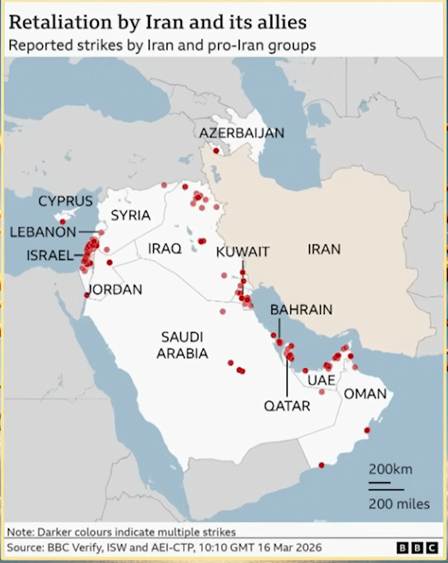
The last two wars between Israel and Iran are called “Roaring Lion” and “Rising Lion”. The lion was the symbol of King David, and of his tribe Judah, and King David was called “the Lion of Judah”.
A second faithful witness is the great Rabbi, the Ra'avad, who wrote that Elijah the Prophet comes “to give Israel peace from the nations of the world, and to announce the coming of the Mashiach. This happens one day before the actual coming of the Mashiach, as is written, ‘For behold I send you the Prophet Elijah before the arrival of the Great (Gadol) and Awesome Day of HaShem, and he shall return the hearts of fathers to their sons and the hearts of sons to their fathers.’ This means that the hearts of the fathers and sons had been overcome with fear and each had run in a different direction in their troubles. On that day, they will return to their former state of valor, they will turn to each other and be comforted by each other, may it happen in our generation”.[6] Thus we see that before the Mashiach arrives, valor returns to our nation and this actually brings us peace with the other nations.
Likewise, Rabbi Zadok HaCohen of Lublin writes: “The fact that Elijah ... comes before the Mashiach means that his strength will make itself felt in the hearts of all the People of Israel ... to use their anger and revenge against the idolaters, with a strong arm as a result of the awakening in their hearts, and this is termed the coming of Elijah...”.[7]
According to the chronology of the year of the Exodus, the day that the Jews were commanded to take the Passover lamb into their homes was Shabbat, the 10th of Nisan. Hence our reference to the Shabbat before Pesach as a great day. The fact that the Egyptians accepted the idea that the Jews would be offering sacrifices to HaShem, of lambs, the animal deified by Egypt, is considered one of the miracles of this great day.
Exodus 12:1-3 HaShem said to Moses and Aaron in Egypt, “This month is to be for you the first month, the first month of your year. Tell the whole community of Israel that on the tenth day of this month each man is to take a lamb for his family, one for each household.”
Nisan is the month, and Shabbat Hagadol is the day for all of us to accept HaShem as the true redeemer of the Jewish people, so that this year we will all come to see the miraculous fulfillment of the words, “L’Shannah HaBah B’Yerushalyim”, Next Year in Jerusalem.
Shabbat Hagadol begins at sundown in the Diaspora on:
Eliyahu Kitov gives us a tells of some of the customs of this Shabbat:
There are also many special customs associated with this Shabbat. It was in Egypt that Israel celebrated the very first Shabbat Hagadol on the tenth of Nisan, five days before their redemption. On that day, the Children of Israel were given their first commandment which applied only to that Shabbat, but not to future generations:
Shemot (Exodus) 12:3 Speak ye unto all the congregation of Israel, saying, In the tenth day of this month (Nisan) they shall take to them every man a lamb, according to the house of their fathers, a lamb for an house:
This mitzva of preparing a lamb for the Passover offering four days before it was to be brought, applied only to that first Passover in Egypt, and the Torah does not tell us that we must continue to do so before every future Passover. Never the less, the people continued to do this to make sure that their lambs had no blemishes which would preclude their being sacrificed.
Pesachim 96a WHAT IS THE DIFFERENCE BETWEEN THE PASSOVER-OFFERING OF EGYPT AND THE PASSOVER-OFFERING OF [SUBSEQUENT] GENERATIONS? THE PASSOVER-OFFERING IN EGYPT WAS TAKEN ON THE TENTH [OF NISAN], [ITS BLOOD] REQUIRED SPRINKLING WITH A BUNCH OF HYSSOP ON THE LINTEL AND ON THE TWO DOOR-POSTS, AND IT WAS EATEN IN HASTE ON ONE NIGHT; WHEREAS THE PASS OVER- OFFERING OF [SUBSEQUENT] GENERATIONS IS KEPT THE WHOLE SEVEN [DAYS].
AND THE ANNUAL PASSOVER-OFFERING IS KEPT THE WHOLE SEVEN [DAYS] etc. To what does this refer? If we say, to the Passover-offering, — is there then a Passover-offering all the seven [days]? — Rather [it must refer] to leaven. Hence it follows that at the Passover of Egypt [leaven was forbidden] one night and no more; but surely it was taught, R. Jose the Galilean said: How do we know that at the Passover of Egypt the [prohibition of] leaven was in force one day only? Because it is said, There shall no leavened bread be eaten and in proximity [thereto] is written, This day ye go forth! -Rather this is its meaning: [The Passover-offering is kept] one night, and the same law applies to the annual Passover-offering; while [the prohibition of] leaven [was in force] the whole day, whereas at the Passover-offering of [subsequent] generations [the interdict of leaven] holds good for the entire seven [days].
The Midrash: “Three days before the Mashiach is to come, Elijah will come and stand upon the mountains of Israel and cry and mourn over them, saying, ‘Mountains of Eretz Israel, how long will you remain dry and desolate?’ And his voice will be heard from one end of the world to the other. Then he will say to them, ‘Peace has come forever’”.[8] Happy is the generation who harkened to the voice of Elijah and came to make the deserts and mountains bloom and thus to bring peace, as Rabbi Kook z"l wrote about the “awakening of the national desire to return to its land, to its own self...”,[9] referring to the awakening of teshuva which is part of our redemption.
Was Lazarus resurrected on Shabbat HaGadol?
The question of whether the resurrection of Lazarus occurred on Shabbat HaGadol (the Sabbath immediately preceding Passover) is a point where the Nazarean Codicil chronology, Jewish tradition, and historical calendars intersect. While the Gospels do not explicitly name the day "Shabbat HaGadol". According to the Gospel of Yochanan (John) 12:1, Yeshua arrived in Bethany "six days before the Passover."
If Passover (Nisan 15) fell on a Friday night/Shabbat (as some traditions suggest for that year), then "six days before" would place his arrival in Bethany on Shabbat. The resurrection of Lazarus occurs shortly before this arrival or is the immediate cause of the crowds gathering that weekend.
In Jewish tradition, Shabbat HaGadol is the day when the Israelites in Egypt took the Paschal lamb and tied it to their bedposts (Exodus 12:3), four days before the Exodus. This occurred on Nisan 10.
If the resurrection of Lazarus or the "Triumphal Entry" occurred on the Sunday (Palm Sunday), then the events immediately preceding it, the miracle in Bethany, would have taken place on or around that Shabbat (Nisan 9 or 10).
It is called Gadol (Great) because of the "Great Miracle" that occurred in Egypt when the firstborn of the Egyptians did not strike the Israelites despite the provocation of the lamb. The resurrection of Lazarus is seen as the "Great Sign" that mirrors the eschatological promise in Malachi 3:23 (read on Shabbat HaGadol): "Behold, I will send you Elijah the prophet before the coming of the great and awesome day".
If the resurrection occurred on Shabbat, it would involve questions of Melacha (work) and ritual impurity (Tumah). However, from a Messianic or "End of Days" perspective, these events are often viewed as "breaking the boundaries" of the natural order, much like the transition from the "Natural Calendar" of Tishri to the "Miraculous Calendar" of Nisan. Because the Hebrew calendar was sanctified by witnesses in that era, the exact day of the week for Nisan 10 varies by year. However, the tradition of the "Entry" occurring on the first day of the week strongly suggests the Bethany events occupied the preceding Shabbat. While the text does not use the term, the chronological proximity (approx. 4–6 days before Passover) places the Lazarus narrative directly within the window of Shabbat HaGadol. Thematic scholars argue this was intentional, linking the "taking of the lamb" (the preparation for the sacrifice) with the "sign of life" that triggered the final events in Jerusalem.
Water swells on the earth in the days of Noah. Day 100. Genesis 7:24
Abraham circumcises himself, Ishmael, and his entire household. Genesis 17:22 - 18:2
Yocheved hides Moses after a 6 month and one day pregnancy - day 33. ArtScroll Mesorah on Shavuot, page 61.
The Pesach lamb, without blemish, is chosen. Exodus 12:3
On the tenth day Ahiezer son of Ammishaddai, the leader of the people of Dan, brought his altar dedication offering. Numbers 7:66
Joshua's secret spies return from Jericho. Day 3 in hiding in the hills of Jericho. Joshua 2:1-23
Israelites cross the Jordan River and enter the promised land, camping at Gilgal. Joshua 4:19-22
Miriam dies on the Sabbath before Pesach. Seder Olam 10
The mobile well, which supplied water to the Exodus Jews, dries up. Seder Olam 10
Israelites cross the Jordan and erect twelve monuments at Gilgal. Joshua 4:20
Levites still consecrating the Temple in Hezekiah's day, day 10. II Chronicles 29:17
Ezekiel gets Temple measurements. Ezekiel 40, 41, 42, 43
Ezra assemble Jews at the Ahava canal prior to departing Babylon for Israel. Day 2 Ezra 8:15
Yeshua feeds the multitude. John 6:4-15
Yeshua enters Jerusalem, on the foal of a donkey, as Mashiach King, on Shabbat. John 12:12-15, Zechariah 9:9
Yeshua heals the blind and lame. Matthew 21:14
* * *
The Shabbat before Pesach is called "The Great Shabbat" because of the miracle which happened on the 10th of Nisan (see above).
But what was it about this miracle that we connect it to Shabbat? We commemorate Shavuot on whichever day of the week the 6th of Sivan occurs. Similarly, Chanukah always starts on the 25th of Kislev, whichever day of the week that happens to be.
What was it about this miracle that we link it to Shabbat rather than its actual calendar date?
It is known that during Shabbat, all the plagues of Egypt were temporarily suspended: The bloody rivers changed back to water; the frogs stopped swarming. In honor of the greatness of Shabbat, even the plagues "took a rest."
The tenth of Nisan, when the Jews led the lambs through the streets of Egypt, occurred during the plague of darkness. If this event had taken place on a weekday, the Egyptians would not have been able to see the what the Jews were doing and there would have been no miracle, for the entire land was engulfed in darkness.
Now we can understand why we celebrate this miracle on the Shabbat before Pesach and not on the 10th of Nisan. For without Shabbat there would have been no miracle. That's why it's the "Great Shabbat".
* * *
On Nisan 10, four days before the Jewish People were to leave Mitzrayim, Egypt, HaShem commanded them to take a lamb, which the Egyptians worshipped as a god, and lead it through the streets to their homes.
They tied the lamb to their bedposts, and three days later, it was this lamb which served as the Pesach sacrifice. Its blood was used to mark the doors and lintels so that HaShem would 'pass over' the Jewish homes, and it was eaten at the first seder on the very night that the Jewish People left Egypt.
The Egyptians saw the Jews leading lambs through the street and asked "What is this lamb for?" The Jews replied "We're going to slaughter it as a Pesach sacrifice, as HaShem has commanded us." You can imagine how the Egyptians felt, seeing their god led through the street and then tied to a bedpost! Miraculously, however, they were prevented from harming the Jewish People. They ground their teeth in fury, but did not utter a word.
We commemorate this miracle on the Shabbat immediately preceding Pesach, on Shabbat Hagadol, ‘The Great Shabbat.’
When you think of the really significant shabbatot[10] throughout the Jewish calendar, you think of Shabbat Hagadol and Shabbat Shuba.
Shabbat Hagadol is similar to Shabbat Shuba, the Sabbath of Repentance before Yom Kippur. Before Yom Kippur we are afraid of what HaShem will decree. Most repent out of fear. But on Shabbat Hagadol, we remember the great miracles HaShem performed in bringing about our exodus from Egypt, and in appreciation our hearts want forgiveness out of love of HaShem. This is significant because what happened in Egypt, in the days of Moshe, will happen in the future in the days of Mashiach:
Rosh HaShana 11a Rabbi Yehoshua says: "In Nisan the world was created ... the bondage of our ancestors ceased in Egypt; and in Nisan they will be redeemed in time to come.”
Further, our future redemption is just like our redemption in the days of Moshe:
Micah 7:15 As in the days of thy coming forth out of the land of Egypt will I show unto them marvellous things.
Thus the secrets of Shabbat HaGadol are important to our own redemption. The relationship of Shabbat HaGadol to Shabbat Shuba will only bring us greater illumination and understanding into this very significant Shabbat.
One of the distinctions of Shabbat HaGadol, among Ashkenazi Jews, is that it was one of two times during the year that, in an earlier age,[11] the Hakham would address the congregation.[12] The other occasion was Shabbat Shuba. The Shabbat before Pesach expresses the motif of drawing down G-dliness, and the Shabbat before Yom Kippur, Shabbat Shuba, relates to man’s ascent. On Shabbat Shuba our Hakhamim expound at length on the laws of teshuva and on Shabbat Hagadol he should expound at length on cleaning for chametz.
In our halachic literature, we find the following remarks by the "Mateh Moshe," "It is customary (that the Rav) deliver a talk on Shabbat shuba and Shabbat Hagadol … in order to awaken the people to repentance; and I have found support for this custom in ‘Midrash Mishlei,’ where it is written, ‘The Holy One, Blessed Be He, said: When the “Hakham,” or “Sage,” sits and teaches, I cancel and forgive the trespasses of Israel.”’ Hence it is proper to deliver a talk on this Shabbat, in order that He pardon their sins; and you may find another support for this in the Zohar on Parshat Vayikra."
What is the connection between teshuva and chametz? Well, for one, we must do careful searching in both cases. When we search for chametz we should also be searching for our own Yetzer HaRa.[13] When we search for our sins in order to do teshuva it is an equally daunting task.
On Shabbat Hagadol we prepare for redemption. This redemption involves attaching ourselves to HaShem and returning to the promised land, to Gan Eden. It means that we become His people.
On Shabbat Shuba we prepare to stand before The Judge by returning to the sinless state we had in Gan Eden.
Thus, we see that these two Shabbatot[14] have much in common.
Shabbat 118b Rav Yochanan said in the name of Rabbi Shimon bar Yochai: “If Israel were to keep two Shabbatot according to the laws thereof, they would be redeemed immediately.”
In the Sifrei HaPardes, Rav Yeshiel Epstein writes that the two Shabbatot which must be observed are Shabbat Hagadol and Shabbat Shuba. Each of these Shabbatot have a special power to them:
Shabbat Shuba falls between Rosh HaShana and Yom Kippur, it is a Shabbat which teaches man how to return to HaShem. Shabbat Shuba is typically the first Shabbat of the year.
Shabbat Hagadol contains within it the secret of redemption. The other Shabbat, Shabbat HaGadol, is the first Shabbat observed in Egypt and the second Shabbat in Nisan.
If man could master these two Shabbatot, the Mashiach would quickly arrive.
The Sefat Emet explains that the term “Shabbat HaGadol” results from the Shabbat taking on new significance. Only with the Jews redemption from Egypt did Shabbat acquire the historical identity which intertwined with the theology. The Sefat Emet explains that Shabbat had now become “greater”: Now the second aspect of Shabbat, articulated in the repetition of the ten commandments, would be realized.[15]
The Sefat Emet states[16] that by taking the lamb the Jews observed Shabbat in Egypt. This was their first Shabbat as a people, a moment of passage in the national sense: They had reached the age of majority, by becoming an Ish (a royal man), with responsibilities. This was Shabbat “HaGadol”.[17]
The most basic teaching of Shabbat is the acknowledgement that HaShem created the world in six days. By taking the lamb the Jews rejected idolatry and accepted HaShem. This was not merely an action which took place on the tenth of Nisan. This was a watershed of Jewish history. Now the Jews joined HaShem in a Shabbat.
 Most Jews have a custom to wear their kittels[18] (קיטל) at two times during the year: At the Pesach
seder we wear a kittel and on Yom Kippur we wear a kittel.[19] Curiously, Shabbat Shuba
and Shabbat HaGadol are the two shabbatot which immediately precede these two
occasions.
Most Jews have a custom to wear their kittels[18] (קיטל) at two times during the year: At the Pesach
seder we wear a kittel and on Yom Kippur we wear a kittel.[19] Curiously, Shabbat Shuba
and Shabbat HaGadol are the two shabbatot which immediately precede these two
occasions.
* * *
Usually, the haftorah always follows the theme of the Maftir. On Yom Tov and Rosh Chodesh, we read a special maftir which is followed by the Haftorah as found in the theme of the Maftir. Yet on two Shabbatot there is no special Maftir, and yet we read a special Haftorah . These are:
1) Shabbat Shuba, and
2) Shabbat Hagadol.
The question that was raised is why are these two Haftarot different from the others?
Here is the answer as I see it. If you analyze the pattern you find that the special maftir only applies to an actual holiday. The pilgrimage festivals and Chanukah are holidays; hence, there is a special maftir when it coincides with Shabbat. Shabbat Shuba, and Shabbat Hagadol are secondary to something else. Shabbat Shuba is secondary to the Days of Awe and Shabbat Hagadol is secondary to Pesach. Hence, since they are still important, they have their own Haftarot. Nevertheless, since they are still secondary, there is no special Maftir.
From this question and its answer we see another connection between Shabbat Hagadol and Shabbat Shuba.
Finally, Shabbat HaGadol is time for learning how to clean on the outside (to remove chametz), while Shabbat Shuba is time for cleaning the inside (returning to HaShem by cleaning out sin). Yes, I know that the point of cleaning the outside is to demonstrate the work that must be exerted to clean the inside. And yes, I know that internal soul searching must be manifested in good deeds on the outside.
Shabbat HaGadol is the Shabbat closest to the Tekufah of Nisan (Vernal Equinox) and Shabbat Shuba is the Shabbat closest to the Tekufah of Tishre (Autumnal Equinox). On these two days the days and nights of equal length.
On the first Shabbat after Simchat Torah, we read the first pasuk of Bereshit, in the annual Torah reading cycle. In the Triennial, or Septennial, cycle, we read the first verse on Shabbat Shuba, the first Shabbat after Yom Teruah, and we also read it on Shabbat Hagadol in Nisan. This bi-modality of the Torah goes well with the Baraita of Rosh HaShanah 10b, where we have Rabbi Eliezer telling us the world was created in Tishri, and Rabbi Joshua telling us that the world was created in Nisan.
The Ashlamata read on Shabbat HaGadol are:
Malachi 3:4-24 Then shall the offering of Judah and Jerusalem be pleasant unto HaShem, as in the days of old, and as in former years. 5 And I will come near to you to judgment; and I will be a swift witness against the sorcerers, and against the adulterers, and against false swearers, and against those that oppress the hireling in his wages, the widow, and the fatherless, and that turn aside the stranger from his right, and fear not me, saith HaShem of hosts. 6 For I am HaShem, I change not; therefore ye sons of Jacob are not consumed. 7 Even from the days of your fathers ye are gone away from mine ordinances, and have not kept them. Return unto me, and I will return unto you, saith HaShem of hosts. But ye said, Wherein shall we return? 8 Will a man rob G-d? Yet ye have robbed me. But ye say, Wherein have we robbed thee? In tithes and offerings. 9 Ye are cursed with a curse: for ye have robbed me, even this whole nation. 10 Bring ye all the tithes into the storehouse, that there may be meat in mine house, and prove me now herewith, saith HaShem of hosts, if I will not open you the windows of heaven, and pour you out a blessing, that there shall not be room enough to receive it. 11 And I will rebuke the devourer for your sakes, and he shall not destroy the fruits of your ground; neither shall your vine cast her fruit before the time in the field, saith HaShem of hosts. 12 And all nations shall call you blessed: for ye shall be a delightsome land, saith HaShem of hosts.13 Your words have been stout against me, saith HaShem. Yet ye say, What have we spoken so much against thee? 14 Ye have said, It is vain to serve G-d: and what profit is it that we have kept his ordinance, and that we have walked mournfully before HaShem of hosts? 15 And now we call the proud happy; yea, they that work wickedness are set up; yea, they that tempt G-d are even delivered. 16 Then they that feared HaShem spake often one to another: and HaShem hearkened, and heard it, and a book of remembrance was written before him for them that feared HaShem, and that thought upon his name. 17 And they shall be mine, saith HaShem of hosts, in that day when I make up my jewels; and I will spare them, as a man spareth his own son that serveth him. 18 Then shall ye return, and discern between the righteous and the wicked, between him that serveth G-d and him that serveth him not. 19 For, behold, the day cometh, that shall burn as an oven; and all the proud, yea, and all that do wickedly, shall be stubble: and the day that cometh shall burn them up, saith HaShem of hosts, that it shall leave them neither root nor branch. 20 But unto you that fear my name shall the Sun of righteousness arise with healing in his wings; and ye shall go forth, and grow up as calves of the stall. 21 And ye shall tread down the wicked; for they shall be ashes under the soles of your feet in the day that I shall do this, saith HaShem of hosts. 22 Remember ye the law of Moses my servant, which I commanded unto him in Horeb for all Israel, with the statutes and judgments. 23 Behold, I will send you Elijah the prophet before the coming of the great and dreadful day of HaShem: 24 And he shall turn the heart of the fathers to the children, and the heart of the children to their fathers, lest I come and smite the earth with a curse.
Triennial Torah readings for Shabbat Shuba and Shabbat Hagadol:
|
Shabbat Hagadol |
Shabbat Shuva |
|
Malachi 3:4-24 |
Hosea 14:2-10 (Sephardim) |
|
Gen 1:1 – 2:3 |
Micah 7:18-20 |
|
Gen. 2:4 – 3:21 |
Joel 2:15-17 (Ashkenazim) |
|
Gen. 27:1-27 |
Gen 1:1 – 2:3 |
|
Gen. 27:28 – 28:9 |
Gen. 30:22 – 31:2 |
|
Ex 6:2 – 7:7 |
Gen. 31:3 – 32:3 |
|
Ex 7:8 -8:15 |
Ex 1:1-22 |
|
Ex 27:20 – 28:43 |
Ex. 2:1-25 |
|
Lev. 15:1-24 |
Ex 32:15 – 33:23 |
|
Lev. 19:23 – 20:27 |
Ex 34:1-26 |
|
Num. 8:1 – 9:23 |
Lev. 15:1-24 |
|
Num. 10:1 – 11:15 |
Num. 10:1 – 11:15 |
|
Num. 10:1 – 11:15 |
Num. 14:11-45 |
|
Deut. 2:2-30 |
Deut. 4:41 – 6:3 |
|
Deut. 2:31 – 3:22 |
|
* * *
This study was written by
Rabbi Dr. Hillel ben David
(Greg Killian).
Comments may be submitted to:
Rabbi Dr. Greg Killian
12210 Luckey Summit
San Antonio, TX 78252
Internet address: gkilli@aol.com
Web page: http://www.betemunah.org/
(360) 918-2905
Return to The WATCHMAN home page
Send comments to Greg Killian at his email address: gkilli@aol.com
[1] The Children of Israel
[2] Malachi 3:23
[3] Solomon Luria (1510 – November 7, 1573) was one of the great Ashkenazic decisor of Jewish law and teachers of his time. He is known for his work of Halakha, Yam Shel Shlomo, and his Talmudic commentary Chochmat Shlomo. Luria is also referred to as “Maharshal” מהרש"ל (Hebrew abbreviation: Our Teacher, Rabbi Solomon Luria), or “Rashal” רש"ל (Hebrew abbreviation: Rabbi Solomon Luria).
[4] Pesiqta Rabbati 35
[5] Orot HaT'shuva 17:2
[6] Commentary of Ra’avad at the end of Eduyoth
[7] Zidkat HaTzadik 218
[8] Pesiqta Rabbati 35
[9] Orot HaT'shuva 17:2
[10] Plural of Shabbat (Sabbaths)
[11] This was the custom, from Talmudic times, in eastern Europe through the nineteenth century. Meir Berlin, Me Volozin Ad Yerushalaim (Tel Aviv, 1939), p.227, asserts that R. Epstein fulfills this law and relates that although very involved in study and community issues, he was careful to deliver his sermons every Shabbat Hagadol and Shabbat Shuba.. (See also Saperstein, Jewish Preaching, p.13, where the categories of sermons are discussed.)
[12] The Aruch HaShulchan, by Rabbi Epstein, tells us about this custom in Orach Chaim 429:6.
[13] Our evil inclination
[14] Plural of Shabbat (Sabbaths)
[15] Sfat Emet Shabbat Hagadol 5637
[16] Sfat Emet Shabbat Hagadol 5646
[17] Sfat Emet Shabbat Hagadol 5674
[18] A long white robe, as pictured.
[19] The kittel is also worn as shrouds for a Niftar (one who died).