|
Esnoga Bet Emunah 12210 Luckey Summit San Antonio, TX 78252 United States of America © 2026 E-Mail: gkilli@aol.com |
|
Esnoga Bet El 102 Broken Arrow Dr. Paris TN 38242 United States of America © 2026 E-Mail: waltoakley@charter.net |
Triennial Cycle (Triennial Torah Cycle) / Septennial Cycle (Septennial Torah Cycle)
|
Three and 1/2 year Lectionary Readings |
First Year of the Triennial Reading Cycle |
|
Tishri 15-23, 5787 / Sep 25–Oct 4, 2026 |
Fifth Year of the Shmita Cycle |
Chag HaSuccoth - Feast of Tabernacles - 5787 Ano Mundi
We wish all of our readers a most happy, blessed, and joyous time over the holidays of Succoth (Tabernacles) together with your loved ones as you welcome daily your most Distinguished guests at your Sukkah, and together with all of our most noble and beloved Jewish brothers and sisters, and their Torah Scholars, amen ve amen!
Candle Lighting and Habdalah Times:
Please go to the below webpage and type your city, state/province, and country to find candle lighting and Habdalah times for the place of your dwelling.
See: http://www.chabad.org/calendar/candlelighting.htm
Roll of Honor:
This Commentary comes out weekly and on the festivals thanks to the great generosity of:
His Eminence Rabbi Dr. Hillel ben David and beloved wife HH Giberet Batsheva bat Sarah
His Eminence Rabbi Dr. Eliyahu ben Abraham and beloved wife HH Giberet Dr. Elisheba bat Sarah
His Honor Paqid Adon David ben Abraham
His Honor Paqid Adon Ezra ben Abraham and beloved wife HH Giberet Karmela bat Sarah,
His Honor Paqid Adon Tzuriel ben Abraham and beloved wife HH Giberet Gibora bat Sarah
Her Excellency Giberet Sarai bat Sarah & beloved family
His Excellency Adon Barth Lindemann & beloved family
His Excellency Adon John Batchelor & beloved wife
His Excellency Adon Yehoshua ben Abraham and beloved wife HE Giberet Rut bat Sarah
His Excellency Adon Michael ben Yosef and beloved wife HE Giberet Sheba bat Sarah
Her Excellency Giberet Prof. Dr. Emunah bat Sarah & beloved family
His Excellency Adon Robert Dick & beloved wife HE Giberet Cobena Dick
His Excellency Adon Ovadya ben Abraham and beloved wife HE Giberet Mirit bat Sarah
His Excellency Adon Shlomoh ben Abraham
His Excellency Adon Yaaqov ben David
His Excellency Adon Bill Haynes and beloved wife HE Giberet Diane Haynes
Her Excellency Giberet Krysta Wallrauch & beloved family
For their regular and sacrificial giving, providing the best oil for the lamps, we pray that GOD’s richest blessings be upon their lives and those of their loved ones, together with all Yisrael and her Torah Scholars, amen ve amen!
Also, a great thank you and great blessings be upon all who send comments to the list about the contents and commentary of the weekly Torah Seder and allied topics. If you want to subscribe to our list and ensure that you never lose any of our commentaries or would like your friends also to receive this commentary, please do send me an E-Mail to gkilli@aol.com with your E-Mail or the E-Mail addresses of your friends. Toda Rabba!
Blessings Before Torah Study
Blessed are You, Ha-Shem our GOD, King of the universe, Who has sanctified us through Your commandments, and commanded us to actively study Torah. Amen!
Please Ha-Shem, our GOD, sweeten the words of Your Torah in our mouths and in the mouths of all Your people Israel. May we and our offspring, and our offspring's offspring, and all the offspring of Your people, the House of Israel, may we all, together, know Your Name and study Your Torah for the sake of fulfilling Your delight. Blessed are You, Ha-Shem, Who teaches Torah to His people Israel. Amen!
Blessed are You, Ha-Shem our GOD, King of the universe, Who chose us from all the nations, and gave us the Torah. Blessed are You, Ha-Shem, Giver of the Torah. Amen!
Ha-Shem spoke to Moses, explaining a Commandment. "Speak to Aaron and his sons, and teach them the following Commandment: This is how you should bless the Children of Israel. Say to the Children of Israel:
May Ha-Shem bless you and keep watch over you; - Amen!
May Ha-Shem make His Presence enlighten you, and may He be kind to you; - Amen!
May Ha-Shem bestow favor on you and grant you peace. – Amen!
This way, the priests will link My Name with the Israelites, and I will bless them."
These are the Laws for which the Torah did not mandate specific amounts: How much growing produce must be left in the corner of the field for the poor; how much of the first fruits must be offered at the Holy Temple; how much one must bring as an offering when one visits the Holy Temple three times a year; how much one must do when performing acts of kindness; and there is no maximum amount of Torah that a person must study.
These are the Laws whose benefits a person can often enjoy even in this world, even though the primary reward is in the Next World: They are: Honoring one's father and mother; doing acts of kindness; early attendance at the place of Torah study -- morning and night; showing hospitality to guests; visiting the sick; providing for the financial needs of a bride; escorting the dead; being very engrossed in prayer; bringing peace between two people, and between husband and wife; but the study of Torah is as great as all of them together. Amen!
Hag HaSuccoth - Feast of Tabernacles
5787 Ano Mundi
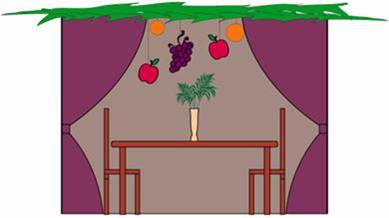
For further study see: https://www.betemunah.org/succoth.html
https://www.betemunah.org/birth.html
Tishri 15, 5787
Friday Evening, September 25 –Sunday Evening, October 4, 2026
Your Distinguished guest at your Sukkah: Abraham Abinu representing love and kindness
Succoth 1st Day - Morning Service
Morning Service Tabernacles (day One) – Tabernáculos (Primer Día)
|
Festival |
Torah Reading: |
|
חַג הַסֻּכּוֹת |
|
|
Succoth |
Reader 1 – Vayikra 22:26 – 23:3 |
|
Vayikra (Leviticus) 22:26 – 23:44 B’midbar (Numbers) 29:12-16 |
Reader 2 – Vayikra 23:4-14 |
|
Haftarah: Zechariah 14:1-21 |
Reader 3 – Vayikra 23:15-22 |
|
Megillah: Koheleth: (Ecclesiastes) 1:1-2:15 |
Reader 4 – Vayikra 23:23-31 |
|
Tehillim (Psalms) 113:1-9 |
Reader 5 – Vayikra 23:32-44 |
|
N.C.: I Thessalonians 1:1-10 + 2:1-12 & Revelation 3:7-13 |
Maftir – Bamidbar 29:12-16 Zekharyah - 14:1-21 |
Rashi & Targum Pseudo Jonathan for: Vayikra (Leviticus) 22:26 – 23:44
|
Rashi |
Targum Pseudo Jonathan |
|
26. Adonai spoke to Moshe, saying; |
26. And the Lord spoke with Mosheh, saying (to the effect that): |
|
27. An ox, lamb, or goat, when it is born, will be with its mother for seven days. From the eighth day and thereafter it may be favorably accepted as a sacrifice as a fire-offering to Adonai. |
27. What time you call to our mind the order of our oblations, as they will be offered year by year, being our expiatory offering for our sins, when on account of our sins (such sacrifices are required), and we have none to bring from our flocks of sheep, then will a bullock be chosen before Him, in memorial of the righteousness/ generosity of the elder who came from the east, the sincere one who brought the calf, fat and tender, to Your Name. A sheep is to be chosen, secondly, in memory of the righteousness/ generosity of him who was bound as a lamb on the altar, and who stretched forth his neck for Your Name's sake, while the heavens stooped down and condescended, and Izhak beheld their foundations, and his eyes were blinded by the high things; on which account he was reckoned to be worthy that a lamb should be provided for him as a burnt offering. A kid of the goats is to be chosen likewise, in memorial of the righteousness/generosity of that perfect one who made the savory meat of the kid, and brought it to his father, and was made worthy to receive the order of the blessing: wherefore Mosheh the prophet explains, saying: Sons of Israel, my people, When a bullock, or a lamb, or a kid is brought forth according, to the manner of the world, it will be seven days after its dam, that there may be evidence that it is not imperfect; and on the eighth day and thenceforth, it is acceptable to be offered an oblation to the Name of the Lord. [JERUSALEM. In the time that you reminded us of the order of the oblations as they are to be offered year by year; our offerings are to make atonement for our sins. But when our sins have given occasion, and we have not wherewith to bring from our flocks of sheep, a bullock is to be chosen before Me. to recall to remembrance the elder of the east, sincere altogether, Who brought to Your Name a calf tender and good, Which he gave to the young man, who hasted to dress it, and to bake unleavened cakes; and the angels did eat, and be was accounted worthy to receive the announcement that, behold, Sarah should give birth to Izhak. A lamb is to be chosen, secondly, to call to remembrance the righteousness/ generosity of the prince who suffered himself to be bound upon the altar, and stretched forth his neck for Your Name's sake; when the heavens stooped down and condescended, and Izhak beheld their foundations, and his eyes were blinded by the high things (or, from the heights), on which account be was held worthy that a lamb should be provided in his stead for a burnt offering. A kid of the goats also is to be chosen, to call to remembrance the righteousness/ generosity of that perfect one who put on the skins of the kids, and made savory meat, and brought of his viands unto his father, and gave wine to him to drink; on account of which he was held worthy to receive the orders of blessings from Izhak his father, that the twelve sacred tribes should arise to Your Name. Behold, then, how Mosheh, the prophet of the Lord, expounds, and says, Sons of Israel, my people, when a bullock, or a lamb, or a goat is brought forth, it will be seven days after its dam; on the eighth day and thenceforth it will be fit to be offered as an oblation to the Name of the Lord.] |
|
28. An ox or a lamb, it and its offspring, you will not slaughter in one day. |
28. Sons of Israel, my people, as our Father in heaven is merciful, so will you be merciful on earth: neither cow, nor ewe, will you sacrifice along with her young on the same day. |
|
29. When you sacrifice a thanks-giving-offering to Adonai, that it be favorably accepted for you, you will sacrifice it. |
29. And when you offer a sacrifice of thanksgiving to the Name of the Lord, you will offer so as to be accepted. |
|
30. On that day [that it is sacrificed] you should eat it; you will leave none of it until the next morning, I am Adonai. |
30. It will be eaten on that day; none will remain till the morning: I am the Lord. |
|
31. You will preserve My commandments and fulfill them, I am Adonai. |
31. And you will observe My commandments to do them I am the Lord who gives a good reward, to them who keep My commandments and My laws. |
|
32. You will not profane My holy Name; but I will be sanctified among Bne Yisrael. I am Adonai Who makes you holy. |
32. Nor will you profane My Holy Name, that I may be hallowed among the children of Israel. I am the Lord who sanctifies you, |
|
33. Who brought you out of the land of Egypt to be your G-d, I am Adonai. |
33. having brought you forth redeemed from the land of Mizraim, that I may be to you Elohim: I am the Lord. |
|
Ch23 |
|
|
1. Adonai spoke to Moshe, saying; |
1. And the Lord spoke with Mosheh, saying: Speak with the sons of Israel, and say to them, |
|
2. Speak to Bne Yisrael and say to them; the appointed times of Adonai, which you will proclaim them as holy assemblies; these are My appointed times. |
2. The orders of the time of the Festivals of the Lord, which you will proclaim as holy convocations, these are the orders of the time of My festivals. |
|
3. Six days will work be performed; and on the seventh day is a Shabbat of resting, a holy assembly. You will not do any work; it is a Shabbat for Adonai in all your dwelling places. |
3. Six days will you do work, and the seventh day (will be) a Sabbath and a rest, a holy convocation. No manner of work may you do; it is a Sabbath to the Lord in every place of your habitations. |
|
4. These are the appointed times of Adonai, the holy assemblies that you will proclaim them in their appointed times. |
4. These are the times of the Festivals of the Lord, holy convocations which you will proclaim in their times: |
|
5. In the first month (Nisan), on the fourteenth day of the month in the afternoon, is a Pesach (offering) for Adonai. |
5. In the month of Nisan, on the fourteenth day of the month, between the suns (will be) the time for the sacrifice of the Pascha to the Name of the Lord. |
|
6. On the fifteenth day of this month is the festival of matzot, for Adonai; for seven days you will eat matzot. |
6. And on the fifteenth day of this month the feast of unleavened cakes to the Name of the Lord. Seven days you will eat unleavened bread. |
|
7. On the first day [there] will be a day of holy assembly for you; you will not do any work of labor. |
7. On the first day of the feast a holy convocation will be to you; you will do no work of labor, |
|
8. You will bring a fire-offering to Adonai [on each of] seven days. On the seventh day it is [a day] of holy assembly; you will not do any work of labor. |
8. but offer the oblation to the Name of the Lord seven days; in the seventh day of the feast will be a holy convocation; you will do no work of labor. |
|
9. Adonai spoke to Moshe, saying, |
9. And the Lord spoke with Mosheh, saying: |
|
10. Speak to B’ne Yisrael and say to them; when you come into the land that I give to you and you reap its harvest, you will bring an omer of the first fruits of your harvest to the Kohen. |
10. Speak with the sons of Israel, and say to them: When you have entered into the land which I give you, and you reap the harvest, you will bring the sheaf of the first fruits of your harvest unto the priest; |
|
11. He will waive the omer before Adonai that it be favorably accepted for you. On the day after the day of rest (Pesach), the Kohen will wave it. |
11. and he will uplift the sheaf before the Lord to be accepted for you. After the first festal day of Pascha (or, the day after the feast-day of Pascha) on the day on which you elevate the sheaf, |
|
12. You will prepare, on the day when you wave the omer, an unblemished, male, yearling lamb as a burnt offering, to Adonai. |
12. you will make (the sacrifice of a lamb of the year, unblemished a burnt offering unto the Name of the Lord: |
|
13. Its meal-offering is two tenths of flour mixed with [olive] oil as a fire-offering to Adonai of pleasing fragrance. Its wine-offering is one fourth of a hin. |
13. and its mincha, two tenths of flour, mingled with olive oil, for an oblation to the Name of the Lord, to be received with acceptance; and its libation, wine of grapes, the fourth of a hin. |
|
14. Bread, parched grain, or tender grain you will not eat until this very day, until you bring the offering of your G-d; it is an everlasting statute for all your generations in all your dwelling places. |
14. But neither bread nor parched corn (of the ripe harvest) nor new ears may you eat until this day, until the time of your bringing the oblation of your God: an everlasting statute unto your generations in all your dwellings |
|
15. You will count for yourselves, from the day after the day of rest (Pesach) from the day on which you will bring the omer wave-offering, seven complete weeks they will be, |
15. And number to you after the first feast day of Pascha, from the day when you brought the sheaf for the elevation, seven weeks; complete they will be. |
|
16. Until the day after the seventh week, you will count fifty days, and you will bring a new meal-offering to Adonai. |
16. Until the day after the seventh week you will number fifty days and will offer a mincha of the new bread unto the Name of the Lord. |
|
17. From [the land of] your dwelling places you will bring two bread wave-offerings; of two tenths of flour, they will be. You will bake them leavened, as first-fruit-offering to Adonai. |
17. From the place of your dwellings you are to bring the bread for the elevation; two cakes of two tenths of flour, which must be baked with leaven, as first fruits unto the Name of the Lord. |
|
18. You will bring, along with the bread, seven unblemished, yearling lambs, one young bullock and two rams; they will be a burnt-offering to Adonai with their meal-offerings and wine-offerings, a fire-offering of pleasing fragrance to Adonai. |
18. And with that bread you are to offer seven lambs of the year, unblemished, and a young bullock without mixture (of color), the one for a sin offering, and two lambs of the year for a sanctified oblation. |
|
19. You will prepare one he-goat as a sin-offering and two yearling lambs as peace-offerings. |
19. And you will make (a sacrifice) of a young goat without mixture, the one for a sin offering and two lambs of the year for a sanctified oblation. |
|
20. The Kohen will wave them along with the bread of the first fruits-offering as a wave-offering before Adonai with the two lambs; they will be holy for Adonai, for the Kohen. |
20. And the priest will uplift them with the bread of the first fruits, an elevation before the Lord, with the two lambs; they will be holy to the Name of the Lord and will be for the priest. |
|
21. You will proclaim on this very day; it will be a [day of] holy assembly for you, you will not do any work of labor. It is an everlasting statute in all your dwelling places throughout your generations. |
21. And you will proclaim with life and strength that self-same day, that at the time of that day there will be to you a holy convocation: you will do no work of labor: it is an everlasting statute in all your dwelling for your generations. |
|
22. When you reap the harvest of your land, you will not cut completely the corner of your field when you reap. You will not gather the gleaning of your harvest. You will leave them for the poor and the proselyte, I am Adonai, your G-d. |
22. And when you reap the harvest of the ground, you will not finish one corner that is in your field at your reaping, nor will you gather the gleanings of your harvest but leave them for the poor and the strangers: I am the Lord your God. |
|
23. Adonai spoke to Moshe, saying; |
23. And the Lord spoke with Mosheh, saying: |
|
24. Speak to B’ne Yisrael, saying; in the seventh month, on the first of the month, will be for you a [day of] rest. A remembrance of the sounding [of the shofar], a holy assembly. |
24. Speak with the children of Israel, saying: In Tishri, which is the seventh month, will be to you a festival, a memorial of trumpets, a holy convocation. |
|
25. You will not do any work of labor and you will bring a fire-offering to Adonai. |
25. No work of labor may you do but offer an oblation before the Lord unto the Name of the Lord. |
|
26. Adonai spoke to Moshe, saying; |
26. And the Lord spoke with Mosheh saying: |
|
27. Indeed, on the tenth day of this seventh month is a day of atonement. It will be for you a [day of] holy assembly and you will afflict yourselves and you will bring a fire-offering to Adonai. |
27. But on the tenth day of this seventh month is the Day of Atonement; a holy convocation will it be to you, and you will humble your souls, (abstaining) from food, and from drink, and from the use of the bath, and from anointing, and the use of the bed, and from sandals; and you will offer an oblation before the Lord, |
|
28. You will not do any work on this very day, for it is a day of atonements, to atone for you before Adonai, your G-d. |
28. and do no work on this same day; for it is the Day of Atonement, to make atonement for you before the Lord your God. |
|
29. For any person who will not be afflicted on this very day will be cut off from his people. |
29. For every man who eats in the fast, and will not fast that same day, will be cut off by death from among his people. [JERUSALEM. For every soul who hides himself from fasting and fasts not on the day of the fast of his atonement.] |
|
30. Any person who does any work on this very day, I will cause that person to perish from among his people. |
30. And every man who does any work on that same day, that man will I destroy with death from among his people. |
|
31. You will not do any work; it is an everlasting statute for all your generations in all your dwelling places. |
31. No work of labor may you do an everlasting statute for your generations, in all your dwellings. |
|
32. It is a Shabbat of complete rest for you, and you will afflict yourselves on the ninth day of the month at evening; from evening to evening you will rest, on your day of rest. |
32. It is a Sabbath and time of leisure for you to humble your souls. And you will begin to fast at the ninth day of the month at even time; from that evening, until the next evening, will you fast your fast, and repose in your quietude, that you may employ the time of your festivals with joy. [JERUSALEM. From evening to evening you will fast your fast, and repose in your quietude, that you may employ the time of your festivals with joy.] |
|
33. Adonai spoke to Moshe, saying; |
33. And the Lord spoke with Mosheh, saying: |
|
34. Speak to B’ne Yisrael saying; on the fifteenth day of this seventh month is the festival of Succoth for seven days, for Adonai. |
34. Speak with the sons of Israel: In the fifteenth day of this seventh month will be the Feast of Tabernacles, seven days unto the Name of the Lord. |
|
35. On the first day [there will be] a holy assembly; you will not do any work of labor. |
35. On the first day of the feast is a holy convocation; no work of labor may you do. |
|
36. For seven days, you will bring a fire-offering to Adonai; the eighth day will be for you a holy assembly, and you will bring a fire-offering to Adonai. It is [a day] of convocation. you will not do any work of labor. |
36. Seven days you will offer an oblation to the Name of the Lord, you will gather together to pray before the Lord for rain; no work of labor may you do. |
|
37. These are the appointed times of Adonai which you will proclaim them [as] holy assemblies, on which to bring a fire-offering to Adonai; a burnt-offering and a meal-offering, a sacrifice, and wine-offerings, each on its assigned day, |
37. These are the times of the order of the Lord's festivals which you are to convoke for holy convocations, to offer an oblation to the name of the Lord, a burnt sacrifice and a mincha, sanctified offerings and libations, the rite of a day in its day; |
|
38. Besides the [offerings of the] Shabbatot of Adonai and besides your gifts and besides all your vow-offerings and besides all your free-will-offerings that you will give to Adonai. |
38. beside the days of the Lord's Sabbaths, beside your gifts, and beside your vows, and beside your free-will offering which you bring before the Lord. |
|
39. Indeed, on the fifteenth day of the seventh month, when you gather the produce of the land you will celebrate the festival of Adonai for seven days. The first day is a day of rest and the eighth day is a day of rest. |
39. But on the fifteenth of the seventh month, at the time when you collect the produce of the ground, you will solemnize a festival of the Lord seven days. On the first day, rest; and on the eighth day, rest. |
|
40. You will take for yourselves, on the first day, the fruit of the beautiful tree (esrog), a branch of palm trees (lulav), boughs of thick-leaved trees (hadasim), and willows of the brook (aravot), and you will rejoice before Adonai, your G-d, for seven days. |
40. And of your own will you take on the first day of the feast, the fruits of praiseworthy trees, citrons, and lulabim, and myrtles, and willows that grow by the brooks; and you will rejoice before the Lord your God seven days. [JERUSALEM. Citrons and lulabim.] |
|
41. You will celebrate it as a festival to Adonai seven days in the year; it is an everlasting statute throughout your generations in the seventh month, you will celebrate it. |
41. And you will solemnize it before the Lord seven days in the year, by an everlasting statute in your generations will you observe it in the seventh month. |
|
42. You will dwell in the sukkah seven days; every native-born Israelite will dwell in the sukkah. |
42. In tabernacles of two sides according to their rule, and the third a handbreadth (higher), that its shaded part may be greater than that into which comes the sunshine; to be made for a bower (or shade) for the feast, from different kinds (of materials) which spring from the earth and are uprooted: in measure seven palms, but the height within ten palms. In it you will sit seven days; the males in Israel, and children who need not their mothers, will sit in the tabernacles, blessing their Creator whenever they enter therein to. |
|
43. So that your generations will know that in Succoth I caused B’ne Yisrael to dwell when I took them out from the land of Egypt, I am Adonai, your G-d. |
43. That your generations may know how, under the shadow of the cloud of glory, I made the sons of Israel to tabernacle at the time that I brought them out redeemed from the land of Mizraim. |
|
44. And thus Moshe declared the appointed times of Adonai to B’ne Yisrael. |
44. And Mosheh declared the time of the orders of the Lord's festivals and taught them to the sons of Israel. |
Reading Assignment
|
The Torah Anthology, Volume 12-II, Holiness By: Hakham Yitschak Magrisso Translated by Rabbi Aryeh Kaplan Moznaim Publishing Corporation, 1990 Leviticus pp. 115-230
|
Ramban: Commentary on the Torah ויקרא - Leviticus Translated and Annotated by Rabbi Dr. Charles Chavel Published by Shilo Publishing House, Inc. (New York, 1974) Vol. 3, pp. 354-403 |
Rashi & Targum Pseudo Jonathan for: Bamidbar (Numbers) 29:12-16
|
Rashi |
Targum Pseudo Jonathan |
|
12. The fifteenth day of the seventh month will be a sacred holiday to you, when you will not do any work of consequence. You will celebrate a festival to Adonai for seven days. |
12. And on the fifth day of the seventh month you will have a holy convocation, no servile work will you do; but will celebrate the Feast of Tabernacles before the Lord seven days, |
|
13. You will bring a burnt-offering, a fire-offering for a pleasing aroma to Adonai, [consisting of] thirteen young bulls, two rams, and fourteen yearling lambs. They will [all] be without blemish. |
13. and offer a sacrifice, an oblation to be received with favor before the Lord: thirteen young bullocks proceeding daily and diminishing their number, (in all) seventy for the seventy nations, and offering them by thirteen orders; two rams, which you will offer by two orders; lambs of the year fourteen, unblemished, to be offered by eight orders, offering six of them, by two and two, and two of them one by one, they will be perfect. |
|
14. Their meal-offering [will be] fine flour mixed with [olive] oil, three tenths [of an ephah] for the bull for each of the thirteen bulls, two tenths [of an ephah] for the ram for each of the two rams, |
14. Their mincha also of wheat flour, with olive oil, three tenths for each bullock of the thirteen, two tenths for each ram, |
|
15. and one tenth [of an ephah] for the lamb for each of the fourteen lambs. |
15. a single tenth for each of the fourteen lambs, |
|
16. [You will also bring] one he-goat as a sin-offering, in addition to [bringing] the constant (daily) burnt-offering with its meal-offering and libation. |
16. and one kid of the goats for a sin offering, which will be offered by one order, beside the perpetual sacrifice, the wheat flour for the mincha, and the wine of the libation. |
Pesiqta deRab Kahana
Pisqa Twenty-Seven (Part I)
[On the fifteenth day of the seventh month, when you have gathered in the produce of the land, you will keep the feast of the Lord seven days ...] And you will take on the first day (the fruit of goodly trees, branches of palm trees and boughs of leafy trees and willows of the brook; and you will rejoice before the Lord your God seven days. You will keep it as a feast to the Lord seven days in the year; it is a statute for ever throughout your generations; you will keep it in the seventh month. You will dwell in booths for seven days; all that are native in Israel will dwell in booths, that your generations may know that I made the people of Israel dwell in booths when I brought them out of the land of Egypt: I am the Lord your God (Leviticus 23:39-43).
XXVII:I
R. Abba bar Kahana commenced [discourse by citing the following verse]: “Take my instruction instead of silver, and knowledge rather than choice gold (Prov. 8:10).” Said R. Abba bar Kahana, ‘Take the instruction of the Torah instead of silver. Take the instruction of the Torah and not silver.’ Why do you weigh out money? [Because there is no bread] (Is. 55:2). Why do you weigh out money to the sons of Esau [Rome]? [It is because] there is no bread, because you did not sate yourselves with the bread of the Torah. And [why] do you labor? Because there is no satisfaction (Is. 55:2). Why do you labor while the nations of the world enjoy plenty? Because there is no satisfaction, that is, because you have not sated yourselves with the bread of the Torah and with the wine of the Torah. For it is written, “Come, eat of my bread, and drink of the wine I have mixed” (Prov. 9:5).
R. Berekhiah and R. Hiyya, his father, in the name of R. Yose b. Nehorai: It is written, “I will punish all who oppress him” (Jer. 30:20), even those who collect funds for charity [and in doing so, treat people badly], except [for those who collect] the wages to be paid to teachers of Scripture and repeaters of Mishnah traditions. For they receive [as a salary] only compensation for the loss of their time, [which they devote to teaching and learning rather than to earning a living]. But as to the wages [for carrying out] a single matter in the Torah, no creature can pay the [appropriate] fee in reward.
It has been taught on Tannaite authority: On the New Year, a person's sustenance is decreed [for the coming year], except for what a person pays out [for food in celebration] of the Sabbath, festivals, the celebration of the New Month, and for what children bring to the house of their master [as his tuition]. If he deducts [from what he should give], [in Heaven] they deduct [from his wealth], but if he adds [to what is originally decreed], [in Heaven] they add to his [resources]. [Margulies, Vayiqra Rabbah, p. 688, n. to 1. 5, links this statement to Prov. 8:10.]
R. Yohanan was going up from Tiberias to Sepphoris. R. Hiyya bar Abba was supporting him. They came to a field. He said, "This field once belonged to me, but I sold it in order to acquire merit in labor in the Torah." They came to a vineyard, and he said, "This vineyard once belonged to me, but I sold it in order to acquire merit in labor in the Torah." They came to an olive grove, and he said, "This olive grove once belonged to me, but I sold it in order to acquire merit in labor in the Torah." R. Hiyya began to cry. Said R. Yohanan, "Why are you crying?" He said to him, "It is because you left nothing over to support you in your old age." He said to him, "Hiyya, my disciple, is what I did such a light thing in your view? I sold something which was given in a spell of six days [of creation] and in exchange I acquired something which was given in a spell of forty days [of revelation). The entire world and everything in it were created in only six days, as it is written, “For in six days the Lord made heaven and earth” (Ex. 20:11). But the Torah was given over a period of forty days and forty nights, as it was said, “And he was there with the Lord for forty days and forty nights” (Ex. 34:28). [Leviticus Rabbah adds: And it is written, “And I remained on the mountain for forty days and forty nights” (Deut. 9:9).]"
When R. Yohanan died, his generation recited concerning him [the following verse of Scripture]: “If a man should give all the wealth of his house for the love (Song 8:7), with which R. Yohanan loved the Torah, he would be utterly destitute” (Song 8:7). When R. Abba bar Hoshaiah of Tiria died, they saw his bier flying in the air. His generation recited concerning him [the following verse of Scripture]: “If a man should give all the wealth of his house for the love, with which the Holy One, blessed be He, loved Abba bar Hoshaiah of Tiria, he would be utterly destitute” (Song 8:7). When R. Eleazar b. Simeon died, his generation recited concerning him [the following verse of Scripture]: “Who is this who comes up out of the wilderness like pillars of smoke, (perfumed with myrrh and frankincense, with all the powders of the merchant?)” (Song 3:6). What is the meaning of the clause, “With all the powders of the merchant?” [Like a merchant who carries all sorts of desired powders,] he was a master of Scripture, a repeater of Mishnah traditions, a writer of liturgical supplications, and a poet.
Another interpretation of the verse, “Take my instruction instead of silver, (and knowledge rather than choice gold)” (Prov. 8:10): Said R. Abba bar Kahana, On the basis of the reward paid for one act of taking, you may assess the reward for [taking] the palm branch [on the festival of Tabernacles]. There was an act of taking in Egypt: “You will take a bunch of hyssop” (Ex. 12:22). And how much was it worth? Four manehs, maybe five. Yet that act of taking is what stood up for Israel [and so made Israel inherit] the spoil of Egypt, the spoil at the sea, the spoil of Sihon and Og, and the spoil of the thirty-one kings. Now the palm-branch, which costs a person such a high price, and which involves so many religious duties - how much the more so [will a great reward be forthcoming on its account]! Therefore, Moses admonished Israel, saying to them, “(On the fifteenth day of the seventh month, when you have gathered in the produce of the land, you will keep the feast of the Lord seven days...) And you will take on the first day (the fruit of goodly trees, branches of palm trees and boughs of leafy trees and willows of the brook; and you will rejoice before the Lord your God seven days. You will keep it as a feast to the Lord seven days in the year; it is a statute forever throughout your generations; you will keep it in the seventh month. You will dwell in booths for seven days; all that are native in Israel will dwell in booths, that your generations may know that l made the people of Israel dwell in booths when I brought them out of the land of Egypt: I am the Lord your God” (Leviticus 23:39-43).
XXVII:II
“You show me the path of life, [in your presence there is fullness of joy] (Ps. 16:11). Said David before the Holy One, blessed be He, "Lord of the ages, show me the open gateway to the life of the world to come." R. Yudan and R. Azariah: R. Yudan said, "David said before the Holy One, blessed be He, 'Lord of the ages, show me the path of life.' Said the Holy One, blessed be He, to David, 'If you seek life, look for fear, as it is said, “The fear of the Lord prolongs life” (Prov. 10:27)." R. Azariah said, "[The Holy One, blessed be He], said to David, 'If you seek life, look for suffering (YYSWRYN), as it is said, “The reproofs of discipline (MWSR) are the way of life” (Prov. 6:23)." [Leviticus Rabbah adds: Rabbis say, "The Holy One, blessed be He, said to David, 'David, if you seek life, look for Torah,' as it is said, “It is a tree of life to those that hold fast to it” (Prov. 3:18)." R. Abba said, "David said before the Holy One, blessed be He, 'Lord of the ages, Show me the path of life.' Said to him the Holy One, blessed be He, 'Start fighting and exert yourself! Why are you puzzled? [Lieberman, in Margulies, Vayyiqra Rabbah, p. 880, to p. 692]. Work and eat: Keep my good deeds and live (Prov. 4:4)."']
“The fulness (SWB`) of joy in your presence (Ps. 16:11): Satisfy (SB'NW) us with five joys in your presence: Scripture, Mishnah, Talmud, Supplements, and Lore.
Another matter: “In your presence is the fullness of joy” (Ps. 16:11): Read not fullness (SWB`) but seven (SB'). These are the seven groups of righteous/generous men who are going to receive the face of the Presence of God. And their face is like the sun, moon, firmament, lightning, stars, lilies, and the candelabrum that was in the house of the sanctuary. How do we know that it is like the sun? As it is said, “Clear as the sun” (Song 6:10). How do we know that it is like the moon? As it is said, “As lovely as the moon” (Song 6:10). How do we know that it is like the firmament? As it is said, “And they that are wise will shine as the brightness of the firmament” (Dan. 12:3). How do we know that it is like the lightning? As it is said, “Their appearance is like torches, they run to and fro like lightning” (Nah. 2:5). And how do we know that it is like the stars? As it is said, “And they that turn the many to righteousness/generosity as the stars forever and ever” (Dan. 12:3). How do we know that it is like lilies? As it is said, “For the leader: upon the lilies (Ps. 69:1). How do we know that it will be like the candelabrum of the house of the sanctuary? As it is said, “And he said to me, what do you see? And I said, I looked and behold [there was] a candelabrum all of gold” (Zech. 4:2).
“At your right hand is bliss for evermore” (Ps. 16:11). Said David before the Holy One, blessed be He, "Lord of the ages, now who will tell me which group [among those listed above] is the most beloved and blissful of them all?" There were two Amoras [who differed on this matter]. One of them said, "It is the group that comes as representative of the Torah and commandments, as it is said, ‘With a flaming fire at his right hand’ (Deut. 33:2)." And the other said, "This refers to the scribes, the Mishnah repeaters, and those who teach children in their fear, who are going to sit at the right hand of the Holy One, blessed be He. That is in line with the following verse of Scripture: ‘I keep the Lord always before me, because he is at my right hand, I will not be moved’ (Ps. 16:8)."
Another matter concerning the verse “You show me the path of life, in Your presence there is fullness of joy, in Your right hand are pleasures for evermore” (Ps. 16:11): “In Your presence there is fullness (SWB`) of joy” (Ps. 16:11): [Leviticus Rabbah adds: Read only "seven (SB`) joys."] These are the seven religious duties associated with the Festival [Tabernacles]. These are they: the four species that are joined in the palm branch, [the building of] the Tabernacle, [the offering of] the festal sacrifice, [the offering of] the sacrifice of rejoicing.
If there is the offering of the sacrifice of rejoicing, then why is there also the offering of the festal sacrifice? And if there is [the offering of] the festal sacrifice, then why also is there [the offering of] the sacrifice of rejoicing? Said R. Abin, "The matter may be compared to two who came before a judge. Now we do not know which one of them is the victor. But it is the one who takes the palm branch in his hand who we know to be the victor. So is the case of Israel and the Gentiles of the world. The [latter] come and draw an indictment before the Holy One, blessed be He, on the New Year, and we do not know which party is victor. But when Israel goes forth from before the Holy One, blessed be He, with their palm branches and their citrons in their hands, we know that it is Israel that are the victors.” Therefore, Moses admonishes Israel, saying to them, “[On the fifteenth day of the seventh month, when you have gathered in the produce of the land, you will keep the feast of the Lord seven days ...] And you will take on the first day (the fruit of goodly trees, branches of palm trees and boughs of leafy trees and willows of the brook; and you will rejoice before the Lord your God seven days. You will keep it as a feast to the Lord seven days in the year; it is a statute for ever throughout your generations; you will keep it in the seventh month. You will dwell in booths for seven days; all that are native in Israel will dwell in booths, that your generations may know that I made the people of Israel dwell in booths when I brought them out of the land of Egypt: I am the Lord your God” (Leviticus 23:39-43).
XXVII:III
“He will regard the prayer of the destitute (and will not despise their supplication)” (Ps. 102:17): Said R. Reuben, "We are unable to make sense of David's character. Sometimes he calls himself king, and sometimes he calls himself destitute. How so? When he foresaw that righteous/generous men were going to come from him, such as Asa, Jehoshaphat, Hezekiah, and Josiah, he would call himself king as it is said, “Give the king your judgments, O God” (Ps. 72:1). When he foresaw that wicked/lawless men would come forth from him, for example, Ahaz, Manasseh, and Amon, he would call himself destitute, as it is said, “A prayer of one afflicted, when he is faint [and pours out his complaint before the Lord]” (Ps. 102:1).”
R. Alexandri interpreted the cited verse “He will regard the prayer of the destitute [and will not despise their supplication]” (Ps. 102:17) to speak of a worker: "[Margulies, ad loc., explains: The one afflicted is the worker. The word for faint, `TP, bears the meaning, cloak oneself, hence in prayer. The worker then has delayed his prayer, waiting for the overseer to leave, at which point he can stop and say his prayer. So, he postpones his prayer.] [So Alexandri says], "Just as a worker sits and watches all day long for when the overseer will leave for a bit, so he is late when he says [his prayer], [so David speaks at Ps. 102:1: Hear my prayer, O Lord; let my cry come to you]." That [interpretation of the word 'TP] is in line with the use in the following verse: “And those that were born late belonged to Laban” (Gen. 30:42). What is the meaning of those that were born late? R. Isaac bar Haqolah said, "The ones that tarried."
[Another interpretation: “He will regard the prayer of the destitute [and will not despise their supplication]” (Ps. 102:17) - Said R. Simeon b. Laqish, "As to this verse, the first half of it is not consistent with the second half, and vice versa. If it is to be, “He will regard the prayer of the destitute [individual],' he should then have said, “And will not despise his supplication.” But if it is to be, “He will not despise their supplication,” then he should have said, “He will regard the prayer of those who are destitute.” But [when David wrote,] “He will regard the prayer of the individual destitute,” this [referred to] the prayer of Manasseh, king of Judah. And [when David wrote,] “He will not despise their supplication,” this [referred to] his prayer and the prayer of his fathers. That is in line with the following verse of Scripture: “And he prayed to him, and he was entreated of him” (2 Chron. 33:13). What is the meaning of the phrase, He was entreated (Y'TR) of him? Said R. Eleazar b. R. Simeon, "In Arabia they call a breach an athirta [so an opening was made for his prayer to penetrate to the Throne of God]" (Slotki, p. 385, n. 3). “And he brought him back to Jerusalem. (His kingdom)” (2 Chron. 33:13). How did he bring him back? R. Samuel b. R. Jonah said in the name of R. Aha, "He brought him back with a wind.” That is in line with the phrase [in The Prayer], “He causes the wind to blow." [At that moment:] “And Manasseh knew that the Lord is God” (2 Chron. 33:13). Then Manasseh said, "There is justice and there is a judge."
R. Isaac interpreted the verse “He will regard the prayer of the destitute (and will not despise their supplication)” (Ps. 102:17) to speak of these generations which have neither king nor prophet, neither priest nor Urim and Thummim, but who have only this prayer alone. Said David before the Holy One, blessed be He, 'Lord of the ages, "Do not despise their prayer. Let this be recorded for a generation to come' (Ps. 102:19). On the basis of that statement, [we know that] the Holy One, blessed be He, accepts penitents. “So that a people yet unborn may praise the Lord” (Ps. 102:19). For the Holy One, blessed be He, will create them as a new act of creation."
Another interpretation: “Let this be recorded for a generation to come” (Ps. 102:18): This refers to the generation of Hezekiah, [Leviticus Rabbah adds: which was tottering toward death]. “So that a people yet unborn may praise the Lord” (Ps. 102:18): for the Holy One, blessed be He, created them in a new act of creation.
Another interpretation: “Let this be recorded for a generation to come” (Ps. 102:18): This refers to the generation of Mordecai and Esther, which was tottering toward death. “So that a people yet unborn may praise the Lord” (Ps. 102:18): for the Holy One, blessed be He, created them in a new act of creation.
Another interpretation: “Let this be recorded for a generation to come” (Ps. 102:18): This refers to these very generations [in our own day], which are tottering to death. “So that a people yet unborn may praise the Lord” (Ps. 102:18): For the Holy One, blessed be He, is going to create them anew, in a new act of creation.
What do we have to take [in order to reach that end]? Take up the palm branch and citron and praise the Holy One, blessed be He. Therefore, Moses admonishes Israel, saying, “[On the fifteenth day of the seventh month, when you have gathered in the produce of the land, you will keep the feast of the Lord seven days...] And you will take on the first day (the fruit of goodly trees, branches of palm trees and boughs of leafy trees and willows of the brook; and you will rejoice before the Lord your God seven days. You will keep it as a feast to the Lord seven days in the year; it is a statute forever throughout your generations; you will keep it in the seventh month. You will dwell in booths for seven days; all that are native in Israel will dwell in booths, that your generations may know that I made the people of Israel dwell in booths when I brought them out of the land of Egypt: l am the Lord your God” (Leviticus 23:39-43).
XXVII:IV
“Let the field exult and everything in it. (Then will all the trees of the wood sing for joy before the Lord, for He comes, for He comes to judge the earth)” (Ps. 96:12-13): “(Let the field exult)” refers to the world, as it is said, “And it came to pass, when they were in the field” (Gen. 4:8) [and determined to divide up the world between them]. “And everything in it” refers to creatures.
That is in line with the following verse of Scripture: “The earth is the Lord's, and all that is in it” (Ps. 24:1). “Then will all the trees of the wood sing for joy” (Ps. 96:12). And there is the verse: “Then will all the trees of the forest shout for joy” (1 Chron. 16:33). Said R. Aha, “The forest and all the trees of the forest.” "The forest” refers to fruit-bearing trees. "And all the trees of the forest” encompasses those trees that do not bear fruit. Before whom? “Before the Lord” (Ps. 96:14). Why? For he comes on New Year and on the Day of Atonement. To do what? To judge the earth. “He will judge the world with righteousness/generosity, and the peoples with his truth” (Ps. 96:13).
XXVII:V
“I wash my hands in innocence and go about Your altar, O Lord, (singing aloud a song of thanksgiving, and telling all Your wondrous deeds)” (Ps. 26:6-7): [What I require I acquire] through purchase, not theft. [Leviticus Rabbah adds:] For we have learned there: A stolen or dried up palm branch is invalid. And one deriving from an asherah or an apostate town is invalid (M. Suk. 3:1A-B). “And go about your altar, O Lord” (Ps. 26:7). That is in line with what we have learned there: Every day they circumambulate the altar one time and say, “We beseech You, O Lord, save now. We beseech You, O Lord, make us prosper now” [Ps. 118:25]. R. Judah says, “I and him, save now.” On that day they circumambulate the altar seven times (M. Suk. 4:5).
“Singing aloud a song of thanksgiving” (Ps. 26:7) - this refers to the offerings. “And telling all your wondrous deeds” (Ps. 26:7): Said R. Abun, this refers to the Hallel Psalms [Ps. 113-118], which contain [praise for what God has done] in the past, also [what He has done] during these generations, as well as what will apply to the days of the Messiah, to the time of Gog and Magog, and to the age to come. "When Israel went forth from Egypt” (Ps. 114:1) refers to the past. "Not for us, O Lord, not for us” (Ps. 115:1) refers to the present generations. "I love for the Lord to hear” (Ps. 116:1) refers to the days of the Messiah. "All the nations have encompassed me” (Ps. 118:10) speaks of the time of Gog and Magog. "You are my God and 1 will exalt You” (Ps. 118:28) speaks of the age to come."
Ketubim: Tehillim (Psalms) 113:1-9
|
Rashi |
Targum on the Psalms |
|
1. Hallelujah. Praise, O you servants of the LORD, praise the name of the LORD. |
1. Hallelujah! Give praise, O servants of the LORD, praise the name of the LORD. |
|
2. Blessed be the name of the LORD from this time forth and forever. |
2. May the name of the LORD be blessed, from now and forever. |
|
3. From the rising of the sun unto the going down thereof the LORD'S name is to be praised. |
3. From the rising of the sun to its setting, the name of the LORD is praised. |
|
4. The LORD is high above all nations; His glory is above the heavens. |
4. The LORD is high above all Gentiles; His glory is over the heavens. |
|
5. Who is like unto the LORD our God, that is enthroned on high, |
5. Who is like the LORD, our God, whose dwelling is lofty in situation? |
|
6. That looks down low upon heaven and upon the earth? |
6. Who lowers His eyes to look on the heavens and the earth. |
|
7. Who raises up the poor out of the dust, and lifts up the needy out of the dunghill; |
7. Who raises up the poor man from the dust; He will lift up the needy from the ash-heap. |
|
8. That He may set him with princes, even with the princes of His people. |
8. To make him dwell with the leaders, with the leaders of His people. |
|
9. Who makes the barren woman to dwell in her house as a joyful mother of children. Hallelujah. |
9. Who makes dwell the congregation of Israel, who is likened to a barren woman who sits beholding the men of her house, full of people, like a mother who rejoices over her sons. |
Ashlamatah: Zechariah 14:1-21
|
Rashi |
Targum |
|
1. Behold! A day of the Lord is coming, and your plunder shall be shared within you. |
1. Behold, the day will come from the LORD when the house of Israel will divide the possessions of the nations in your midst, O Jerusalem. |
|
2. And I will gather all the nations to Jerusalem to wage war; and the city shall be captured, and the houses shall be plundered, and the women shall be ravished, and half the city shall go forth into exile-and the rest of the people shall not be cut off from the city. |
2. And I will gather all the nations to Jerusalem to do battle, and the city will be conquered, and the houses plundered, and the women ravished, and half of the city will go forth into captivity, but the remainder of the people will not cease from the city. |
|
3. And the Lord shall go forth and wage war with those nations, like the day he waged war on the day of the battle. |
3. And the LORD will reveal himself and will do battle with those nations as in the day when He did battle by the Red Sea. |
|
4. And on that day His feet shall stand on the Mount of Olives, which is before Jerusalem from the east. And the Mount of Olives shall split in the midst thereof-toward the east and toward the west-a very great valley. And half the mountain shall move to the north, and half of it to the south. |
4. And at that time He will reveal Himself in His might upon the mount of Olives which is before Jerusalem on the east, and the mount of Olives will be split in two to the east and to the west by a very great valley; and half of the mountain will be torn away to the north and half of it to the south. |
|
5. And you shall flee to the valley of the mountains, for the valley of the mountains shall reach Azal. And you shall flee as you fled because of the earthquake, in the days of Uzziah the King of Judah. And the Lord, my God, shall come; all holy ones with you. |
5. And the valley of the mountains will be stopped up, for the valley of the mountains will extend to Azal; and you will flee just as you fled before the earthquake which came in the days of Uzziah king of the tribe of the house of Judah; and the LORD my God will reveal Himself, and all His holy ones with Him. |
|
6. And it shall come to pass on that day that there shall be no light, only disappearing light and thick darkness. |
6. And it will come to pass at that time. there will not be light, but cold and ice. |
|
7. And it shall be one day that shall be known to the Lord, neither day nor night; and it shall come to pass that at eventide it shall be light. |
7. And it will be one day - it is known before the LORD - not like the light of day, and not like the darkness of night; and it will come to pass, at evening there will be light. |
|
8. And it shall come to pass on that day that spring water shall come forth from Jerusalem; half of it to the eastern sea, and half of it to the western sea; in summer and in winter it shall be. |
8. And it will come to pass at that time, spring waters will issue from Jerusalem, half of them to the eastern sea and half of them to the western sea; they will issue in summer and in winter. |
|
9. And the Lord shall become King over all the earth; on that day shall the Lord be one, and His name one. |
9. And the kingdom of the LORD will be revealed upon all the inhabitants of the earth; at that time, they will serve before the LORD with one accord. For His name is established in the world, there is none apart from Him. |
|
10. The whole earth shall be changed to be like a plain, from the hill of Rimmon in the south of Jerusalem; but it [Jerusalem] will be elevated high and remain in its old place; from the gate of Benjamin to the place of the first gate, until the corner gate, and from the tower of Hananel until the king's wine-cellars. |
10. He will turn the whole land into a plain from Geba to Rimmon, south of Jerusalem; and (Jerusalem) will increase and will be inhabited in its place from the Gate of the tribe of Benjamin to the site of the former gate, to the Gate of the Corners, and (from) the Hippicus Tower to the king's pits. |
|
11. And they shall dwell therein, and there shall be no more destruction; but Jerusalem shall dwell in safety. |
11. And they will live in it, and there will be no more killing, and Jerusalem will dwell in security. |
|
12. And this shall be the plague wherewith the Lord will smite all the nations who besieged Jerusalem; his flesh will waste away while he still stands on his feet; his eyes will waste away in their sockets, and his tongue shall waste away in his mouth. |
12. And this will be the plague with which the LORD will smite all the nations which assemble and come against Jerusalem: their flesh will be dissolved while they stand upon their feet, and their eyes will dissolve in their sockets, and their tongue will dissolve in their mouth. |
|
13. And it will come to pass on that day that there will be great consternation, sent by the Lord upon them; each one shall seize the hand of the other, and his hand shall rise up against the hand of the other. |
13. And it will come to pass at that time, there will be a great deadly upheaval from the LORD among them and they will each lay hold upon the hand of his companion, and his hand will be torn away with the hand of his companion. |
|
14. Yea, even Judah will fight against Jerusalem! And the wealth of all the nations roundabout-gold and silver and apparel-will be gathered in very great abundance. |
14. And even the people of the house of Judah will the nations bring by force to wage war against Jerusalem, and they will amass the goods of all the nations round about, gold and silver and clothes in great abundance. |
|
15. And so will be the plague of the horses, the mules, the camels, the donkeys, and all the animals that are in those camps, similar to this plague. |
15. And the plague upon the horse, mule, camel and ass, and every beast which may be in those camps: will be like this plague. |
|
16. And it will come to pass that everyone left of the nations who came up against Jerusalem will go up from year to year to prostrate himself to the King, the Lord of Hosts, and to celebrate the festival of Tabernacles. |
16. And it will come to pass, everyone who is left of all the Gentiles which assemble and come against Jerusalem will go up year by year to worship before the King of the ages, the LORD of hosts, and to keep the festival of Tabernacles. |
|
17. And it shall be that whoever of all the families of the earth does not go up to Jerusalem to prostrate himself to the King, the Lord of Hosts-upon them there shall be no rain. |
17. And it will come to pass, if any of the families of the nations of the earth will not go up to Jerusalem to worship before the King of the ages, the LORD of hosts, there will not be rain upon them. |
|
18. And if the family of Egypt does not go up and does not come, it shall not [rain] upon them. The plague [on Egypt] will be [the same as] that with which the Lord will plague the nations who do not go up to celebrate the festival of Tabernacles. |
18. And if the kingdom of Egypt will not go up or be present, then the Nile will not rise for them, but upon them will be the plague with which the LORD will smite all the nations which will not go up to keep the festival of Tabernacles. |
|
19. Such will be the punishment of Egypt and the punishment of all the nations who do not go up to celebrate the festival of Tabernacles. |
19. This will be the retribution upon the Egyptians and the retribution upon all the nations which will not go up to keep the festival of Tabernacles. |
|
20. On that day there will be upon the bells of the horses, "holy to the Lord"; and the pots in the House of the Lord will be like the sprinkling bowls before the altar. |
20. At that time there will be upon the blanket of the horse, "Holiness before the LORD", and the pots in the Sanctuary of the LORD will be numerous as the bowls before the altar. |
|
21. Yea, every pot in Jerusalem and in Judah will be holy to the Lord of Hosts, and all who sacrifice will come and take of them and cook in them; and there will no longer be a trafficker in the House of the Lord of Hosts on that day. |
21. And every pot in Jerusalem and in Judah will be holiness before the LORD of hosts, and all who offer sacrifice will come and take from them and boil in them; and there will never again be a trader in the Sanctuary of the LORD of hosts at that time. |
Rashi’s Commentary for: Zecharia 14:1-21
1 Behold! A day of the Lord is coming A day dear to the Lord.
and your plunder shall be shared within you Those dwelling within you shall share the plunder that you shall plunder [from] the enemies. And so does Jonathan render: And the house of Israel shall share the wealth of the peoples in your midst, O Jerusalem.
2 and the rest of the people Not all of them will be exiled. Now, why will He permit them [i.e., the gentile nations] to exile half of them and to plunder the houses? So that they should not have an excuse, saying, “We have not come for war, but we have come to prostrate ourselves.”
3 like the day he waged war on the day of battle Like the day He waged war on the Red Sea.
4 in the midst thereof lit., from its half
toward the east and toward the west From east to west, as he goes on and concludes.
and half the mountain shall move to the north, etc. The northern half shall move from its place and draw toward the north, and so…
and half of it to the south Toward the south; and the valley between them will have its beginning to the east and its end to the west.
5 And you shall flee to the valley of the mountains Jonathan renders. And the valley of the mountains shall be stopped up. Since Jerusalem is surrounded by mountains, and there is a valley between the mountains in the north and the Mount of Olives, and [this is also] so in the south, when half of the Mount of Olives draws toward the mountain in the north, the valley between them will be stopped up. [This will also be] so in the south.
shall reach The height of the valley that will be between the mountains.
to Azal To the height of the mountaintops that are from either side. So did Menahem classify this (Machbereth p. 32), with (Isa. 41:9) “and from its nobles I called you.” Its meaning is an expression of height.
and you shall flee when you see this great wonder.
as you fled because of the earthquake [Isa. 6:4] “And the doorposts quaked” on the day that Uzziah was stricken with zaraath.
all holy ones Angels.
6 there shall be no light, only disappearing light and thick darkness Jonathan renders. There shall not be light, only light that passes away, and thickness, i.e., there shall not be splendrous light, only יְקָרוֹת and קִפָּאוֹן shall [there] be. יְקָרוֹת An expression similar to (Ps. 37:20), “like the disappearing light over the plains.” Like a sort of light that appears in the morning over the mountains and disappears little by little.
and thick darkness וְקִפָּאוֹן Congealed and dark and thick, like ice that is congealed and frozen, as in (Job 10:10), “And like cheese You curdled me.”
7 And it shall be one day And this thing shall be one day of the day of the Holy One, blessed be He. That day shall be known, that it is for the preparation of the salvation by the Holy One, blessed be He.
neither day Neither [will it be] a light of splendor, like the light of the world to come, as it is stated (Isa. 30:26): “The light of the sun shall be sevenfold as the light of the seven days.”
nor night Nor a time of trouble, like the trouble of the preceding subjugation by the kingdoms, shall [these days] be, for they will be the days of the Messiah, and there shall be no subjugation during these days.
and it shall come to pass that at eventide Before the thousand years are up there shall be a splendorous light, and all the good promised to Israel [will come]. And so did Jonathan translate: Not like the light of day and not like the darkness of night.
8 And it shall come to pass on that day when the Mount of Olives will split from east to west.
spring water shall come forth from Jerusalem and flow to the east by way of the crevice to…
the eastern sea which is to the east of the world; and half of it will turn to the west, to the western sea. This is the spring concerning which Joel (4:18) prophesied: “And a spring shall emanate from the house of the Lord.” That is the spring concerning which Ezekiel (47:3) prophesied: “And he measured a thousand cubits and he made me pass through the water.”
9 shall the Lord be one For all the nations shall abandon their vanities and acknowledge Him, that He is one, and [that] no strange deity is with Him.
and His name one That His name shall be mentioned by everyone.
10 The whole earth shall be changed The whole earth shall be changed to be like a plain. The mountains will be lowered, and the whole world will be a plain; and Jerusalem will be a mountain, so that it should appear higher than everything [else in the world].
from the hill of Rimmon We learned in Tosefta of Sotah (11:14): South of Jerusalem is a plain, and the hill of Rimmon is rocks and clods. Rather, so is [the] interpretation [of this phrase]: From the hill of Rimmon, which is a mountainous place from there [the mountains of the world] will begin to be changed, to [be] a plain; and they will be like the south of Jerusalem, which is a plain.
but it will be elevated high Since its entire environs are a plain, it will appear high.
and remain in its old place in its place.
until the corner gate, and from the tower of Hananel which will also be in its place; and from there shall extend the length of the city.
until the king’s wine-cellars Jonathan renders: the pits off the king, fosec in Old French. [This is] like [a word in] Baba Kamma 50b, “trenches and caves.” And so, all wine cellars in Scripture are expressions of trenches, referring to the pit that is before the wine press, into which the wine flows. And the Midrash Aggadah (Pesikta d’Rav Kahana p. 143a; Song Rabbah 7: 4, cf. Mattenoth Kehunnah, Radal) [identifies] the pits of the king with the ocean: that Jerusalem will reach the end of the whole world, the pits dug out by the supreme King of kings.
11 and there shall be no more destruction The city shall no longer be in ruins.
12 his flesh will waste away while he still stands This denotes the falling off of the limbs.
13 there will be great consternation, sent by the Lord upon them to confuse their wisdom, to bring them about to madness.
each one will seize the hand of the other He will seize him to slay him.
and his hand shall rise up Whoever is stronger is victorious.
14 Yea, even Judah against their will shall fight against Jerusalem.
15 similar to this plague which is delineated above, that his flesh shall waste away.
16 the festival of Tabernacle As our Sages explained in tractate Avodah Zarah (3a): I have an easy commandment named Sukkah, as is stated in the first halachic discussion.
17 rain Actual rain to cause the produce of their land to grow. Now, what reason did He have for decreeing upon them the withholding of rain? That the commandments of the festival are based on the rains: the four species of the lulav and the water libation are to appease God for water. Since the festival of Tabernacles is the time of the rains of the year, no rain will fall on those who entertain doubts concerning the festival of Tabernacles. This is learned in the Tosefta of Sukkah (4:7).
18 And if the family of Egypt does not go up and they do not require rain, for the Nile comes up and waters it [i.e., the land of Egypt].
it shall not [rain] upon them Their rain shall not be upon them; i.e., the Nile will not water them, and so did Jonathan render: The Nile shall not ascend upon them.
the plague will be The plague of famine.
with which the Lord will plague This will be the punishment of Egypt and the punishment of all the nations, as He states. “upon them there shall be no rain.”
20 there will be upon the bells of the horses On the bells that are hung on the horse for beauty between its eyes (Pesachim 50a). Those, too, will be consecrated to make service vessels: sprinkling basins for the blood and pots to cook the flesh of the many sacrifices.
Yea, every pot… will be All those that are used to remove the ashes, they too will be of gold and of silver, like the sprinkling basins that are before the altar.
the bells of the horses tentinonc in Old French.
21 and there will no longer be a trafficker They will not require trafficking, as in (Isa. 23:8): “whose traffickers were the honored of the earth.” Another explanation: There is no poor man here.
Commentary on the Ashlamatah of Zechariah 4:1-21
By: H.Ex. Adon Shlomoh Ben Abraham
Zechariah tells off events that will take place during the wars of Gog and Magog. The Sages of Israel Speak of three separate wars that will be fought. Malbim says the first two of these wars are discussed in the book of Ezekiel chapters 38 and 39 but the final war when God will actually break into Jerusalem is the subject of this chapter here in Zechariah 14. [1] Rabbi Mendel Hirsch states in his commentary, “This chapter presents difficulties which certainly require many explanations, but it will only be fully understood when the actual time arrives. But the basic thought and truths which were to be revealed by the historical events prophesied, only shine through to us the brighter, out of the darkness of this historical background.”[2] Other rabbis suggests that Ezekiel 38 is the background for the wars of Gog and Magog. Commentators have been trying to figure out who Gog and Magog are since Ezekiel first wrote his prophecy. When one looks at the text it seems to indicate it is to be the lands and nations in what we know today as Asia minor all the area to the east and North of Jerusalem and the land of Israel. These are now associated with Europe and Asia going beyond the area we refer to as the Middle East and we should also keep in mind that the people in this area have been scatter to every corner of the earth. The original identity of Gog matters little as later interpreters have understood him to be a trans-national symbol of evil, much like Edom and Egypt (Isa. 34; 63:1–6; Mal. 1:2–5; Exod.15) or the chaos monsters such as Leviathan or behemoth (Ps. 74; 104; Job 38–41).[3]
‘Son of mam set thy face toward Gog, of the land of Magog, the chief prince of Meshech and Tubal, and prophesy against him, 3 and say: Thus saith the Lord GOD: Behold, I am against thee, O Gog, chief prince of Meshech and Tubal; and I will turn thee about, and put hooks into thy jaws, and I will bring thee forth. [4] This seems to teach us that Gog has a land and a prince referred to as Magog. Many look at Turkey directly north of Israel, ‘the house of Togarmah’ (Ezek. 38:6), many more interrupt ‘Gog u’Magog’ as being ‘rosh’ those bad russikie’s from Russia. I for one have never been able to wrap my mind around these two nations as the personified ‘Gog u’Magog’, although from firsthand experience Turkey and its leadership is in a dark place in reference to Jews and the God of Israel and Turkey will pay for the way they have treated Israel and the Jewish people.
The spoils are to be divided, and all the nations are to be gather to Jerusalem. (v.1-2) Radak said this is the day when ‘Gog u’Magog’ will march on the land of Israel as prophesied by Ezekiel 38:18-39:16.[5] Behold a day is coming for Hashem, Rashi said this day is dear to Hashem, a day when all the world, every nation is going to see his might and Glory. Hashem is going to lure ‘Gog Magog’ into thinking they can attack Israel straight on and win a war of destruction, to eliminate this people once and for all. Daniel and later commentators say (Dan 12) that all these troubles will befall Israel so that the remaining third maybe refined. It will be a time of trouble such as there had never been. Our text here states, half of the city shall go forth into captivity, but the residue of the people shall not be cut off from the city. Then shall the Hashem go forth, and fight against those nations, as when He fighteth in the day of battle. The day of battle, is when Hashem waged war at the Reed Sea.[6] Malbim noting a difference in the words used to describe this battle said, this battle will not be fought at a distance, but will be up close or “close by, through God’s miracles.[7] Others have expressed similar thoughts that this evil would not stand at a distance but would come up close and get personal. We can say both in the land of Israel in the last two years since October 7, and in America and even in other places around the world, this greater evil we would term ‘Gog u’Magog’ has been fought “up close and personal”.
His feet shall stand in that day upon the mount of Olives, which is before Jerusalem on the east, and the mount of Olives shall cleft in the midst thereof toward the east and toward the west, so that there shall be a very great valley; and half of the mountain shall remove toward the north, and half of it toward the south. Many understand this as a literal great earthquake that cleaves the land into two parts, as Rashi and Iben Ezra understood. But Radak comes to suggest that it is metaphorically describing the total routing of the invading armies. The Rambam in Moreh Nevuchim 1:28 tells us that the word ‘foot’ when being used to reference Hashem expresses the idea that God is the cause of that which is occurring and that it is he that causes the miracles and that thru these events he will be revealed in his might at this time, which is how it was understood in the targums. There have been various different understandings of this chapter’s message thru the years. And at this late date in history, regardless of the particulars as it plays out the end goal is to turn all the nations back from serving their gods to the worship and service of the one true God, which is no other than the one true God of Abraham, Isaac and Jocob. The God of the Jewish people and the God we know as Hashem who is “Jealous for Jerusalem and his people.” (Zeck 1:14, 8:2) Abarbanel in his understanding gets more interesting in the context of our day. He said it is to be understood as a figurative prophecy and argues that it is a foretelling of a battle between the descendants of Edom, the Christians, and the descendants of Ishmael, the Moslems.[8]
The Rabbis say that as the people flee at the splitting of the mountain they flee toward the temple and not away from it as they did in the days of Uzziah. R’ Mendel Hirsch said, in the past the people fled from the area of the temple due to the sin Uzziah committed in offering sacrifice that was reserved for the priest, and he was stricken with tzaraat. (2 Chr. 26:16-21) Uzziah became corrupt in his thinking, and his heart was lifted up against God’s rule, and it cost him with Leprosy in his forehead, and he lived out his days and was buried. Rabbi Hirsch goes on to say, this time during the wars of ‘Gog u’Magog’ there is an earthquake, but it is not the sign of the departure of God’s Glory but of its returning. Therefore, the people are not running away from the temple but are moving toward it.[9] The Rambam said the Holy ones that come to protect the city, is God’s Prophets and that all the promises, through which God assured his Nation by his prophets will be fulfilled.[10]
In verse 6, the people are somewhat distressed, it is neither light nor dark and the commentators figuratively understand this as Israel will experience both blessings and distress (Rashi), and the people will be somewhat perplexed. Is this a prelude to victory or just the setup for more destruction? (Metzudot) Not able to completely celebrate a victory, they are still thinking when will the next shoe drop. A day not “entirely’ dark and not “entirely” light but the light of God’s salvation in (v.3) will begin…... Rashi explains, it is not like the light of the world to come, - which is a bright brilliant light, but it’s not a time of terrible trouble either…... but a time just prior to the coming of Messiah, a time when foreign kingdoms will dominate the Jewish people and just at ‘evening time’ before the thousand years are up, there will be a bright light. On that day a spring of water will flow toward the eastern sea and toward the western sea. This is the same spring of water mention in (13:1) and also in Joel 4:18 and Ezekiel 47 when the borders of the land are spelled out.[11] This will be in summer and winter.[12]
It seems to be clear from the text there is a progression of events, something happening before other things and each of them in their correct time and each with the proper response by the people. You can also see a progression in the text of Ezekiel 47, with the prophet being led to the temple “door of the house” and seeing the water flowing out, at first to the ankle, then the knee, then up to the loins and then it became a river he could not cross. it shall come to pass, that every living creature wherewith it swarmeth, whithersoever the rivers shall come, shall live; and there shall be a very great multitude of fish; for these waters are come thither, that all things to be healed and may live whithersoever the river cometh. This progression continues in the changing of the land and the building up of Jerusalem and there will be no more devastation and Jerusalem will dwell in security.(v.10-11) After two days of meditating on the text I notice while reading the text again that even from the first verse of chapter 14 we have a progression that is all out of sequence.
This next section seems out of place. Why would the building up the land and the city of Jerusalem come first before the punishment of those who oppose and fight against God’s city and the people of Israel? Could the answer be as simple as the building up is ongoing and moving in this direction since the day it was destroyed back in 586 B.C.E. as record in 2Kings 25 and that what we are witnessing since May of 1948 is steady progression of God’s building program. Which by all accounts seems to be increasing in momentum. This will be the plague: for those who have organized against Jerusalem, and not only will it affect people who have fought against God’s people it will also affect their animals. This plague will cause their flesh to fall off and not only the flesh it will also cause their flesh to ‘melt away’ even till when you reach to help someone to their feet or shake their hand, your left holding their hand or arm… unattached to their body.
In Verse 13: “It shall come about on that day that this will be a great disturbance(panic) that Hashem will bring against them. Each man shall seize the hand of his neighbor, and his hand shall go up upon the hand of his neighbor.” Most scholars see here an expression of fear. His hand shall go up upon the hand of his neighbor: A Hebrew idiom that usually has to do with war or a conflict between two people or people groups. In any disagreement or conflict there are always at least two principles teams, regardless of what they are labeled and know by. This the prophet said will create a great panic among the people who have come against Jerusalem. For I [know] their works and their thoughts; [the time] cometh, that I will gather all nations and tongues; and they shall come and shall see My glory. And I will work a sign among them, and I will send such as escape of them unto the nations. We should remember that the end goal is for all nations to come to know the one God and they will travel to the Temple in Jerusalem. This passage repeats the prophecy of First Isaiah and Micah found in Isaiah 2:1–4 and Micah 4:1–4. Isaiah adds that the nations of the world will bring the exiled Israelites back to the land of Israel and this is the process we are witnessing being played out in the earth for the last 2000 years.
During this time (v.14) tells us Judah will also wage war against Jerusalem. If we are correct, we truly have many things happening, consecutively, simultaneously and all at once, it will be such that people know it is Hashem at work. As for this plague, some have purposed there will be a nuclear blast. I just cannot understand why Hashem would want to drop a nuclear bomb on Israel when he wants all those who repent to go up to Jerusalem during the festival of Succos when the war of ‘Gog u’Magog’ was to have taken place. The Talmud in Avodah Zarah 3a says Hashem concedes to the cries of the nations and offers them a final chance to accept his Torah by coming up to celebrate the festival of Succos. But what about this plague, a nuclear bomb brings instant destruction to a sizeable area and then a slow painful death to a large radius around the kill zone.
Maybe Me’am Lo’ez is on to something when the plague is identified as Tzaraas.[13] In the passage quoted above from Isaiah 66:19 we see that God says; For I know their works and their thoughts. Are we not judged for our works and our thoughts? There is not anything we as humans can do without thinking before action. We sow in thought word and deed. The first mention of this disease is as a sign given by God to Moses (Ex 4:6) and God said if they do not listen to the first sign, they may believe the latter sign. Leprosy was a punishment for the slander of the people. Even Miriam, a member of the people, was punished with Tzaraas, when she slandered Moses (Num.12:1). According to (2Kings 5:27) this can also be transmitted down through time to descendants. Miriam teaches a lesson that the unclean leper stays outside the camp for seven days, then is allowed to reenter. There are as many opinions on this chapter as there are commentators, however, we can see three ideals associated with this plague and leprosy. One, you can keep it till you die as Uzziah. Two, you can get it and keep it for seven days as Miriam and as in second Kings it seems to travel in a seed line. But if it was to return in its physical form as a plague as suggest by Zechariah the only treatment would be to go to Israel and seek out a Priest in order to return to a state of purity.
Radak says the ‘Gog u’Magog’ war is to take place at Succos and Rabbi Hirsch relates that Gog is associated with the word ‘roof ’, which is in contrast to the ‘succah ’, which has a weak and unstable covering of foliage. This contrast is summed up in the entire history of mankind, who think that just as they have the ability to build strong walls and roofs to protect them from the elements and their contemporaries, they also have the same ability to protect themselves from that which comes from above. In other words, it is my life and my body, and I can do with it as I please. The war of ‘Gog u’Magog’ is the battle of the ‘roof’ allusion of human greatness and never allows man to rest against the ‘succah’ truth that in God is peace and serenity and it is Hashem that supplies our needs and not the allusion that we control our own life’s and that there is nothing above man.[14] Water is essential to man and without it he will cease to exist and water is the very thing that is put to work to train mankind to come to Jerusalem to the God of Abraham and the Jewish people and it is those nations that refuse to go that are punished with no rain. While those honoring the Succos, judgement is passing on them for the coming year in regard to water and rain.[15] For those that go to Jerusalem now, there are blessings and for those who refuse to honor God, Hashem knows what he has instore for them. They can come the easy way or the hard way, but mankind will come.
Below is a chart that should help to better understand the Eschatological Timeline. As quoted in our opening paragraph, Rabbi Mendel Hirsch states in his commentary, “This chapter presents difficulties which certainly require many explanations, but it will only be fully understood when the actual time arrives. But the basic thought and truths which were to be revealed by the historical events prophesied, only shine through to us the brighter, out of the darkness of this historical background.
The Jewish Eschatological Timeline Based on Rashi, Radak, Malbim, and Midrashic sources
|
Stage |
Event |
Source |
Description |
|
1️⃣ |
War of Gog and Magog |
Ezekiel 38–39 |
Gog (leader of Magog) invades Israel. Rashi and Radak interpret this as a climactic war involving many nations. Divine intervention includes earthquakes, fire, and confusion. |
|
2️⃣ |
Divine Judgment |
Zechariah 14:1–5 |
Nations attack Jerusalem. Hashem splits the Mount of Olives, creating a miraculous escape. Malbim sees this as a metaphysical upheaval. |
|
3️⃣ |
Cosmic Transformation |
Zechariah 14:6–8 |
A unique day with no clear light/dark cycle. Living waters flow from Jerusalem—interpreted by Radak as spiritual abundance. |
|
4️⃣ |
Universal Recognition of God |
Zechariah 14:9 / Isaiah 2:11–17 |
“Hashem will be One…” and “God alone will be exalted.” Rashi links this to the final unification of divine worship. |
|
5️⃣ |
Sanctification of Jerusalem |
Zechariah 14:10–11 / Isaiah 2:2–3 |
Jerusalem becomes the spiritual center. Nations ascend to learn Torah. Malbim sees this as the fulfillment of Isaiah’s vision. |
|
6️⃣ |
Punishment of the Wicked |
Zechariah 14:12–15 |
Plagues afflict those who fought against Jerusalem. Rashi describes this as divine retribution. |
|
7️⃣ |
Global Worship and Pilgrimage |
Zechariah 14:16–19 / Isaiah 2:3 |
All nations celebrate Sukkot in Jerusalem. Isaiah describes nations seeking Torah and abandoning war. |
|
8️⃣ |
Sanctification of the Mundane |
Zechariah 14:20–21 |
Everyday objects become holy. Malbim interprets this as the final stage of redemption—no divide between sacred and secular. |
Nazarean Jews Privately read:
Revelation 3:7-13&
I Thessalonians 1:1-10 + 2:1-12
Rev 7. And to the angel of the congregation in Philadelphia, write: These things/words says the Holy One, the True One, the One having the keys of David, who opens and there is none who shuts, and shuts and there is none who opens (Isa. 22:22).
8. “I know your works and behold, I have set an opened door before you, and no one is able to shut, for you have little strength and you have observed My Word (Torah) and have not denied my name/authority.
9. Behold, I give out those of the synagogue of HaSatan saying that they are Jewish, and they are not, but they lie [being themselves Gentiles]. Behold, I will make them come and bow down before your feet, and to know that I loved you [my Jewish people].
10. Because you kept the Word (Torah) of my patience, I also will keep you out of the hour of trial which is going to come on all the inhabited world in order to prove those dwelling on the earth.
11. Behold, I am coming quickly. Hold fast to what you have that no one take your crown [of Torah].
12. The one overcoming, I will make him a pillar in the Temple of G-d, and he will not go out from it anymore. And I will write the name of my G-d upon him, and the name of the city of my G-d, the new Yerushalayim which comes down out of Heaven from my G-d, and my own new name.
13. The one who has ears, hear what the Spirit [of G-d] says to the [Jewish] congregations.
Blessing After Torah Study
Barúch Atáh Adonai, Elohénu Meléch HaOlám,
Ashér Natán Lánu Torát Emét, V'Chayéi Olám Natá B'Tochénu.
Barúch Atáh Adonái, Notén HaToráh. Amen!
Blessed is Ha-Shem our God, King of the universe,
Who has given us a teaching of truth, implanting within us eternal life.
Blessed is Ha-Shem, Giver of the Torah. Amen!
“Now unto Him who is able to preserve you faultless, and spotless, and to establish you without a blemish,
before His majesty, with joy, [namely,] the only one God, our Deliverer, by means of Yeshua the Messiah our Master, be praise, and dominion, and honor, and majesty, both now and in all ages. Amen!”
Succoth 1st Day - Afternoon Service
Koheleth (Ecclesiastes) 1:1 - 2:15
Normally, the whole of Koheleth (Ecclesiastes) is read on the Shabbat during Succoth. We have spread out the reading during all of Succoth just to reduce the amount of reading. Feel free to read the whole megillah on Shabbat.
Amen ve Amen!
Chag Sukkoth Sameach!
Succoth 2nd Day - Morning Service
Tishri 16, 5787
Saturday Evening, September 26 – Evening Sunday, September 27, 2026
Your Distinguished guest at your Sukkah:
The Patriarch Yitzchaq representing restraint and personal strength
Morning Service Tabernacles (day Two) – Tabernáculos (Seguno Día)
|
Festival |
Torah Reading: |
|
Succoth 2nd Day |
Reader 1 – Vayikra 22:26 – 23:3 |
|
Vayikra (Leviticus) 22:26 – 23:44 B’midbar (Numbers) 29:12-16 |
Reader 2 – Vayikra 23:4-14 |
|
Haftarah: Melachim alef (I Kings) 8:2-21 |
Reader 3 – Vayikra 23:15-22 |
|
Megillah: Koheleth: (Ecclesiastes) 2:16-3:22 |
Reader 4 – Vayikra 23:23-31 |
|
Tehillim (Psalms) 114:1-8 |
Reader 5 – Vayikra 23:32-44 |
|
N.C.: I Thessalonians 2:13-16 + 2:17-20 & Revelation 3:7-13 |
Maftir – Bamidbar 29:12-16 & I Kings 8:2-21 |
Blessings Before Torah Study
Blessed are You, Ha-Shem our G-d, King of the universe, Who has sanctified us through Your commandments, and commanded us to actively study Torah. Amen!
Please Ha-Shem, our G-d, sweeten the words of Your Torah in our mouths and in the mouths of all Your people Israel. May we and our offspring, and our offspring's offspring, and all the offspring of Your people, the House of Israel, may we all, together, know Your Name and study Your Torah for the sake of fulfilling Your delight. Blessed are You, Ha-Shem, Who teaches Torah to His people Israel. Amen!
Blessed are You, Ha-Shem our G-d, King of the universe, Who chose us from all the nations, and gave us the Torah. Blessed are You, Ha-Shem, Giver of the Torah. Amen!
Ha-Shem spoke to Moses, explaining a Commandment. "Speak to Aaron and his sons and teach them the following Commandment: This is how you should bless the Children of Israel. Say to the Children of Israel:
May Ha-Shem bless you and keep watch over you; - Amen!
May Ha-Shem make His Presence enlighten you, and may He be kind to you; - Amen!
May Ha-Shem bestow favor on you and grant you peace. – Amen!
This way, the priests will link My Name with the Israelites, and I will bless them."
These are the Laws for which the Torah did not mandate specific amounts: How much growing produce must be left in the corner of the field for the poor; how much of the first fruits must be offered at the Holy Temple; how much one must bring as an offering when one visits the Holy Temple three times a year; how much one must do when performing acts of kindness; and there is no maximum amount of Torah that a person must study.
These are the Laws whose benefits a person can often enjoy even in this world, even though the primary reward is in the Next World: They are: Honoring one's father and mother; doing acts of kindness; early attendance at the place of Torah study -- morning and night; showing hospitality to guests; visiting the sick; providing for the financial needs of a bride; escorting the dead; being very engrossed in prayer; bringing peace between two people, and between husband and wife; but the study of Torah is as great as all of them together. Amen!
JPS & Targum Pseudo Jonathan for: Vayikra (Leviticus) 22:26 – 23:44
|
JPS |
Targum Pseudo Jonathan |
|
26. Adonai spoke to Moshe, saying; |
26. And the Lord spoke with Mosheh, saying (to the effect that): |
|
27. An ox, lamb, or goat, when it is born, will be with its mother for seven days. From the eighth day and thereafter it may be favorably accepted as a sacrifice as a fire-offering to Adonai. |
27. What time you call to our mind the order of our oblations, as they will be offered year by year, being our expiatory offering for our sins, when on account of our sins (such sacrifices are required), and we have none to bring from our flocks of sheep, then will a bullock be chosen before Him, in memorial of the righteousness/ generosity of the elder who came from the east, the sincere one who brought the calf, fat and tender, to Your Name. A sheep is to be chosen, secondly, in memory of the righteousness/ generosity of him who was bound as a lamb on the altar, and who stretched forth his neck for Your Name's sake, while the heavens stooped down and condescended, and Izhak beheld their foundations, and his eyes were blinded by the high things; on which account he was reckoned to be worthy that a lamb should be provided for him as a burnt offering. A kid of the goats is to be chosen likewise, in memorial of the righteousness/generosity of that perfect one who made the savory meat of the kid, and brought it to his father, and was made worthy to receive the order of the blessing: wherefore Mosheh the prophet explains, saying: Sons of Israel, my people, When a bullock, or a lamb, or a kid is brought forth according, to the manner of the world, it will be seven days after its dam, that there may be evidence that it is not imperfect; and on the eighth day and thenceforth, it is acceptable to be offered an oblation to the Name of the Lord. [JERUSALEM. In the time that you reminded us of the order of the oblations as they are to be offered year by year; our offerings are to make atonement for our sins. But when our sins have given occasion, and we have not wherewith to bring from our flocks of sheep, a bullock is to be chosen before Me. to recall to remembrance the elder of the east, sincere altogether, Who brought to Your Name a calf tender and good, Which he gave to the young man, who hasted to dress it, and to bake unleavened cakes; and the angels did eat, and be was accounted worthy to receive the announcement that, behold, Sarah should give birth to Izhak. A lamb is to be chosen, secondly, to call to remembrance the righteousness/ generosity of the prince who suffered himself to be bound upon the altar, and stretched forth his neck for Your Name's sake; when the heavens stooped down and condescended, and Izhak beheld their foundations, and his eyes were blinded by the high things (or, from the heights), on which account be was held worthy that a lamb should be provided in his stead for a burnt offering. A kid of the goats also is to be chosen, to call to remembrance the righteousness/ generosity of that perfect one who put on the skins of the kids, and made savory meat, and brought of his viands unto his father, and gave wine to him to drink; on account of which he was held worthy to receive the orders of blessings from Izhak his father, that the twelve sacred tribes should arise to Your Name. Behold, then, how Mosheh, the prophet of the Lord, expounds, and says, Sons of Israel, my people, when a bullock, or a lamb, or a goat is brought forth, it will be seven days after its dam; on the eighth day and thenceforth it will be fit to be offered as an oblation to the Name of the Lord.] |
|
28. An ox or a lamb, it, and its offspring, you will not slaughter in one day. |
28. Sons of Israel, my people, as our Father in heaven is merciful, so will you be merciful on earth: neither cow, nor ewe, will you sacrifice along with her young on the same day. |
|
29. When you sacrifice a thanks-giving-offering to Adonai, that it be favorably accepted for you, you will sacrifice it. |
29. And when you offer a sacrifice of thanksgiving to the Name of the Lord, you will offer so as to be accepted. |
|
30. On that day [that it is sacrificed] you should eat it; you will leave none of it until the next morning, I am Adonai. |
30. It will be eaten on that day; none will remain till the morning: I am the Lord. |
|
31. You will preserve My commandments and fulfill them, I am Adonai. |
31. And you will observe My commandments to do them I am the Lord who gives a good reward, to them who keep My commandments and My laws. |
|
32. You will not profane My holy Name; but I will be sanctified among Bne Yisrael. I am Adonai Who makes you holy. |
32. Nor will you profane My Holy Name, that I may be hallowed among the children of Israel. I am the Lord who sanctifies you, |
|
33. Who brought you out of the land of Egypt to be your G-d, I am Adonai. |
33. having brought you forth redeemed from the land of Mizraim, that I may be to you Elohim: I am the Lord. |
|
Rashi |
Targum Pseudo Jonathan |
|
1. Adonai spoke to Moshe, saying; |
1. And the Lord spoke with Mosheh, saying: Speak with the sons of Israel, and say to them, |
|
2. Speak to Bne Yisrael and say to them; the appointed times of Adonai, which you will proclaim them as holy assemblies; these are My appointed times. |
2. The orders of the time of the Festivals of the Lord, which you will proclaim as holy convocations, these are the orders of the time of My festivals. |
|
3. Six days will work be performed; and on the seventh day is a Shabbat of resting, a holy assembly. You will not do any work; it is a Shabbat for Adonai in all your dwelling places. |
3. Six days will you do work, and the seventh day (will be) a Sabbath and a rest, a holy convocation. No manner of work may you do; it is a Sabbath to the Lord in every place of your habitations. |
|
4. These are the appointed times of Adonai, the holy assemblies that you will proclaim them in their appointed times. |
4. These are the times of the Festivals of the Lord, holy convocations which you will proclaim in their times: |
|
5. In the first month (Nisan), on the fourteenth day of the month in the afternoon, is a Pesach (offering) for Adonai. |
5. In the month of Nisan, on the fourteenth day of the month, between the suns (will be) the time for the sacrifice of the Pascha to the Name of the Lord. |
|
6. On the fifteenth day of this month is the festival of matzot, for Adonai; for seven days you will eat matzot. |
6. And on the fifteenth day of this month the feast of unleavened cakes to the Name of the Lord. Seven days you will eat unleavened bread. |
|
7. On the first day [there] will be a day of holy assembly for you; you will not do any work of labor. |
7. On the first day of the feast a holy convocation will be to you; you will do no work of labor, |
|
8. You will bring a fire-offering to Adonai [on each of] seven days. On the seventh day it is [a day] of holy assembly; you will not do any work of labor. |
8. but offer the oblation to the Name of the Lord seven days; in the seventh day of the feast will be a holy convocation; you will do no work of labor. |
|
9. Adonai spoke to Moshe, saying, |
9. And the Lord spoke with Mosheh, saying: |
|
10. Speak to B’ne Yisrael and say to them; when you come into the land that I give to you and you reap its harvest, you will bring an omer of the first fruits of your harvest to the Kohen. |
10. Speak with the sons of Israel, and say to them: When you have entered into the land which I give you, and you reap the harvest, you will bring the sheaf of the first fruits of your harvest unto the priest; |
|
11. He will waive the omer before Adonai that it be favorably accepted for you. On the day after the day of rest (Pesach), the Kohen will wave it. |
11. and he will uplift the sheaf before the Lord to be accepted for you. After the first festal day of Pascha (or, the day after the feast-day of Pascha) on the day on which you elevate the sheaf, |
|
12. You will prepare, on the day when you wave the omer, an unblemished, male, yearling lamb as a burnt offering, to Adonai. |
12. you will make (the sacrifice of a lamb of the year, unblemished a burnt offering unto the Name of the Lord: |
|
13. Its meal-offering is two tenths of flour mixed with [olive] oil as a fire-offering to Adonai of pleasing fragrance. Its wine-offering is one fourth of a hin. |
13. and its mincha, two tenths of flour, mingled with olive oil, for an oblation to the Name of the Lord, to be received with acceptance; and its libation, wine of grapes, the fourth of a hin. |
|
14. Bread, parched grain or tender grain you will not eat until this very day, until you bring the offering of your G-d; it is an everlasting statute for all your generations in all your dwelling places. |
14. But neither bread nor parched corn (of the ripe harvest) nor new ears may you eat until this day, until the time of your bringing the oblation of your God: an everlasting statute unto your generations in all your dwellings |
|
15. You will count for yourselves, from the day after the day of rest (Pesach) from the day on which you will bring the omer wave-offering, seven complete weeks they will be, |
15. And number to you after the first feast day of Pascha, from the day when you brought the sheaf for the elevation, seven weeks; complete they will be. |
|
16. Until the day after the seventh week, you will count fifty days, and you will bring a new meal-offering to Adonai. |
16. Until the day after the seventh week you will number fifty days and will offer a mincha of the new bread unto the Name of the Lord. |
|
17. From [the land of] your dwelling places you will bring two bread wave-offerings; of two tenths of flour, they will be. You will bake them leavened, as first-fruit-offering to Adonai. |
17. From the place of your dwellings you are to bring the bread for the elevation; two cakes of two tenths of flour, which must be baked with leaven, as first fruits unto the Name of the Lord. |
|
18. You will bring, along with the bread, seven unblemished, yearling lambs, one young bullock and two rams; they will be a burnt-offering to Adonai with their meal-offerings and wine-offerings, a fire-offering of pleasing fragrance to Adonai. |
18. And with that bread you are to offer seven lambs of the year, unblemished, and a young bullock without mixture (of color), the one for a sin offering, and two lambs of the year for a sanctified oblation. |
|
19. You will prepare one he-goat as a sin-offering and two yearling lambs as peace-offerings. |
19. And you will make (a sacrifice) of a young goat without mixture, the one for a sin offering and two lambs of the year for a sanctified oblation. |
|
20. The Kohen will wave them along with the bread of the first fruit-offering as a wave-offering before Adonai with the two lambs; they will be holy for Adonai, for the Kohen. |
20. And the priest will uplift them with the bread of the first fruits, an elevation before the Lord, with the two lambs; they will be holy to the Name of the Lord and will be for the priest. |
|
21. You will proclaim on this very day; it will be a [day of] holy assembly for you, you will not do any work of labor. It is an everlasting statute in all your dwelling places throughout your generations. |
21. And you will proclaim with life and strength that self-same day, that at the time of that day there will be to you a holy convocation: you will do no work of labor: it is an everlasting statute in all your dwelling for your generations. |
|
22. When you reap the harvest of your land, you will not cut completely the corner of your field when you reap. You will not gather the gleaning of your harvest. You will leave them for the poor and the proselyte, I am Adonai, your G-d. |
22. And when you reap the harvest of the ground, you will not finish one corner that is in your field at your reaping, nor will you gather the gleanings of your harvest but leave them for the poor and the strangers: I am the Lord your God. |
|
23. Adonai spoke to Moshe, saying; |
23. And the Lord spoke with Mosheh, saying: |
|
24. Speak to B’ne Yisrael, saying; in the seventh month, on the first of the month, will be for you a [day of] rest. A remembrance of the sounding [of the shofar], a holy assembly. |
24. Speak with the children of Israel, saying: In Tishri, which is the seventh month, will be to you a festival, a memorial of trumpets, a holy convocation. |
|
25. You will not do any work of labor and you will bring a fire-offering to Adonai. |
25. No work of labor may you do but offer an oblation before the Lord unto the Name of the Lord. |
|
26. Adonai spoke to Moshe, saying; |
26. And the Lord spoke with Mosheh saying: |
|
27. Indeed, on the tenth day of this seventh month is a day of atonement. It will be for you a [day of] holy assembly and you will afflict yourselves and you will bring a fire-offering to Adonai. |
27. But on the tenth day of this seventh month is the Day of Atonement; a holy convocation will it be to you, and you will humble your souls, (abstaining) from food, and from drink, and from the use of the bath, and from anointing, and the use of the bed, and from sandals; and you will offer an oblation before the Lord, |
|
28. You will not do any work on this very day, for it is a day of atonements, to atone for you before Adonai, your G-d. |
28. and do no work on this same day; for it is the Day of Atonement, to make atonement for you before the Lord your God. |
|
29. For any person who will not be afflicted on this very day will be cut off from his people. |
29. For every man who eats in the fast, and will not fast that same day, will be cut off by death from among his people. [JERUSALEM. For every soul who hides himself from fasting and fasts not on the day of the fast of his atonement.] |
|
30. Any person who does any work on this very day, I will cause that person to perish from among his people. |
30. And every man who does any work on that same day, that man will I destroy with death from among his people. |
|
31. You will not do any work; it is an everlasting statute for all your generations in all your dwelling places. |
31. No work of labor may you do an everlasting statute for your generations, in all your dwellings. |
|
32. It is a Shabbat of complete rest for you, and you will afflict yourselves on the ninth day of the month at evening; from evening to evening you will rest, on your day of rest. |
32. It is a Sabbath and time of leisure for you to humble your souls. And you will begin to fast at the ninth day of the month at even time; from that evening, until the next evening, will you fast your fast, and repose in your quietude, that you may employ the time of your festivals with joy. [JERUSALEM. From evening to evening you will fast your fast, and repose in your quietude, that you may employ the time of your festivals with joy.] |
|
33. Adonai spoke to Moshe, saying; |
33. And the Lord spoke with Mosheh, saying: |
|
34. Speak to B’ne Yisrael saying; on the fifteenth day of this seventh month is the festival of Succoth for seven days, for Adonai. |
34. Speak with the sons of Israel: In the fifteenth day of this seventh month will be the Feast of Tabernacles, seven days unto the Name of the Lord. |
|
35. On the first day [there will be] a holy assembly; you will not do any work of labor. |
35. On the first day of the feast is a holy convocation; no work of labor may you do. |
|
36. For seven days, you will bring a fire-offering to Adonai; the eighth day will be for you a holy assembly, and you will bring a fire-offering to Adonai. It is [a day] of convocation. you will not do any work of labor. |
36. Seven days you will offer an oblation to the Name of the Lord, you will gather together to pray before the Lord for rain; no work of labor may you do. |
|
37. These are the appointed times of Adonai which you will proclaim them [as] holy assemblies, on which to bring a fire-offering to Adonai; a burnt-offering and a meal-offering, a sacrifice, and wine-offerings, each on its assigned day, |
37. These are the times of the order of the Lord's festivals which you are to convoke for holy convocations, to offer an oblation to the name of the Lord, a burnt sacrifice and a mincha, sanctified offerings and libations, the rite of a day in its day; |
|
38. Besides the [offerings of the] Shabbatot of Adonai and besides your gifts and besides all your vow-offerings and besides all your free-will-offerings that you will give to Adonai. |
38. beside the days of the Lord's Sabbaths, beside your gifts, and beside your vows, and beside your free-will offering which you bring before the Lord. |
|
39. Indeed, on the fifteenth day of the seventh month, when you gather the produce of the land you will celebrate the festival of Adonai for seven days. The first day is a day of rest and the eighth day is a day of rest. |
39. But on the fifteenth of the seventh month, at the time when you collect the produce of the ground, you will solemnize a festival of the Lord seven days. On the first day, rest; and on the eighth day, rest. |
|
40. You will take for yourselves, on the first day, the fruit of the beautiful tree (esrog), a branch of palm trees (lulav), boughs of thick-leaved trees (hadasim), and willows of the brook (aravot), and you will rejoice before Adonai, your G-d, for seven days. |
40. And of your own will you take on the first day of the feast, the fruits of praiseworthy trees, citrons, and lulabim, and myrtles, and willows that grow by the brooks; and you will rejoice before the Lord your God seven days. [JERUSALEM. Citrons and lulabim.] |
|
41. You will celebrate it as a festival to Adonai seven days in the year; it is an everlasting statute throughout your generations in the seventh month, you will celebrate it. |
41. And you will solemnize it before the Lord seven days in the year, by an everlasting statute in your generations will you observe it in the seventh month. |
|
42. You will dwell in the sukkah seven days; every native-born Israelite will dwell in the sukkah. |
42. In tabernacles of two sides according to their rule, and the third a handbreadth (higher), that its shaded part may be greater than that into which comes the sunshine; to be made for a bower (or shade) for the feast, from different kinds (of materials) which spring from the earth and are uprooted: in measure seven palms, but the height within ten palms. In it you will sit seven days; the males in Israel, and children who need not their mothers, will sit in the tabernacles, blessing their Creator whenever they enter therein to. |
|
43. So that your generations will know that in Succoth I caused B’ne Yisrael to dwell when I took them out from the land of Egypt, I am Adonai, your G-d. |
43. That your generations may know how, under the shadow of the cloud of glory, I made the sons of Israel to tabernacle at the time that I brought them out redeemed from the land of Mizraim. |
|
44. And thus Moshe declared the appointed times of Adonai to B’ne Yisrael. |
44. And Mosheh declared the time of the orders of the Lord's festivals and taught them to the sons of Israel. |
JPS & Targum Pseudo Jonathan for: B’Midbar (Numbers) 29:12-16
|
JPS |
Targum Pseudo Jonathan |
|
12. The fifteenth day of the seventh month will be a sacred holiday to you, when you will not do any work of consequence. You will celebrate a festival to Adonai for seven days. |
12. And on the fifteenth day of the seventh month you will have a holy convocation, no servile work will you do; but will celebrate the Feast of Tabernacles before the Lord seven days, |
|
13. You will bring a burnt-offering, a fire-offering for a pleasing aroma to Adonai, [consisting of] thirteen young bulls, two rams, and fourteen yearling lambs. They will [all] be without blemish. |
13. and offer a sacrifice, an oblation to be received with favor before the Lord: thirteen young bullocks proceeding daily and diminishing their number, (in all) seventy for the seventy nations, and offering them by thirteen orders; two rams, which you will offer by two orders; lambs of the year fourteen, unblemished, to be offered by eight orders, offering six of them, by two and two, and two of them one by one, they will be perfect. |
|
14. Their meal-offering [will be] fine flour mixed with [olive] oil, three tenths [of an ephah] for the bull for each of the thirteen bulls, two tenths [of an ephah] for the ram for each of the two rams, |
14. Their mincha also of wheat flour, with olive oil, three tenths for each bullock of the thirteen, two tenths for each ram, |
|
15. and one tenth [of an ephah] for the lamb for each of the fourteen lambs. |
15. a single tenth for each of the fourteen lambs, |
|
16. [You will also bring] one he-goat as a sin-offering, in addition to [bringing] the constant (daily) burnt-offering with its meal-offering and libation. |
16. and one kid of the goats for a sin offering, which will be offered by one order, beside the perpetual sacrifice, the wheat flour for the mincha, and the wine of the libation. |
Pesiqta deRab Kahana
Pisqa Twenty-Seven (Part II)
[On the fifteenth day of the seventh month, when you have gathered in the produce of the land, you will keep the feast of the Lord seven days ...] And you will take on the first day (the fruit of goodly trees, branches of palm trees and boughs of leafy trees and willows of the brook; and you will rejoice before the Lord your God seven days. You will keep it as a feast to the Lord seven days in the year; it is a statute for ever throughout your generations; you will keep it in the seventh month. You will dwell in booths for seven days; all that are native in Israel will dwell in booths, that your generations may know that I made the people of Israel dwell in booths when I brought them out of the land of Egypt: I am the Lord your God (Leviticus 23:39-43).
XXVII:VI
And you will take [for yourselves] (Lev. 23:40): R. Hiyya taught, "The act of taking must be accomplished by each and every one of you." "For yourselves" - for every one of you. They must be yours and not stolen.
Said R. Levi, "One who takes a stolen palm branch - to what is he comparable? To a thief who sat at the crossroads and mugged passers-by. One time a legate came by, to collect the taxes for that town. [The thug] rose before him and mugged him and took everything he had. After some time, the thug was caught and put in prison. The legate heard and came to him. He said to him, 'Give back what you grabbed from me, and I'll argue in your behalf before the king.' He said to him, 'Of everything that I robbed and of everything that I took, I have nothing except for this rug that is under me, and it belongs to you.' He said to him, 'Give it to me, and I'll argue in your behalf before the king.' He said to him, 'Take it.' "He said to him, 'You should know that tomorrow you are going before the king for judgment, and he will ask you and say to you, "Is there anyone who can argue in your behalf," and you may say to him, "I have the legate, Mr. So-and-so, to speak in my behalf," and he will send and call me, and I will come and argue in your behalf before him.' The next day they set him up for judgment before the king. The king asked him, saying to him, 'Do you have anyone to argue in your behalf?' He said to him, 'I have a legate, Mr. So-and-so, to speak in my behalf.' The king sent for him. He said to him, 'Do you know anything to say on behalf of this man?' He said to him, 'I do indeed have knowledge. When you sent me to collect the taxes of that town, he rose up before me and mugged me and took everything that I had. That rug that belongs to me gives testimony against him.' Everyone began to cry out, saying, 'Woe for this one, whose defence attorney has turned into his prosecutor.' So, a person acquires a palm branch to attain merit through it. But if it was a stolen one, [the branch] cries out before the Holy One, blessed be He, 'I am stolen! I am taken by violence.' And the ministering angels say, 'Woe for this one, whose defence attorney has turned into his prosecutor!'"
XXVII:VII
[On the fifteenth day of the seventh month, when you have gathered the produce of the land, you will keep the feast of the Lord seven days;] on the first day [will be a solemn rest] (Lev. 23:40). This in fact is the fifteenth day, yet you speak of the first day! R. Mana of Sheab and R. Joshua of Sikhnin in the name of R. Levi said, "The matter may be compared to the case of a town which owed arrears to the king, so the king went to collect [what was owing]. [When he had reached] ten mils [from the town], the great men of the town came forth and praised him. He remitted a third of their [unpaid] tax. When he came within five mils of the town, the middle-rank people came out and acclaimed him, so he remitted yet another third [of what was owing to him]. When he entered the town, men, women, and children, came forth and praised him. He remitted the whole [of the tax]. Said the king, 'What happened, happened. From now on we will begin keeping books [afresh].' "So, on the eve of the New Year, the Israelites repent, and the Holy One, blessed be He, remits a third of their [that is, Israel's] sins. On the ten days of repentance from the New Year to the Day of Atonement outstanding individuals fast, and the Holy One, blessed be He, remits most of their [that is, Israel's] sins. On the Day of Atonement all Israel fasts, so the Holy One, blessed be He, forgives them for all their sins [Leviticus Rabbah: says to Israel, 'What happened, happened. From now on we will begin keeping books afresh].'"
Said R. Aha, "For with you there is forgiveness (Ps. 80:4). From the New Year forgiveness awaits you. Why so long? So that You may be feared (Ps. 80:4). To put Your fear into creatures. From the Day of Atonement to the Festival, all the Israelites are kept busy with doing religious duties. This one takes up the task of building his tabernacle, that one preparing his palm branches. On the first day of the Festival, all Israel they take their palm branches and citrons in their hand and praise the Holy One, blessed be He. The Holy One, blessed be He, says to them, 'What happened, happened. From now on we will begin keeping books [afresh].'" Therefore, Scripture says, On the first day. What is the sense of the first day? It is first in the task of reckoning sins [done in the future], that is, from the first day of the festival.
XXVII:VIII
On the first day (Lev. 23:40): By day and not by night. On the...day - even on the Sabbath. On the first day - only the first day [of the Festival] overrides the restrictions [of Sabbath rest. When the Sabbath coincides with other than the first day of the Festival, one does not carry the palm branch.]
[And you will take...) the fruit of a goodly tree [branches of palm trees and boughs of leafy trees and willows of the brook) (Lev. 23:40). R. Hiyya taught, "A tree: the taste of the wood and fruit of which is the same. This is the citron." Goodly (HDR): Ben Azzai said, "[Fruit] that remains [HDR] on its tree from year to year." Aqilas the proselyte translated [HDR] as, "That which dwells by water (Greek: hudor)." Branches of a palm tree (Lev. 23:40): R. Tarfon says, "[As to branch of palm tree (KPWT)], it must be bound. If it was separated, one has to bind (YKPWT) it up." Boughs of leafy trees: The branches of which cover over the wood. One has to say, "This is the myrtle." Willows of the brook: I know only that they must come from a brook. How do I know that those that come from a valley or a hill [also are valid]? Scripture says, "And willows of a brook." Abba Saul says, "'And willows of the brook' refers to the requirement that there be two, one willow for the palm branch, and a willow for the sanctuary." R. Ishmael says, "The fruit of goodly trees' indicates one; 'branches of palm tree' also one; 'boughs of leafy trees,' three; 'willows of the brook,' two. Two [of the myrtles] may have the twigs trimmed at the top, and one may not." R. Tarfon says, "Even all three of them may be trimmed."
XXVII:IX
R. Aqiba says, "The fruit of goodly (HDR) trees refers to the Holy One, blessed be He, concerning whom it is written, You are clothed with glory and majesty (HDR) (Ps. 104:1). "Branches of palm trees refers to the Holy One, blessed be He, concerning whom it is written, The Righteous/Generous One will flourish like a palm tree (Ps. 92: 13). "Boughs of leafy trees refers to the Holy One, blessed be He, concerning whom it is written, And he stands among the leafy trees (Zech. 1:8). "And willows of the brook refers to the Holy One, blessed be He, concerning whom it is written, Extol him who rides upon the willows, whose name is the Lord (Ps. 68:5)."
Another interpretation: The fruit of goodly (HDR) trees (Lev. 23:40): This refers to Abraham, whom the Holy One, blessed be He, honored (HDR) with a goodly old age, as it is said, And Abraham was an old man, [coming along in years] (Gen. 24:1). [Leviticus Rabbah adds:] And it is written, And you will honor (HDR) the face of an old man (Lev. 19:32). Branches (KPWT) of palm trees (Lev. 23:40): This refers to Isaac, who was tied (KPWT) and bound upon the altar. And boughs of leafy trees (Lev. 23:40): This refers to Jacob. Just as a myrtle is rich in leaves, so Jacob was rich in children. Willows of the brook (Lev. 23:40): This refers to Joseph. Just as the willow wilts before the other three species do, so Joseph died before his brothers did.
Another interpretation: The fruit of goodly trees (Lev. 23:40): This refers to Sarah our mother, whom the Holy One, blessed be He, honored with a goodly old age, as it is said, And Abraham and Sarah were old (Gen. 18:11). Branches of palm trees (Lev. 23:40): this refers to Rebecca our mother. Just as a palm tree contains both edible fruit and thorns, so Rebecca produced a righteous/generous and a wicked son [Jacob and Esau]. Boughs of leafy trees (Lev. 23:40): this refers to Leah our mother. Just as a myrtle is rich in leaves, so Leah was rich in children. And willows of the brook (Lev. 23:40): this refers to Rachel our mother. Just as the willow wilts before the other three species do, so Rachel died before her sister.
Another interpretation: The fruit of goodly trees (Lev. 23:40) refers to the great Sanhedrin of Israel, which the Holy One, blessed be He, honored (HDR) with old age, as it is said, You will rise up before old age (Lev. 19:32). Branches (KPWT) of palm trees (Lev. 23:40): this refers to disciples of sages, who compel (KWPYN) themselves to study Torah from one another. Boughs of leafy trees refers to the three rows of disciples who sit before them. And willows of the brook (Lev. 23:40): this refers to the court scribes, who stand before them, one on the right side, the other on the left, [and write down the opinions of those who vote to acquit and those who vote to convict].
Another interpretation: The fruit of goodly trees refers to Israel. Just as a citron has both taste and fragrance, so in Israel are people who have [the merit of both] Torah and good deeds. Branches of palm trees (Lev. 23:30): refers to Israel. Just as a palm has a taste but no fragrance, so in Israel are people who have [the merit of] Torah but not of good deeds. Boughs of leafy tree refers to Israel. Just as a myrtle has a fragrance but no taste, so in Israel are people who have the merit of good deeds but not of Torah. Willows of the brook refers to Israel. Just as a willow has neither taste nor fragrance, so in Israel are those who have the [merit] neither of Torah nor of good deeds. Said the Holy One, blessed be He, "Utterly to destroy them is not possible rather, let them all be joined together in a single bond, and they will effect atonement for one another. And if you have done so, at that moment I will be exalted." Therefore, Moses admonishes Israel: [On the fifteenth day of the seventh month, when you have gathered in the produce of the land, you will keep the feast of the Lord seven days...] And you will take on the first day (the fruit of goodly trees, branches of palm trees and boughs of leafy trees and willows of the brook; and you will rejoice before the Lord your God seven days. You will keep it as a feast to the Lord seven days in the year; it is a statute for ever throughout your generations; you will keep it in the seventh month. You will dwell in booths for seven days; all that are native in Israel will dwell in booths, that your generations may know that I made the people of Israel dwell in booths when I brought them out of the land of Egypt: I am the Lord your God (Leviticus 23:39-43).
XXVII:X
R. Berekhiah in the name of R. Levi: "[God speaks], Through the merit [attained in fulfilling the commandment], And you will take for yourself on the first day... (Lev. 23:40), lo, I will be revealed to you first; I will exact punishment for you from the first one; I will build for you first; and bring to you the first one. I will be revealed for you first, refers to the Holy One, blessed be He, as it is said, I the Lord am first (Is. 41:4). I will exact punishment for you from the first one refers to the wicked Esau, as it is written, And the red one came forth first (Gen. 24:24). And I will build for you first [refers to the house of the sanctuary], concerning which it is written, You throne of glory, on high from the first (Jer. 17:12). And I will bring to you the first one, namely, the King Messiah, concerning whom it is written, The first to Zion I will give (Is. 41:27)."
Ketubim: Tehillim (Psalms) 114:1-8
|
Rashi |
Targum on the Psalms |
|
1. When Israel left Egypt, the house of Jacob [left] a people of a strange tongue, |
1. When Israel came out of Egypt, the house of Jacob from barbarian peoples – |
|
2. Judah became His holy nation, Israel His dominion. |
2. The company of the house of Judah became property of His Holy One, Israel of his rulers. |
|
3. The sea saw and fled; the Jordan turned backward. |
3. When the Word of the LORD was revealed at the sea, the sea looked and retreated; the Jordan turned around. |
|
4. The mountains danced like rams, hills like young sheep. |
4. When the Torah was given to His people, the mountains leapt like rams, the hills like offspring of the flock. |
|
5. What frightens you, O sea, that you flee? O Jordan, that you turn backward? |
5. God said, “What is the matter, O sea, for you are retreating? O Jordan, that you are turning around?” |
|
6. You mountains, that you dance like rams; you hills, like young sheep? |
6. O mountains, leaping about like rams? O hills, like offspring of the flock? |
|
7. From before the Master, Who created the earth, from before the God of Jacob, |
7. In the presence of the LORD, dance, O earth, in the presence of the God of Jacob. |
|
8. Who transforms the rock into a pond of water, the flint into a fountain of water. |
8. Who turns the flint into a channel of water, the adamant to springs of water. |
Ashlamatah: Melachim alef (I Kings) 8:2-21
|
JPS |
Targum |
|
2. And all the men of Israel assembled themselves unto king Solomon at the feast in the month Ethanim, which (is) the seventh month. |
2. And all the men of Israel were gathered unto King Solomon in the month that the ancients called the first month (the festival) and now it is the seventh month. |
|
3. And all the elders of Israel came, and the priests took up the ark. |
3. And all the elders of Israel came, and the priests bore the ark. |
|
4. And they brought up the ark of the Lord, and the tabernacle of meeting, and all the holy vessels which (were) in the tabernacle, and the priests and the Levites did bring them up. |
4. And they brought up the ark of the LORD and the tent of the appointed time, and all the holy vessels that were in the tent; and the priests and the Levites brought them up. |
|
5. And King Solomon, and all the congregation of Israel, that were assembled unto him, (were) with him before the ark, sacrificing sheep and oxen, that could not be counted nor numbered for multitude. |
5. And King Solomon and all the assembly of Israel who were joined with him were standing with him before the ark, sacrificing sheep and oxen which could not be counted and could not be numbered for greatness. |
|
6. And the priests brought in the ark of the covenant of the Lord to its place, into the Sanctuary of the house, to the most holy (place), under the wings of the cherubim. |
6. And the priests brought in the ark of the covenant of the LORD to its place, to the house of atonements that was prepared for it, in the midst of the houses to the holy of holies, to beneath the wings of the cherubim. |
|
7. For the cherubim spread forth (their) wings over the place of the ark, and the cherubim covered the ark and the staves thereof above. |
7. For the cherubim spread their wings over the place of the ark, and the cherubim made a covering over the ark and over its poles from above. |
|
8. And the staves were so long that the ends of the staves were seen from the holy (place) before the Sanctuary, and they were not seen without; and they are there unto this day. |
8. And so long were the poles that the ends of the poles were seen from the holy place facing the house of atonements - and were not seen outside; and they are there unto this day. |
|
9. There was nothing in the ark save the two tablets of stone which Moses put there at Horeb, when the Lord made (a covenant) with the children of Israel, when they came out of the land of Egypt. |
9. In the ark lay the two tablets of stones that Moses deposited there on Horeb upon which were written the ten words of the covenant that the LORD cut with the sons of Israel in their going forth from the land of Egypt. |
|
10. And it came to pass, when the priests came out of the holy (place), and the cloud filled the house of the Lord. |
10. And when the priests went forth from the holy place, a dense cloud filled the house of the sanctuary of the LORD. |
|
11. And the priests could not stand to minister because of the cloud; for the glory of the Lord filled the house of the Lord. |
11. And the priests were not able to stand to minister from before the cloud, for the glory of the LORD filled the house of the sanctuary of the LORD. |
|
12. Then Solomon said, "The Lord said that He would dwell in the thick darkness. |
12. Then Solomon said: “The LORD has chosen to make his Shekinah reside in Jerusalem.” |
|
13. I have surely built You a house to dwell in; a settled place for You to dwell in forever." |
13. Indeed I have built the house of the sanctuary before You, a place prepared for the house of your Shekinah forever.” |
|
14. And the king turned his face about, and blessed all the congregation of Israel, and all the congregation of Israel stood. |
14. And the king turned his face and blessed all the assembly of Israel, and all the assembly of Israel was standing. |
|
15. And he said, "Blessed (be) the Lord, the God of Israel Who spoke with His mouth unto David my father, and has fulfilled it with His hand, saying. |
15. And he said: “Blessed be the LORD the God of Israel who decreed by his Memra with David my father and by his good pleasure fulfilled it, saying: |
|
16. Since the day that I brought forth My people Israel out of Egypt, I chose no city out of all the tribes of Israel to build a house, that My name might be therein; but I chose David to be over My people Israel.' |
16. 'From the day that I brought forth My people Israel from Egypt I did not choose a city from all the tribes of Israel to build the house to make My Shekinah reside there, and I chose David to be the king over My people Israel.' |
|
17. And it was in the heart of David my father to build a house for the name of the Lord, the God of Israel. |
17. And it was in the heart of David my father to build the house to the name of the LORD the God of Israel. |
|
18. And the Lord said to David my father, 'Since it was in your heart to build a house unto My name, you did well that it was in your heart. |
18. And the LORD said to David my father: ‘Inasmuch as it was with your heart to build the house to My name, you have done well for it was with your heart. |
|
19. Nevertheless, you shall not build the house; but your son that shall come forth out of your loins, he shall build the house for My name.' |
19. Only you will not build the house, but a son whom you will beget, he will build the house to my name.’ |
|
20. And the Lord has established His word that He spoke, and I have risen up in the place of David my father, and sit on the throne of Israel, as the Lord spoke, and have built a house for the name of the Lord, the God of Israel. |
20. And the LORD fulfilled his words that He spoke, and I rose up in the place of David my father and sat upon the throne of the kingdom of Israel as the LORD spoke, and I built the house to the name of the LORD the God of Israel. |
|
21. And I have set there a place for the ark, wherein (is) the covenant of the Lord, which He made with our fathers, when He brought them out of the land of Egypt." |
21. And I made a place there prepared for the ark in which lay the two tablets of stone upon which was the covenant of the LORD that He cut with our fathers when He brought them out from the land of Egypt.” |
Rashi’s Commentary for: Melachim alef (1 Kings) 8:2-21
2 In the Month Ethanim Jonathan rendered [these words] בְּיֶרַח הָאֵיתָנִים בֶּחָג as follows: ‘In the month which the ancients called the first month, on the festival, and at present it is the seventh month,’ i.e., since the Torah was given, and it is written in reference to the month of נִיסָן that it is the first of the months, so תִּשְׁרֵי will then be called the seventh [month].
4 And the tabernacle of meeting Which Moses made [in the desert, and was in Gibeon until now], And Solomon stored this away as soon as the first temple was built, [in the upper story which was above the temple and the Sanctuary,] as we have learned in the Tosefta of the tractate Sota (13:1).
Which were in the tabernacle which David pitched for the ark.
6 Under the wings of the cherubim Those which Solomon made, which are standing on their feet on the ground [and facing the temple.] And these are not the cherubim of the cover which was on the ark.
7 Over the place of the ark [Their wings were spread] from wall to wall as he said above on this subject (6:27).
8 The ends of the staves were seen In the curtain which was against the entrance [of the sanctuary in the אמה טרקסין. You might think they tore through the curtain and protruded [on the other side]. The text, therefore, states “and they were not seen without.” How is this possible? They were pushing and bulging similar to two breasts of a woman, as it says, “he lies between my breasts” (Song of Songs 1:13).
10 When the priests came out of the holy place When the priests who carried the ark into the Sanctuary were leaving, the Divine presence immediately came to rest there.
12 Then When he saw the cloud, he said, Now I see that the Divine presence is in the house which I built, for thus did He promise to come and dwell in it from the midst of a cloud and thick darkness. And where did he say this promise? “For in the cloud will I appear upon the ark-cover” (Lev. 16:12). Thus is this taught in the Sifrei.
13 For You to dwell in forever And from the time that this [place] was chosen, it would no longer be permissible [to offer sacrifices] on any strange altars, [except those in the temple,] and the Divine presence no longer dwelled in any other place.
15 Who spoke with His mouth [He also told him] that he would grant him a son who would build the temple.
And has fulfilled it with His hand He has fulfilled His word with His good power, lit. with His good hand.
16 … Since the day, etc. This is what He spoke to my father David.
Nazarean Jews Privately read:
I Thessalonians 2:13-16 + 2:17-20 & Revelation 3:7-13
Blessing After Torah Study
Barúch Atáh Adonai, Elohénu Meléch HaOlám,
Ashér Natán Lánu Torát Emét, V'Chayéi Olám Natá B'Tochénu.
Barúch Atáh Adonái, Notén HaToráh. Amen!
Blessed is Ha-Shem our God, King of the universe,
Who has given us a teaching of truth, implanting within us eternal life.
Blessed is Ha-Shem, Giver of the Torah. Amen!
“Now unto Him who is able to preserve you faultless, and spotless, and to establish you without a blemish,
before His majesty, with joy, [namely,] the only one God, our Deliverer, by means of Yeshua the Messiah our Master, be praise, and dominion, and honor, and majesty, both now and in all ages. Amen!”
Succoth 2nd Day - Afternoon Service
Koheleth (Ecclesiastes) 2:16 - 3:22
Normally, the whole of Koheleth (Ecclesiastes) is read on the Shabbat during Succoth. We have spread out the reading during all of Succoth just to reduce the amount of reading. Feel free to read the whole megillah on Shabbat.
The readings of Kohelet are on a separate supplementary document.
Amen ve Amen! - Chag Succoth Sameach!
Succoth 3rd Day and the First Intermediate Day
Feast of Tabernacles - 5787 Ano Mundi
Tishri 17, 5787
Evening Sunday, September 27– Evening Monday, September 28, 2026
Your Distinguished guest at your Sukkah: The Patriarch Ya’aqob representing beauty and truth
Tishri 17, 5787 – September 28, 2026
Morning Service for the 1st Intermediate Day of Succoth
Torah: Bamidbar (Numbers) 29:17-22
Psalms: Tehillim (Psalms) 115:1-18 & Koheleth (Ecclesiastes) 4:1 - 5:20
N.C.: I Thessalonians 3:1-13 + 4:1-8 & Revelation 3:7-13
Torah Reading:
Reader 1 – Bamidbar (Numbers) 29:17-19
Reader 2 – Bamidbar (Numbers) 29:20-22
Reader 3 – Bamidbar (Numbers) 29:23-25
Reader 4 – Bamidbar (Numbers) 29:17-22
Blessings Before Torah Study
Blessed are You, Ha-Shem our G-d, King of the universe, Who has sanctified us through Your commandments, and commanded us to actively study Torah. Amen!
Please Ha-Shem, our G-d, sweeten the words of Your Torah in our mouths and in the mouths of all Your people Israel. May we and our offspring, and our offspring's offspring, and all the offspring of Your people, the House of Israel, may we all, together, know Your Name and study Your Torah for the sake of fulfilling Your delight. Blessed are You, Ha-Shem, Who teaches Torah to His people Israel. Amen!
Blessed are You, Ha-Shem our G-d, King of the universe, Who chose us from all the nations, and gave us the Torah. Blessed are You, Ha-Shem, Giver of the Torah. Amen!
Ha-Shem spoke to Moses, explaining a Commandment. "Speak to Aaron and his sons and teach them the following Commandment: This is how you should bless the Children of Israel. Say to the Children of Israel:
May Ha-Shem bless you and keep watch over you; - Amen!
May Ha-Shem make His Presence enlighten you, and may He be kind to you; - Amen!
May Ha-Shem bestow favor on you and grant you peace. – Amen!
This way, the priests will link My Name with the Israelites, and I will bless them."
These are the Laws for which the Torah did not mandate specific amounts: How much growing produce must be left in the corner of the field for the poor; how much of the first fruits must be offered at the Holy Temple; how much one must bring as an offering when one visits the Holy Temple three times a year; how much one must do when performing acts of kindness; and there is no maximum amount of Torah that a person must study.
These are the Laws whose benefits a person can often enjoy even in this world, even though the primary reward is in the Next World: They are: Honoring one's father and mother; doing acts of kindness; early attendance at the place of Torah study -- morning and night; showing hospitality to guests; visiting the sick; providing for the financial needs of a bride; escorting the dead; being very engrossed in prayer; bringing peace between two people, and between husband and wife; but the study of Torah is as great as all of them together. Amen!
Rashi & Targum Pseudo Jonathan for: Bamidbar (Numbers) 29:17-22
|
Rashi |
Targum Pseudo Jonathan |
|
17. And on the second day, twelve young bulls, two rams, and fourteen lambs in the first year, [all] unblemished. |
17. On the second day of the Feast of Tabernacles you will offer twelve young bullocks, by twelve orders; two rams, by two orders; fourteen lambs of the year unblemished by nine orders, five of them will offer two by two, and four of them one by one. |
|
18. And their meal offerings and their libations, for the bulls, for the rams, and for the lambs, according to their number, as prescribed. |
18. And their mincha of wheat flour, and the wine of their libation which will be offered with the bullocks, rams, and lambs, by their number according to the order of their appointment; |
|
19. And one young male goat for a sin offering, besides the continual burnt offering, its meal offering, and their libations. |
19. and one ram by one order, a sin offering, beside the perpetual sacrifice, and the wheat flour of their minchas, and their libations of wine. |
|
20. And on the third day, eleven bulls, two rams, and fourteen lambs in the first year, [all] unblemished. |
20. On the third day of the Feast of Tabernacles you will offer twelve bullocks by twelve orders; two rams by two orders, fourteen unblemished lambs of the year, by ten orders; four of them will offer two and two, and six of them one by one; |
|
21. And their meal offerings and their libations, for the bulls, for the rams, and for the lambs, according to their number, as prescribed. |
21. and their mincha of wheat flour, and their libations of wine, you will offer with the bullocks, rams, and lambs, by the number in their appointed order; |
|
22. And one young male goat for a sin offering, besides the continual burnt offering, its meal offering and its libation. |
22. and one kid of the goats for a sin offering by one order; beside the perpetual sacrifice the wheat flour for the mincha, and its libation of wine. |
|
23. And on the fourth day, ten bulls, two rams, and fourteen lambs in the first year, [all] unblemished. |
23. On the fourth day of the Feast of Tabernacles, ten young bullocks by ten orders; two rams by two orders; fourteen unblemished lambs of the year by twelve orders; three of them will be offered at two times, and eight of them singly; |
|
24. Their meal offerings and their libations, for the bulls, for the rams, and for the lambs, according to their number, as prescribed. |
24. their mincha of wheaten flour, and their libations of wine, which you will offer with the bullocks, rams, and lambs by their number, after their appointed order, |
|
25. And one young male goat for a sin offering, besides the continual burnt offering, its meal offering and its libation. |
25. and one kid for a sin offering, by one order; beside the perpetual sacrifice, the wheat flour for the mincha, and its libation of wine. |
Ketubim: Tehillim (Psalms) 115:1-18
|
Rashi |
Targum on the Psalms |
|
1. Not for us, O Lord, not for us, but for Your name give honor, for Your kindness and for Your truthfulness. |
1. Not on our account, O LORD, not on account of our merits, but rather to your name give glory, because of your goodness and because of your truth. |
|
2. Why should the nations say, "Where is your God now?" |
2. Why will the Gentiles say, "Where now is their God?" |
|
3. But our God is in heaven; whatever He wishes, He does. |
3. And our God's residence is in heaven, all that he desires he has done. |
|
4. Their idols are silver and gold, the handiwork of man. |
4. Their idols are of silver and gold, the handiwork of a son of man. |
|
5. They have a mouth, but they do not speak; they have eyes but they do not see. |
5. They have a mouth, but do not speak; they have eyes, and do not see. |
|
6. They have ears, but they do not hear; they have a nose but they do not smell. |
6. They have ears, and do not hear; they have nostrils, but do not smell. |
|
7. Their hands-but they do not feel; their feet-but they do not walk; they do not murmur with their throat. |
7. Hands, but do not feel; feet, but do not walk; they do not murmur with their throat. |
|
8. Like them shall be those who make them, all who trust in them. |
8. May their makers become like them, everyone who relies upon them. |
|
9. Israel, trust in the Lord; He is their help and their shield. |
9. O Israel, trust in the word of the LORD; he is their helper and their shield. |
|
10. House of Aaron, trust in the Lord; He is their help and their shield. |
10. Those of the house of Aaron, trust in the word of the LORD; he is their helper and their shield. |
|
11. Those who fear the Lord, trust in the Lord; He is their help and their shield. |
11. You who fear the LORD, trust in the word of the LORD; he is their helper and their shield. |
|
12. The Lord, Who remembered us, will bless; He will bless the house of Israel; He will bless the house of Aaron. |
12. The word of the LORD has remembered us for good, he will bless; he will bless the house of Israel, he will bless the house of Aaron. |
|
13. He will bless those who fear the Lord, the small together with the great. |
13. He will bless those who fear the LORD, the small with the great. |
|
14. May the Lord add upon you, upon you and upon your children. |
14. The word of the LORD will add to you; to you, and to your sons. |
|
15. Blessed are you to the Lord, the Maker of heaven and earth. |
15. Blessed are you in the presence of the LORD, maker of heaven and earth. |
|
16. The heavens are heavens of the Lord, but the earth He gave to the children of men. |
16. The heavens of the heavens are for the glorious presence of the LORD, and the earth he has given to the sons of men. |
|
17. Neither will the dead praise God, nor all those who descend to the grave. |
17. The dead do not praise the name of the LORD, nor any of those who go down to the grave of earth. |
|
18. But we shall bless God from now until everlasting, Hallelujah! |
18. But we will bless Yah, from now and forevermore. Hallelujah! |
Blessing After Torah Study
Barúch Atáh Adonai, Elohénu Meléch HaOlám,
Ashér Natán Lánu Torát Emét, V'Chayéi Olám Natá B'Tochénu.
Barúch Atáh Adonái, Notén HaToráh. Amen!
Blessed is Ha-Shem our God, King of the universe,
Who has given us a teaching of truth, implanting within us eternal life.
Blessed is Ha-Shem, Giver of the Torah. Amen!
“Now unto Him who is able to preserve you faultless, and spotless, and to establish you without a blemish,
before His majesty, with joy, [namely,] the only one God, our Deliverer, by means of Yeshua the Messiah our Master, be praise, and dominion, and honor, and majesty, both now and in all ages. Amen!”
3rd Day Afternoon Service
Koheleth (Ecclesiastes) 4:1 – 5:20
Normally, the whole of Koheleth (Ecclesiastes) is read on the Shabbat during Succoth. We have spread out the reading during all of Succoth just to reduce the amount of reading. Feel free to read the whole megillah on Shabbat.
The readings of Kohelet are on a separate supplementary document.
Nazarean Jews Privately read:
I Thessalonians 3:1-13 + 4:1-8 & Revelation 3:7-13
Rev 3:7-13
7. And to the angel of the congregation in Philadelphia, write: These things/words says the Holy One, the True One, the One having the keys of David, who opens and there is none who shuts, and shuts and there is none who opens (Isa. 22:22).
8. “I know your works and behold, I have set an opened door before you, and no one is able to shut, for you have little strength and you have observed My Word (Torah) and have not denied my name/authority.
9. Behold, I give out those of the synagogue of HaSatan saying that they are Jewish, and they are not, but they lie [being themselves Gentiles]. Behold, I will make them come and bow down before your feet, and to know that I loved you [my Jewish people].
10. Because you kept the Word (Torah) of my patience, I also will keep you out of the hour of trial which is going to come on all the inhabited world in order to prove those dwelling on the earth.
11. Behold, I am coming quickly. Hold fast to what you have that no one take your crown [of Torah].
12. The one overcoming, I will make him a pillar in the Temple of G-d, and he will not go out from it anymore. And I will write the name of my G-d upon him, and the name of the city of my G-d, the new Yerushalayim which comes down out of Heaven from my G-d, and my own new name.
13. The one who has ears, hear what the Spirit [of G-d] says to the [Jewish] congregations.
Amen ve Amen! Chag Succoth Sameach!
Tishri 18, 5787
Evening Monday, September 28 – Evening Tuesday, September 29, 2026
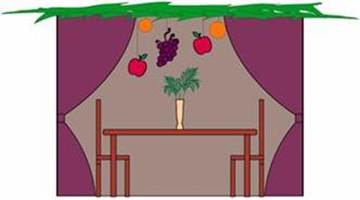
Your Distinguished guest at your Sukkah: Mosheh Rabbenu
representing eternality and dominance through Torah
4th day of Succoth and the Second Intermediate Day - Morning Service
Morning Service Tabernacles (day Four) – Tabernáculos (Quarto Día)
Torah: B’Midbar (Numbers) 29:20-28
Psalm: 116:1-19 & Koheleth (Ecclesiastes) 6:1 - 7:19
N.C.: 1 Thessalonians 4:9-12 + 4:13-18 & Revelation 3:7-13
Torah Reading:
Reader 1 – BeMidbar 29:20-22
Reader 2 – BeMidbar 29:23-25
Reader 3 – BeMidbar 29:26-28
Reader 4 – BeMidbar 29:20-25
For further study see:
https://www.betemunah.org/succoth.html
Blessings Before Torah Study
Blessed are You, Ha-Shem our G-d, King of the universe, Who has sanctified us through Your commandments, and commanded us to actively study Torah. Amen!
Please Ha-Shem, our G-d, sweeten the words of Your Torah in our mouths and in the mouths of all Your people Israel. May we and our offspring, and our offspring's offspring, and all the offspring of Your people, the House of Israel, may we all, together, know Your Name and study Your Torah for the sake of fulfilling Your delight. Blessed are You, Ha-Shem, Who teaches Torah to His people Israel. Amen!
Blessed are You, Ha-Shem our G-d, King of the universe, Who chose us from all the nations, and gave us the Torah. Blessed are You, Ha-Shem, Giver of the Torah. Amen!
Ha-Shem spoke to Moses, explaining a Commandment. "Speak to Aaron and his sons and teach them the following Commandment: This is how you should bless the Children of Israel. Say to the Children of Israel:
May Ha-Shem bless you and keep watch over you; - Amen!
May Ha-Shem make His Presence enlighten you, and may He be kind to you; - Amen!
May Ha-Shem bestow favor on you and grant you peace. – Amen!
This way, the priests will link My Name with the Israelites, and I will bless them."
These are the Laws for which the Torah did not mandate specific amounts: How much growing produce must be left in the corner of the field for the poor; how much of the first fruits must be offered at the Holy Temple; how much one must bring as an offering when one visits the Holy Temple three times a year; how much one must do when performing acts of kindness; and there is no maximum amount of Torah that a person must study.
These are the Laws whose benefits a person can often enjoy even in this world, even though the primary reward is in the Next World: They are: Honoring one's father and mother; doing acts of kindness; early attendance at the place of Torah study -- morning and night; showing hospitality to guests; visiting the sick; providing for the financial needs of a bride; escorting the dead; being very engrossed in prayer; bringing peace between two people, and between husband and wife; but the study of Torah is as great as all of them together. Amen!
JPS & Targum Pseudo Jonathan for: Bamidbar (Numbers) 29:20-28
|
JPS |
Targum Pseudo Jonathan |
|
20. On the third day [you will bring] eleven young bulls, two rams, and fourteen yearling lambs, [all] without blemish, |
20. On the third day of the Feast of Tabernacles you will offer twelve bullocks by twelve orders; two rams by two orders, fourteen unblemished lambs of the year, by ten orders; four of them will offer two and two, and six of them one by one; |
|
21. together with their meal-offerings and libations for the bulls, rams, and lambs, of the required number. |
21. and their mincha of wheat flour, and their libations of wine, you will offer with the bullocks, rams, and lambs, by the number in their appointed order; |
|
22. [You will also bring] one he-goat as a sin-offering, in addition to [bringing] the constant (daily) burnt-offering with its meal-offering and libation. |
22. and one kid of the goats for a sin offering by one order; beside the perpetual sacrifice the wheat flour for the mincha, and its libation of wine. |
|
23. On the fourth day [you will bring] ten young bulls, two rams, and fourteen yearling lambs, [all] without blemish, |
23. On the fourth day of the Feast of Tabernacles, ten young bullocks by ten orders; two rams by two orders; fourteen unblemished lambs of the year by twelve orders; three of them will be offered at two times, and eight of them singly; |
|
24. together with their meal-offerings and libations for the bulls, rams, and lambs, of the required number. |
24. their mincha of wheaten flour, and their libations of wine, which you will offer with the bullocks, rams, and lambs by their number, after their appointed order, |
|
25. [You will also bring] one he-goat as a sin-offering, in addition to [bringing] the constant (daily) burnt-offering with its meal-offering and libation. |
25. and one kid for a sin offering, by one order; beside the perpetual sacrifice, the wheat flour for the mincha, and its libation of wine. |
|
26. On the fifth day [you will bring] nine young bulls, two rams, and fourteen yearling lambs, [all] without blemish, |
26. On the fifth day of the Feast of Tabernacles, nine young bullocks by nine orders; two rams by two orders lambs of the year fourteen, perfect by twelve orders two of them in a pair, twelve singly; |
|
27. together with their meal-offerings and libations for the bulls, rams, and lambs, of the required number. |
27. and the wheat flour for their mincha, and the libation wine for the bullocks, the rams, and lambs by their number after the order of their appointment; |
|
28. [You will also bring] one he-goat as a sin-offering, in addition to [bringing] the constant (daily) burnt-offering with its meal-offering and libation. |
28. and one kid for a sin offering by one order; beside the perpetual sacrifice and the wheat flour for the mincha, and the wine of its libation. |
Ketubim: Tehillim (Psalms) 116:1-19
|
JPS |
Targum on the Psalms |
|
1. I wished that the Lord would hear my voice [in] my supplications. |
1. I love, for the LORD will hear my voice, my prayer. |
|
2. For He extended His ear to me, and I shall call out in my days. |
2. For He has inclined His ear to me, and I call [to Him] throughout my days. |
|
3. [When] bands of death surrounded me and the boundaries of the grave befell me, and I found trouble and grief, |
3. The sicknesses of death surrounded me, and the pains of Sheol found me; pain and sorrow I will find. |
|
4. And I called out in the name of the Lord, "Please, O Lord, save my soul! |
4. And in the name of the LORD I will call out: Please, O LORD, save my soul. |
|
5. The Lord is gracious and righteous, and our God is merciful. |
5. The LORD is gracious and righteous/generous, and our God is merciful. |
|
6. The Lord protects the simple; when I was poor, He saved me. |
6. The LORD observes enticements; I became poor, and it was meet to redeem me. |
|
7. Return, my soul, to your rest, for the Lord has dealt bountifully with you. |
7. Return, O my soul, to your place of rest, for the Word of the LORD has repaid you with good. |
|
8. For You have rescued my soul from death, my eye from tears, and my foot from stumbling. |
8. For You have delivered my soul from being killed, my eyes from tears, my feet from stumbling. |
|
9. I shall walk before the Lord in the lands of the living. |
9. I will walk before the LORD in the land of the living. |
|
10. I believed so that I spoke; I humble myself exceedingly. |
10. I have believed; therefore, I will speak; in the assembly of the righteous/generous I have sung much praise. |
|
11. I said in my haste, "All men are liars." |
11. I said when I fled, “All the sons of men are liars.” |
|
12. How can I repay the Lord for all His favors upon me? |
12. How will I repay in the presence of the LORD all His kind favors that are shown to me? |
|
13. I shall lift up a cup of salvations, and I shall call out in the name of the Lord. |
13. The cup of redemption I will carry in the age to come, and I will call on the name of the LORD. |
|
14. I shall pay my vows to the Lord now in the presence of all His people. |
14. I will repay my vows in the presence of the LORD; I will tell now His miracles to all His people. |
|
15. Difficult in the eyes of the Lord is the death of His pious ones. |
15. Honorable in the presence of the LORD is the death that is sent to His pious ones. |
|
16. Please, O Lord, for I am Your servant; I am Your servant the son of Your maidservant; You have loosed my thongs. |
16. Please, O LORD; for I am Your servant; I am Your servant, the son of Your handmaiden, You have loosened my bonds. |
|
17. To You I shall slaughter a thanksgiving offering, and I shall call out in the name of the Lord. |
17. To You I will sacrifice the sacrifice of slaughter and call out in the name of the LORD. |
|
18. I shall pay my vows to the Lord now in the presence of all His people, |
18. I will repay my vows in the presence of the LORD; I will tell now His miracles to all His people. |
|
19. In the courtyards of the house of the Lord, in your midst, O Jerusalem. Hallelujah! |
19. In the courts of the sanctuary of our God, in your midst, O Jerusalem. Hallelujah! |
Blessing After Torah Study
Barúch Atáh Adonai, Elohénu Meléch HaOlám,
Ashér Natán Lánu Torát Emét, V'Chayéi Olám Natá B'Tochénu.
Barúch Atáh Adonái, Notén HaToráh. Amen!
Blessed is Ha-Shem our God, King of the universe,
Who has given us a teaching of truth, implanting within us eternal life.
Blessed is Ha-Shem, Giver of the Torah. Amen!
“Now unto Him who is able to preserve you faultless, and spotless, and to establish you without a blemish,
before His majesty, with joy, [namely,] the only one God, our Deliverer, by means of Yeshua the Messiah our Master, be praise, and dominion, and honor, and majesty, both now and in all ages. Amen!”
Nazarean Jews Privately read:
I Thessalonians 4:9-12 + 4:13-18 & Revelation 3:7-13
4th day of Succoth and the 2nd Intermediate Day - Afternoon Service
Koheleth (Ecclesiastes) 6:1 – 7:19
Normally, the whole of Koheleth (Ecclesiastes) is read on the Shabbat during Succoth. We have spread out the reading during all of Succoth just to reduce the amount of reading. Feel free to read the whole megillah on Shabbat.
The readings of Kohelet are on a separate supplementary document.
Tishri 19, 5787
Evening Tuesday September 29 – Evening Wednesday September 30, 2026
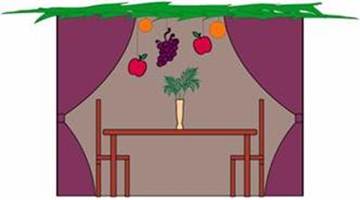
Your Distinguished guest at your Sukkah: Aharon HaKohen representing empathy and receptivity to divine splendor
5th day of Succoth and the 3rd Intermediate Day - Morning Service
Morning Service Tabernacles (Day Five)– Tabernáculos (Quinto Día)
Torah: B’Midbar (Numbers) 29:23-31
Psalm: Tehillim (Psalms) 117:1-2 & Koheleth (Ecclesiastes) 7:19 – 9:3
N.C.: I Thessalonians 5:1-11 + 5:12-28 & Revelation 3:7-14
Torah Reading:
Reader 1 – BeMidbar 29:23-25
Reader 2 – BeMidbar 29:26-28
Reader 3 – BeMidbar 29:29-31
Reader 4 – BeMidbar 29:23-31
Blessings Before Torah Study
Blessed are You, Ha-Shem our G-d, King of the universe, Who has sanctified us through Your commandments, and commanded us to actively study Torah. Amen!
Please Ha-Shem, our G-d, sweeten the words of Your Torah in our mouths and in the mouths of all Your people Israel. May we and our offspring, and our offspring's offspring, and all the offspring of Your people, the House of Israel, may we all, together, know Your Name and study Your Torah for the sake of fulfilling Your delight. Blessed are You, Ha-Shem, Who teaches Torah to His people Israel. Amen!
Blessed are You, Ha-Shem our G-d, King of the universe, Who chose us from all the nations, and gave us the Torah. Blessed are You, Ha-Shem, Giver of the Torah. Amen!
Ha-Shem spoke to Moses, explaining a Commandment. "Speak to Aaron and his sons and teach them the following Commandment: This is how you should bless the Children of Israel. Say to the Children of Israel:
May Ha-Shem bless you and keep watch over you; - Amen!
May Ha-Shem make His Presence enlighten you, and may He be kind to you; - Amen!
May Ha-Shem bestow favor on you and grant you peace. – Amen!
This way, the priests will link My Name with the Israelites, and I will bless them."
These are the Laws for which the Torah did not mandate specific amounts: How much growing produce must be left in the corner of the field for the poor; how much of the first fruits must be offered at the Holy Temple; how much one must bring as an offering when one visits the Holy Temple three times a year; how much one must do when performing acts of kindness; and there is no maximum amount of Torah that a person must study.
These are the Laws whose benefits a person can often enjoy even in this world, even though the primary reward is in the Next World: They are: Honoring one's father and mother; doing acts of kindness; early attendance at the place of Torah study -- morning and night; showing hospitality to guests; visiting the sick; providing for the financial needs of a bride; escorting the dead; being very engrossed in prayer; bringing peace between two people, and between husband and wife; but the study of Torah is as great as all of them together. Amen!
JPS & Targum Pseudo Jonathan for: Bamidbar (Numbers) 29:23-31
|
Targum Pseudo Jonathan |
|
|
23. On the fourth day [you will bring] ten young bulls, two rams, and fourteen yearling lambs, [all] without blemish, |
23. On the fourth day of the Feast of Tabernacles, ten young bullocks by ten orders; two rams by two orders; fourteen unblemished lambs of the year by twelve orders; three of them will be offered at two times, and eight of them singly; |
|
24. together with their meal-offerings and libations for the bulls, rams, and lambs, of the required number. |
24. their mincha of wheaten flour, and their libations of wine, which you will offer with the the bullocks, rams, and lambs by their number, after their appointed order, |
|
25. [You will also bring] one he-goat as a sin-offering, in addition to [bringing] the constant (daily) burnt-offering with its meal-offering and libation. |
25. and one kid for a sin offering, by one order; beside the perpetual sacrifice, the wheat flour for the mincha, and its libation of wine. |
|
26. On the fifth day [you will bring] nine young bulls, two rams, and fourteen yearling lambs, [all] without blemish, |
26. On the fifth day of the Feast of Tabernacles, nine young bullocks by nine orders; two rams by two orders lambs of the year fourteen, perfect by twelve orders two of them in a pair, twelve singly; |
|
27. together with their meal-offerings and libations for the bulls, rams, and lambs, of the required number. |
27. and the wheat flour for their mincha, and the libation wine for the bullocks, the rams, and lambs by their number after the order of their appointment; |
|
28. [You will also bring] one he-goat as a sin-offering, in addition to [bringing] the constant (daily) burnt-offering with its meal-offering and libation. |
28. and one kid for a sin offering by one order; beside the perpetual sacrifice and the wheat flour for the mincha, and the wine of its libation. |
|
29. On the sixth day [you will bring] eight young bulls, two rams, and fourteen yearling lambs, [all] without blemish, |
29. On the sixth day of the Feast of Tabernacles, eight young bullocks by eight orders; two rams by two orders; fourteen unblemished lambs of the year by thirteen orders; a pair of them together, and twelve of them singly. |
|
30. together with their meal-offerings and libations for the bulls, rams, and lambs. of the required number. |
30. Their mincha of wheat flour, and their libation of wine you will offer with the bullocks, rams, and lambs, by their number in the order appointed; |
|
31. [You will also bring] one he-goat as a sin-offering, in addition to [bringing] the constant (daily) burnt-offering with its meal-offering and libations. |
31. and one kid for a sin offering by one order, besides the perpetual sacrifice, the wheat flour for the mincha, the wine of its libation, and a vase of water to be outpoured on the day of the Feast of Tabernacles in grateful acknowledgment (for a good memorial) of the showers of rain. |
Ketubim: Tehillim (Psalms) 117:1-2
|
JPS |
Targum on the Psalms |
|
1. Praise the Lord, all nations, laud Him, all peoples. |
1. Praise the Lord, all you Gentiles; praise him, all you nations. |
|
2. For His kindness has overwhelmed us, and the truth of the Lord is eternal. Hallelujah! |
2. For He has increased His goodness towards us; and the truth of the LORD is forever. Hallelujah! |
Nazarean Jews Privately read:
I Thessalonians 5:1-11 + 5:12-28 &
Revelation 3:7-14
Blessing After Torah Study
Barúch Atáh Adonai, Elohénu Meléch HaOlám,
Ashér Natán Lánu Torát Emét, V'Chayéi Olám Natá B'Tochénu.
Barúch Atáh Adonái, Notén HaToráh. Amen!
Blessed is Ha-Shem our God, King of the universe,
Who has given us a teaching of truth, implanting within us eternal life.
Blessed is Ha-Shem, Giver of the Torah. Amen!
“Now unto Him who is able to preserve you faultless, and spotless, and to establish you without a blemish,
before His majesty, with joy, [namely,] the only one God, our Deliverer, by means of Yeshua the Messiah our Master, be praise, and dominion, and honor, and majesty, both now and in all ages. Amen!”
5th day of Succoth and the 3rd Intermediate Day of Shabbat - Afternoon Service
Koheleth (Ecclesiastes) 7:19 – 9:3
Normally, the whole of Koheleth (Ecclesiastes) is read on the Shabbat during Succoth. We have spread out the reading during all of Succoth just to reduce the amount of reading. Feel free to read the whole megillah on Shabbat.
The readings of Kohelet are on a separate supplementary document.
Hakham’s Commentary on Succoth
By Hakham Dr. Hillel ben David
Let’s examine one of the ideas of Succoth[16] where the Zohar[17] says that the succah is the shadow of faith, based on a reference from Shir HaShirim.
Shir HaShirim (Song of Songs) 2:3 … In His shadow, I delighted there and there I sat, and the fruit of His Torah was sweet to my palate.
Soncino Zohar, Vayikra, Section 3, Page 103a When Miriam died the well was taken from them, as it is written, “And Miriam died, and there was no water for the congregation”.[18] Another well which was with Israel also desired to depart, but when it saw six clouds that hovered over them it remained attached to them. When Aaron died the clouds departed and the cloud of the well with them, until Moses came and brought them back.’ R. Isaac said: ‘Why was this honour conferred upon Aaron? Because he was linked with clouds and he linked them all together, so that they were all blessed through him. For in addition to all the lovingkindness that God did with Israel, He linked with them seven precious clouds which He also linked with the Community of Israel, whose cloud was linked with seven others, and Israel traversed the wilderness protected by all of them. They all form a bond of faith, and therefore Israel were bidden to dwell in booths seven days, so that the Israelite may show that he is dwelling in the shadow of faith. As long as Aaron was alive, Israel were in the shadow of faith under those clouds. When Aaron died, a cloud on the right departed and the rest departed with it, and the weakness of Israel was exposed, and straightway the king of Arad heard that the clouds had departed [Tr. note: Cf. T.B. Taanith, ibid.] and the great explorer to whom they were all linked was dead.’ R. Isaac observed that the King of Arad dwelt in the south, and the spies also brought back word that Amalek dwelt in the south,[19] to awe the people, because Amalek had struck the first blow at them. R. Abba said: Why is the Canaanite mentioned here? Because Canaan was a slave of slaves,[20] and this shows that he who withdraws himself from the shadow of faith deserves to be a slave to the slave of slaves. Hence “all that are homeborn in Israel shall dwell in booths”; everyone who is of the holy root and stock of Israel shall dwell in a booth under the shadow of faith. Shall he that is not of the holy stock withdraw himself from the shadow of faith? We are told that Eleazar the servant of Abraham was a Canaanite, but because he served Abraham, who sat under the shadow of faith, he was delivered from the curse of Canaan and was even called “blessed”, as it is written, “Come in, thou blessed of the Lord”.[21] Thus whoever abides under the shadow of faith acquires freedom for himself and his descendants in perpetuity, and is blessed with a noble blessing, but he who withdraws from the shadow of faith brings captivity upon himself and for his children, as it is written, “And he took some of them captive”.
There are several questions which arise: What is the ‘shadow of faith’,[22] what does that mean?[23] Why is the Succah connected with emunah?
To understand this enigmatic phrase, we must first examine the words ‘faith’[24] or ‘belief’. The two words both carry the connotation of something that is blind. Faith and belief suggests that you believe something that you can’t ever know. This is silly when you are speaking about something as important as the Creator of the universe and one’s eternal destiny. Consider also that if you have faith in something that you can’t ever ‘know’, then how is your faith in HaShem any different from another man’s faith in little green men?
Emunah[25] derives from the same root[26] as ne’eman, meaning faithful or loyal. Even the most superficial examination of the word in Torah will show that it cannot be translated as faith in the sense of belief: in the verse:
Shemot (Exodus) 17:12 But Moses’ hands were heavy; and they took a stone, and put it under him, and he sat thereon; and Aaron and Hur stayed up his hands, the one on the one side, and the other on the other side; and his hands were faithful until the going down of the sun.
“Va’yehi yadav emunah ad ba hashamesh, And his hands were loyal until the sun went down”; Moses’ hands stayed where they were, they remained loyal to their task. The verse cannot be translated in any other way. Hands cannot have faith or believe anything. In Judaism there is no such concept as contained in the English word ‘faith’. Even the Nazarean Codicil teaches that emunah requires ‘substance’ and ‘evidence’:
Bereans (Hebrews) 11:1 Now faith is the substance of things hoped for, the evidence of things not seen.
A unique feature of the human condition is that we can know something with clarity and yet act in discordance with that knowledge. In disloyalty to that knowledge. You may acknowledge that a certain action is wrong and then do it anyway. who can claim that this is an unfamiliar problem? Free will means that you can act in disharmony with your intellect. Understanding a thing and all its consequences clearly does not guarantee that you will live in accord with your understanding, that you will be loyal to it. Not at all. It takes work to live up to the truth. That work is emunah.
Emunah relates very little to the idea of blind belief; it relates far more to the work of disciplining the heart and harnessing the hands in loyalty to the head. With this understanding, let’s begin to look at the Succah.
What is a Succah? The mitzva of Succah has some unique characteristics which are not found in any other mitzva.
A Succah has to be flimsy, a trait not found in any other mitzva. The roof must be so thin that you can see the stars, and the rain can come through freely. Yet, the whole concept of a Succah is that it provides protection. We leave a solid structure, with the illusion of security, and enter a structure of emunah. Thus we leave our house, which does not provide protection, and enter this flimsy structure that does provide protection. This is the essence of bitachon.[27]
The obvious conclusion derived from the mitzva of Succah is that our protection does not derive from the wooden or concrete walls of a building, but rather from HaShem. This is not an easy message to assimilate. When we live with the comforts of life, a high-tech security system, and a fine home, it is hard to internalize that none of these things provide the slightest protection without HaShem’s desire.
Succoth does not come when we are planting because this is a time when we feel vulnerable. After all, there is uncertainty about the quality of the seed, the efficacy of the soil, and the availability of rain. No, Succoth occurs at the time of the harvest. Thus, a time when we feel the most secure. It is precisely for this reason that we leave this illusion and live in a way that bends our minds to the reality that all of those items of security are meaningless and that the Succah is all we need because our protection comes from HaShem and from no other place. The Succah comes to inoculate our mind at a time when we feel that there is plenty and that we are self-sufficient. It has been said, in this regard, that the distance between us and HaShem is the thickness of our wallet.
We move into a Succah to teach ourselves that wealth, security, and plenty are not what brings us protection. That is why we read Kohelet (Ecclesiastes) at Succoth. The theme of this book is that all of our material wealth is illusory.
A major theme of Kohelet is the futility of mundane pursuits and pleasures, and the search for deeper meaning to life. Succoth is also known as Chag HaAsif, the Festival of Ingathering. It’s the time of year when the harvest has ended, and the crops are gathered and stored for the coming year. It’s a moment of great satisfaction, as one can see the fruits of his labor before him.
Kohelet shakes our contentment with the reminder that mundane accomplishments are fleeting and empty. Even at the close of the harvest, we must seek real achievement and fulfillment.
Succoth itself demonstrates this theme by the commandment to live in temporary dwellings. We move outside our home, which provides a sense of permanence and comfort, and instead dwell in a flimsy hut. This recalls the transience of physicality, as does the book of Kohelet.
A major mitzva of Succoth is to be joyful. The Torah comes to teach us that the way to have joy, when you have material security, is leave that security and move into this flimsy structure with no obvious protection. This is where we experience joy that is not based on our material things, which can let us down,[28] but rather our joy is in HaShem. The only real joy is the realization that joy cannot be found in the things of this world, it can only be found in HaShem.
The Gemara[29] says that if you have no trouble[30] for forty days, then you are in disastrous trouble. The reason why it signifies trouble, is because it means that you are not worth being sensitized. It is like a father who has tried punishments, scolding, and every other discipline he could imagine, yet his son continues in his bad ways. When this father, finally, leaves his son and ignores his bad behavior, then the son knows that he is really in trouble because he is no longer worth fixing. In the same way, if you have learned to trust in material things for your protection, and you are not awakened by the succah, then there is no hope.
The deep joy that we experience comes from knowing that the pleasures and things of this world are to be enjoyed, but our eyes see that these are all from HaShem. The festive meals, the beautiful succah, the company of family and friends are all to be enjoyed at exactly the same time as we realize that all is from HaShem. This is true joy.
The word schach,[31] סכך,[32] and ‘succah’ both come from the same Talmudic root sacar, which means to ‘see through’. One of Sarah’s names was Iscah.[33] This word has the same root as schach and succah and means “to see through”. Just as Sarah had incredible, almost irresistible, physical beauty, so much so that when she was advanced in age Paro[34] desired her for a wife. But, in a deeper sense, this beauty meant that one could see that her spirit on the inside, and at the same time one saw her external beauty, and they were the same. What was on the inside is the same as what was outside, i.e. her deeds. When one looked at Sarah, they saw HaShem. The idea of Tzniut, often translated as modesty or privacy, carries the same idea, and is the ability of a woman to properly wear clothes[35] so that her flesh is covered and her beauty is projected to the world.
In the same way, one could look through the succah’s temporary roof[36] and see the stars. But the deep meaning is that Succoth is a time to see through physicality to what is beyond. That is why the Succah has such a high place in the Torah. This ability suggests that we should be very careful about how we conduct ourselves in our succah. We should be mindful of what we are supposed to achieve. To our physical eyes it is just a hut, but to our spiritual eyes we see a place of intense spirituality. So, Succoth is a time to build emunah.
The succah is really beyond words, but we have only words to convey the meaning of this deep spiritual item. We want to reach beyond the words. The words can bring us to the brink, but our own inner daat[37] must take over from the words and carry us to the real understanding. Emunah is the zone beyond the brink, it is true knowledge that cannot be put into words.
Emunah is the underlying assumption for all of the mitzvot[38] in the Torah, in a sense it is the first commandment upon which all others depend. Maimonides[39] holds this to be the first commandment; others hold that it is even more fundamental than a commandment, it is the substrate on which all the commandments depend. Emunah reaches into every other facet of Torah and of life!
The area of emunah, lets call it the knowledge of something higher, is knowing that HaShem exists and understanding the nature of our relationship. Many folks say that if they could just see a miracle, then they would believe in HaShem. But this is not the way of the world. Consider the following hint:
Luqas (Luke) 16:19 There was a certain rich man, which was clothed in purple and fine linen, and fared sumptuously every day: 20 And there was a certain beggar named Lazarus, which was laid at his gate, full of sores, 21 And desiring to be fed with the crumbs which fell from the rich man’s table: moreover the dogs came and licked his sores. 22 And it came to pass, that the beggar died, and was carried by the angels into Abraham’s bosom: the rich man also died, and was buried; 23 And in hell he lifts up his eyes, being in torments, and seeth Abraham afar off, and Lazarus in his bosom. 24 And he cried and said, Father Abraham, have mercy on me, and send Lazarus, that he may dip the tip of his finger in water, and cool my tongue; for I am tormented in this flame. 25 But Abraham said, Son, remember that thou in thy lifetime receivedst thy good things, and likewise Lazarus evil things: but now he is comforted, and thou art tormented. 26 And beside all this, between us and you there is a great gulf fixed: so that they which would pass from hence to you cannot; neither can they pass to us, that would come from thence. 27 Then he said, I pray thee therefore, father, that thou wouldest send him to my father’s house: 28 For I have five brethren; that he may testify unto them, lest they also come into this place of torment. 29 Abraham saith unto him, They have Moses and the prophets; let them hear them. 30 And he said, Nay, father Abraham: but if one went unto them from the dead, they will repent. 31 And he said unto him, if they hear not Moses and the prophets, neither will they be persuaded, though one rose from the dead.
If we saw a miracle today, tomorrow we would wake up and suspect that we had been dreaming. Doubt would immediately spring up in our imagination. The person who ‘needs’ a miracle to believe in HaShem will probably not use the miracle correctly and the miracle would be wasted. Emunah is not like this. The kind of person who has emunah does not need a miracle because he has already seen through the mask of nature and ‘knows’ HaShem. The reason that our generation does not experience miracles is because we would not use them correctly, and we would then become more culpable. Our tendency would be to take the miracle and explain it in a natural way, as though we could explain it through the laws of nature. Just as we do today when incredible coincidences occur.
The question that most people want to know is: Can we ‘KNOW’ that HaShem exists and that He is a rewarder of those who diligently seek Him?[40] In summary, how can emunah ever be meaningful? The existence of HaShem is either definitely knowable, or it is not. If it is knowable with a definite clarity, then emunah would seem to be the wrong idea. But if HaShem’s existence is not knowable objectively, then emunah would seem arbitrary, no more than a personal emotion, really. And quite possibly a smokescreen, a confusing, deluding and enslaving thing. Can you know it as solidly as you know something in the physical world, or is it intrinsically unknowable? So what is emunah?
What we mean by emunah is not belief. We do not commit ourselves to something that is the product of imagination. We have not committed ourselves to HaShem throughout history because we decided subjectively and personally that such commitment was a good idea. Our commitment is based on knowledge. We assert that the object of our “faith” can be established and known. That knowledge is enlightenment itself, and that is the real value, not belief.
In fact, clarity of knowledge is exactly what we are seeking. Torah study is a demanding and rigorous training in objectivity. Torah students are not encouraged to accept anything uncritically and thoughtlessly; they are encouraged to think powerfully and logically. Torah learning is not an appeal to the emotions; it is a very demanding appeal to the intellect. To study Torah effectively you must be able to ask the most penetrating questions and learn to accept only completely satisfactory answers; only the highest standards of thought and logic are valid. We are not afraid of questions. On the contrary, asking difficult questions that cut to the root of an issue is the basis of learning.
Let’s assume that knowledge of HaShem is knowable, and let’s explore that pathway.
When we begin to learn any profession, we start at a point where we are told what to look for and what to expect, but when we try to do it for the first time, then we find that it seems impossible. It is like riding a bike. The first time we actually try it we find that it seems impossible to actually ride it. We watch someone else riding and it seems possible and even easy, yet when we try, we find it impossible. After we go through the process, the training, we, eventually, begin to be able to ride. Eventually, we find it to be so easy that it was hard to imagine that we first thought that it was impossible. With a bit a practice we can do unbelievable tricks that boggle the imagination.
Something which is unknown can be taught so that it becomes known. This process is normally called training. Thus the act of riding a bicycle is not faith, it is not blind; it is knowledge. If it is possible to know HaShem, then it is not faith, in the traditional meaning of the word; it is called knowledge. Like learning to ride, it is hard to acquire this knowledge and there may be many mishaps along the way, but it is possible if we persevere and patiently learn.
On the other hand, if knowledge of HaShem is not knowable, then you are in even bigger trouble. If I accept, with blind faith, that which is unknowable, then I am no better off than the one who believes in Santa Claus or the Easter bunny. Without knowledge, belief is just silly. The Christian idea of ‘faith’ as a blind belief in that which is unknowable that faith is directly contrary to the concept of emunah.
At a superficial level, it is possible to know HaShem. At some point, however, there is gap where we do not know. Consider that there is nothing in life which is ultimately knowable. The knowledge of HaShem is an expanded level of the knowledge of ourselves; knowledge of our own existence. Along with this knowledge, of self, is an awareness of something beyond that self. The most important tool in the knowing of something higher is the knowledge of your own existence; and knowing that you exist is not logical as it cannot be proven.
All of the most important things in life cannot be proven. For example, it is impossible to prove that you exist. “I think therefore I am”,[41] means that I know that I am. This is not a formal demonstration of the fact.
Knowing that you have free will is not something that can be proven, you cannot demonstrate it. Knowing that you are human and not an animal cannot be demonstrated, it is unknowable. If you say that there is a demonstrable difference between me and an animal, you are saying something that is not demonstrable.
This line of thought can be continued by asking how you know that your parents are really your parents? The most basic things in our awareness live is an area which is not amenable to proofs. Consider that it is impossible to prove that you are awake right now. After all, in a dream we ‘know’ that it is real and our body reacts accordingly. Yet, when you wake up, you instantly know that a dream was just that. The dream was not real, despite the fact that we thought it was. This demonstrates how difficult it is to know that you are awake right now, you could be dreaming. Thus, the basic, important things in life are unknowable.
There nothing that you can know and no amount of miracles will change this situation. If Aristotle[42] would have been at Mt. Sinai, he would have been able to bring Moshe Rabbenu[43] a thousand proofs that it had never happened; after they had been there, it still would have been impossible to prove it! How do you prove that the Infinite G-d came down and met with finite people? It is not possible to prove this! Logically, Descartes would have been right, while being wrong in fact.
So, is there a leap of faith in accepting HaShem’s existence? Surely there must be when we can’t even prove our own existence! In Judaism we are going to look for ‘good enough’ evidence that I can act on the consequences. This will begin with common sense understanding that I am here, that I am real, and that I am not dreaming when I am not. This is good enough and I posit my life on those principles.
Consider that all other religions, save Judaism, are based on the testimony, or vision, of a single person. Judaism is based on the testimony of more than six million people who stood at the foot of Mt. Sinai and personally heard the voice of HaShem. Then, every year, they faithfully transmitted that testimony to their children at the Passover seder. Jews all over the world tell the same story to their children at the seder table. So, all over the world, Jews share the testimony of the events at Sinai! Remarkably, no other religion has ever claimed that this testimony was falsified. It is difficult to falsify because more than six million men, women, and children heard the voice of HaShem. They then testified this experience to their children for the last eighty generations.
Understanding that HaShem created the world can be found in the complexities of our created world. In the same way that a watch found in the wilderness is presumed to have been created by a man.[44] Even a single living cell[45] in man, animals, or plants give evidence that they, too, have a Creator.[46]
Those who deny the creation are unable to explain how simple molecules came to be. A grain of dust on the moon is so complex that it boggles the mind. Even today we do not understand the atomic forces that go into such a simple thing. The way deniers explain this dust is to simply say that it has always existed. This lets them off the hook so that they do not need to explain its complexities.
Things in this world do not become more complex by themselves. It is axiomatic that everything will naturally decay. This is summed up in the second law of thermodynamics, which states that the entropy[47] of any isolated system always increases. If a watch sits in the wilderness it begins to rust and decay. Eventually it will no longer be recognized as a watch. This is the nature of our world.
All proofs of HaShem’s existence are proofs by exclusions. We do not follow a process whereby we derive HaShem’s existence, but rather we try see if the world could be explained in its own terms, and we find that difficult to do. So, we take the world, or even a single molecule, and ask whether this could have happened by accident. Does this look like creation by random processes?
Consider that sodium is a metal that explodes when exposed to the air, and chlorine is a deadly gas. Yet when combined they form table salt.[48] Could this have happened by accident? Is it reasonable to assume that this could have happened through random processes? It boggles the mind to even contemplate this. This implies that something else must have created these wondrous materials. This is an argument by exclusion. Consider what Sherlock Holmes said, “When you have eliminated the impossible, whatever remains, however improbable, must be the truth?”[49] We cannot prove HaShem’s existence by derivation, therefore we must prove it by exclusion because there is no other way.
A proof by exclusion can show what did not create this wondrous molecule, but, it cannot prove what did create it. Scientific analysis can bring us to the brink of understanding, but it cannot send us over the brink to the point of knowledge. To accomplish this, we need Torah. The point of the scientific processes is to shake us up and help us understand that creation must be something beyond the realm of science. In order to achieve true knowledge, we need the experience of Torah. This where the ‘leap of faith’ comes in. Emunah has this aspect of blind faith, but it comes after we know that all other possibilities have been excluded.
When Abraham is commanded to leave his home on the journey that begins Jewish history, he is not told the destination:
Bereshit (Genesis) 12:1 Go from your land, from your birthplace and from your father’s house to the land which I shall show you.
This is the classical structure of a test. The point of departure is clear; there is no doubt that he must go. The test is the journey that leads into the unknown; what he will find and what he must go through on that journey are not clear at all. The destination will become clear only when he gets there; the entire journey must be made only on the strength of the command to travel.
This is where we meet the element of the unknown in ordeals, and this is the element of truth in the world’s translation of emunah, as blind. If there is a blindness in tests, it is this: the destination is always hidden. You can never know what the end of the road will be until you are there because the end of the road is really the greater form of yourself that the journey is building. Each of life’s ordeals is an opportunity to become what you must be; you will know the meaning of that, only when you have made it real.
So, is it knowable or not? The Jewish answer is that it is knowable within certain limits. What is knowable is only that a certain thing must be, but getting into that thing and where it takes you is completely unknowable.
The correct translation of emunah is not faith but faithfulness, loyalty. The concept is this: when you have acquired spiritual knowledge, when you know clearly that what meets the eye is not all there is; the question, then, is will you be loyal to that knowledge? Will you live up to it? The problem of emunah is not how to gain knowledge of the spiritual world, it is the challenge of being faithful to that knowledge. In the gap between impersonal truth and direct personal experiential contact with that truth to the extent that no disloyalty can enter, then emunah becomes a possibility and an obligation.
Amen ve Amen!
Chag Succoth Sameach!
Part II coming.