
The Significance of the Shofar (שופר)
By Rabbi Dr. Hillel ben David (Greg Killian)

I. Definition
II. The Shofar Sounds
A sound that walks
The sound of the neshama
The sound that dissipates harsh judgment
III. Saadia Gaon’s Reasons
IV. Verses with the word “shofar”
V. The shofar in the Midrash
VI. Occasions for Blowing the Shofar
VII. Laws of Shofar Blowing
1. תקיעה – TEKIAH
2. שברים - SHEBARIM
3. תרועה – TERUAH
4. תקיעה גדולה - TEKIAH GEDOLAH
VIII. Point of Origin
IX. Messianic implications
X. The Akeida

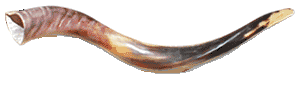
In this study I would like to examine the significance of the shofar and the sounds that it makes. I want to examine how it is used, when it is used, why it is used, and what will the sounds accomplish.
Let’s start by seeing what the Encyclopedia Britannica uses as a definition for the word “shofar”:
שופר - shofar, also spelled SHOPHAR, plural SHOFROTH, SHOPHROTH, or SHOFROT, a ritual musical instrument, made from the horn of a ram or other animal, used on important Jewish public and religious occasions. In biblical times the shofar sounded the Sabbath, announced the New Moon, and proclaimed the anointing of a new king. This latter custom has been preserved in modern Israel at the swearing in of the president of the state.
The most important modern use of the shofar in religious ceremonies takes place on Rosh HaShana, when it is sounded in the synagogue to call the Jewish people to a spiritual reawakening as the religious New Year begins on Tishri 1. The shofar can be made to produce sobbing, wailing, and sustained sounds in sequences that are varied strictly according to halacha. The shofar is also sounded on Yom Kippur, the Day of Atonement, as a call for repentance and sacrifice and for love of the Torah.[1]
Now let’s look at the Hebrew meaning of the shofar: A sense of incising; a cornet or curved horn; cornet or trumpet.
Shofar is a Hebrew word that comes from a root meaning beauty. The word shofar, however, through tradition came to mean almost solely “ram’s horn”. The shofar was used in biblical times for various occasions ranging from calling the armies together to signaling death. Which brings up the curious point that shofar is also literally translated as a “sense of incising”. Incising means to cut or burn into. Obviously the sound of the shofar was more than a mere horn blast to the ancient Hebrews, to earn a name that signified a cutting or burning into the heart and soul of the people. Strong’s confirms this understanding with his definition:
7782 showphar, sho-far’; or shophar, sho-far’; from 8231 in the orig. sense of incising; a cornet (as giving a clear sound) or curved horn:-cornet, shofar.
------------------ Dictionary Trace --------------
8231 shaphar, shaw-far’; a prim. root; to glisten, i.e. (fig.) be (caus. make) fair:-X goodly.
According to the Talmud the shofar can be made of the horns of various animals including the sheep, both domestic and wild goats, the antelope, the gazelle, and of course the ram:
Rosh HaShana 26a MISHNA. ALL KINDS OF SHOFAR MAY BE USED EXCEPT [ONE MADE FROM THE HORN] OF A COW, BECAUSE IT IS [PROPERLY] KEREN. SAID R. JOSE: ARE NOT ALL SHOFARS CALLED ‘KEREN’ AS IT SAYS, WHEN THEY MAKE A LONG BLAST WITH THE RAM’S KEREN [HORN]?
GEMARA. R. Jose was surely quite right. What can the Rabbis reply? — That all shofars are called both shofar and keren, whereas that of a cow is called keren but is not called shofar, as it is written, His firstling bullock, majesty is his, and his horns [karnaw] are as the horns of a re’em. What says R. Jose to this? — He can reply that that of a cow is also called shofar as it is written, And it shall please the Lord better than a bullock [shor par] that hath horns and hoofs. Now if ‘shor’ is mentioned here why ‘par’, and if ‘par’ why ‘shor’? The fact is that shor par is equivalent to shofar. And the Rabbis? — They adopt the explanation of R. Mattenah; for R. Mattenah said: What is meant by shor par? A shor which is as full-grown as a par.
Of course, the horn of a ram is preferred, as the shofar is strongly linked with the story of Abraham binding Isaac to sacrifice him to HaShem. As we all know, an angel stopped Abraham, and HaShem provided a ram in Isaac’s place.
Now, while a ram is preferred, a cow’s horn is forbidden. The reason being that the Hakhamim believe that if a cow’s horn is used, it will remind the Satan to continue to accuse Israel for the “Golden Calf“ incident, and HaShem will then be biased in His dealings with Israel.
Along with the harp, the shofar is the most spoken of musical instrument in the Bible. While the harp is used to calm and soothe the spirit and soul, the shofar is constantly used to grab hold of the attention and spirit of the people. The harp is a consoler while the shofar is a preparer.
The Gemara records an argument that I believe is revealing:
Rosh Hashanah 26b MISHNA. THE SHOFAR USED ON NEW YEAR WAS OF AN ANTELOPE’S HORN AND STRAIGHT, AND ITS MOUTH WAS OVERLAID WITH GOLD. THERE WERE TWO TRUMPETS, ONE ON EACH SIDE OF IT. THE SHOFAR GAVE A LONG BLAST AND THE TRUMPETS A SHORT ONE, SINCE THE PROPER CEREMONY OF THE DAY WAS WITH THE SHOFAR. ON [COMMUNAL] FAST DAYS THEY USED [TWO] CURVED SHOFARS OF RAMS, THE MOUTHS OF WHICH WERE OVERLAID WITH SILVER. THERE WERE TWO TRUMPETS BETWEEN THEM; A SHORT BLAST WAS MADE WITH THE SHOFARS AND A LONG ONE WITH THE TRUMPETS, BECAUSE THE RELIGIOUS DUTY OF THE DAY WAS [TO BE PERFORMED] WITH THE TRUMPETS. THE JUBILEE IS ON A PAR WITH NEW YEAR FOR BLOWING THE HORN AND FOR BLESSINGS. R. JUDAH SAYS: ON NEW YEAR THE BLAST IS MADE WITH A SHOFAR OF RAMS AND ON JUBILEES WITH ONE OF ANTELOPES.
GEMARA. R. Levi said: The religious duty of New Year and of the Day of Atonement is performed with a curved shofar, and on other days in the year with a straight shofar. But we learn, THE SHOFAR OF NEW YEAR WAS A STRAIGHT ONE OF ANTELOPE’S HORN? — Levi followed the view of the following Tanna, as it has been taught: ‘R. Judah says, On New Year they used to blow with curved shofars of rams’ horns and on jubilees with shofars of antelopes’ horns’. Why then did not he [Levi] say that the law follows the view of R. Judah? — If you were to say that the law follows R. Judah, I should say that in the case of the Jubilee also he was of the same opinion as R. Judah. Now we know [that this is not so]. What is the ground of the difference [between R. Judah and the First Tanna]? — One authority [R. Judah] holds that on New Year the more a man [so to speak] bends his mind the more effective [is his prayer], while on the Day of Atonement [of the Jubilee] the more a man elevates his mind the better is the effect. The other authority holds that on New Year the more a man elevates his mind the better the effect, and on fast days the more he bends his mind the better the effect.
The Mishna states that the shofar to be used on Rosh Hashanah should be of an antelope and should be straight. The Gemara states: Rav Levi says that the mitzva of Rosh Hashanah is fulfilled with a bent-over shofar. The Gemara then brings a Baraitha in the name of Rav Yehuda who says that on Rosh HaShanah we use a bent rams horn and on Yom Kippur (for the Jubilee) we use a straight horn. After stating that the halacha is like Rav Yehuda, the Gemara explains that the more bent over we are, the more effective is our Rosh Hashanah, while the straighter we are on Yom Kippur the better. Rashi explains that being bent over is the correct posture for the prayers of Yom HaDin.[2]
Thus, we see that there is more to this simple musical instrument than meets the eye.
The shofar produces some very mystical sounds, which have some very unusual properties. One of its properties is the ability to stir a heart to repentance.
What is it about the sound of the shofar that calls us to return to HaShem? To answer this question we must return to Gan Eden, that garden wherein we have the beginnings of everything.
After the first sin we find:
Bereshit (Genesis) 3:8 And they heard the voice (kol) of HaShem God walking in the garden in the cool of the day: and Adam and his wife hid themselves from the presence of HaShem God amongst the trees of the garden.
Exactly how does a “voice”, a kol, go “walking”?
This particular Hebrew word for sound or voice, kol, resonates with another kol, the sound (kol) of the shofar:
Shemot (Exodus) 19:16 And it came to pass on the third day in the morning, that there were thunders (kol) and lightnings, and a thick cloud upon the mount, and the voice (kol) of the shofar exceeding loud; so that all the people that [was] in the camp trembled.
This kol that we hear at Sinai is the same kol that went walking in Gan Eden right after the first sin. The kol that walked had a question:
Bereshit (Genesis) 3:9 And HaShem God called unto Adam, and said unto him, Where are you?
This question: “Where are you (Ayekah)?” was obviously not concerned with Adam’s physical location. After all, how can one hide from The One who is everywhere? This question must be asking a more profound question: ‘Ayekah?’ Where are you, where do you stand morally and spiritually, to what place are you directing your efforts?
 The
kol of HaShem in Gan Eden looms significant because the shofar blessing on Rosh
Hashanah, which reasonably could have stressed the “blowing” of the shofar,
stresses the sound or voice, “lishmoah kol haShofar,” to hear (or internalize)
the sound of the shofar.
The
kol of HaShem in Gan Eden looms significant because the shofar blessing on Rosh
Hashanah, which reasonably could have stressed the “blowing” of the shofar,
stresses the sound or voice, “lishmoah kol haShofar,” to hear (or internalize)
the sound of the shofar.
The Rambam is quite explicit in altering the definition of the mitzva. He consistently defines the mitzva as one of HEARING the shofar rather than BLOWING.
This then is the kol that walks. This kol comes seeking the state of the soul of His beloved. This same kol approaches us at this time of judgment. This kol from the shofar “walks” to us, His beloved, and asks: Where are you?
Another mystical property of the sounds of the shofar, is the ability to express the human neshama.[3]
Our Sages teach us that the sound made by the shofar is the sound of the human neshama, the soul. This is a sound without corruption, the raw sound of the neshama. The bend of the shofar is said by the mystics to be the transition between this world and the next.
In the Prayer of Remembrance we say, “Remember us with a favorable remembrance from before You, and, from the highest heavens of old, consider us with a consideration for deliverance and compassion”. We ask that He remember us favorably, and the shofar, whose entire purpose in creation is to remind, as the Talmud states,[4] is what causes us to be remembered. Of this, the Talmud states,[5] “God said..., recite before Me... verses of Remembrance so that your remembrance will arise before Me for goodness. And with what? With the shofar”.[6]
The shofar is the depth or root of speech. Teshuva means to go back to the moment of creation, to go back into the womb to the moment of conception. We return to our fetal state, our moment of creation. This return is what Chazal meant by zichronot – memory or remembering as a function of Rosh HaShana. We return to the moment when the memories (sperm), or seeds, of the father are given to us. Chazal use this same concept to teach us that the sound Adam HaRishon heard on wakening from his creation, was the sound of a shofar, the sound made by his neshama as it entered him. This suggests that the shofar can take us back to the very moment when our neshama entered us.
This same concept will help us to understand why a ram was found at the very moment that Isaac expired and was resurrected. At that moment a shofar became available.
Another mystical property of the sounds of the shofar, is the ability to cause HaShem to move from the seat of judgment to the seat of mercy. The Zohar describes this reaction:
Soncino Zohar, Vayikra, Section 3, Page 100b Thus when Israel produce the blasts of the shofar with proper devotion, the supernal Shofar returns and crowns Jacob so that all is properly arranged. Another throne is set up and joy is universally diffused and God has mercy on the world. Happy are Israel who know how to divert their Master from justice to mercy and to be the instruments for establishing all worlds. Corresponding to the three series of blasts three books are opened above on this day, and just as mercy is awakened and punishments are restrained and put back in their place above, so below in the same way harsh punishments are kept back and removed from the world. And what are these? These are the irremediably wicked who are inscribed at once for death.’ Said R. Abba: ‘Assuredly this is the true explanation of the matter. Blessed be God that I asked for and obtained this instruction.’ R. Judah said: ‘It is written, A MEMORIAL OF BLOWING OF TRUMPETS. We make a memorial by the concentration of our mind and thought. Israel make a memorial below by an appropriate ceremony, so as to arouse a corresponding reaction above.’
The mekubalim[7] teach that the shofar has the ability to create a sound called the ‘Voice of Yaaqov’. This is the sound that causes HaShem to move to the mercy seat.
Notice that the shofar on Shavuot was preceded by the counting of the omer, we count 7 weeks and 50 days.
The shofar of Rosh HaShana was preceded by seven weeks of consolations.
The shofar of the jubilee was preceded by the count of seven sabbatical years for a total of 50 years.
A Ninth century Babylonian teacher, Saadia Gaon, taught that there were ten reasons that the Holy One commanded us to blow the shofar on Yom Teruah:
1. Just as earthly kings have horns and shofarot blown to celebrate the anniversary of their coronation, so HaShem wants the shofar blown on the anniversary of the Creation - when there came to be a world that HaShem could rule over, as it is said:
Tehillim (Psalms) 98:6 With shofarot and the blast of the ram’s horn--shout for joy before HaShem, the King.
2. Just as earthly kings have horns and shofarot blown to announce their decrees - and only after this warning actually enforce the decree, so HaShem wants the shofar blown to announce the beginning of the Ten Days of Return, when all are commanded to turn their lives around.
3. Just as the shofar blew when HaShem gave the Torah at Mount Sinai, so it blows to remind us each year to do as our forebears said at Sinai:
Shemot (Exodus) 24:7 Then he took the Book of the Covenant and read it to the people. They responded, “We will do everything HaShem has said; we will obey.”
4. Just as Yehezkel (Ezekiel) compared the words of the Prophets, calling for the people to change their ways, to a shofar, so we must know that those who hear the shofar and do not take warning and change their lives will be responsible for their own destruction, as it is said:
Yehezkel (Ezekiel) 33:2-9 “Ben Adam, speak to your countrymen and say to them: ‘When I bring the sword against a land, and the people of the land choose one of their men and make him their watchman, And he sees the sword coming against the land and blows the shofar to warn the people, Then if anyone hears the shofar but does not take warning and the sword comes and takes his life, his blood will be on his own head. Since he heard the sound of the shofar but did not take warning, his blood will be on his own head. If he had taken warning, he would have saved himself. But if the watchman sees the sword coming and does not blow the shofar to warn the people and the sword comes and takes the life of one of them, that man will be taken away because of his sin, but I will hold the watchman accountable for his blood.’ “Ben Adam, I have made you a watchman for the house of Israel; so hear the word I speak and give them warning from me. When I say to the wicked, ‘O wicked man, you will surely die,’ and you do not speak out to dissuade him from his ways, that wicked man will die for his sin, and I will hold you accountable for his blood. But if you do warn the wicked man to turn from his ways and he does not do so, he will die for his sin, but you will have saved yourself.
5. Because the shofar was blown as a war-alarm when the Temple was destroyed, it should remind us of the destruction of the Temple, the disaster that we brought upon ourselves, and thus should warn us to abandon our misdeeds in order to avert disaster, as it is said:
Yirmeyahu (Jeremiah) 4:19-20 Oh, my anguish, my anguish! I writhe in pain. Oh, the agony of my heart! My heart pounds within me, I cannot keep silent. For I have heard the Teruah of the shofar; I have heard the battle cry. Disaster follows disaster; the whole land lies in ruins. In an instant my tents are destroyed, my shelter in a moment.
6. Because HaShem used a ram as a substitute sacrifice for Isaac, the ram’s horn should remind us how Isaac and Abraham were prepared to give up all their hopes and dreams for HaShem’s sake. Bereshit (Genesis) 22.
7. Since the blowing of a horn causes cities to tremble, so the shofar will make us tremble and fear our Creator, as it is said:
Amos 3:6 When a shofar sounds in a city, do not the people tremble? When disaster comes to a city, has not HaShem caused it?
8. Since the shofar will be blown on the great day of HaShem.
Zephaniah 1:14-16 “The great day of HaShem is near--near and coming quickly. Listen! The cry on the day of HaShem will be bitter, the shouting of the warrior there. That day will be a day of wrath, a day of distress and anguish, a day of trouble and ruin, a day of darkness and gloom, a day of clouds and blackness, A day of shofar and battle cry against the fortified cities and against the corner towers.
Daniel speaks of this judgment day in: (seated for judgment)
Daniel 7:9-14 “As I looked, “thrones were set in place, and the Ancient of Days took his seat. His clothing was as white as snow; the hair of his head was white like wool. His throne was flaming with fire, and its wheels were all ablaze. A river of fire was flowing, coming out from before him. Thousands upon thousands attended him; ten thousand times ten thousand stood before him. The court was seated, and the books were opened. “Then I continued to watch because of the boastful words the horn was speaking. I kept looking until the beast was slain and its body destroyed and thrown into the blazing fire. (The other beasts had been stripped of their authority, but were allowed to live for a period of time.) “In my vision at night I looked, and there before me was one like a son of man, coming with the clouds of heaven. He approached the Ancient of Days and was led into his presence. He was given authority, glory and sovereign power; all peoples, nations and men of every language worshipped him. His dominion is an everlasting dominion that will not pass away, and his kingdom is one that will never be destroyed.
We can also see in the above passage the coronation of the King of kings.
Revelation 20:4-6 I saw thrones on which were seated those who had been given authority to judge. And I saw the souls of those who had been beheaded because of their testimony for Yeshua and because of the word of God. They had not worshipped the beast or his image and had not received his mark on their foreheads or their hands. They came to life and reigned with Christ a thousand years. (The rest of the dead did not come to life until the thousand years were ended.) This is the first resurrection. Blessed and holy are those who have part in the first resurrection. The second death has no power over them, but they will be priests of God and of Christ and will reign with him for a thousand years.
9. Since the shofar will be blown when the tempest-tossed of HaShem’s people are gathered in harmony to the Land of Israel, we should hear the shofar to stir our longings for that day, as it is said:
Yeshayahu (Isaiah) 27:12-13 In that day HaShem will thresh from the flowing Euphrates to the Wadi of Egypt, and you, O Israelites, will be gathered up one by one. And in that day a shofar gadol will sound. Those who were perishing in Assyria and those who were exiled in Egypt will come and worship HaShem on the holy mountain in Jerusalem.
This reminds me of:
Matityahu (Matthew) 24:29-31 “Immediately after the distress of those days ‘the sun will be darkened, and the moon will not give its light; the stars will fall from the sky, and the heavenly bodies will be shaken.’ “At that time the sign of the Son of Man will appear in the sky, and all the nations of the earth will mourn. They will see the Son of Man coming on the clouds of the sky, with power and great glory. And he will send his angels with a loud shofar call, and they will gather his elect from the four winds, from one end of the heavens to the other.
10. Since the shofar will be blown when Mashiach revives the dead, we hear the shofar in order to revive our faith in that supernatural transformation, the final victory of life and freedom over death, the ultimate oppressor, as it is said:
Yeshayahu (Isaiah) 18:3 All you people of the world, you who live on the earth, when a banner is raised on the mountains, you will see it, and when a shofar sounds, you will hear it.
This reminds me of another Yom Teruah event:
Yehezekel (Ezekiel) 37:1-14 The hand of HaShem was upon me, and he brought me out by the Spirit of HaShem and set me in the middle of a valley; it was full of bones. He led me back and forth among them, and I saw a great many bones on the floor of the valley, bones that were very dry. He asked me, “Son of man, can these bones live?” I said, “O Sovereign HaShem, you alone know.” Then he said to me, “Prophesy to these bones and say to them, ‘Dry bones, hear the word of HaShem! This is what the Sovereign HaShem says to these bones: I will make breath enter you, and you will come to life. I will attach tendons to you and make flesh come upon you and cover you with skin; I will put breath in you, and you will come to life. Then you will know that I am HaShem.’” So I prophesied as I was commanded. And as I was prophesying, there was a noise, a rattling sound, and the bones came together, bone to bone. I looked, and tendons and flesh appeared on them and skin covered them, but there was no breath in them. Then he said to me, “Prophesy to the breath; prophesy, son of man, and say to it, ‘This is what the Sovereign HaShem says: Come from the four winds, O breath, and breathe into these slain, that they may live.’” So I prophesied as he commanded me, and breath entered them; they came to life and stood up on their feet--a vast army. Then he said to me: “Son of man, these bones are the whole house of Israel. They say, ‘Our bones are dried up and our hope is gone; we are cut off.’ Therefore prophesy and say to them: ‘This is what the Sovereign HaShem says: O my people, I am going to open your graves and bring you up from them; I will bring you back to the land of Israel. Then you, my people, will know that I am HaShem, when I open your graves and bring you up from them. I will put my Spirit in you and you will live, and I will settle you in your own land. Then you will know that I HaShem have spoken, and I have done it, declares HaShem.’”
In this passage we see the resurrection of the righteous (the whole house of Israel), and the ingathering of the exile back to Israel. The word translated ‘breath’ is the Hebrew word: Ruach. Yom Teruah literally means a day for breathing, and by implication a day for blowing. I believe that this is an intentional play on words in order to make room for both thoughts.
The first use of the word “shofar” is found at mount Sinai where we read:
Shemot (Exodus) 19:16-19 And it came to pass on the third day in the morning, that there were thunders and lightnings, and a thick cloud upon the mount, and the voice of the shofar exceeding loud; so that all the people that [was] in the camp trembled. Then Moses led the people out of the camp to meet with God, and they stood at the foot of the mountain. Mount Sinai was covered with smoke, because HaShem descended on it in fire. The smoke billowed up from it like smoke from a furnace, the whole mountain trembled violently, And the sound of the shofar grew louder and louder. Then Moses spoke and the voice of God answered him.
From this first use of the word “shofar”, we find that the shofar is a signal of the presence of HaShem that causes the people to tremble, this is their emotional response. After the emotional response, we see that there is an action response. The action is to return to HaShem, to draw near to HaShem. These two responses should always flow from the sound of the shofar.


 Now let’s look at the rest of the shofar
verses. Take the time to notice the responses:
Now let’s look at the rest of the shofar
verses. Take the time to notice the responses:
Shemot (Exodus) 20:18-21 When the people saw the thunder and lightning and heard the shofar and saw the mountain in smoke, they trembled with fear. They stayed at a distance And said to Moses, “Speak to us yourself and we will listen. But do not have God speak to us or we will die.” Moses said to the people, “Do not be afraid. God has come to test you, so that the fear of God will be with you to keep you from sinning.” The people remained at a distance, while Moses approached the thick darkness where God was.
Vayikra (Leviticus) 25:8-10 “‘Count off seven sabbaths of years--seven times seven years--so that the seven sabbaths of years amount to a period of forty-nine years. Then have the shofar sounded everywhere on the tenth day of the seventh month; on the Day of Atonement sound the shofar throughout your land. Consecrate the fiftieth year and proclaim liberty throughout the land to all its inhabitants. It shall be a jubilee for you; each one of you is to return to his family property and each to his own clan.
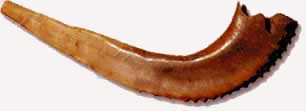
Another use of the shofar is to bring about the will of HaShem. This instrument is capable of breaking down the greatest of barriers:
Yehoshua (Joshua) 6:4-9 And seven priests shall bear before the ark seven shofarot of rams’ horns: and the seventh day ye shall compass the city seven times, and the priests shall blow with the shofarot. And it shall come to pass, that when they make a long [blast] with the ram’s horn, [and] when ye hear the sound of the shofar, all the people shall shout with a great shout; and the wall of the city shall fall down flat, and the people shall ascend up every man straight before him. And Yehoshua (Joshua) the son of Nun called the priests, and said unto them, Take up the ark of the covenant, and let seven priests bear seven shofarot of rams’ horns before the ark of HaShem. And it came to pass, when Joshua had spoken unto the people, that the seven priests bearing the seven shofarot of rams’ horns passed on before HaShem, and blew with the shofarot: and the ark of the covenant of HaShem followed them. And the armed men went before the priests that blew with the shofarot, and the reward came after the ark, [the priests] going on, and blowing with the shofarot.
Yehoshua (Joshua) 6:13 And seven priests bearing seven shofarot of rams’ horns before the ark of HaShem went on continually, and blew with the shofarot: and the armed men went before them; but the reward came after the ark of HaShem, [the priests] going on, and blowing with the shofarot.
Yehoshua (Joshua) 6:16 And it came to pass at the seventh time, when the priests blew with the shofarot, Joshua said unto the people, Shout; for HaShem hath given you the city.
Yehoshua (Joshua) 6:20 So the people shouted when [the priests] blew with the shofarot: and it came to pass, when the people heard the sound of the shofar, and the people shouted with a great shout, that the wall fell down flat, so that the people went up into the city, every man straight before him, and they took the city.
The shofar is used to gather the people:
Shoftim (Judges) 3:27 And it came to pass, when he was come, that he blew a shofar in the mountain of Ephraim, and the children of Israel went down with him from the mount, and he before them.
Shoftim (Judges) 6:34 But the spirit of HaShem came upon Gideon, and he blew a shofar; and Abi-ezer was gathered after him.
Shoftim (Judges) 7:8 So the people took victuals in their hand, and their shofarot: and he sent all [the rest of] Israel every man unto his tent, and retained those three hundred men: and the host of Midian was beneath him in the valley.
The shofar is capable of bringing fear to the heart of even the most hardened man:
Shoftim (Judges) 7:16 And he divided the three hundred men [into] three companies, and he put a shofar in every man’s hand, with empty pitchers, and lamps within the pitchers.
Shoftim (Judges) 7:18-20 When I blow with a shofar, I and all that [are] with me, then blow ye the shofarot also on every side of all the camp, and say, [The sword] of HaShem, and of Gideon. So Gideon, and the hundred men that [were] with him, came unto the outside of the camp in the beginning of the middle watch; and they had but newly set the watch: and they blew the shofarot, and brake the pitchers that [were] in their hands. And the three companies blew the shofarot, and brake the pitchers, and held the lamps in their left hands, and the shofarot in their right hands to blow [withal]: and they cried, The sword of HaShem, and of Gideon.
Shoftim (Judges) 7:22 And the three hundred blew the shofarot, and HaShem set every man’s sword against his fellow, even throughout all the host: and the host fled to Beth-shittah in Zererath, [and] to the border of Abel-meholah, unto Tabbath.
1 Shmuel (Samuel) 13:3 And Jonathan smote the garrison of the Philistines that [was] in Geba, and the Philistines heard [of it]. And Saul blew the shofar throughout all the land, saying, Let the Hebrews hear.
The shofar can be used to halt actions that are not helpful:
2 Shmuel (Samuel) 2:28 So Joab blew a shofar, and all the people stood still, and pursued after Israel no more, neither fought they any more.
In this next verse we see, again, that the shofar is used to indicate the presence of HaShem:
2 Shmuel (Samuel) 6:15 So David and all the house of Israel brought up the ark of HaShem with shouting, and with the sound of the shofar.
2 Shmuel (Samuel) 15:10 But Absalom sent spies throughout all the tribes of Israel, saying, As soon as ye hear the sound of the shofar, then ye shall say, Absalom reigneth in Hebron.
2 Shmuel (Samuel) 18:16 And Joab blew the shofar, and the people returned from pursuing after Israel: for Joab held back the people.
2 Shmuel (Samuel) 20:1 And there happened to be there a man of Belial, whose name [was] Sheba, the son of Bichri, a Benjamite: and he blew a shofar, and said, We have no part in David, neither have we inheritance in the son of Jesse: every man to his tents, O Israel.
2 Shmuel (Samuel) 20:22 Then the woman went unto all the people in her wisdom. And they cut off the head of Sheba the son of Bichri, and cast [it] out to Joab. And he blew a shofar, and they retired from the city, every man to his tent. And Joab returned to Jerusalem unto the king.
1 Melachim (Kings) 1:34 And let Zadok the priest and Nathan the prophet anoint him there king over Israel: and blow ye with the shofar, and say, God save king Solomon.
1 Melachim (Kings) 1:39 And Zadok the priest took an horn of oil out of the tabernacle, and anointed Solomon. And they blew the shofar; and all the people said, God save king Solomon.
1 Melachim (Kings) 1:41 And Adonijah and all the guests that [were] with him heard [it] as they had made an end of eating. And when Joab heard the sound of the shofar, he said, Wherefore [is this] noise of the city being in an uproar?
1 Divrei HaYamim (Chronicles) 15:28 Thus all Israel brought up the ark of the covenant of HaShem with shouting, and with sound of the cornet, and with shofarot, and with cymbals, making a noise with psalteries and harps.
2 Divrei HaYamim (Chronicles) 15:14 And they sware unto HaShem with a loud voice, and with shouting, and with shofarot, and with cornets.
2 Melachim (Kings) 9:13 Then they hasted, and took every man his garment, and put [it] under him on the top of the stairs, and blew with shofarot, saying, Jehu is king.
The shofar is also used to alert us and to call us to battle against our enemies:
Ezra-Nechemiah 4:18 For the builders, every one had his sword girded by his side, and [so] builded. And he that sounded the shofar [was] by me.
Ezra-Nechemiah 4:20 In what place [therefore] ye hear the sound of the shofar, resort ye thither unto us: our God shall fight for us.
Iyov (Job) 39:24-25 He swalloweth the ground with fierceness and rage: neither believeth he that [it is] the sound of the shofar. He saith among the shofarot, Ha, ha; and he smelleth the battle afar off, the thunder of the captains, and the shouting.
Tehillim (Psalm) 47:5 God is gone up with a shout, HaShem with the sound of a shofar.
The shofar is used to call all of HaShem’s people to repentance on Yom Teruah (Rosh HaShanah)
Tehillim (Psalm) 81:3 Blow the shofar in the new moon, in the time appointed, on our solemn feast day.
Tehillim (Psalm) 98:6 With shofarot and sound of cornet make a joyful noise before HaShem, the King.
Tehillim (Psalm) 150:3 Praise him with the sound of the shofar: praise him with the psaltery and harp.
Yeshayahu (Isaiah) 18:3 All ye inhabitants of the world, and dwellers on the earth, see ye, when he lifteth up an ensign on the mountains; and when he bloweth a shofar, hear ye.
Yeshayahu (Isaiah) 27:13 And it shall come to pass in that day, [that] the great shofar shall be blown, and they shall come which were ready to perish in the land of Assyria, and the outcasts in the land of Egypt, and shall worship HaShem in the holy mount at Jerusalem.
As a call to return in repentance before HaShem, the shofar has no equal:
Yeshayahu (Isaiah) 58:1 Cry aloud, spare not, lift up thy voice like a shofar, and shew my people their transgression, and the house of Jacob their sins.
The shofar was used to call the people to assemble before HaShem. This call to assemble is required before we can understand the rest of the message:
Yirmiyahu (Jeremiah) 4:5 Declare ye in Judah, and publish in Jerusalem; and say, Blow ye the shofar in the land: cry, gather together, and say, Assemble yourselves, and let us go into the defenced cities.
Yirmiyahu (Jeremiah) 4:19 My bowels, my bowels! I am pained at my very heart; my heart maketh a noise in me; I cannot hold my peace, because thou hast heard, O my soul, the sound of the shofar, the alarm of war.
Yirmiyahu (Jeremiah) 4:21 How long shall I see the standard, [and] hear the sound of the shofar?
Yirmiyahu (Jeremiah) 6:1 O ye children of Benjamin, gather yourselves to flee out of the midst of Jerusalem, and blow the shofar in Tekoa, and set up a sign of fire in Beth-haccerem: for evil appeareth out of the north, and great destruction.
Yirmiyahu (Jeremiah) 6:17 Also I set watchmen over you, [saying], Hearken to the sound of the shofar. But they said, We will not hearken.
Yirmiyahu (Jeremiah) 42:14 Saying, No; but we will go into the land of Egypt, where we shall see no war, nor hear the sound of the shofar, nor have hunger of bread; and there will we dwell:
Yirmiyahu (Jeremiah) 51:27 Set ye up a standard in the land, blow the shofar among the nations, prepare the nations against her, call together against her the kingdoms of Ararat, Minni, and Ashchenaz; appoint a captain against her; cause the horses to come up as the rough caterpillars.
Yechezkel (Ezekiel) 33:3 If when he seeth the sword come upon the land, he blow the shofar, and warn the people;
Yechezkel (Ezekiel) 33:4 Then whosoever heareth the sound of the shofar, and taketh not warning; if the sword come, and take him away, his blood shall be upon his own head.
Yechezkel (Ezekiel) 33:5 He heard the sound of the shofar, and took not warning; his blood shall be upon him. But he that taketh warning shall deliver his soul.
Yechezkel (Ezekiel) 33:6 But if the watchman see the sword come, and blow not the shofar, and the people be not warned; if the sword come, and take [any] person from among them, he is taken away in his iniquity; but his blood will I require at the watchman’s hand.
Hoshea (Hosea) 5:8 Blow ye the cornet in Gibeah, [and] the shofar in Ramah: cry aloud [at] Beth-aven, after thee, O Benjamin.
Hoshea (Hosea) 8:1 [Set] the shofar to thy mouth. [He shall come] as an eagle against the house of HaShem, because they have transgressed my covenant, and trespassed against my law.
Yoel (Joel) 2:1 Blow ye the shofar in Zion, and sound an alarm in my holy mountain: let all the inhabitants of the land tremble: for the day of HaShem cometh, for [it is] nigh at hand;
Yoel (Joel) 2:15 Blow the shofar in Zion, sanctify a fast, call a solemn assembly:
Amos 2:2 But I will send a fire upon Moab, and it shall devour the palaces of Kirioth: and Moab shall die with tumult, with shouting, [and] with the sound of the shofar:
Amos 3:6 Shall a shofar be blown in the city, and the people not be afraid? shall there be evil in a city, and HaShem hath not done [it]?
Tzefaniah (Zephaniah) 1:16 A day of the shofar and alarm against the fenced cities, and against the high towers.
Zechariah 9:14 And HaShem shall be seen over them, and his arrow shall go forth as the lightning: and the Lord HaShem shall blow the shofar, and shall go with whirlwinds of the south.
In the Nazarean Codicil, we find, from the Septuagint, that there is a Greek word used to translate “shofar”. This word is used in the following places:
Matityahu (Matthew) 24:31 And he shall send his angels with a great sound of a shofar, and they shall gather together his elect from the four winds, from one end of heaven to the other.
1 Corinthians 14:8 For if the shofar give an uncertain sound, who shall prepare himself to the battle?
1 Corinthians 15:52 In a moment, in the twinkling of an eye, at the last trump: for the shofar shall sound, and the dead shall be raised incorruptible, and we shall be changed.
Bereans (Hebrews) 12:19 And the sound of a shofar, and the voice of words; which [voice] they that heard entreated that the word should not be spoken to them any more:
Revelation 1:10 I was in the Spirit on the Lord’s day, and heard behind me a great voice, as of a shofar,
Revelation 4:1 After this I looked, and, behold, a door [was] opened in heaven: and the first voice which I heard [was] as it were of a shofar talking with me; which said, Come up hither, and I will shew thee things which must be hereafter.
Revelation 8:2 And I saw the seven angels which stood before God; and to them were given seven shofarot.
Revelation 8:6 And the seven angels which had the seven shofarot prepared themselves to sound.
Revelation 8:13 And I beheld, and heard an angel flying through the midst of heaven, saying with a loud voice, Woe, woe, woe, to the inhabiters of the earth by reason of the other voices of the shofar of the three angels, which are yet to sound!
Revelation 9:14 Saying to the sixth angel which had the shofar, Loose the four angels which are bound in the great river Euphrates.
Revelation 10:7 But in the days of the voice of the seventh angel, when he shall begin to sound, the mystery of God should be finished, as he hath declared to his servants the prophets.
Midrash Rabbah - Bereshit (Genesis) LVI:9 AND ABRAHAM LIFTED UP HIS EYES, AND LOOKED, AND BEHOLD BEHIND HIM (AHAR) A RAM (XXII, 13). What does A H A R mean? Said R. Judan: After all that happened,[9] Israel still fall into the clutches of sin and [in consequence] become the victims of persecution; yet they will be ultimately redeemed by the ram’s horn, as it says, And the Lord God will blow the horn, etc. (Zech. IX, 14). R. Judah b. R. Simon interpreted: At the end of [after] all generations Israel will fall into the clutches of sin and be the victims of persecution; yet eventually they will be redeemed by the ram’s horn, as it says, ‘And the Lord God will blow the horn,’ etc.[10] R. Hanina b. R. Isaac said: Throughout the year Israel are in sin’s clutches and led astray by their troubles, but on New Year they take the shofar and blow on it, and eventually they will be redeemed by the ram’s horn, as it says, ‘ And the Lord God will blow the horn.’ R. Abba b. R. Pappi and R. Joshua of Siknin in R. Levi’s name said: Because the Patriarch Abraham saw the ram extricate himself from one thicket and go and become entangled in another, the Holy One, blessed be He, said to him: ‘ So will thy children be entangled in countries, changing from Babylon to Media, from Media to Greece, and from Greece to Edom; yet they will eventually be redeemed by the ram’s horn,’ as it is written, And the Lord God will blow the horn... the Lord of hosts will defend them (ib. 14 f.). AND ABRAHAM WENT AND TOOK THE RAM, AND OFFERED HIM UP FOR A BURNT-OFFERING IN THE STEAD OF HIS SON (ib.). R. Judan said in R. Banai’s name: He prayed to him: ‘Sovereign of the Universe! Look upon the blood of this ram as though it were the blood of my son Isaac; its emurim as though they were my son’s emurim,’ even as we learned[11]: When a man declares: This animal be instead of this one, in exchange for that, or a substitute for this, it is a valid exchange[12]
Midrash Rabbah - Bereshit (Genesis) XCVIII:17 GIVETH GOODLY WORDS (SHAFER) means words of a shofar, for they embellish (meshapperin) the words which were uttered with the shofar and teru’ah.[13]
Midrash Rabbah - Vayikra (Leviticus) XXIX:1 IN THE SEVENTH MONTH, IN THE FIRST DAY OF THE MONTH SHALL BE A SOLEMN REST (XXIII, 24).[14] This bears on what is written in Scripture: For ever, O Lord, Thy word standeth fast in heaven (Ps. CXIX, 89).[15] It was taught in the name of R. Eliezer: The world was created on the twenty-fifth of Elul. The view of Rab agrees with the teaching of R. Eliezer. For we have learned in the Shofar Benediction[16] composed by Rab: ‘ This day, on which was the beginning of work, is a memorial of the first day, for it is a statute for Israel, a decree of the God of Jacob. Thereon also sentence is pronounced upon countries, which of them is destined to the sword and which to peace, which to famine and which to plenty; and each separate creature is visited thereon, and recorded for life or for death.’[17] Thus you are left to conclude[18] that on New Year’s Day, in the first hour the idea of creating man entered His mind, in the second He took counsel with the Ministering Angels, in the third He assembled Adam’s dust, in the fourth He kneaded it, in the fifth He shaped him, in the sixth He made him into a lifeless body, in the seventh He breathed a soul into him, in the eighth He brought him into the Garden of Eden, in the ninth he was commanded [against eating of the fruit of the tree of knowledge], in the tenth he transgressed, in the eleventh he was judged, in the twelfth he was pardoned. ‘This,’ said the Holy One, blessed be He, to Adam, ‘will be a sign to your children. As you stood in judgment before Me this day and came out with a free pardon, so will your children in the future stand in judgment before Me on this day and will come out from My presence with a free pardon.’ When will that be? IN THE SEVENTH MONTH, IN THE FIRST DAY OF THE MONTH.
Midrash Rabbah - Vayikra (Leviticus) XXIX:6 R. Berekiah opened his discourse with the text, Blow the horn at the new moon when it is concealed for our feast-day (Ps. LXXXI, 4).[19] But is there not new moon every month? Or will you answer, ‘When it is concealed’? And are not all new moons concealed? Or will you answer, ‘For our feast-day’? Is not Nisan a month in which the moon is concealed and has a festival of its own?[20] The meaning can only be as follows: which month is it where the moon is concealed and has a festival, and the festival falls on that very day [of new moon]? You will not find any other except the month of Tishri. In this month then you shall turn over a new leaf[21] with the blowing of the horn (shofar). In this month you shall amend (shapperu) your deeds. The Holy One, blessed be He, said to Israel: ‘If you will amend (shippartem) your deeds I shall become unto you like a horn (shofar). As the horn takes in [the breath] at one end and sends out at the other,[22] so will I rise from the Throne of Judgment and sit upon the Throne of Mercy and will change for you the Attribute of Justice into the Attribute of Mercy. When? IN THE SEVENTH MONTH.
Midrash Rabbah - Esther VII:11 IN
THE FIRST MONTH, WHICH IS THE MONTH NISAN (III, 7). It was taught: When the wicked
Haman determined to destroy Israel, he said: ‘How shall I prevail over them?
The best way is to cast lots.’ The Holy Spirit thereupon cried out, ‘ And they
have cast lots for My people ‘ (Yoel (Joel) IV, 3). Said the Holy One, blessed
be He, to him: ‘ Villain son of villain, your lot is drawn to be hanged. HE
CAST PUR, THAT IS, THE LOT: the lot fell upon himself. Why? For the rod of wickedness
shall not rest upon the lot of the righteous (Ps. CXXV, 3). First he cast lots
for the day of the week, as it says, FROM DAY TO DAY. He drew a lot for the first
day of the week, whereupon the Prince[23]
of that day rose before the Holy One, blessed be He, and said: ‘Sovereign of
the Universe, on me the heavens and the earth were created, and Thou hast said,
Were it not for My covenant, day and night [and] the ordinances of heaven and
earth I had not set (Jer. XXXIII, 25).[24]
There is a covenant on their flesh, as it says, And as for thee, thou shalt
keep My covenant (Gen. XVII, 9), and it is written, And My covenant shall be in
your flesh (ib. 13). There is also a covenant in their mouth, namely, the
Torah, as it is written, This book of the law[25]
shall not depart out of thy mouth (Josh. I, 8), and I have said, If heaven
above can be measured, and the foundations of the earth searched out beneath,
then will I also cast off all the seed of Israel (Jer. XXXI, 37), and it is
written, Then the seed of Israel also will cease from being a nation before Me
for ever (ib. 36), and this wretch seeks to destroy them! First uproot heaven
and earth and then Thou canst consume them!’ He drew a lot for the second day,
and its Prince thereupon rose before the Holy One, blessed be He, and said:
‘Sovereign of the Universe, on the second day Thou didst separate the upper
from the lower waters, and similarly Israel are separated from the other nations,
as it is written, I have set you apart from the peoples, that ye should be Mine
(Lev. XX, 26), and this wretch seeks to destroy them. Reverse the upper and
lower spheres, and then consume them! ‘ He drew a lot for the third day,
whereupon its Prince stood before the Holy One, blessed be He, and said: ‘
Sovereign of the Universe, on the third day seeds were created, and from them
Israel set aside heave- offerings and tithes; trees were created thereon and
with them Israel extol thee, as it says, And ye shall take you on the first day
the fruit of goodly trees, etc. (ib. XXIII, 40). On it too the waters were gathered
together to form the sea, and twelve passages were cut in the sea for Israel.
Now therefore if Israel vanish, how shall we endure?’ He drew a lot for the fourth
day and its Prince stood before the Holy One, blessed be He, and said:
‘Sovereign of the Universe, on the fourth day the luminaries were created to
serve as the light of Israel,[26]‘ as it
says, And nations shall walk at thy light, and kings at the brightness of thy
rising (Isa. LX, 3), and on it were the stars created, and Thy sons are likened
to the stars. If Thou destroyest them, how shall we endure?’ He drew a lot for
the fifth day, and its Prince stood before the Holy One, blessed be He, and
said: ‘ Sovereign of the Universe, on the fifth day were created the birds,[27]
from which Thou didst command to be brought offerings through which Thou
forgivest and becomest reconciled with Thy creatures, and if they vanish who
will bring an offering?’ He drew a lot for the sixth day, and its Prince stood
before the Holy One, blessed be He, and said before Him: ‘Sovereign of the
Universe, on the sixth day was created man, by whose name Thou didst call Thy
sons, as it is written, And ye My sheep, the sheep of My pasture, are man
(Ezek. XXXIV, 31); if therefore Thou meanest to uproot them, uproot the whole
of mankind, and then let him have sway over them.’ He drew a lot for the Sabbath
day, and its Prince stood before the Holy One, blessed be He, and said: ‘
Sovereign of the Universe, on the Sabbath day all Thy works were finished and
completed, as it says, And on the seventh day God finished His work (Gen. II,
2), and it is also written, It is a sign between Me and the children of Israel
for ever (Ex. XXXI, 17). If therefore Thou art minded to uproot them, uproot
the Sabbath and abolish it, and then Thou canst consume them.’ When that
miscreant saw that the lot would not help him to the right day, he tried
months. He began with Nisan, and the merit of Passover appeared in it. In Iyar
appeared the merit of the lesser Passover[28]
and of the manna which was given to Israel on the fifteenth of this month. In Sivan
there was the merit of the Torah[29]; in Tammuz
the merit of the land.[30] Another
reason why the lot did not fall on Tammuz or Ab was because these months said
before the Holy One, blessed be He: ‘ Sovereign of the Universe, sufficient
calamities have already happened in us to Thy sons, five in Tammuz and five in
Ab.’[31] With Elul
came up the merit of the completion of the wall of Jerusalem [by Ezra] which
took place in that month, as it says, So the wall was finished in the twenty
and fifth day of the month Elul (Neh. VI, 15),[32]
and also the merit of the tithe of cattle, as we have learnt[33]:
On the first of Elul is the new year for the tithe of cattle. With Tishri came
up the merit of the shofar and the Day of Atonement and the Festival [of Tabernacles].
With Marheshvan came up the merit of Sarah our mother who died in that month.[34]
With Kislev came the merit of Chanukah,[35]
with Tebet the merit of Ezra, as it says, And the children of the captivity did
so. And Ezra the priest... were separated... in the first day of the tenth
month... and they were finished with all the men that had married foreign
women, etc. Nehemiah X, 16 f). With Shebat came up the merit of the Men of the
Great Synagogue; for on the twenty-third of that month all Israel gathered
together to take counsel about the concubine of Gibeah and the graven image of
Micah.[36] When the
month of Adar came up, he found no merit in it and he began to rejoice. He then
turned to examining the signs of the Zodiac. In the sign of the Lamb[37]
he found the merit of Passover, as it says, Every man a lamb, according to
their fathers’ houses (Ex. XII, 3). In that of Taurus (ox) was found the merit
of Joseph who was called ox, as it says, His firstling bullock, majesty is his
(Deut. XXXIII, 17); and also the merit of the offering, as it says, When a
bullock, or a sheep, or a goat is brought forth, etc. (Lev. XXII, 27). In
Gemini (twins) was found the merit of Peretz and Zerach[38]
who were called twins, as it says, Behold, twins were in her womb (Gen.
XXXVIII, 27). In Leo (lion) was found the merit of Daniel who was from the tribe
of Judah which is called lion, as it says, Judah is a lion’s whelp (ib. XLIX,
9). In Virgo (virgin) there was the merit of Hananiah, Mishael, and Azariah,
who were like a maiden that knows no man except her husband; so they did not
change their God or their law and clung to their Judaism. Libra (scales) is
Iyov (Job), as it says, O that my vexation we weighed, and my calamity laid in
the balances (Iyov (Job) VI, 2). Scorpio is Ezekiel, as it says, Thou dost dwell
among scorpions (Ezek., 6).[39]
Sagittarius (bowman) is Joseph, as it says, But his bow abode firm (Gen. XLIX,
24). Capricornus (kid) is Jacob, as it says, And she put the skins of the kids
of the goats upon his hands (ib. XXVII, 16). Aquarius (water-carrier) is Moses,
as it says, And moreover he drew water for us (Ex. II, 19).[40]
On reaching the sign of Pisces (fishes) which shines in the month of Adar, he
found no merit in it and rejoiced saying, ‘Adar has no merit, its sign has no merit,
and what is more, in Adar Moses their master died.’ He, however, did not know
that on the first of Adar Moses died and on the first[41]
of Adar he was born. He said: ‘Just as fishes swallow one another, so I will
swallow them.’ Said the Holy One, blessed be He, to him: ‘ Wretch! 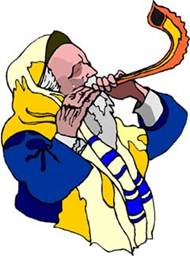 Fishes sometimes swallow and sometimes are swallowed, and
now it is you who will be swallowed.’ Said R. Hanan: The same thing is
intimated by the verse, Whereas it was turned to the contrary, that the Jews
had rule over them that hated them (Est. IX, 1). R. Tanhuma said: And the Lord
said not that He would blot out the name of Israel (II Melachim (Kings) XIV,
27), but what He said was, For I will utterly blot out the remembrance of Amalek
(Ex. XVII, 14)
Fishes sometimes swallow and sometimes are swallowed, and
now it is you who will be swallowed.’ Said R. Hanan: The same thing is
intimated by the verse, Whereas it was turned to the contrary, that the Jews
had rule over them that hated them (Est. IX, 1). R. Tanhuma said: And the Lord
said not that He would blot out the name of Israel (II Melachim (Kings) XIV,
27), but what He said was, For I will utterly blot out the remembrance of Amalek
(Ex. XVII, 14)
When do we blow the shofar?
During the month of Elul, from Elul 1 till Elul 20, except on shabbat, we blow the shofar in Ashkenaz synagogues at the end of the shacharit prayers. In many Sephardic synagogues we blow the shofar from the second day of Elu until Elul 28, though some do not blow the shofar at all during Elul. According to all opinions the shofar is not blown on the eve of Rosh Hashanah at all,[42] in order to “confuse the Satan”.
On both days of Rosh HaShana, except on Shabbat, the shofar is blown either 100 or 101 times.[43] It is blown before and during the Musaf prayers.
And, at the end of Neilah, with the closing of the Gates of Prayer as Yom Kippur draws to a close, the Service rises to a crescendo, and we acknowledge the departure of the “Shechinah,” the Divine Presence, with a “Tekiah Gedolah” a Great “Tekiah”, a long straight blast of the Shofar.
The commandment to hear the shofar blowing requires conscious intent to fulfill the mitzva. Because this is a legal action, it must take place during day light hours, from sun up till sun down. Those who hurry to fulfill the mitzva are praise worthy.
The shofar blower recites two blessings; the community must listen to the blessings and respond, “Amen”; to each one. (One should not say “Baruch hu uvaruch sh’mo”; to these blessings.)
One should stand during the recitation of the blessings and for all of the shofar blasts.
It is forbidden to speak from the beginning of the first blessing until after the final shofar blast (at the end of Musaf).
There are four different sounds associated with the blowing of the shofar during the Yom Teruah service. These sounds are interpreted as follows:
1. תקיעה – TEKIAH - A pure unbroken sound that calls man to search his heart, forsake his wrong ways, and seek forgiveness through repentance. The tekiah is a long blast.
The object of Rosh HaShana is to crown HaShem as our King. Tekiah, the long, straight shofar blast, is the sound of the King’s coronation. In the Garden of Eden, Adam’s first act was to proclaim HaShem as King. And now, the shofar proclaims to ourselves and to the world: HaShem is our King. We set our values straight and return to the reality of HaShem as the One Who runs the world, guiding history, moving mountains, and caring for each and every human being individually and personally.
2. שברים - SHEBARIM - A broken, staccato, trembling sound. It typifies the sorrow that comes to man when he realizes his misconduct and desires to change his ways. The shebarim is three shorter blasts. The Kabbalists say that Shebarim is the sobbing cry of a Jewish heart yearning to connect, to grow, to achieve.
3. תרועה – TERUAH - A wave-like sound of alarm calling upon man to stand by the banner of HaShem. The teruah is ten very quick abbreviated blasts. The Teruah sound resembles an alarm clock, arousing us from our spiritual slumber. This shofar sound brings clarity, alertness, and focus. fix what’s broken, eye’s open.
4. תקיעה גדולה - TEKIAH GEDOLAH - The prolonged, unbroken sound typifying a final appeal to sincere repentance and atonement. This note concludes each set of blowing during the Rosh HaShana ceremony. The Hakhamim described it as a sign of “divine withdrawal”, based on the verse: “When the Shofar sounds long, they [the people] shall come up to the mountain...” (Shemot 19:13).
HaGaon Levush states that the tekiah blast represents joy whereas the blasts of the shebarim-teruah represent pain and affliction. Because they are opposites, the shofar blower should not blast both types using the same breath.
The following section is a quote from “The Pentateuch” by S.R Hirsch[44]:
In Bamidbar (Numbers) 10:7, two notes are specifically differentiated. There it says: ובהקהיל את הקהל תתקעו ולא תריעו by which תקוע is differentiated from תריע. תקיעה Tekiah is accordingly a different note to תרועה teruah and they have different meanings for the purpose of giving signals. תקיעה is the signal for gathering about Moses, תרועה teruah the signal to strike camp. It nevertheless, in verses 5 and 6 the order for the signal to strike camp does not run: והרעותם תרועה תרועה ירעו but: the breaking up signal is described as a combination of teruah and tekiah, the teruah is to be introduced by a tekiah, (תקיעה), and concluded by one (תקיעה). There by the assembling signal is differentiated from the breaking up signal by תתקעו ולא תריעו that the tekiah is blown without a following teruah[45]. The word תקע means to bring something energetically into something else: to ram home, to thrust into, to sink, to plunge into. Hence also the term used for the symbolic binding by a handshake as a sign of assurance and emphasis on the transaction to be made. By it, the one party thrusts his hand to remain (symbolically) permanently in the hand of the other. Here, at a wind instrument it designates the sustained unbroken note produced by a prolonged blowing of air into the shofar. It is the calling note, calling your attention and holding you.
The word תרועה (teruah) from רעע, רוע, to break, designates the broken note interrupted by shorter or longer quavers (shebarim or teruah). It is the note for bustling, speeded activity, the signal for breaking up. The combined notes of tekiah and teruah as a signal for decampment and moving on worked as follows: the tekiah called the people to attention to Moses. If no teruah were to follow, they had to hurry to him to receive his orders. But the teruah following immediately, informed them at once that it was a signal for striking tents and breaking up camp. And then the final tekiah after packing up, called them forward thither to where HaShem had indicated their new resting place. Quite in this way, with every teruah consisting of the threefold note introduced by, and concluding with, a tekiah does tradition teach the procedure for blowing the prescribed teruah on the shofar on Yom Teruah and תקיעה.... The preparatory tekiah would be the summons in general to listen to HaShem, to receive from Him the orders for the day. Then the teruah would then give His order to be breaking off and away from every attachment that estranges us from HaShem, and from consciousness of having the power of moral freedom of will, and leaving everything worthless behind, in short in giving up everything in our present mode of life which is displeasing to HaShem. The tekiah which then follows, calls one to the new standpoint, to the new attitude to life, to faithfully giving oneself up to following the road set out by HaShem, which alone is the path of freedom, and which is blessed by the favor of HaShem.[46]
Before the shofar is sounded, the Ba’al Tokea (the shofar blower) prepares himself for his task of blowing the shofar for the congregation and says:
“I am prepared to fulfill HaShem’s commandment to blow the shofar, as it is prescribed in the Torah, ‘a day of blowing unto you.’”
The Ba’al Tokea then recites the following two blessings:
Baruch ata HaShem Eloheinu melech ha-olam, asher kidishanu bemitzvotav vetzvivanu leshemoa kol shofar.
Blessed are You, HaShem, our God, King of the universe, Who has sanctified us with your commandments and has instructed us to hear the shofar.
Baruch ata HaShem Eloheinu melech ha-olam, asher kidishanu bemitzvotav vetzivanu lazman hazeh.
Blessed are You, HaShem, our God, King of the universe, Who has kept us alive, sustained us, and brought us to this season.
TEKIAH, SHEBARIM, TERUAH, TEKIAH GEDOLAH, Combinations of one hundred of these sounds are arranged in three sets of blasts:
1. “tashrat”
TEKIAH, SHEBARIM, TERUAH, TEKIAH
TEKIAH, SHEBARIM, TERUAH, TEKIAH
TEKIAH, SHEBARIM, TERUAH, TEKIAH
2. “tashat”
TEKIAH, SHEBARIM, and TEKIAH
TEKIAH, SHEBARIM, and TEKIAH
TEKIAH, SHEBARIM, and TEKIAH
3. “tarat”
TEKIAH, TERUAH, and TEKIAH
TEKIAH, TERUAH, and TEKIAH
TEKIAH, TERUAH, and TEKIAH GEDOLAH
(Rosh HaShanah Machzor, Mesorah Publications)
The Talmud, in Rosh HaShanah 34a, explains that the nine blasts are derived from a combination of three separate verses dealing with the shofar (Vayikra (Leviticus) 25:9, 23:24; Bamidbar (Numbers) 29:1). Taking all three verses together, we find the word TERUAH mentioned three times; this accounts for the three TERUOT. The TEKIAH before each TERUAH is derived from the verse: And you shall sound the shofar, a TERUAH...(Vayikra (Leviticus) 25:9). Here we see that preceding the TERUAH there is a simple sounding of the shofar, i.e., extended and unvaried, for it is referred to simply by the word shofar. After the TERUAH we again find that there is to be a simple sounding of the shofar, for the verse continues: You shall sound the shofar. Thus there are nine blasts in all - TEKIAH, TERUAH, TEKIAH, sounded three times. These, then, are the blasts of the scriptural order.
On the Rabbinic level, there are more shofar blasts - the extra ones necessitated by doubt as to the nature of the Biblical TERUAH. One possibility is that when the Torah calls for TERUAH, it means a sound similar to the sound of groaning, the type of blast now called SHEBARIM, literally broken. Another possibility is that the Biblical TERUAH is the sound of whimpering, the intermittent quavering blast that we refer to as TERUAH. A third possibility is that what the Torah meant by TERUAH is a combination of both of these sounds. In order to fulfill all possible meanings, R. Abahu in Caesarea enacted a Rabbinic decree that the blowing should consist as outlined above.
R. Hai Gaon was asked, how it is possible that doubt could arise as to the nature of a mitzva (the Biblical TERUAH) which is performed every year? The gist of his reply is: From earliest times there were two customs in Israel. Some blew light short blasts (those called TERUAH today), and others blew heavy short blasts, that is, SHEVARIM. Either manner of blowing was sufficient to fulfill the obligation. R’Abahu decreed that all Israel should follow a single practice so that there should not be among them anything that might be misconstrued as a division.
Psalm 89:15 Blessed [is] the people that know the joyful TERUAH: they shall walk, HaShem, in the light of thy countenance.
In the Rosh HaShanah Machzor (prayer book), on both days, we read the following:
“May it be Your will that the tekiah-shebarim-Teruah-tekiah blasts that we sound be embroidered into the [heavenly] curtain by the appointed angel (name deleted), just as You accepted prayers through Elijah, who is remembered for good; Yeshua (the Kohen Gadol - High Priest), minister of the inner chamber, and the ministering angel (name deleted); and may You be filled with mercy upon us. Blessed are You Master of Mercies.” [47]
Here is the first place I have found, in an orthodox Jewish publication, the mention of the name of a High Priest named Yeshua. Clearly this High Priest served in the days of Ezra HaNavi (The Prophet). His service is associated with the service of Rosh HaShana (Yom Teruah) by the connection to the shofar. This is the service where we crown Mashiach ben David as King. Thus we have a connection between the High Priest of Ezra’s day and the Mashiach ben Yosef who was also called Yeshua. Further, we expect Mashiach ben Yosef to return as Mashiach ben David, presumably with the same name: Yeshua.
* * *
Devarim (Deuteronomy) 28:10 And all the nations of the land will see that the name of HaShem is called on you and they will fear you.
During the prayers on each day of Rosh Hashanah we blow 100 Tekiot. These 100 Tekiot contain 300 different sounds:
The Tekiah is 1.
The Shebarim is 3.
The Teruah is 9.
There are ten different sets of Tekiot.
Each set contains the following:
4 Tekiah, Shebarim, Teruah, Tekiah
3 Tekiah, Shebarim, Tekiah
3 Tekiah, Teruah, Tekiah
10 Tekiot
There are 10 of these sets throughout the prayers.
6 Tekiot
6 Shebarim
18 Teruot
30 sounds x 10 sets = 300 sounds throughout the day.
The Pasuk says Ki Shem HaShem Nekrah. The Roshei Teivot of the words Shem HaShem Nekra are Shin, Yud, Nun which spells the word Shin, whose gematria is 300, a remez (hint) to the 300 sounds. The last letters of the same words are Mem, Hey, Alef, which spell the word Meah, whose gematria is 100, a remez (hint) to the 100 Tekiot.
This Parsha discusses the yoke of Kingship, of accepting the Kingship of the Master of the World. We do this when we blow Shofar.[48]
* * *
When we see the following Hebrew word in the Tanakh, our Sages indicate that it is always an allusion to Rosh HaShana: היום
In the Musaf service of Rosh HaShana, after each sequence of shofar blasts, we will say:
היום הרת עולם
Hayom harat olam
Today is the birthday of the world!
Why is Rosh HaShana called the birthday of the world?
Our Sages tell us that this life is a corridor to the next life. Death is a birth to a new existence. Just as emergence from the womb constitutes corporeal birth, detachment from the body is the birth of the soul. Just as the eight or nine months in the womb are the period of gestation preceding earthly birth, the 70 or 80 years on earth are the gestation period preceding heavenly birth.
Rosh HaShana, one could say, is the new year’s birth canal.
Curious, isn’t it, that a shofar with its narrow mouthpiece and wider opening resembles a birth canal? In fact, the Bible mentions a great woman with a name of the same etymology: Shifrah. She was the midwife of the ancient Hebrews who left Egypt. Rashi tells us that the name Shifra comes from a Hebrew root that means, “the capacity to make something better, or to improve its quality”, and that is what she did: In keeping with this characteristic, and contrary to Pharaoh’s orders, Shifrah ensured that the babies would emerge healthy and viable, then swaddled and massaged them to foster their strength and beauty.
The shofar is loaded with birth imagery: It can be viewed as the birth canal, the air rushing through it to create a plaintive cry is the breath of life, and the sound that we hear recalls the cries of labor. Traditionally, we hear 100 blasts of the shofar during Rosh Hashanah. A Midrash teaches that the first 99 are the cries of a woman in labor, and the final one, the tekiah gedolah, is the responding cry of the newborn child.
Today is the birthday of the world, or more accurately, today is the pregnancy of the world. On Rosh Hashanah our world becomes pregnant with HaShem, and HaShem is pregnant with us. It is a time of mutual awareness and understanding. It is the time when we enter the inner world, the world of the womb, in order to be reborn into change. HaShem intervened in the wombs of the matriarchs Sarah, Rachel, and Hannah and made them pregnant[49]. On Rosh HaShanah, we read the stories of Sarah, Hannah, and Rachel[50] to remind us of the hope for new life. There is an understanding that Sarah, the mother of the Jewish people, herself was born on this day. We also read the story of the Akedah, the binding of Isaac, when Isaac is nearly sacrificed by his father Abraham, to let us know that this time of year also signals radical change, a part of us must die in order to be reborn.
We are the ones who inscribe ourselves for life or death by living our lives throughout the year the way we do. We are the ones who give birth to ourselves. In the next world our birth and the nature of our experience will reflect the choices we, and we alone, made. In this life we were born into circumstances beyond our control, but in the next life we will emerge from the “womb” of circumstances we shaped with our daily life choices and actions. If we are true to our soul here, then our soul will experience a happy birth in the next world. If we succumb to the low impulses of the material body we will be confused and dismayed when we emerge into the wide space of eternity.
The Torah readings of Rosh Hashanah are Bereshit (Genesis) chapter 21 on the first day and Bereshit (Genesis) chapter 22 on the second day. The Rabbis have associated the first day of the seventh month as the birthday of both Yitzchak and Shmuel. This association (of the root “z.k.r.” and of the idea to remember) hint towards the choice of the first day’s Torah and Haftarah reading (the first day’s Torah reading describes the birth of Yitzchak and the Haftarah of the first day describes the birth of Shmuel and the Prayer of Hannah (1 Samuel 1:1-2:10)).The Torah reading of the second day describes the binding of Yitzchak. The reason for the choice of this chapter is explained in the Talmud: R. Abbahu said, “why is a ram’s horn blown? The Holy One, Blessed be He, said: Blow the ram’s horn in order that I will remember the binding of Yitzchak, son of Abraham and so that I will consider it as if you yourselves had bound yourselves to me.[51]
Adam and Eve are created, it is the sixth day.[52]
Noah’s birthday. 1st day of the 1st month.[53] Bereshit (Genesis) 8:13
The shofar sounds like a child wailing.
The Ramban in his discourse on Rosh Hashanah links the word shofar to the verse:
Iyov (Job) 26:13 “By His breath the Heavens are spread (shifra).”
This verse refers to the dispersing of the clouds to reveal the clear blue sky.
That which was clouded over and concealed becomes revealed. The root of the
word shifra also means to beautify, for true beauty is to see the essence of
something, the purpose for which it was created. Shifra is also the root of the
word shofar.
The shofar gives us a clarity to see beyond the clouds, to see to the blue sky beyond. It is this clarity that results in fear and trembling:
Amos 3:6 “Can the shofar be sounded in the city and the people not tremble?”
The shofar is the midwife of the new year. Into its piercing cry we squeeze all our heartfelt prayers, all our tears. All of our being resonates with its call until it reaches the very beginning, the cosmic womb. And there it touches a switch: The Divine Presence shifts from the strict judgment of Din to the compassion of Rachamim. In the language of the Zohar:
Zohar, Vayikra, Section 3, Page 99b “The shofar below awakens the shofar above and the Holy One, blessed be He, rises from His throne of judgment and sits in His throne of compassion.”
Why is Rosh HaShana called the birthday of the world?
And the classic response is: because we are not celebrating an anniversary; “Today is the birthday of the world” means today, now. Today the world is born again. This day is “the beginning of your works”, reminiscent of the very first time the world was made. Only that the first time the world was born, it was a free gift. Since then, it depends on us, the Adam. And so, it occurs on our birthday, Rosh Hashanah. We are reborn, and within us, the entire cosmos.
* * *
Shafir in Hebrew means ‘fine’, but ‘mey shafir’ means the amniotic fluid that surrounds the fetus (‘ubbar’) in the womb.
שופר : In the original sense of incising. From the root שפר to be pleasing, be beautiful, be fair, be comely, be bright, glisten, to be beautiful. To improve to develop.
שפור - Shipur means to elevate to a new level,
Notice in the following verses that Gabriel is dispatched in Elul (the sixth month). I suspect that this is Elul 29 and that Miryam will be remembered on Rosh HaShana, the first day of the seventh month:
Luqas (Luke) 1:26 And in the sixth month the angel Gabriel was sent from God unto a city of Galilee, named Nazareth, 27 To a virgin espoused to a man whose name was Joseph, of the house of David; and the virgin’s name was Mary. 28 And the angel came in unto her, and said, Hail, thou that art highly favoured, the Lord is with thee: blessed art thou among women. 29 And when she saw him, she was troubled at his saying, and cast in her mind what manner of salutation this should be. 30 And the angel said unto her, Fear not, Mary: for thou hast found favour with God. 31 And, behold, thou shalt conceive in thy womb, and bring forth a son, and shalt call his name Yeshua. 32 He shall be great, and shall be called the Son of the Highest: and the Lord God shall give unto him the throne of his father David: 33 And he shall reign over the house of Jacob for ever; and of his kingdom there shall be no end. 34 Then said Mary unto the angel, How shall this be, seeing I know not a man? 35 And the angel answered and said unto her, The Holy Ghost shall come upon thee, and the power of the Highest shall overshadow thee: therefore also that holy thing which shall be born of thee shall be called the Son of God. 36 And, behold, thy cousin Elisabeth, she hath also conceived a son in her old age: and this is the sixth month with her, who was called barren.
Rav Zadok HaCohen Lublin alludes to the famous idea that the ram sacrificed by Avraham Avinu at the Akeida had two unequal horns. The smaller horn was blown at Har Sinai, and the larger will be used to usher in the Mashiach and the final redemption. What is the significance of the larger horn? Rav Zadok says the larger horn symbolizes the power to permeate (hitpashtut). Redemption is the message of the shofar permeating completely. The complete redemption comes when the universe is filled with the sound, and personal redemption when I am immersed in it.
SHANA TOVA
This study was written by
Rabbi Dr. Hillel ben David
(Greg Killian).
Comments may be submitted to:
Rabbi Dr. Greg Killian
12210 Luckey Summit
Lacey, WA 98516
Internet address: gkilli@aol.com
Web page: https://www.betemunah.org/
(360) 918-2905
Return to The WATCHMAN home page
Send comments to Greg Killian at his email address: gkilli@aol.com
[1] Copyright (c) 1996 Encyclopedia Britannica, Inc. All Rights Reserved
[2] This is another name for Rosh HaShanah
[4] Rosh Hashanah 26a
[5] Rosh Hashanah 16a
[6] Reflexions & Introspection Elul, Rosh Hashanah, Yom Kippur, Sukkos, Torah Insights of Hagon HaGadol Rav Moshe Shapiro, by Moshe Antebi
[7] Mekubalim are the masters of the sod level of Torah hermeneutics.
[8] From “Seasons of our joy”
[9] E.J.- After all that God has done for Israel, redeeming than from Egypt. etc.
[11] Tem. 26b
[12] ‘It is a valid exchange’ is a technical expression denoting that both are holy; v. Lev. XXVII, 23
[13] Sc. the Torah.
[14] New Year’s Day; the day on which God sits in judgment upon the world. The exposition that follows is intended to explain why the first day of the year was chosen as the day of judgment.
[15] The bearing is not clear. In Pes. R. XL, 2 this verse is expounded as showing that mercy governs God’s attitude in His judgment of man and that this was so in the case of Adam who was judged on the first day of the year.
[16] I.e. in the second of the special passages inserted in the Additional Service on New Year’s Day. This second benediction is now known as Zikronoth, remembrance.
[17] V. A.P.B., p. 250.
[18] The conclusion is only that Adam was created on New Year’s Day, the first of Tishri, this being the sixth day from the twenty-fifth of Elul.
[19] So lit., E.V. ‘At the full moon’.
[21] Lit. ‘start your deeds afresh’.
[22] The narrow end is compared to imprisonment and the broad end to liberation (Radal).
[23] I.e. celestial guardian.
[24] E.V. ‘If My covenant be not with day and night, if I have not appointed, etc. The Midrash interprets: I would not have created day and night and the ordinances of heaven and earth but for the sake of My covenant. By ‘covenant’ they understood circumcision and the Torah, and Israel alone had accepted both.
[25] And the Torah is called a covenant
[26] We might also translate, ‘ to derive their light from Israel.’ Y.’A. emends:... ‘the luminaries were created, while Israel are likened to the luminaries, since the other nations will one day seek the light of Israel.’ This reading is preferable.
[27] Cur. ed. adds ‘and beasts’, which is deleted by the commentators.
[28] For persons unclean or on a journey at the time of the real Passover. V. Num. IX, 9 seq.
[29] Which was given at Sinai in this month.
[30] The allusion is obscure; it is variously referred to the passage of Caleb and Joshua through the land with the spies, or to the return of Ezra (Ezra VII, 8).
[31] V. Ta’an. 26a.
[33] R.H. 2a.
[34] According to the Rabbis (Gen. R. LVIII, 5) she died through the shock of thinking that Isaac had been sacrificed, and so probably a few weeks after the Akedah, which was on Tishri 1st. V. Radal.
[35] This also was in the future.
[36] Judg. XX. The date of the twenty-third of Shebat is given in Megillath Ta’anith. Radal emends: ‘With Tebet came up the merit of Ezra and the men of the great Synagogue, etc.; with Shebat came up the merit of the twenty-third day thereof on which all Israel, etc.
[37] I.e. Aries.
[38] Sons of Judah and Tamar.
[39] I.e. wardest off the evil from the constellation Scorpio (Mah.).
[40] The sign of Cancer is omitted.
[41] Y.’A. corrects to ‘seventh’, in accordance with the Rabbinical tradition, Kid. 38a.
[42] Kaf HaChaim ad loc. 13
[43] Tosafot (Rosh Hashana 33b)
[44] Found in “The Pentateuch” by S.R. Hirsh, in book two of Leviticus, page 674.
[45] see Rosh HaShana 34a
[46] “The Pentateuch”, translation and commentary by Samson Raphael Hirsch.
[47] The Complete ArtScroll Machzor for Rosh Hashanah (Ashkenaz), page 436 and 437, Mesorah Publications
[48] This vort was said on the 27th day of Elul 5750, for the 56th Yarzheit of Rebbetzin Nechama Taub, z”l, the Moditzer Rebbetzin.
[49] Babylonian Talmud, Yevamot 64b, Rosh HaShanah 10b; Genesis Rabbah 73:1.
[50] Genesis 12-23; I Sam. 1-2; Genesis 29-35.
[51] Rosh Hashanah 16a
[52] Sanhedrin 38b
[53] Seder Olam; Radak